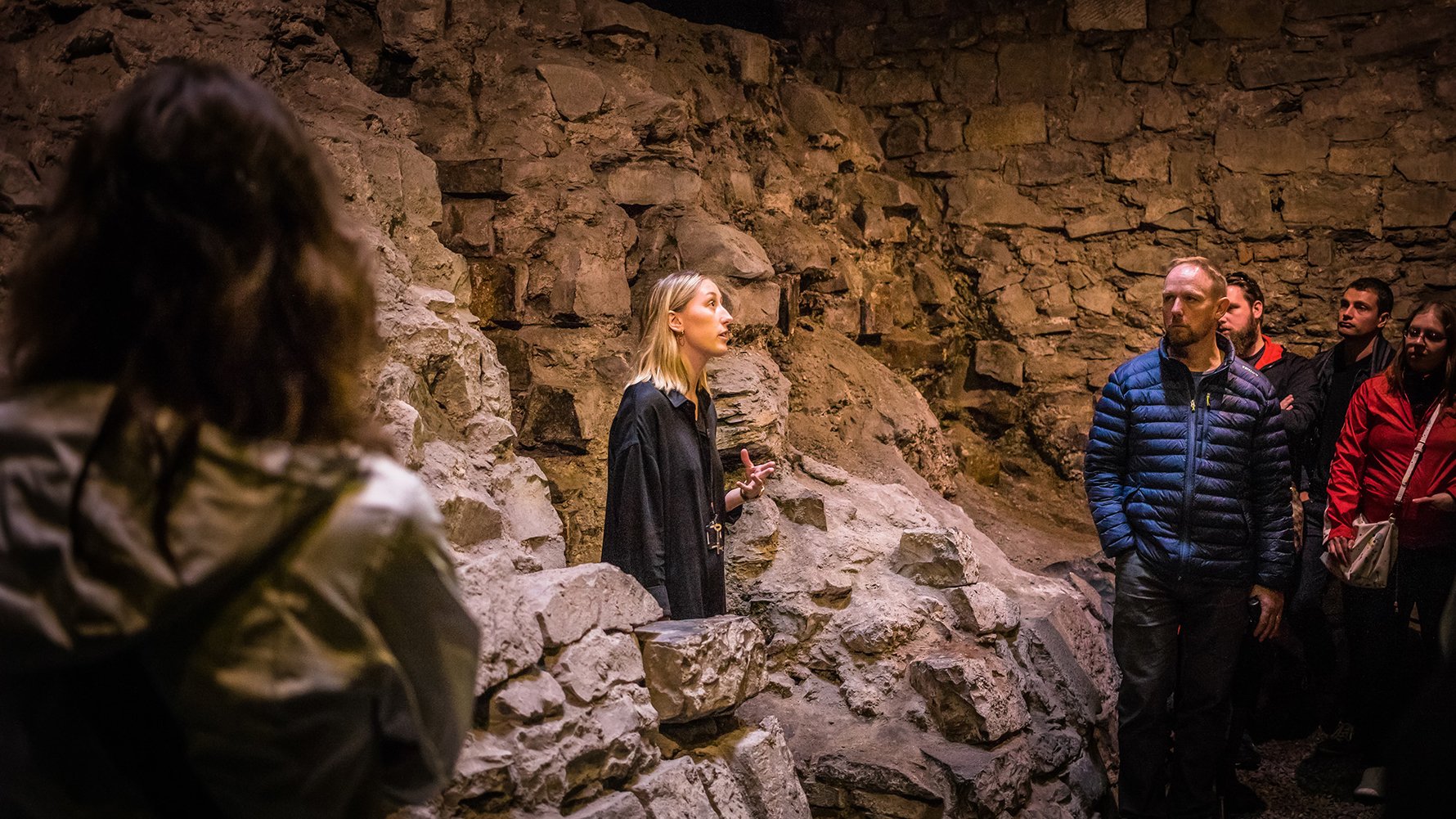
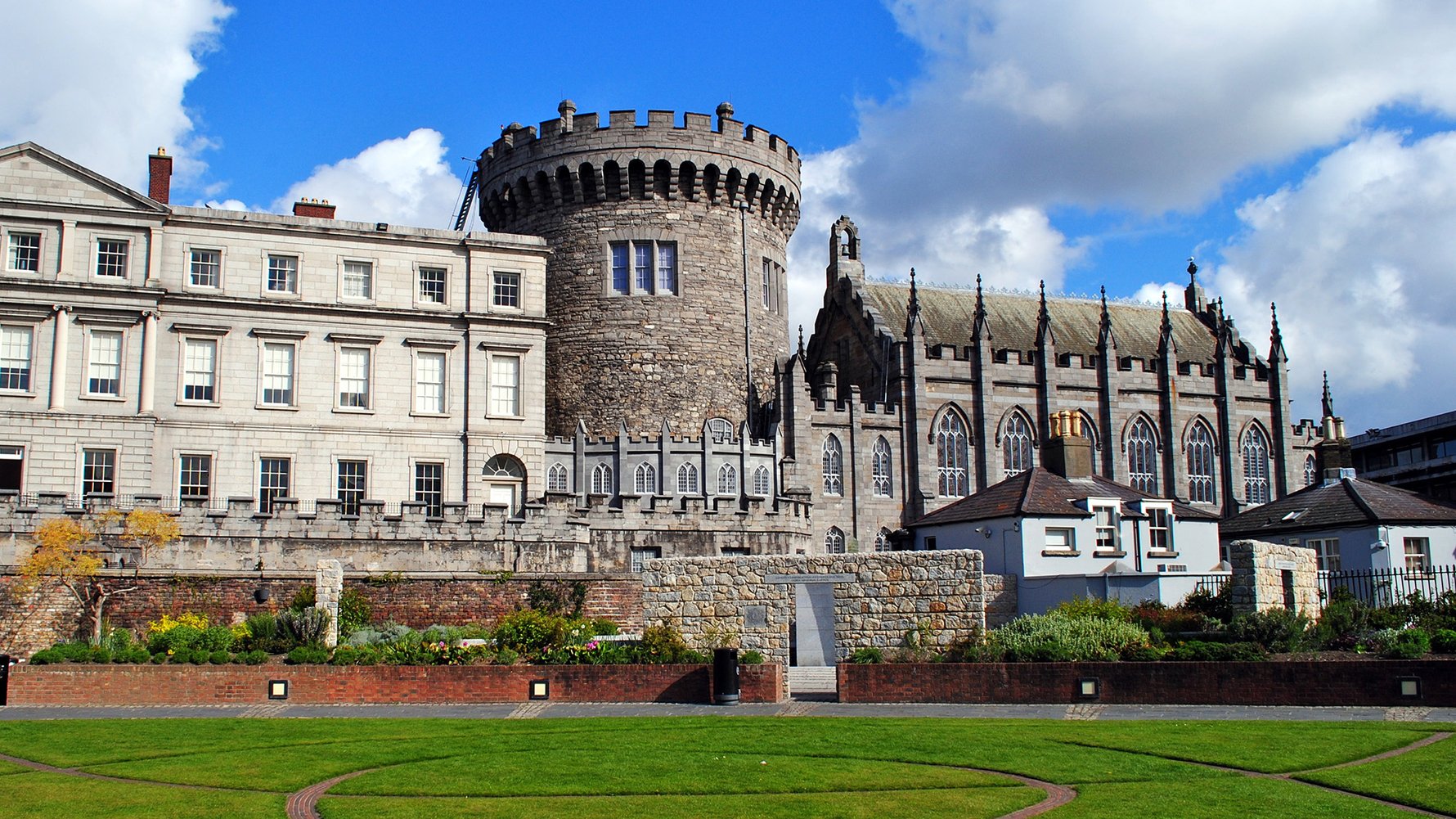
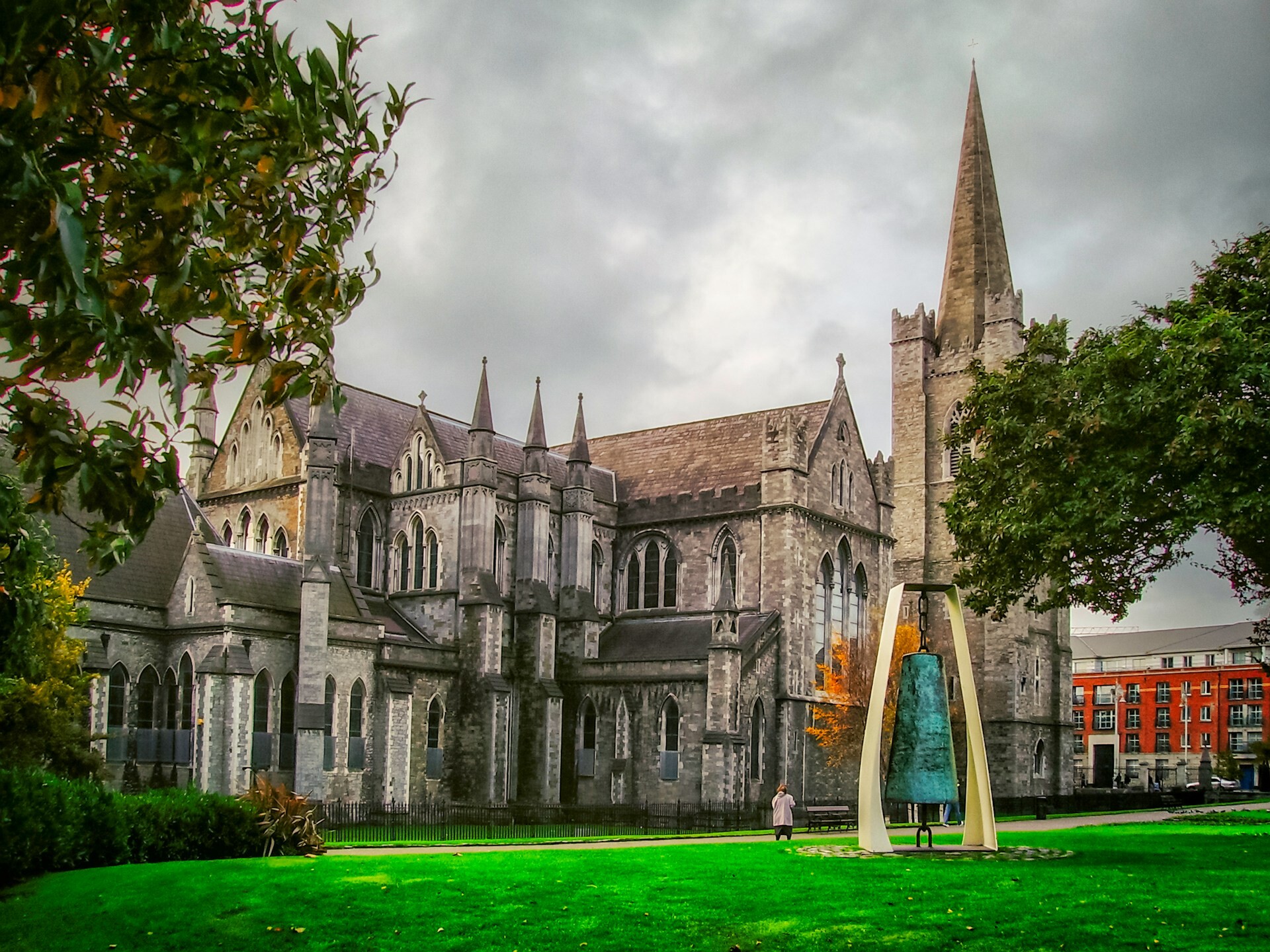
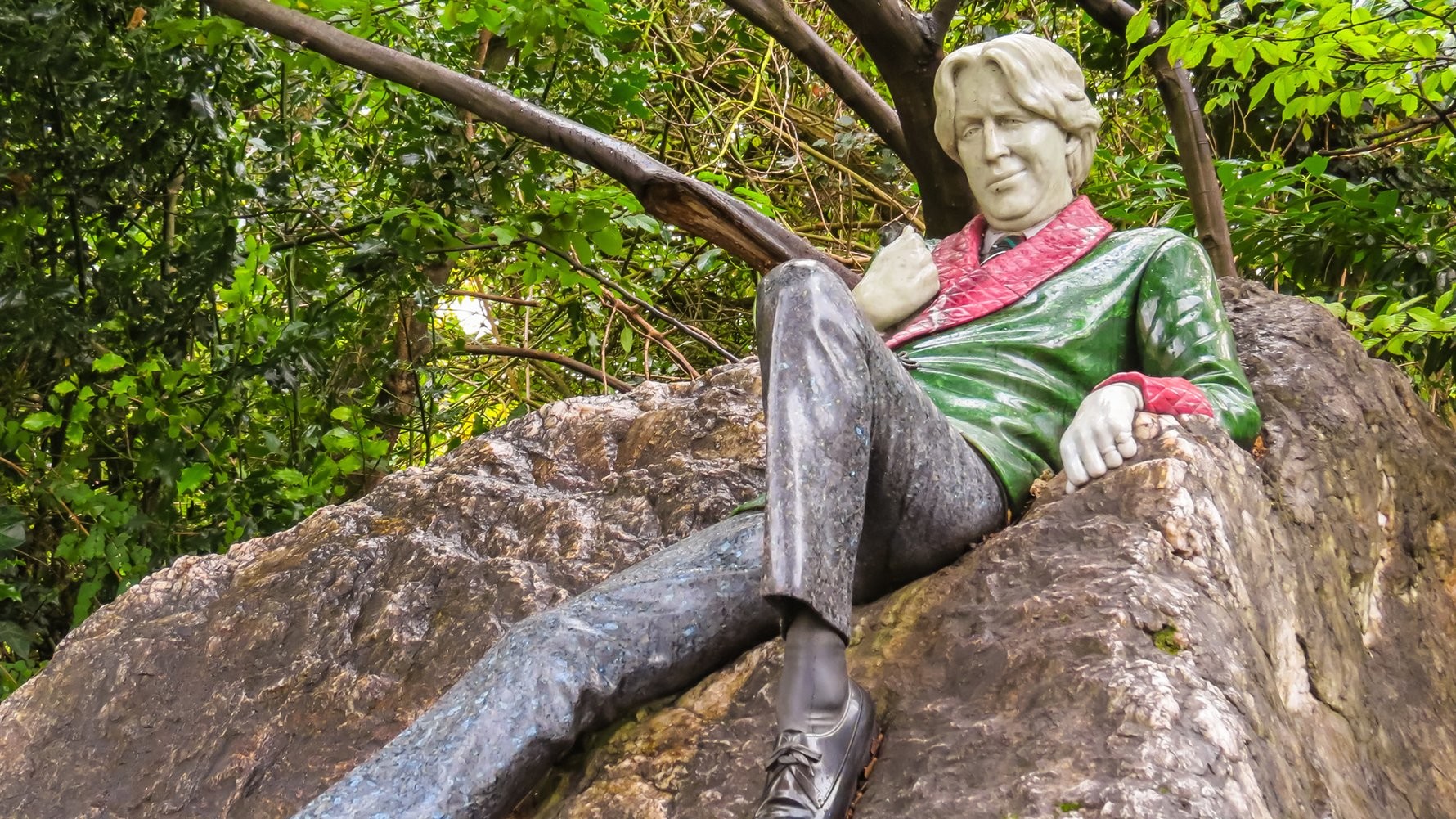
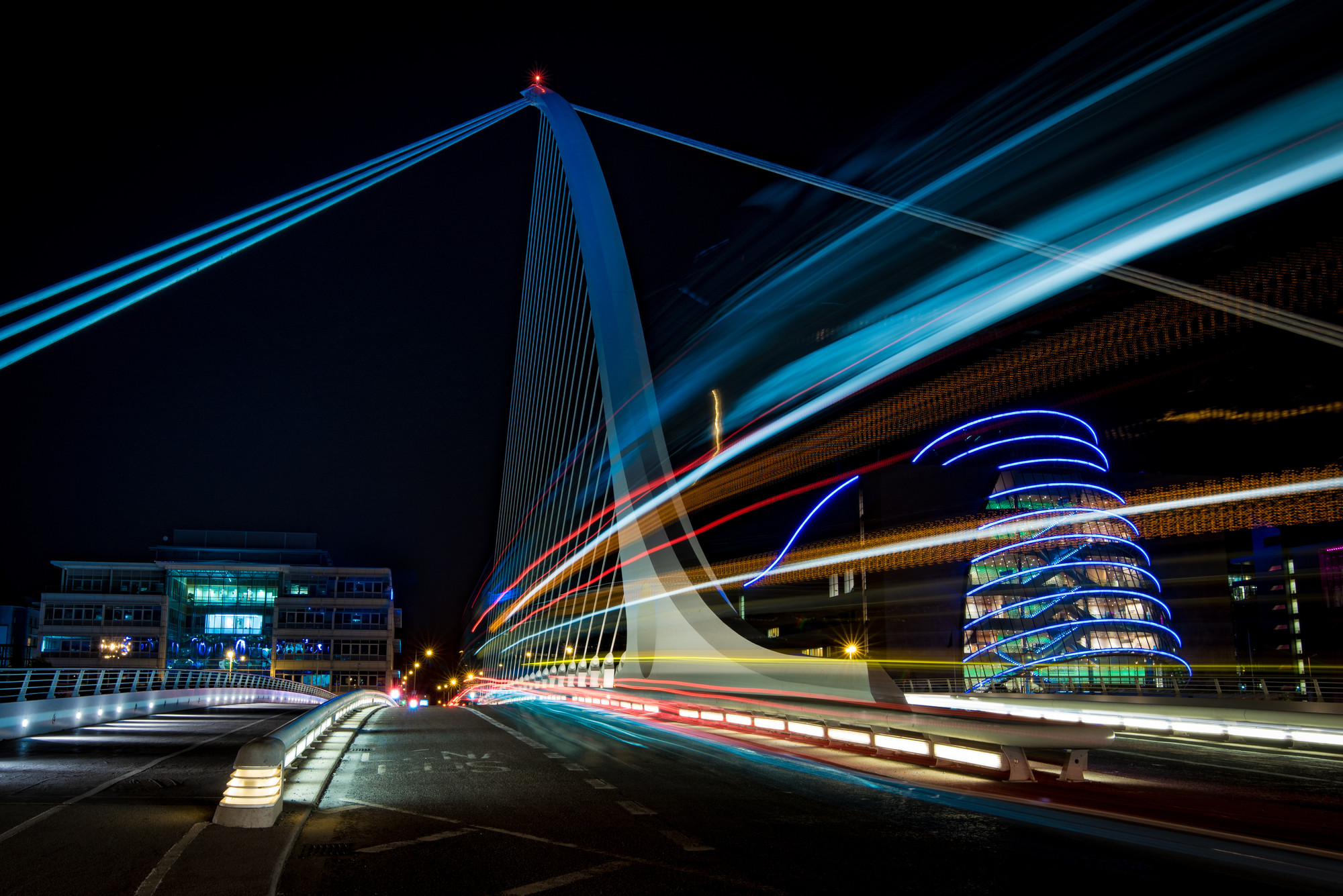
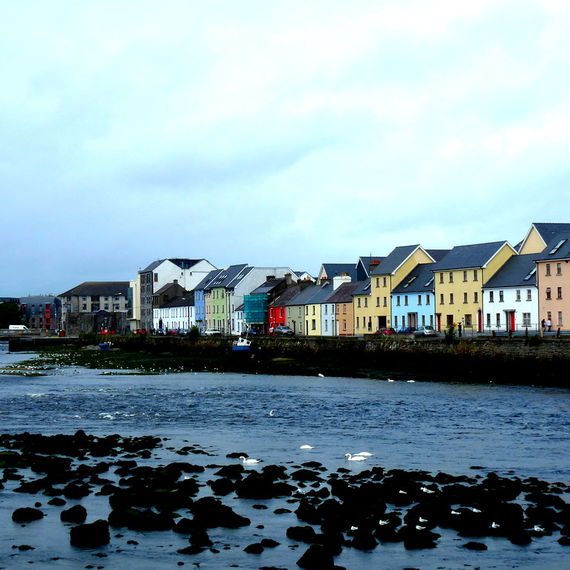
The name Dublin comes from the Gaelic dubh linn or “black pool” - where the Poddle stream met the River Liffey to form a deep pool at Dublin Castle. The city's modern name - Baile Áth Cliath – means the “town of the ford of the hurdles”. Ireland's four principal routeways converged at a crossing place made of hurdles of interwoven saplings straddling the low-tide Liffey.
837 AD – 917 AD
In 837, sixty Viking longships attacked churches round the Poddle and Liffey estuary, and the invaders made a permanent settlement in 841.
917 – 1014
Dublin was the Viking world’s largest city and traded from Iceland to Constantinople. The first genuine ruler of all Ireland - High King, Brian Boru - was rebelled against by Dublin Vikings and the Leinster Irish. With the aid of Vikings, Brian crushed his foes, then was himself slain in an epic battle at Clontarf in 1014.
In 1171 Henry II landed with a great army and made Dublin the capital of the Normans' Irish territory and the heart of the Norman and English colony. Christ Church was rebuilt in the Gothic style and work began on St Patrick’s Cathedral. In 1317 ScoHeading 2ttish King Robert the Bruce and brother Edward failed to take the city, but much destruction ensued. In 1348 the city was gripped by the Black Death.
1399 – 1603
English royal control of Ireland shrank during the 14th and 15th Centuries to coastal towns and an area round Dublin known as the Pale. From 1485-1603 the city played a crucial role when Tudor monarchs undertook a reconquest. In 1603 The Earl of Tyrone submitted and, for the first time, the Crown won control of the entire island.
1603 – 1660
English monarchs decided Ireland should become Protestant. Christ Church and St Patrick’s were taken over and restored. English Civil War broke out in 1642 and many citizens joined the Gaelic Irish rebellion which had begun the year before. Eventually the forces of Parliament prevailed, and defeated royalists and the Irish besieged Dublin at Rathmines in 1649. Oliver Cromwell landed thirteen days later to begin the relentless subjugation of the country
1660 – 1691
A remarkable period of recovery began and, between 1610-1683, the population rose from 26,000 to 58,000. Instability returned when James II, chased from England, arrived in Ireland via France in 1689. He was given an enthusiastic reception in Dublin but, after defeat by William of Orange at the Boyne in 1690, returned to France.
Rebellion by the United Irishmen in 1798. The authorities kept the insurrection out of Dublin but the revolt convinced Westminster to close the Dublin Parliament, and the 1801 Act of Union saw Ireland ruled from London. The aristocracy slowly deserted and, while it continued to grow, the city endured severe economic difficulties. Destitute victims of the Great Famine poured into Dublin from 1845-1850.
1900 – 1923
At the outbreak of WWI, the Irish Republican Brotherhood and the Irish Citizen Army prepared rebellion. The insurrection began on Easter Monday 1916 and was eventually put down, leaving much of the city centre around the General Post Office reduced to rubble. During the War of Independence, beginning in 1919, much guerrilla fighting took place in the streets, and in May 1921 the Irish Republican Army burned the Custom House. The 1921 Anglo-Irish Treaty made Dublin the capital of the Irish Free State. Disagreement over the terms of the Treaty resulted in civil war which began when Free State troops bombarded the Four Courts and buildings in O’Connell Street. The anti-Treaty IRA called a truce in the spring of 1923.
1923 – 1965
Dublin remained an elegant but somewhat impoverished city - the capital of a state which, in stages, severed its last links with the British Empire in the 1930s and 1940s and became a republic in 1949. Ireland's 1st Taoiseach (or Prime Minister) Eamon de Valera kept the state - renamed Éire in 1937 - out of WW2. Incidentally, Ireland's first leader, or President of the Executive Council, was WT Cosgrave (1922-32).
1965 – 1991
A long era of peace, with trade agreements with Britain in 1965 and the joining of the Common Market in 1973 heralding spectacular – if uneven – city growth. In 1963, four months before his assassination, President Kennedy visited Ireland. In 1979 Pope John Paul ll - the first reigning Pope to visit Ireland - celebrated mass in front of one million people at Phoenix Park. In 1985 the Irish and British governments signed the Anglo-Irish Agreement giving the Republic of Ireland a consultative role in the Northern Irish government. In 1988 Dublin celebrated its Millennium and became European Capital of Culture in 1991.
1990s - early 2000s
From the 1990s, the Celtic Tiger economy boomed and many ex-pats – or Irish Diaspora – returned home. House prices vied with those in London, and international music success, from Ireland’s 7th Eurovision Song Contest win (and the birth of Riverdance) to the global domination of rock band U2, further cemented Ireland's new culture of cool. In 1990 Mary Robinson became the first female President of Ireland and was succeeded in 1997 by Belfast-born Mary McAleese. The feel-good factor spread into sport; back in 1987, cyclist Stephen Roche had won the Tour De France, Ireland beat Italy in the 1994 US World Cup Finals and runner Sonia O'Sullivan won World Championship gold in 1995 and Olympic silver in 2000. In 2002 the Euro replaced the Punt as Ireland's currency.
2000s - 2010s
Free EU movement attracted a large swathe of Eastern Europeans to migrate to Ireland, particularly Dublin. Amid the global financial crash, Ireland's huge property bubble burst and the Celtic Tiger collapsed, leaving many Irish businesses bankrupt and property owners in debt. Westlife took over the Irish boyband mantle from Boyzone. Referendums allowing same-sex marriage (2015) and abortion (2018) further separated state from church and reinforced the country's increasing secularism. The UK referendum vote to leave the EU put the Irish border at the centre of negotiations ahead of the expected March 2019 leaving date.
Written by Dr. Jonathan Bardon OBE. Updates by Heidi McAlpin.
I am from Nova Scotia, Canada, and my mother''s side is McClelland, originally our ancestors were lords or Edinburgh Seat and our ancestor James McClelland emigrated to Canada in the 1600s after marrying a Jane Glassey in Dublin rather than succeeding his father''s position, as he was disowned for that union. He was sent by his father on a business trip to Dublin, which I now think may have had to do with the cattle business being big I Dublin at the time.
DOes anyone know about a Glassey family (most likely RICH living in Dublin at the time? I''m told the name comes from Glasgow, Scotland. I wonder if their branch of the Glassey clan had a reason to emigrate to Dublin for economic reason and maintain links to the powerful McClellands? If so, why would the senior McClelland be so angry about his son deciding to get married? He was the oldest son, so perhaps his timing was off and dear old Dad simply wanted him to delay marriage or hook up with a woman in a union arranged to further increase the family wealth?
Kurt Biewald
20. 3. 2012
thank you i was interested in my Irish roots from the TV show I saw on St. Patty day. This was exactly the sort of thing I was looking for. Some information but not too much.
Reader
29. 5. 2011
It said that this was a short history but it isnt it is realy long.Do you think you could make it shorter or dont say that it is short
Joel Mahuika
29. 5. 2011
A very informative website on Ireland. I used this site to assist me with Irish history which I'm studying at university. I also have Irish ancestors who come from Roscommon and their my mum's maiden name is Ormsby(Viking Irish). But they were protestant aristocrats who emigrated around the world & ended up in NZ to produce me.