This In Your Pocket Guide is available as
Essential Zadar

Essential Zadar

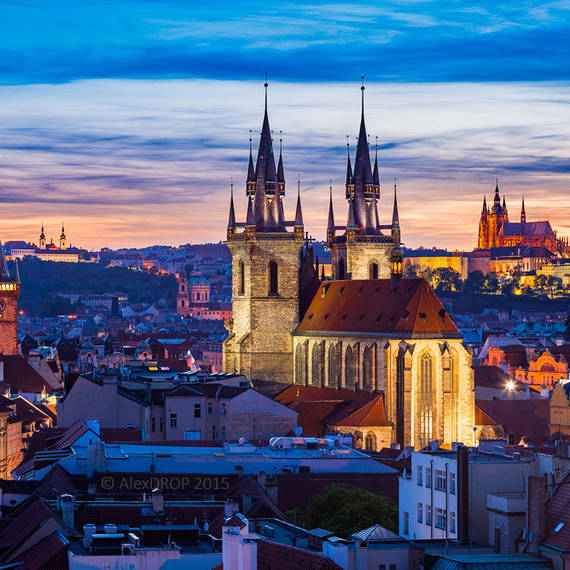
Nobody likes being invaded. But one good thing has come of Zadar's periods of building, rebuilding and being gatecrashed: each period has left its architectural mark. There can be few places on Earth with such diverse influences crammed into one small area.

Bookmark and Share

Zadar | Sightseeing & Culture | Essential Zadar

City Forum
The Roman Forum - the largest on this side of the Adriatic - was founded by the first Emperor Augustus, as documented on two 3rd Century stone inscriptions on the site. A raised area on the west side was the site of a temple dedicated to Jupiter, Juno and Minerva. To one side a “Pil [...]


Add your comment

City Gates
The city walls have had several entrances knocked through them at more confident points in Zadar's history. Some of them were walled up for good, but four remain as the vital link between the town within the walls and the sea outside them.
The Venetians built the Land Gate - then the main entrance into the city - on the little Foša harbour in 1543. It's considered one of the finest monuments of the Venetian rule in Dalmatia, and has the form of a triumphal arch with a central passage for wheeled traffic, and two smaller side arches for pedestrians. It's decorated with motifs such as St Chrysogonus (Zadar's main patron saint) on his horse, and the Shield of St Mark (the coat of arms of the Republic of Venice). Previously, the area had been highly defensive, with a surrounding moat.
Between the ferryport and market is the Harbour Gate (also known as St Chrysogonus' Gate, because of its proximity to the church of the same name), built in 1573 to celebrate the victory of the Christian fleet over the Turks at Lepanto. Near the bridge on the north side is the neo-Renaissance Bridge Gate, knocked through by the Italians only 70 years ago, and leading directly to Narodni trg and the Kalelarga. Further west, by the old Arsenal, is the fourth and smallest gate, named after St Rocco, connecting the Three Wells Square with the harbour area. [...]


Add your comment

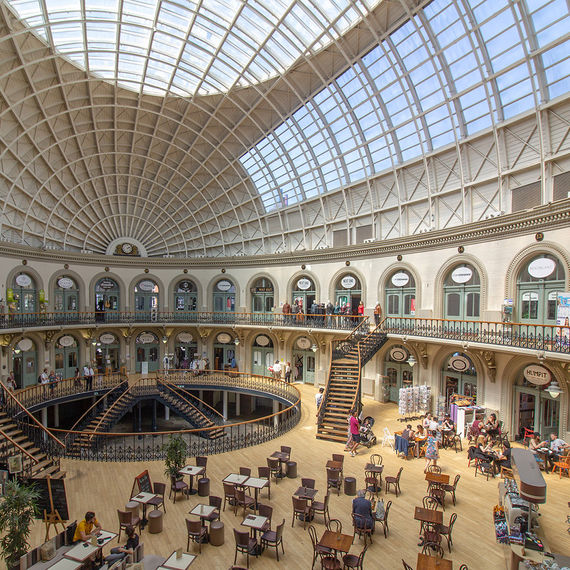
Built by the same architet as the City Sentinel, this building once was the city's courthouse, council chambers and library. With its huge windows and high ceilings, it nowadays serves as a stunning exhibition space, hosting events such as the international photography triennial “Man and [...]


Add your comment

Narodni trg
Open 09:00 - 12:00, 18:00 -21:00, Sat 09:00 - 13:00. Closed Sun.
In most Dalmatian towns the market is a sight for sore eyes, and Zadar's is one of the biggest and best. It's been here since the Middle Ages, but the large open space dates back to WWII, when many buildings were flattened in this part of town. Some around the edge of the square are only just being reconstructed. The outside stalls are where you'll find mouthwatering displays of fruit, vegetables, fresh herbs and more... all locally grown and bursting with flavour. Little old ladies (bakice) also sell home made olive oil, rakija and cheese – usually far better than the shop-bought equivalent. The indoor meat market is to one side of the square, and the fish market is opposite, coolly located inside the city walls. Proud locals claim it's the best fish market on the coast. To one side is a section of the market for cheap clothes and bric-a-brac, great if you need an emergency pair of flip-flops or a cheap snorkel. Hours of fun browsing, bargaining and banter.

[...]


Add your comment

Designed by a Venetian architect in the late Renaissance style, with a large central clock tower and a surrounding stone barrier and railing with holes for cannons (both later additions). The building once housed the Ethnographic Section of the National Museum, one of the most important collections [...]


Add your comment

Narodni trg
Open 09:00 - 12:00, 18:00 - 21:00, Sat 09:00 - 13:00. Closed Sun.
Once the largest city-fortress in the entire Republic of Venice, Zadar's walls allowed it to retain more of its independence than most of its neighbouring cities, and meant that it was never captured by the Turks. Previously, there were even more fortifications than there are now, but what [...]


Add your comment

Five Wells Square
During the 16th century, the Venetians helped the city withstand Turkish sieges by building a large drinking water cistern with five ornamental wellheads. When the Turkish threat ended, a park was built on top of the nearby bastion, and nowadays the attractive stone-flagged park serves as the [...]


Add your comment

Vladimir Nazor Park (Perivoj Vladimira Nazora)

Named since WWII after one of the most famous Croatian writers, Zadar's biggest park lies on top of the city's biggest fort, just east of the peninsula and the Land Gate. It was created in 1888-90 by an Austrian deputy, Dragutin Blažekovic, born to a noble family in Osijek (east Croatia). Despite working for the Austrians, he was a supporter of Croatian rights, and resigned when the Austrians refused to concede them. He left something beautiful to the city - a richly planted park with winding pathways, a pond, and an elevation giving great views of the sea. He died three years after it was completed, and the park was named after him – against his wishes.


Queen Jelena Madijevka Park (Perivoj kraljice Jelene Madijevke)

Vlaimir Nazor Park is not the city's oldest – that distinction goes the park named after Queen Jelena Madijevka (Medici), built on top of the Grimaldi bastion by Five Wells Square. Founded by Austrian commander Baron Franz Ludwig von Welden in 1829, a passionate botanist and admirer of Dalmatian flora, it was the first public park in Dalmatia. To create a garden on top of a military object was an unusual move, but one Zadar is eternally grateful for. [...]


Add your comment

Silver Casket of St Simeon
In the church of the same name, a gilded silver casket on the altar is raised on the outstretched arms of four bronze angels. It contains the remains of the popular saint-protector of the city  Commissioned in 1381 by Elizabeth, wife of Croat-Hungarian King Ludwig I of Anjou, it's one of the finest examples of the work of Zadar's silversmiths, and inside and out shows in intricate detail scenes from the saint's life and the city's history.

Locals say that a merchant who was shipping the body of St Simeon from the Holy Land to Venice was caught in a storm, and sought shelter here. He fell ill, and before he died had the body buried, but told the nurses taking care of him that they would find something interesting in his documents. They found an inscription of the powers of the saint around his neck, and asked three local priests to dig up the grave that night. Not yet knowing the true nature of the occupant of the grave, visions appeared to them, and St Simeon has been revered in Zadar ever since. The silver casket of St. Simeon can be viewed daily and his remains will be shown to  the public on his patron day, October the 8th.

[...]


Add your comment

tel. (+385-23) 21 17 05
Open 08:30 - 12:00.
Silver and Gold of the City of Zadar
If you come to Zadar you must see the Forum and St Donatus. If you only see one other thing, make it the Silver and Gold of Zadar. It's housed in the Benedictine convent of St Mary's, where it has been guarded by nuns since the end of the Second World War. It forms the Permanent Exhibition [...]


Add your comment

Trg opatice Čike 1
tel. (+385-23) 25 04 96
Open 10:00 - 12:30, 18:00 - 19:30. Sun 10:00 - 12:00.
An attrative Romanesque cathedral - the biggest in Dalmatia - built during the 12th and 13th centuries. As with many Dalmatian churches, the belfry is separate. You can climb to the top - the view is amazing. Two attractive rosettes decorate the front portal, and a gallery of blind a [...]


Add your comment

Trg svete Stošije
St Donatus' Church
Imposing and austere, yet absolutely harmonius and original in form, it's not surprising that the pre-Romanesque St Donatus' is taken as the very symbol of Zadar and an image of the unique spirit of Dalmatia. The circular shape is typical of the early Byzantine age in Dalmatia. It was [...]


Add your comment

Poljana pape Ivana Pavla II
A pentagonal tower on the Five Wells Square, built by the Venetians to strengthen the city against Turkish attacks. It gets its name from the nearby residence of the Venetian city captain, and is now used as an exhibition space. [...]


Add your comment

“Riva” is a generic word meaning “waterfront”, usually a place to enjoy a stroll and a coffee in seaside towns. When people in Zadar talk about the Riva, they mean the pleasant promenade on the edge of the Old Town peninsula called Obala Petra Krešimira IV, named after [...]


Add your comment

Obala kralja Petra Krešimira IV
Spring 2005 saw Zadar gain something absolutely unique: the world’s first pipe organ that’s played by the sea. It’s an art installation designed to let people enjoy the point where urban space meets the sea on Zadar’s new pier for cruisers on the end of the Old Town peninsul [...]


Add your comment

Obala kralja Petra Krešimira IV