This In Your Pocket Guide is available as
Cemeteries

Cemeteries

Vilnius’ extraordinary cemeteries offer an often emotional and always interesting journey through the rich tapestry of races and cultures that built the city. For information on the city's two Jewish cemeteries, see Jewish Vilnius.

Bookmark and Share

Vilnius | Sightseeing | Cemeteries

Antakalnis Cemetery
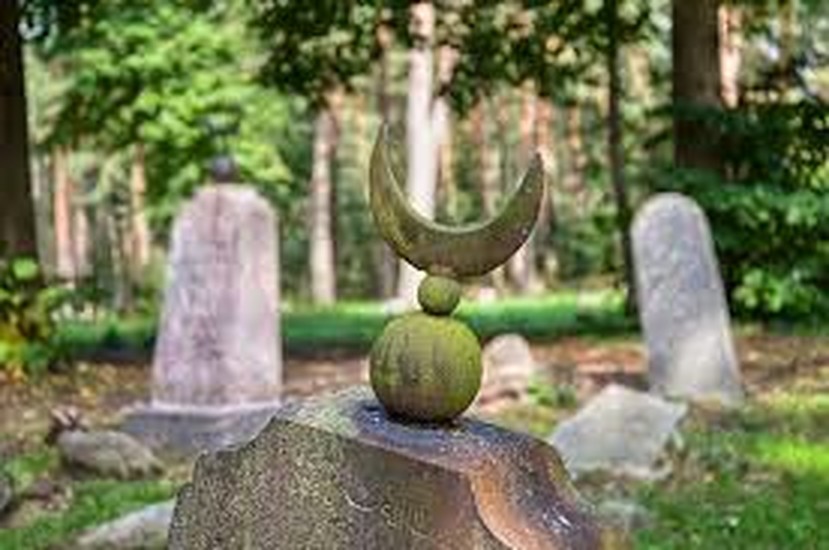
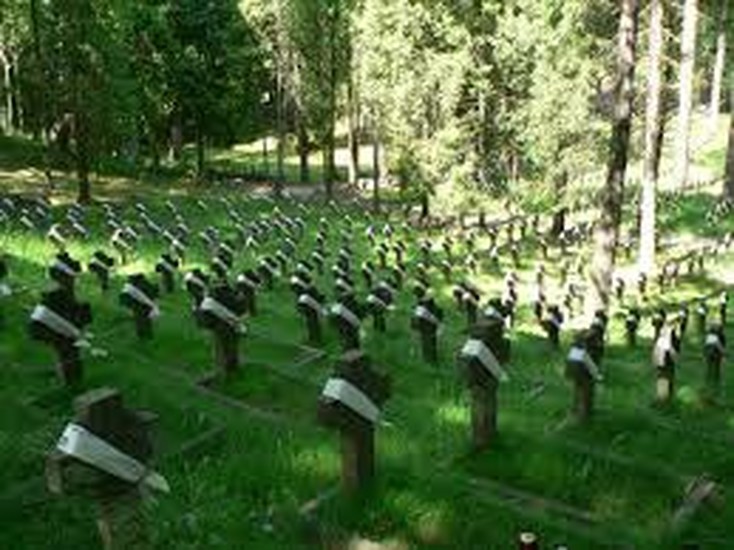
Thought to have begun life as a cemetery way back in 1809, the so-called Soldiers' Cemetery (Karių Kapinės) can be found in the forested area of Antakalnis a couple of kilometres or so from Old Town. The Polish soldiers' graveyard, distinguished by undulating rows of identical headstones, lies to the left of the entrance. Nearby stands a small collection of Tartar graves complete with Islamic symbols. To the left and deeper into the cemetery, large Soviet soldiers guard the (no-longer burning) eternal flame. To the soldiers' right is the ghastly Soviet memorial encasing the graves of Soviet Lithuania's dignitaries. Take a hike up the stairs on your left to reach the 'red star' graves of Soviet soldiers who died fighting Lithuanian partisans. Perhaps most poignant are the graves of the border guards murdered by the Soviets at Medininkai on July 31, 1991 and the civilians killed by Soviet paratroopers during the January 1991 demonstrations, all guarded by a stunning Pietà. Still in use, among the more notable recent additions are a large patch of grass surrounded by a tiny concrete wall and containing the remains of the Napoleonic soldiers discovered in the city in 2002, and the final resting place of the often overlooked Lithuanian composer Antanas Rekašius (1928-2003).
[...]


Add your comment

Karių Kapų 11

tel. (+370) 5 234 05 87

Bernardine Cemetery
Founded in 1810 by Bernardine monks, the cemetery is perhaps the most attractive and romantic cemetery in Vilnius. Located over a little less than four hectares on a rolling hill running down to the Vilnia river, the cemetery fell into disrepair soon after WWII before being finally shut in 1970. Independence has seen it flourish with the assistance of the Lithuanian and Polish governments, although much work remains to be done. Of particular interest are the columbaria, once used for holding urns full of ashes and now slowly crumbling away. Among the eminent university professors, scientists and painters buried here find a few surprises including Geleda Dzerzhinskaja (1849-1896), whose claim to fame was giving birth to the founder of the forerunner of the KGB, Felix Dzerzhinsky (Feliksas Dzeržinskis). [...]


Add your comment

Žvirgždyno 3

tel. (+370) 5 216 20 64

Following the destruction in the mid-1960s of the original cemetery in Lukiškės, the former traditional home of the city’s Karaite and Tatar communities, a new cemetery was opened in a remote area in the southern part of Vilnius close to the airport. Among the graves, which are marked in an extraordinary mixture of Hebrew (Karaite) and Arabic (Tatar), is that of the Karaite scientist, historian and head of the Lithuanian and Polish Karaite communities Chadži Seraja Chan Šapšalas (Pol. Hadżi Seraja Chan Szapszał, 1873-1961). The cemetery is still in use, but is generally closed to visitors. According to tradition, women are forbidden from visiting. Find it on the stretch of Žirnių to the east of the road to the airport, before the ski slopes on the north side. [...]


Add your comment

Žirnių

Rasos Cemetery
Founded in 1801 and the final resting place of many of the country’s social elite, this extraordinary cemetery stretched over a large area divided by a main road is still in use today, providing an extraordinary snapshot of the cultural history of the city. Hidden away here find the artist an [...]


Add your comment

Rasų/Sukilėlių

tel. (+370) 5 265 65 63

Vingio Parkas Soldiers Cemetery
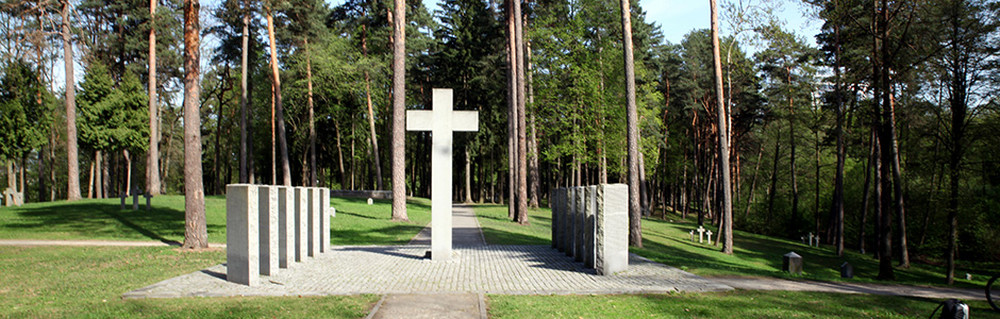
A cemetery of one sort or another has been known to exist here since victims of the plague were buried on the site in 1710. During the German occupation of Vilnius during WWI the cemetery was used for soldiers from the German, Turkish, Polish and Russian armies. In 1948 at the height of the destruction of the final resting places of many of the former inhabitants of the city, the Soviet authorities ripped up the gravestones and the site lay abandoned until 1980 when it was unceremoniously turned into a children’s playground and public toilet. Thanks to the efforts of the Germans, the 6.5 hectare site was renovated in 2001, with various markers and a large monument placed where specific burial sites were known to exist. At the eastern entrance of Vingio Parkas, the cemetery offers a poignant glimpse inside the former rich ethnic tapestry that once made up the population of the city.
[...]


Add your comment

M. K. Čiurlionio