The iconic centrepiece of the 'Cathedral Island' district in Wrocław, the Cathedral of St. John the Baptist was the first brick building in Poland, and offers fantastic views from its tower!
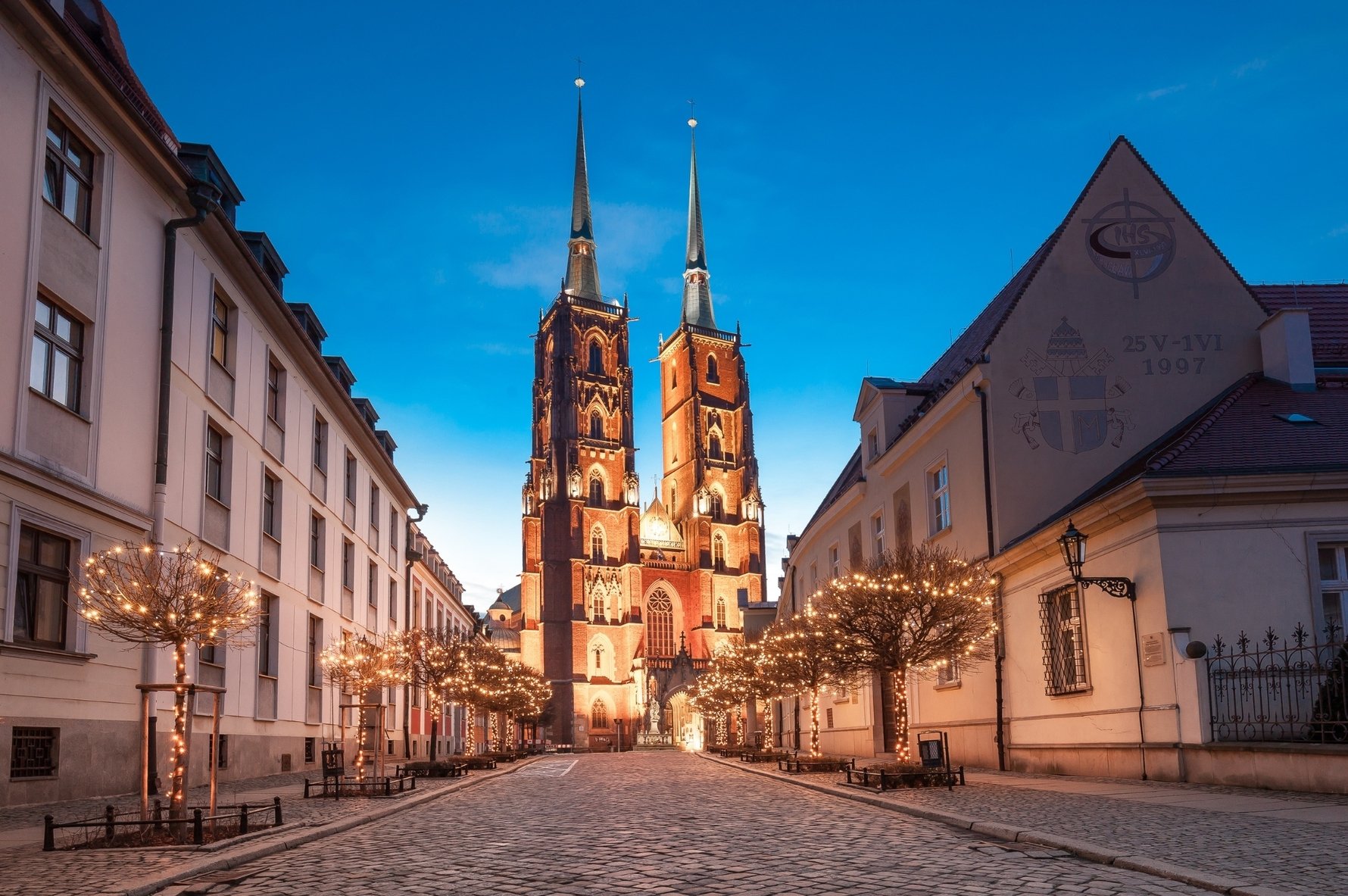
Street view looking towards the Cathedral of St. John the Baptist in Wrocław. Photo by karp85 / Canva Pro.
One of Wrocław’s most enduring icons, the elegant double-spires of this Gothic building stand like sentinels at the end of ul. Katedralna, and its elaborate portal is one of the most valuable medieval artefacts in Wrocław. What we see today is in fact the fourth church to be built on this site. When construction began in 1244, this was the first brick building in Poland. Cathedral-building being what it is, work continued for five more centuries.
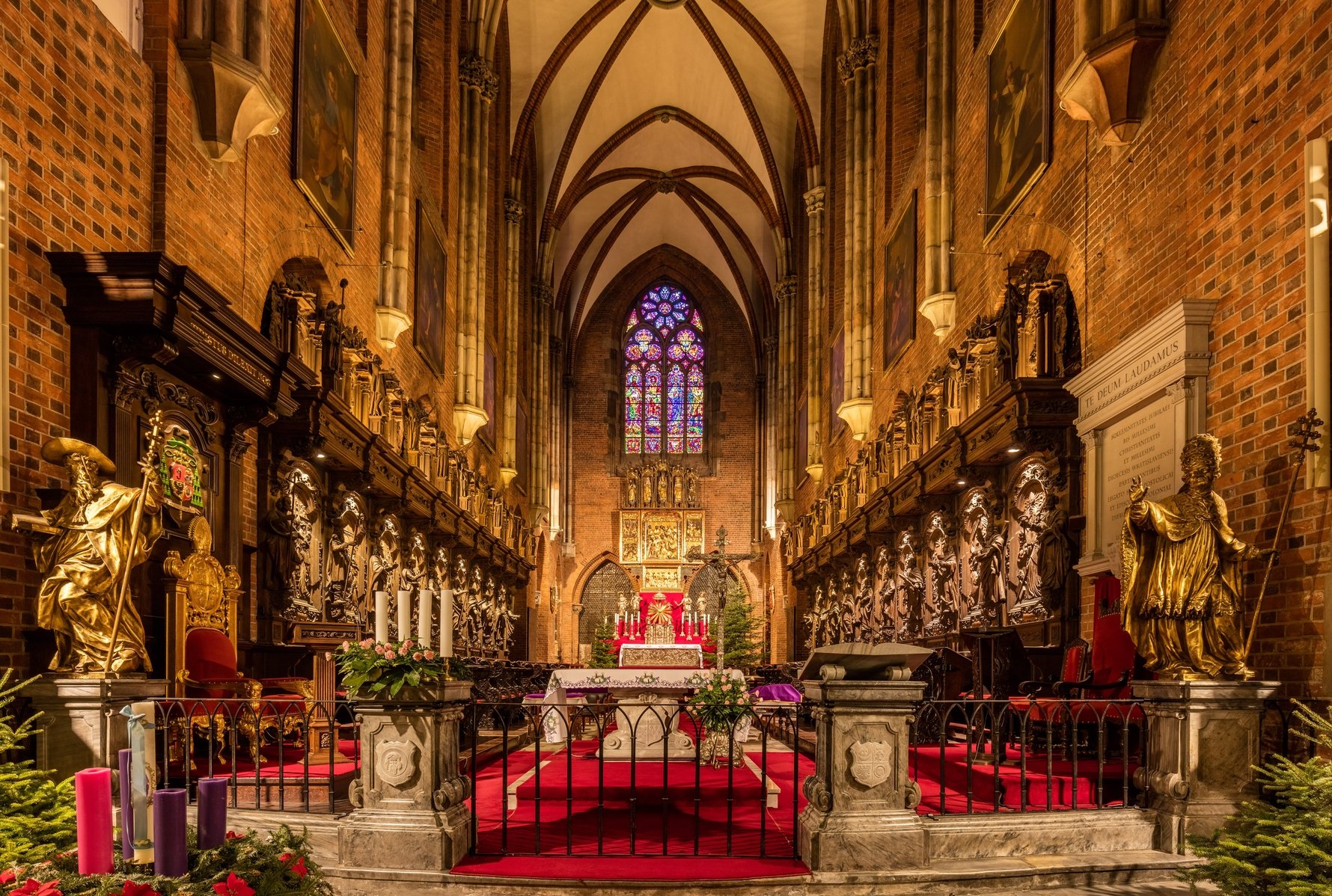
Interior of the Cathedral of St. John the Baptist in Wrocław. Photo Diego Delso / Canva Pro.
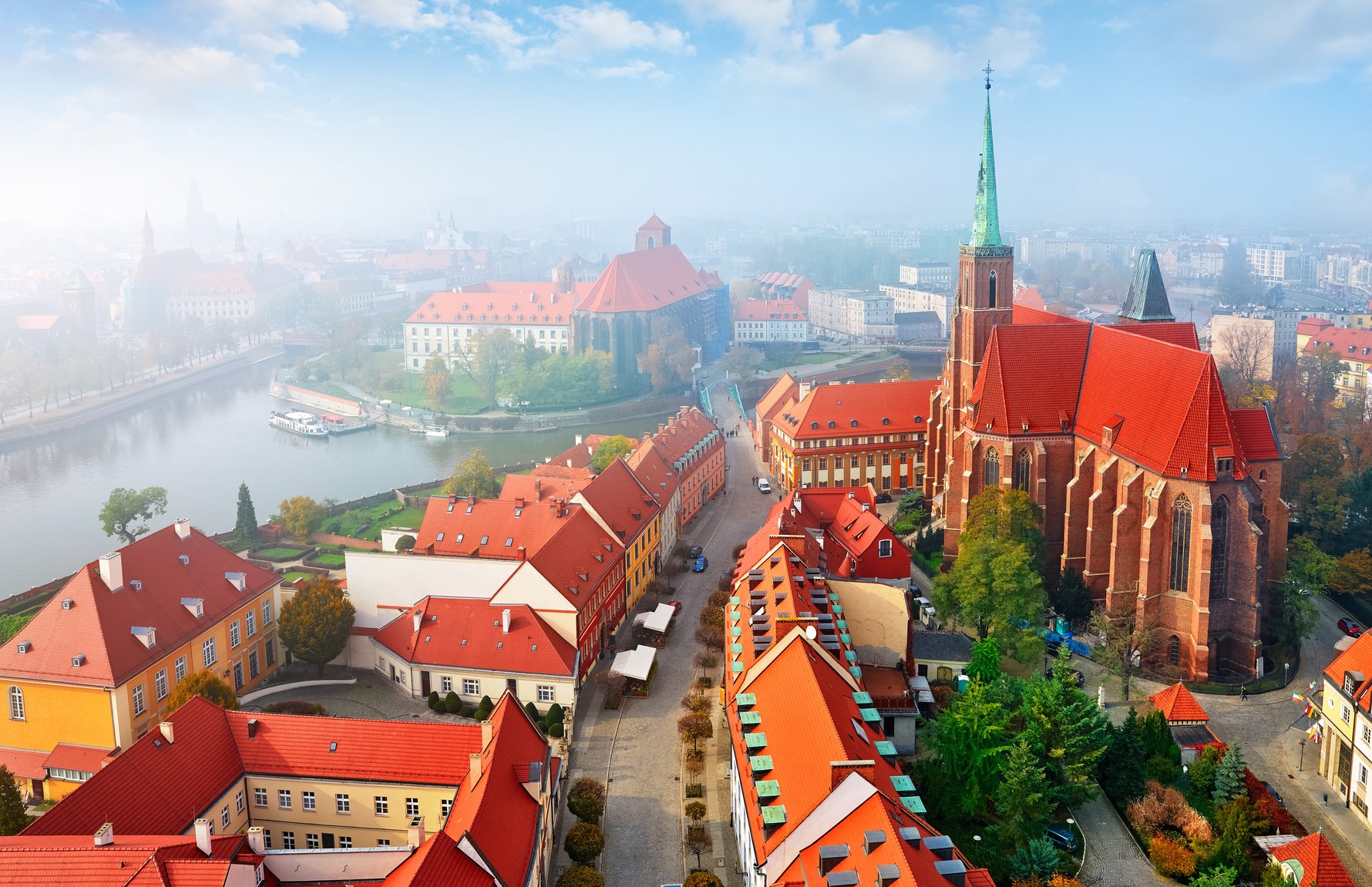
The centrepiece of the rich, Gothic interior is the recently-restored altarpiece, painted in Lublin in 1522, showing the Virgin Mary having a nap. You’ll also see the largest organ in Poland, which prior to the war was also the largest in the world. The real highlight of the Cathedral, however, is the panoramic view from one of its towers; though there are still some stairs, unlike the arduous climbs required for Wrocław's other church towers, here an elevator does most of the work in taking you to the open-air terrace for wonderful views. Aside from Sky Tower, it's Wrocław's highest viewpoint, and arguably its best. On the way down you'll also see a small dated exhibit about the church's missionary endeavours, including a lot of very impressive African masks.
View from the tower of Cathedral of St. John the Baptist in Wrocław. Photo by Yasonya/Adobe Stock.