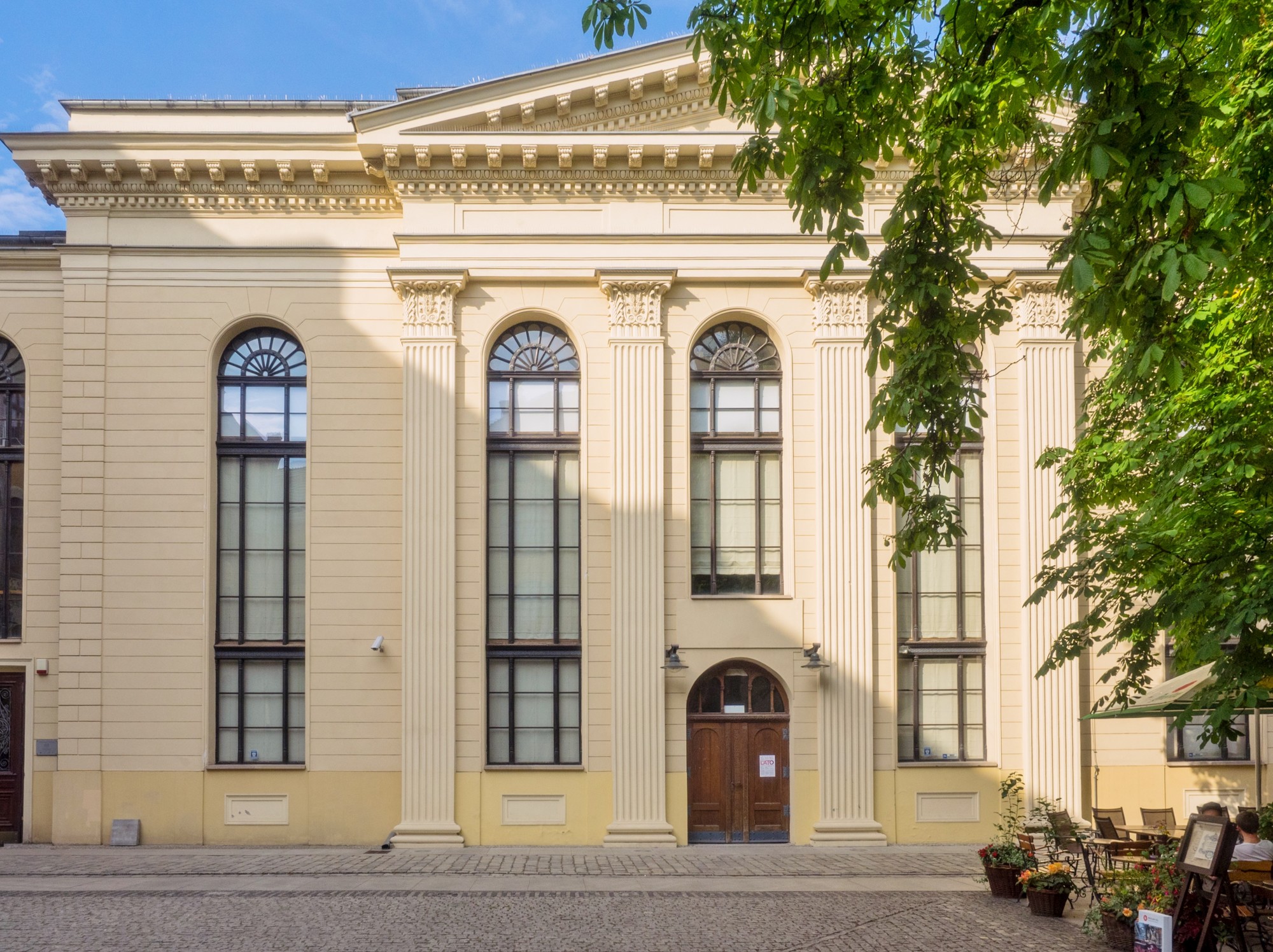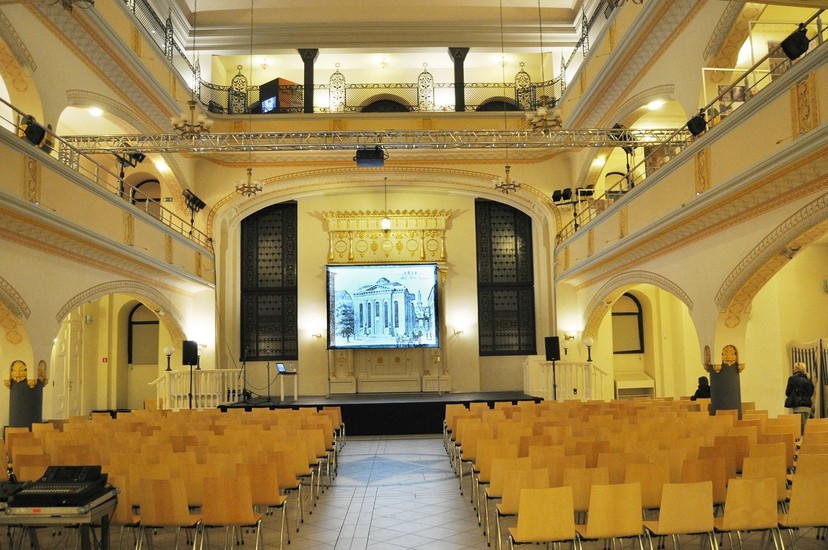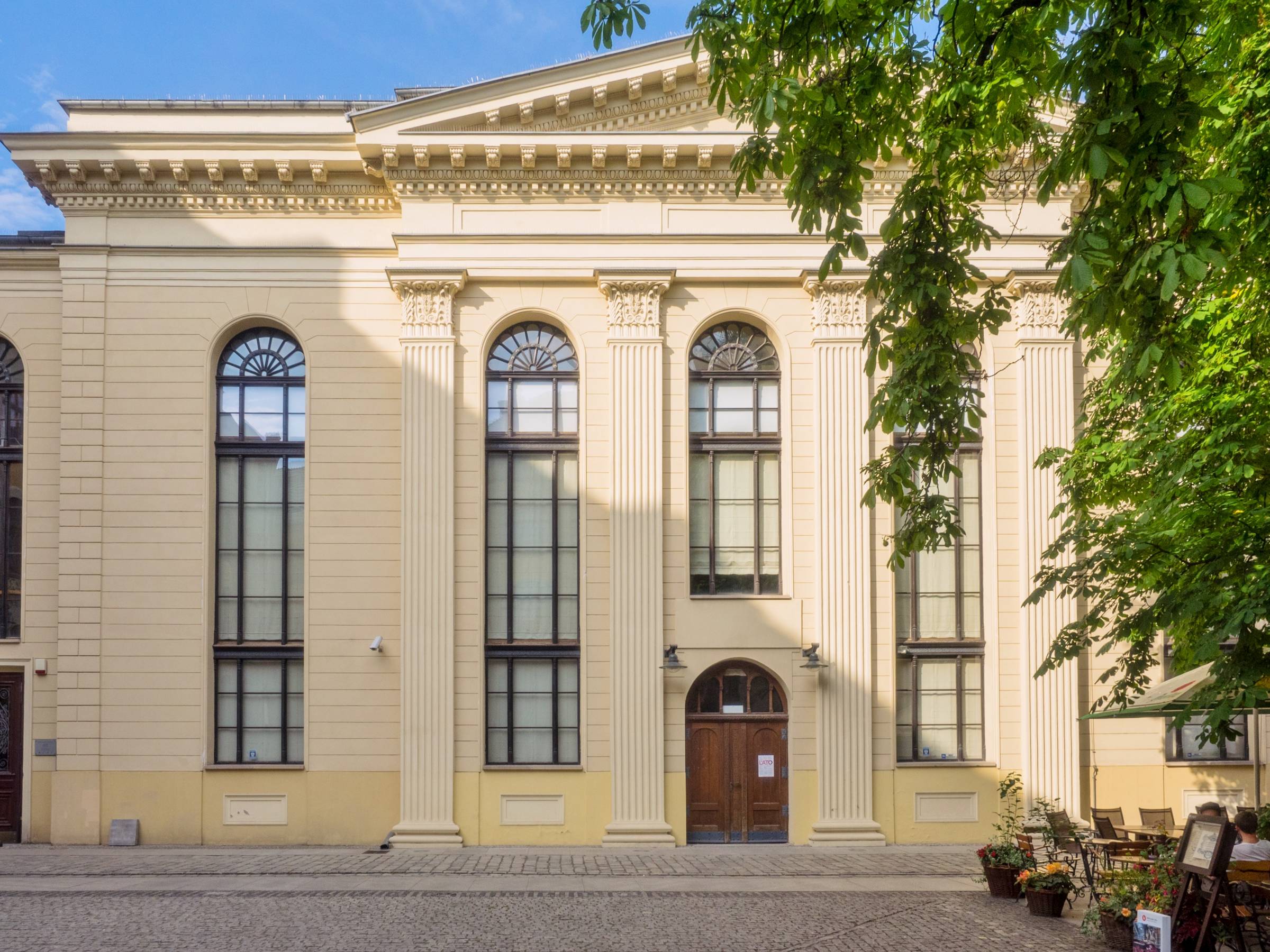


Wrocław's White Stork Synagogue only surviving building of its type in the city. Today, this building serves as a Jewish community centre, hosting events and historical exhibits.

Badly damaged, but not set ablaze (thanks only to its proximity to residential buildings), the synagogue was literally left to rot after the war, before the Jewish community was finally able to recover it from the Polish government in 1996 and initiate restoration. Restored and reopened in May 2010, the synagogue now serves as a worship space, cultural centre, museum, branch of the Jewish Information Centre and ritual bath house. Both balconies serve as exhibition spaces - one houses the permanent exhibit 'History of Jews in Wrocław and Lower Silesia,' while the second is for temporary exhibits - and the historic mikvah in the basement (which can be entered free of charge) hosts the multimedia exhibit 'Jewish Cycle of Life.'