“Some like it hot and some sweat when the heat is on.” Although temperatures in Kyiv can soar in the summer months, it is possible to beat the heat. Dress appropriately (Kyivites appreciate skimpy, see-through clothing) and head for the shade of one of Kyiv’s many glorious parks.
For centuries, Kyiv has had the reputation of being one of Europe’s greenest cities. In the 11th Century, the city’s inhabitants began planting near Pechers’ka Lavra Monastery and in front of Zoloti Vorota (Golden Gate). Descriptions from the 16th and 17th Centuries testify that nearly all the courtyards were adorned with gardens. By the end of the 18th Century, landscaping projects of private manors became more numerous and elaborate, and the chestnut tree planted its roots as the city’s symbol. This led to Kyiv being referred to as a city “buried in verdure”.
The first park was established in Kyiv in 1631, and subsequent parks sprang-up all along the right bank of the Dnipro River. A number of these parks remain, and include Volodymyr’s Hill, Khreschatyk Park, The City Garden, Mariins’kyi Park, Askoldova Mohyla and Pechersk Landscape Park.
Volodymyr’s Hill is one of the most popular places in Kyiv, and for good reason. Spectacular views overlooking the Dnipro will have you reaching for your camera, and the bricked pathways that cut the park into a series of terraces are lined with benches and shaded by trees providing the perfect respite from the blistering heat. The park’s centre-piece is the distinctive statue of Prince Volodymyr the Great (crafted in 1853), who is credited with establishing Christianity in Eastern Europe. The park can be accessed from the bottom of the hill by walking up Tr’okhsviatytel’s’ka Street past “Ukrainian House”. From the top, pass through Mykhailivs’ka ploscha and around Mykhailivs’ka Monastery. Admission is free.
Finding
Mariins’kyi Park is easy. It’s located opposite all the illegally parked, decked-out luxury cars waiting on “hard-working” members of Verkhovna Rada (Ukraine’s Parliament). A few years back, the park was given a face-lift – rickety benches replaced and new paths created. A musical venue known as “The Cockleshell” is located in the North-East corner. All are welcome Friday nights at 22:00 for salsa dancing. Classical and jazz concerts are also scheduled throughout the summer. Open-air festivals, featuring both Ukrainian and international artist, take place practically every day and start at 18-19:00. The pride of Mariins’kyi Park is the Tsar’s Fountain. In the past this served not only as an ornament, but for practical uses as well. Citizens could purchase six buckets of water for the extremely reasonable price of one kopek. Is your goat thirsty? Livestock were also welcome to drink from the fountain (one kopek per head). Admission is free.
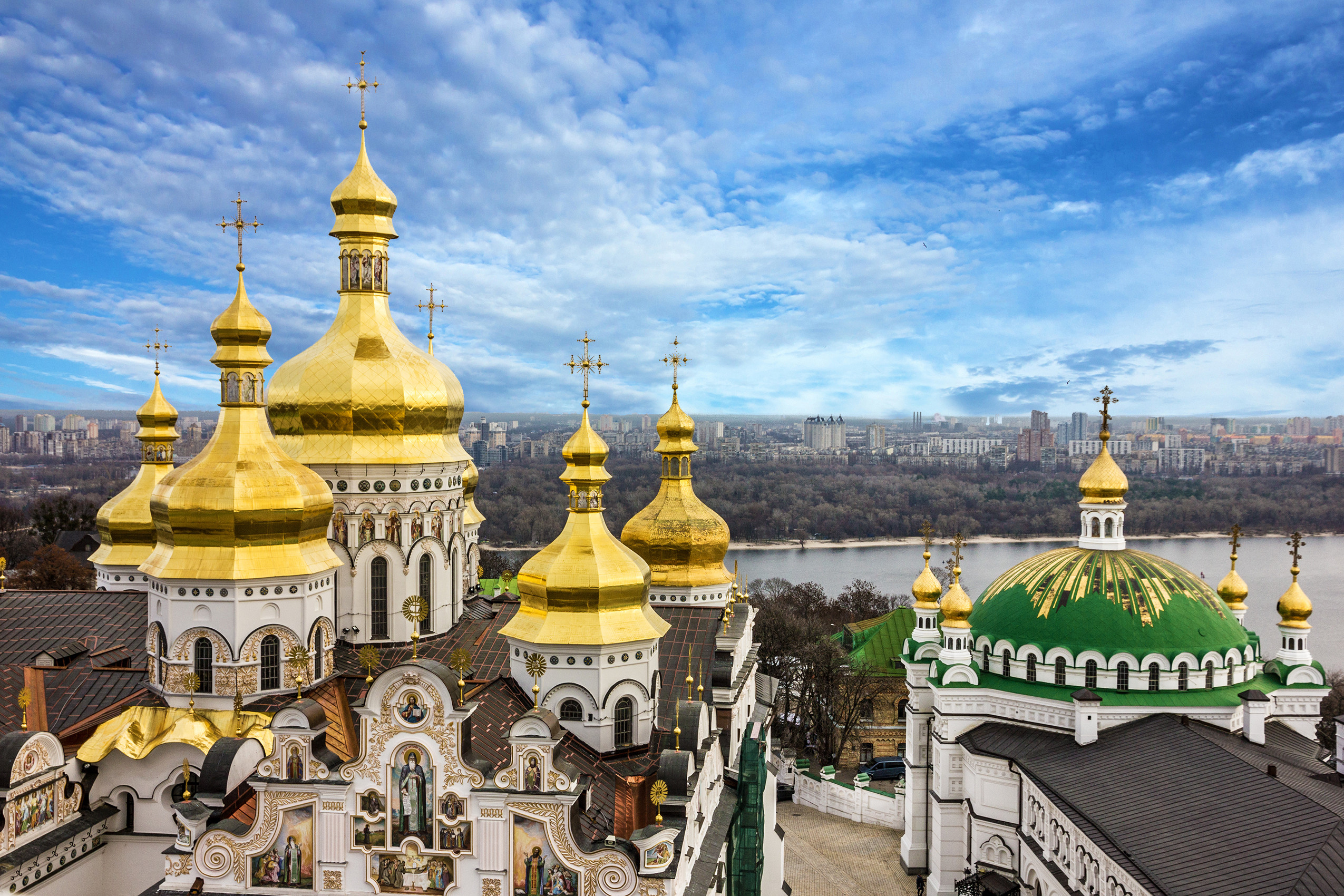
Glory Park located between Arsenal metro and Pechers’ka Lavra, is definitely worth checking out. Not only an interesting vantage point of the Dnipro, the tree and shrub-lined walkways provide a unique foreground for snapshots of Lavra’s golden domes. Admission is free.
Shevchenko Park is not just a monument of gardening and landscape architecture; it is Kyiv’s embodiment of everything beautiful. How so many gorgeous colours, sights and sounds can be packed into such a small area is beyond reason. The park is located on the corner of Volodymyrs’ka and Shevchenka bul’v., opposite Taras Shevchenko National University and, therefore, attracts scantily clad coeds by the dozens. For decades, this has been the prominent scene for chess enthusiasts, who reign over the park’s south-west corner. Verbal disputes and even scuffles between opponents are a common sight, as vodka and gambling are indispensable parts of the game. From the centre of the park, a solemn looking statue of Taras Shevchenko (the greatest of the classic Ukrainian literary figures) gazes down, like a stern yet loving father, on his hedonistic spawn. Admission is free.
Fomin Botanical Gardens was founded in 1939 by Kyiv University, and is located behind the university’s “Red Building”. Though not quite as impressive as its name, the garden does display many types of unique local and exotic flowers, plants and trees. It is best visited in mid to late summer when all of the plants have had a chance to completely recover from the torturous winter. Although forbidden, shish-kebab parties and picnics take place just about every day of the week (rain or shine), so you may find yourself wading through discarded plastic kitchenware on your way to the next exhibit. If you’re lucky/unlucky enough to receive a random invite to one of these little galas, just go with the flow. The main entrance to the park is located on Shevchenko bul’v. next to Universytet metro. Admission is free. Tours to tropical and subtropical plants every day only at 10:00, 13:00 and 15:00 (Entrance from Kominternu Str.). Admission for adults 10Hr, children 5Hr.
Adjacent to the Vydubytskyi Monastery,
Gryshko National Botanical Gardens displays over 13,000 varieties of plants, flowers and trees used for horticultural research by the Ukrainian Academy of Sciences. Construction began in 1944 with prisoner of war labour, but the gardens were not completed until 1964. One of the most spectacular natural sights in Kyiv is the blooming of the lilacs here in May, which brings tourists, artists and photographers from all over to enjoy the variety of colours and types on display. Throughout the summer and into autumn, the roses are in bloom and from July through August there is a striking display of lilies. Open 08:30 - 21:00. Admission for adults 10Hr, children 5Hr.