Günter Grass, the Nobel prize-winning author, passed away in spring 2015 and with him probably went an era. A sometimes controversial figure, he maintained close contact with the city of his birth until his death.
Günter Grass was born on October 16, 1927 the son of a German grocer, Wilhelm Grass and a Kashubian mother Helena Knoff, in the hospital now known as Kliniczna. Grass’ background was not uncommon in a city where Germans, Poles and the local Kashubian population regularly intermarried and his own story can be viewed as a pocket history of the city in the first half of the 20th century. The mix of cultures in which Grass grew up is also a theme that regularly appears in his work and is particularly evident in Grass’ ‘The Tin Drum’ where the main character Oskar has a Kashubian mother, and two presumptive fathers - the German Alfred Matzerath, his mother’s husband and the Pole Jan Bronski, his mother’s lover. Because Grass uses real places set against a historical background in his fictionalised work, he creates a window into the Danzig of the 1930s and 1940s and the lives of those who lived here during this period.
Many of the locations where the action is set in his novels are real places where Günter Grass spent time during this period and with many having survived the devastation suffered by the main city of Gdańsk/Danzig during World War II, it is possible to walk the streets of Günter Grass’ childhood and at the same time realise the setting of his stories.
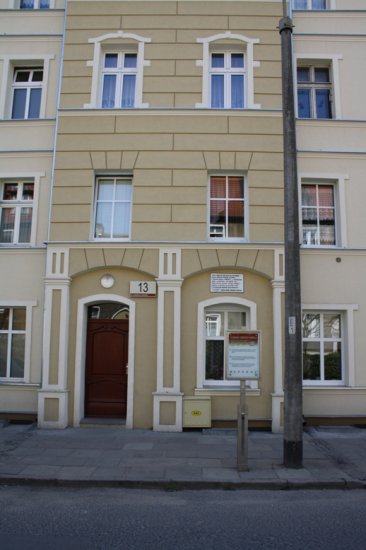
The best place to start is his parents’ home close to the Wrzeszcz railway station and bus terminus. The row of buildings at ul. Lendziona 5a (German - Kastanienweg) look much like they did when Grass was born; you’ll see the entrance to the courtyard where the Grasses lived.
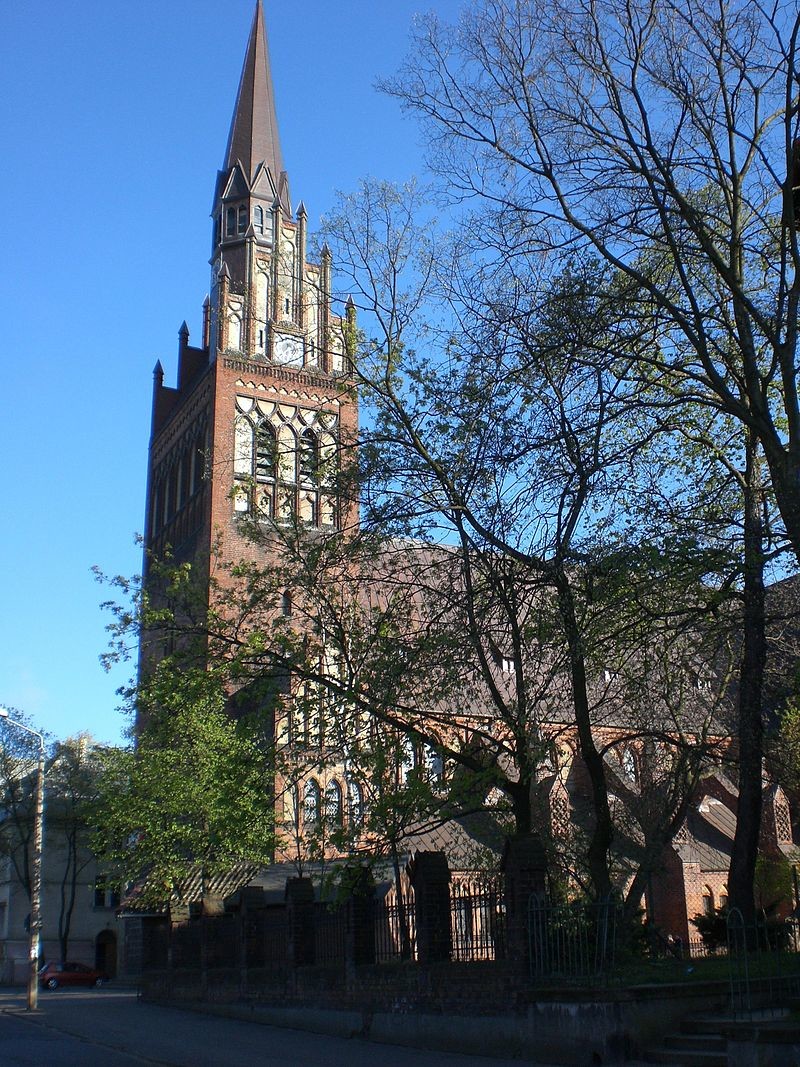
Although his father was an Evangelical Protestant, Günter Grass was christened a Catholic like his mother in the nearby Sacred Heart of Jesus church on ul. ks. Jozefa Zator Przytockiego 3 (Schwarzerweg). His parents moved to the nearby ul. Joachima Lelewela (Labesweg), where his father, a grocer, also had a shop. Grass attended the primary school on ul. Pestalozziego (Pestalozzistrasse) before continuing his studies in the Conradinum on ul. Piramowicza (Kruzestrasse).
Gunter Grass was born and raised in the Free City and by the time he became a teenager, Danzig had been incorporated into the Nazi German Reich in 1939. While Grass had openly admitted to having been a member of the Hitler Youth, it is the period of his life towards the end of the war which caused the most controversy in his later years. Grass had said that he had volunteered for, and been rejected by, the Kriegsmarine as a 15-year old in order primarily to get away from his unhappy, uninspiring family life in the “two-room flat and four-family toilet” and that later he had served as an anti-aircraft auxiliary manning a post in what is now the shipyard area. However, this version of his story was thrown on its head in 2006 following a frank interview granted to the Frankfurter Allgemeine Zeitung.
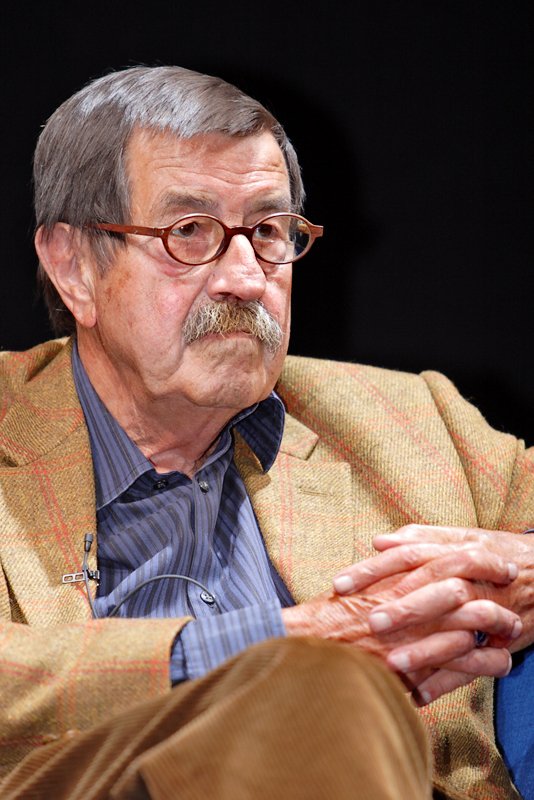
Günter Grass admitted that in 1944 he had been drafted into the 10th SS tank division Frundsberg and that the aircraft auxiliary episode was one that had lasted only while he was a schoolboy. Naturally his involvement in an organisation infamous for its associations with deaths heads and murder caused a bit of a rumpus in Poland, a country regarded as the primary killing field of the Nazi machine. Local hero, Lech Wałęsa, called on Grass to surrender his honorary citizenship of Gdańsk, while some accused him of trying to hype up the publication of his autobiography, Peeling the Onion. While the belated revelation drew widespread shock and accusations of hypocrisy, following many years where he had criticised Germans for not taking full responsibility for their war-time actions, many high profile names such as the local Archbishop Michalik and novelist John Irving, sprang to his defence. Speaking of the guilt he had carried all his life, Grass claimed to never have fired a shot, adding that once he saw the brutality of war he even tried to infect himself with jaundice in an attempt to escape his military duty. He went as far as to write an open letter of explanation to the people of Gdańsk and this appeared to have done the trick with then local mayor Paweł Adamowicz refusing to rescind Grass’ honorary citizenship while even the normally stubborn Wałęsa applauded Grass for coming clean and withdrew his previous objections.