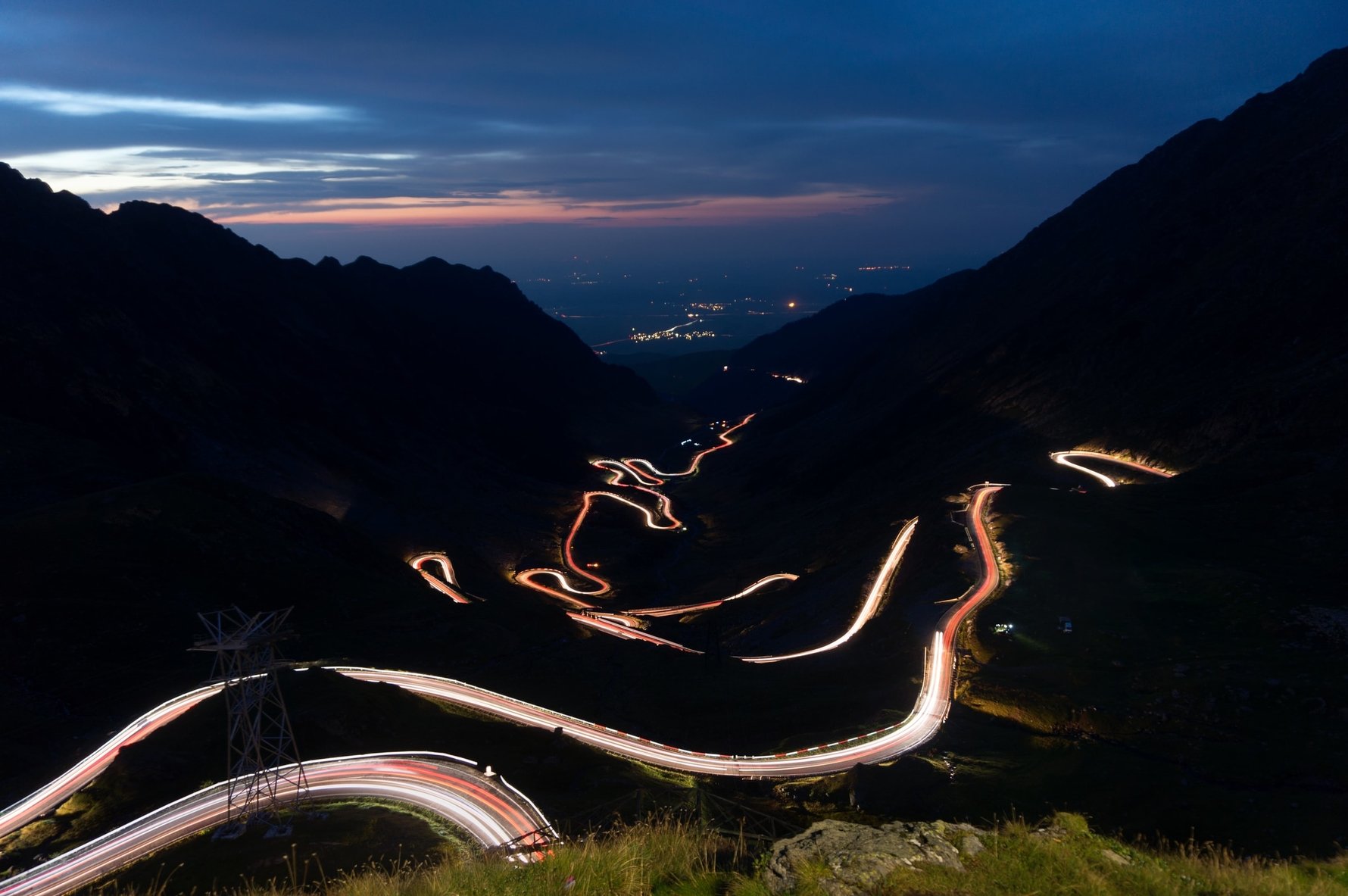
Buckle up and get ready for a road trip like no other! The Transfagarasan Highway, often called “the best road in the world” (thanks, Jeremy Clarkson), is an absolute must-see for thrill-seekers, nature lovers, and anyone who’s just a bit obsessed with jaw-dropping scenery. Winding its way through the Fagaras Mountains, this engineering marvel offers hairpin turns, dramatic cliffs, and panoramic views that might just make you forget how to breathe for a moment. Whether you're cruising in a car, hopping on a motorcycle, or braving it on a bicycle, the Transfagarasan promises an adventure you won't soon forget. Trust us—this is more than just a road. It's an experience.
More than 150 kilometres in length, the Transfagarasan Highway is Romania’s most spectacular and best known road, and, thanks to an appearance on BBC Top Gear in 2009, now one of the country’s most popular tourist attractions. Fully open only from June to October, the road’s highest point is at 2042 metres: the tunnel which links the northern and southern sides at Lake Balea (Balea Lac). However, if you're looking for a little more asphalt and engine-powered excitement, perhaps you should check out the Transalpina Highway, which owns the notorious (unofficial) title of Romania's most dangerous road!
A Little History
The Transfagarasan was built from 1970-1974 on the personal orders of Nicolae Ceausescu, who wanted to create a strategic route across the Fagaras Mountains to ferry troops north should Romania be invaded by the USSR (as Czechoslovakia had been in 1968).Getting There
To get to the Transfagarasan from Bucharest, the best way is to take the A1 motorway to the industrial town of Pitesti (best known as being the place where Dacia cars are made). There is little to recommend a stop in the town itself, except perhaps the memorial north of the city centre marking the site of Pitesti Prison. This – along with Sighet in the very north of Romania – was the most notorious of the communist prisons where countless intellectuals and members of the old ruling class were executed from 1948-1954.A much better choice for your first pit stop is in fact Curtea de Arges, a small town 38 kilometers north of Pitesti. It is home to the ruins of the Princely Court (Curtea Domneasca, Open 10:00-17:00) built by Basarab I in the 14th century. While there is not really very much left of the Court building itself, the well-kept church (Biserica Domneasca) is in excellent condition - it was entirely renovated from 2003-4 and open to the public. Basarab I is buried near the church’s altar.
Up the Southern Side
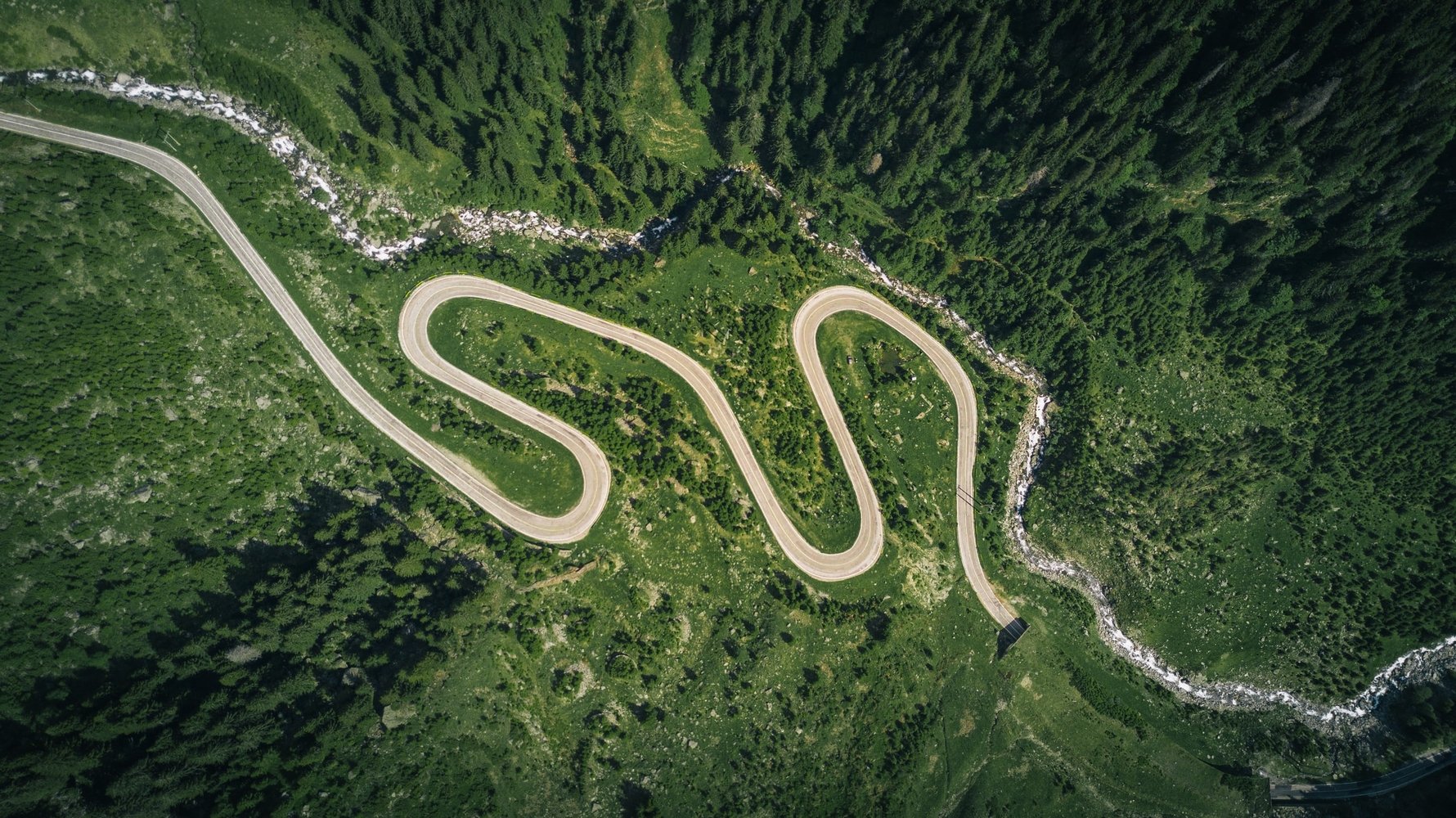
The DN7C officially becomes the Transfagarasan at the little village of Albestii de Arges, 6km north of Curtea de Arges. The road climbs steadily from here, and by the time you reach Capatenii Pamantului - the last village before the serious hairpins begin - the scenery is already stunning, with the road clinging in places to the cliffs as it passes through a wonderful natural gorge.Capatenii Pamantului (which rather fittingly translates, by the way, as The Ends of the Earth) is home to the ruins of the real Dracula Castle, Poienari, (real in the sense that Vlad Dracul actually lived here for a time. Bran Castle - often marketed as Dracula’s Lair, was never Vlad’s home). You will see the impressive castle high to your left as you approach: you can visit the ruins, but doing so involves a climb up more than 1500 very, very steep steps. It is not for the faint of heart. At the foot of the climb there is a pension, the Pensiunea La Cetate.
During the summer there are boat trips on the lake. Lasting 30 minutes they cost 10 lei per person. Departure times are ad hoc depending on how many visitors there are, but during July and August - especially at weekends - you should never have to wait too long. A couple of hundred metres further along the road there is a hotel, the elegant Hotel Posada Vidraru.
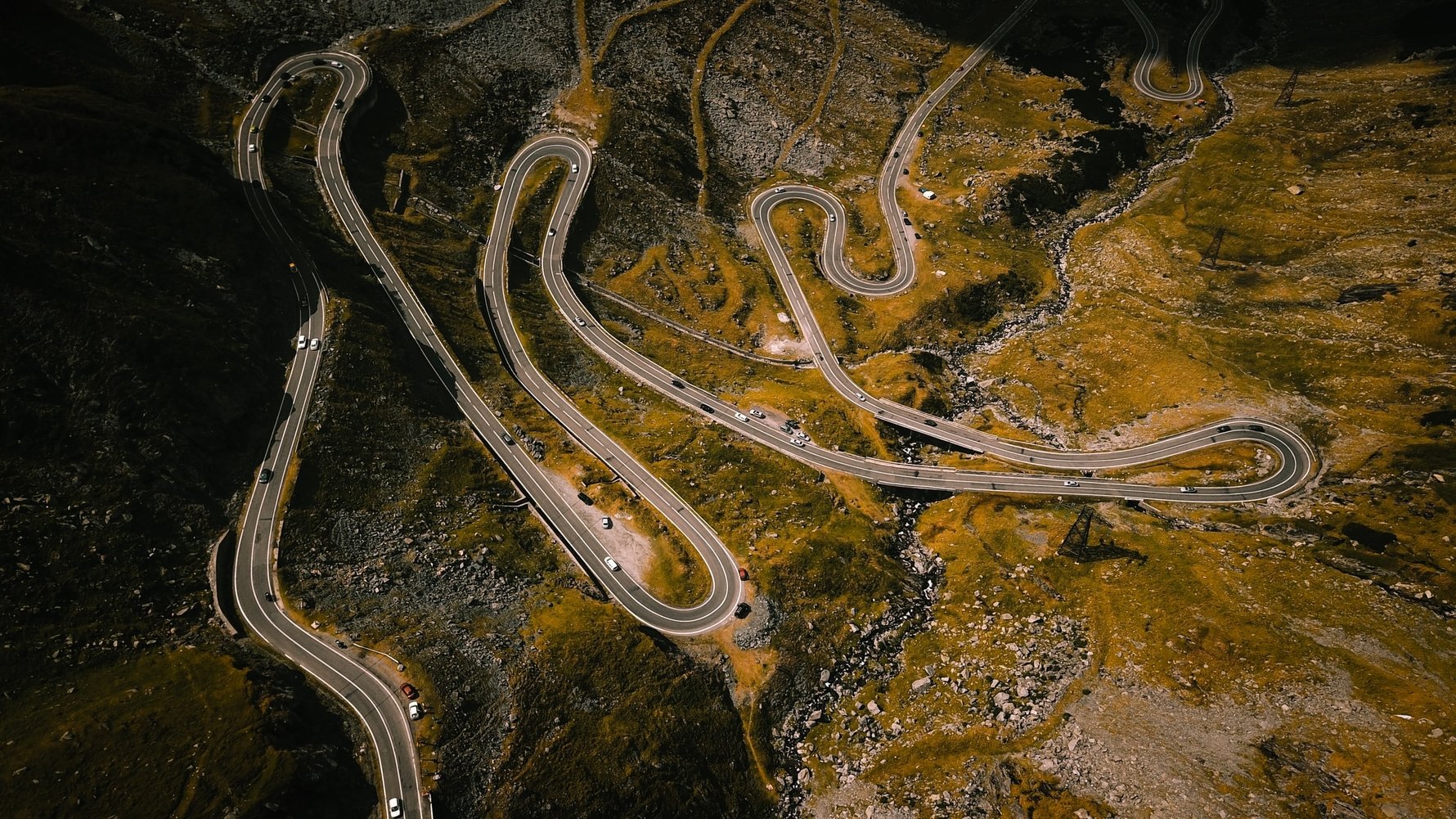
The Transfagarasan then follows the outline of the lake (and another hotel overlooking the lake, the Valea cu Pesti), the water often visible through the trees on your left. The valley then gets gradually steeper, before climbing sharply, up to its highest point: the 890m long Capra Tunnel, at an altitude of 2042m. (This fact means that the Transfagarasan is not actually the highest road in Romania: the Transalpina further west reaches a maximum altitude of 2145m). Note that there is another hotel along the way, the Conacul Ursului, just before the start of the hairpins on the southern side: its good value restaurant is a decent place to stop for food, as it is usually less crowded than the places at the top.
The Top of the Transfagarasan: Balea Lac
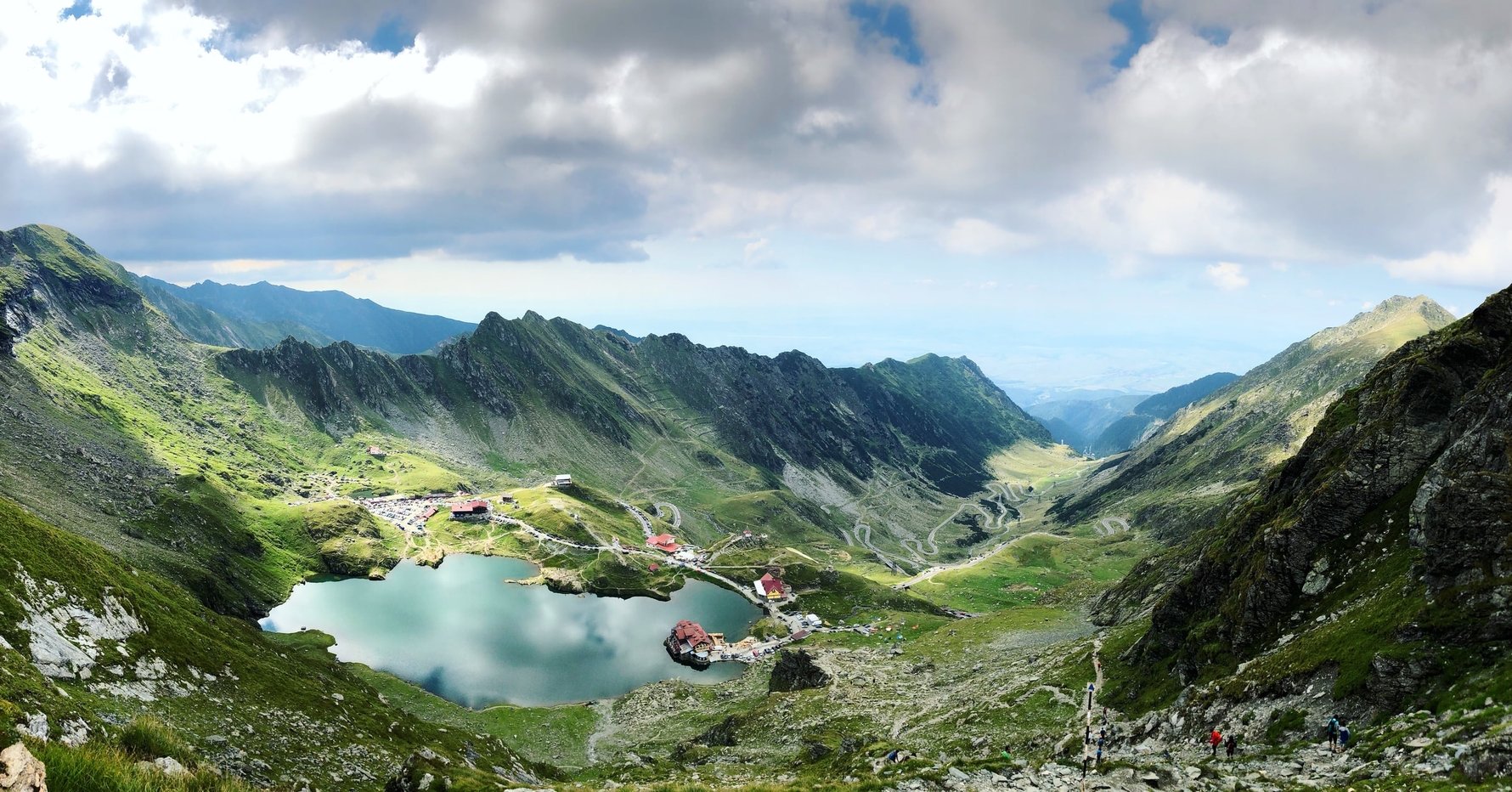
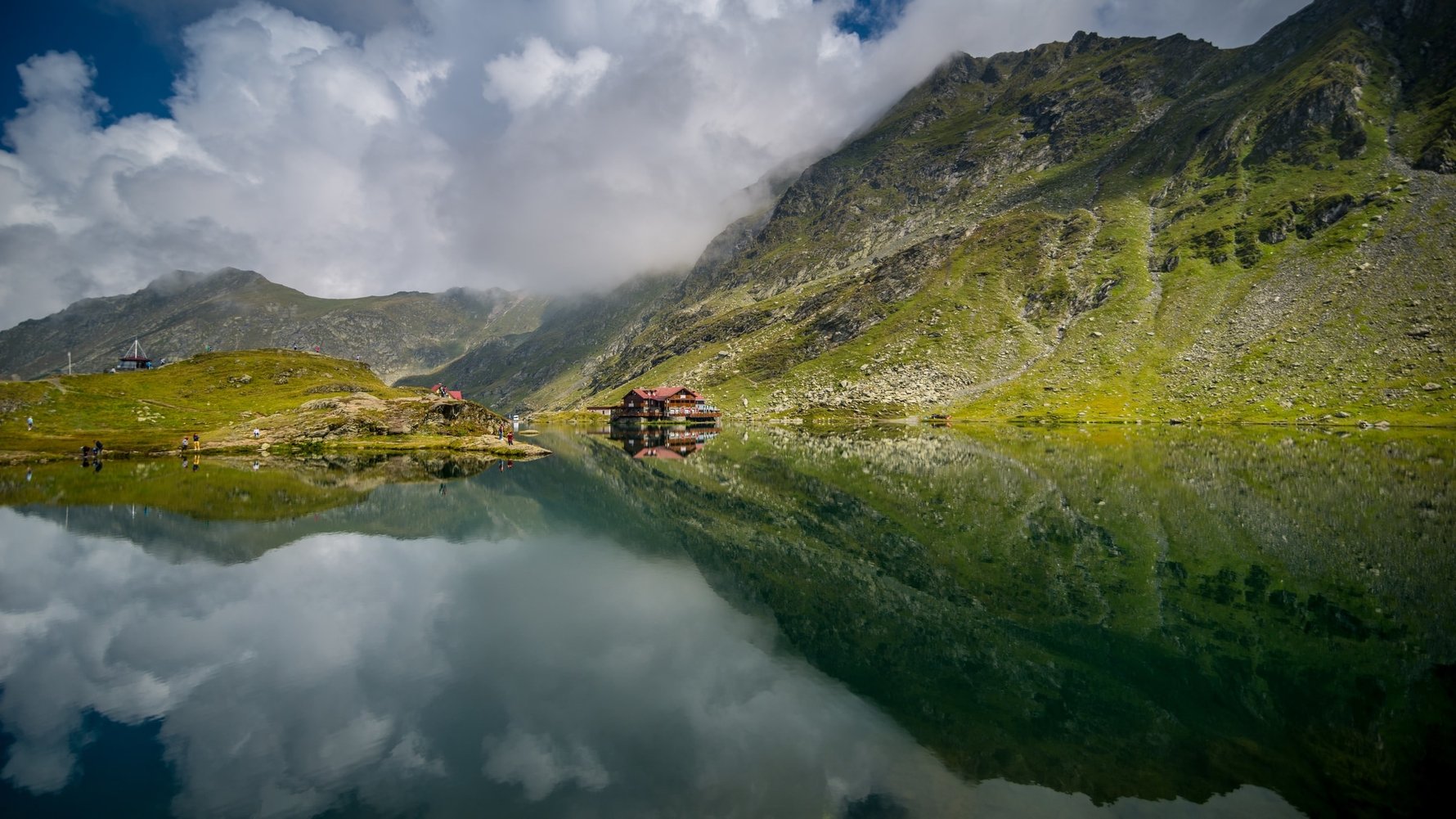
As you exit the Capra Tunnel the landscape changes starkly, and quite often the weather with it. Whereas the southern side is a relatively gentle climb, made in the most part through the trees along the side of Lake Vidraru, the scene on the northern side is little short of spectacular: a wide open valley with the road serpentining its way down visible as far as the eye can see. This is the classic picture postcard view of the Transfagarasan, and one which moved Jeremy Clarkson to call it ‘every great corner from every great race track lined up one after the other.’At Balea Lac, just below the tunnel, there are two comfortable pensions (Cabana Paltinu and Cabana Balea Lac) and - in winter - an ice hotel if you want to stay up here the night. The cabins also have good - if not cheap - restaurants. See balealac.ro for more information. In winter there is a cable car which provides access to the cabins and ice hotel from Balea Cascada, as the road is closed.
There is also a rather tacky, touristy market next to the large car park at the exit of the tunnel, selling all sorts of rubbish as well as a few decent treats (such as kürtős kalács).
The Fagaras Mountains are extremely popular with hikers: this is the some of the best hiking terrain in Europe. There are tens of well-marked routes criss-crossing the mountains, which are also dotted by mountain huts offering basic food and accommodation. At Balea Lac you can pick up a number of routes, including one which leads down to Balea Cascada, and one which goes up to Negoiu Peak: at 2525m the tallest mountain in the Fagaras range and the second tallest in Romania. Do not attempt any hiking in the Fagaras unless you are well equipped for bad weather, have decent boots and have a good map: the Fagaras mountains are not for the casual walker. This brilliant website shows all of the marked trails in the Fagaras.
Down to Cartisoara
From Balea Lac the 25km drive down the most spectacular part of the Transfagarasan to Cartisoara takes around 45 minutes, although at weekends - when half of Romania can often appear to turn up - it can take double that. As such, we advise anyone planning to drive the Transfagarasan to do so during the week, avoided Saturday and Sunday altogether. There are very few places to stop and take photos (and you will see most people trying to do so by hanging out of their car windows). There are a number of small memorials to those who worked (and died) on the road, but the first main stopping point on the way down is Balea Cascada (the Balea Waterfall). A cable car from here runs back up to Balea Lac, and during the winter (when the road beyond this point is closed) is the only way up. The cable car usually runs during the summer too.At Cartisoara (where the Badea Cartan Museum, featuring a collection of painted glass icons and an old shepherd’s house complete with thatched roof is well worth a stop) those of you on a day trip should turn left onto the DN1 and head for Avrig and the DN7, which will get you back to Pitesti and the A1 in around two hours. If you are in less of a hurry head for Sibiu, Transylvania’s most fabulous city, just 25km beyond Avrig: make sure you pick up a copy of Sibiu In Your Pocket to help you make the best of your time here.