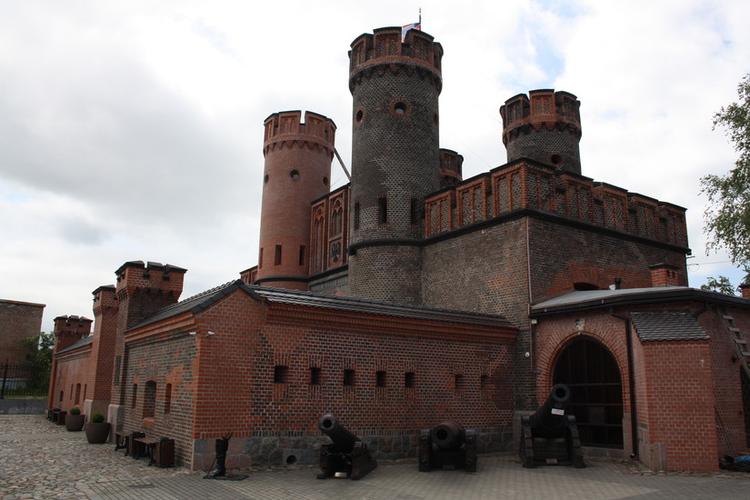
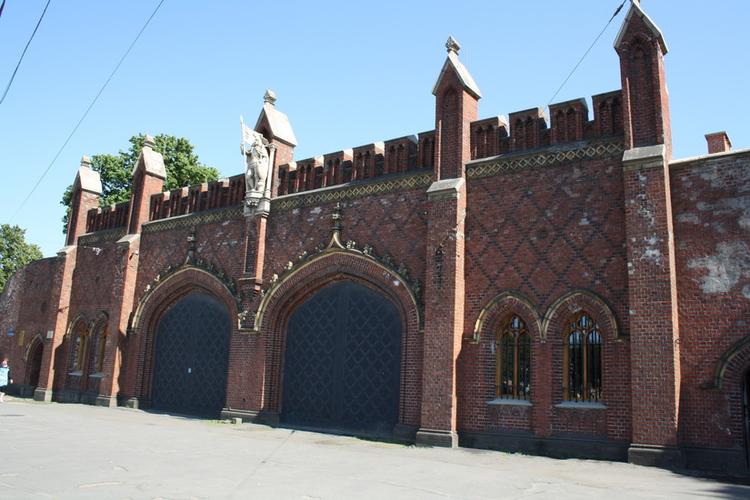
An original wooden gate with accompanying moat was built here, on the road from Königsberg to Brandenburg Castle, in 1657 but was upgraded to brick around a century later, the new structure housing a small defensive garrison and storage facilities.
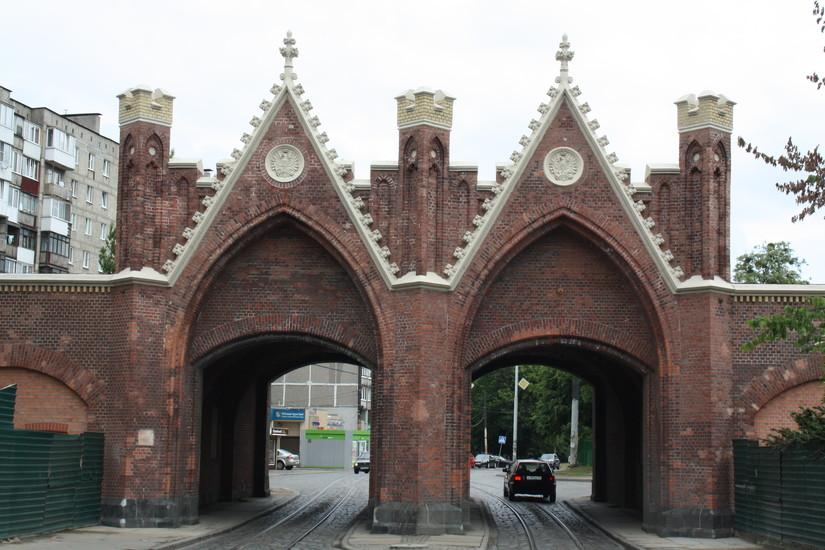
In the 1840s, the tiring brickwork was renovated and the gate decorated as you see it today with sandstone flowers, medallions and coats of arms. Two sculpted bust portraits were also inlaid on the inner side of the gate – on the left the Prussian Minister of War, Field Marshal Hermann von Boyen (1771-1848), and on the right Lieutenant-General Ernst von Aster (1778-1855), the man responsible for designing and organising construction of most of the city's other remaining gates and fortifications.
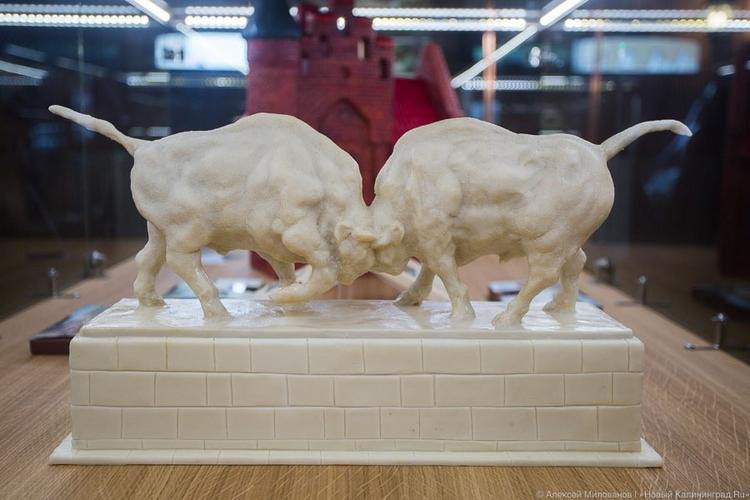
Interestingly, with traffic passing under the two arches (one lane in either direction), it is the only remaining gate still serving its original purpose. Today you can see inside the gate by paying a visit to the Museum of Marzipan which is housed in one part.
In the 1840s, the tiring brickwork was renovated and the gate decorated as you see it today with sandstone flowers, medallions and coats of arms. Two sculpted bust portraits were also inlaid on the inner side of the gate – on the left the Prussian Minister of War, Field Marshal Hermann von Boyen (1771-1848), and on the right Lieutenant-General Ernst von Aster (1778-1855), the man responsible for designing and organising construction of most of the city's other remaining gates and fortifications.
Interestingly, with traffic passing under the two arches (one lane in either direction), it is the only remaining gate still serving its original purpose. Today you can see inside the gate by paying a visit to the Museum of Marzipan which is housed in one part.