Curaçao is the largest of the ABC islands and the most complex. It has a UNESCO-listed capital of genuine distinction, a coastline of 38 beaches ranging from sheltered coves to dramatic limestone cliffs, a Jewish community whose roots on the island predate the American Declaration of Independence by 125 years, and a colonial history as a major hub of the transatlantic slave trade that its museums address with more honesty than most Caribbean islands manage. It is also the island from which Blue Curaçao liqueur originates, which is not the most important fact about the place but is the one most people arrive knowing.
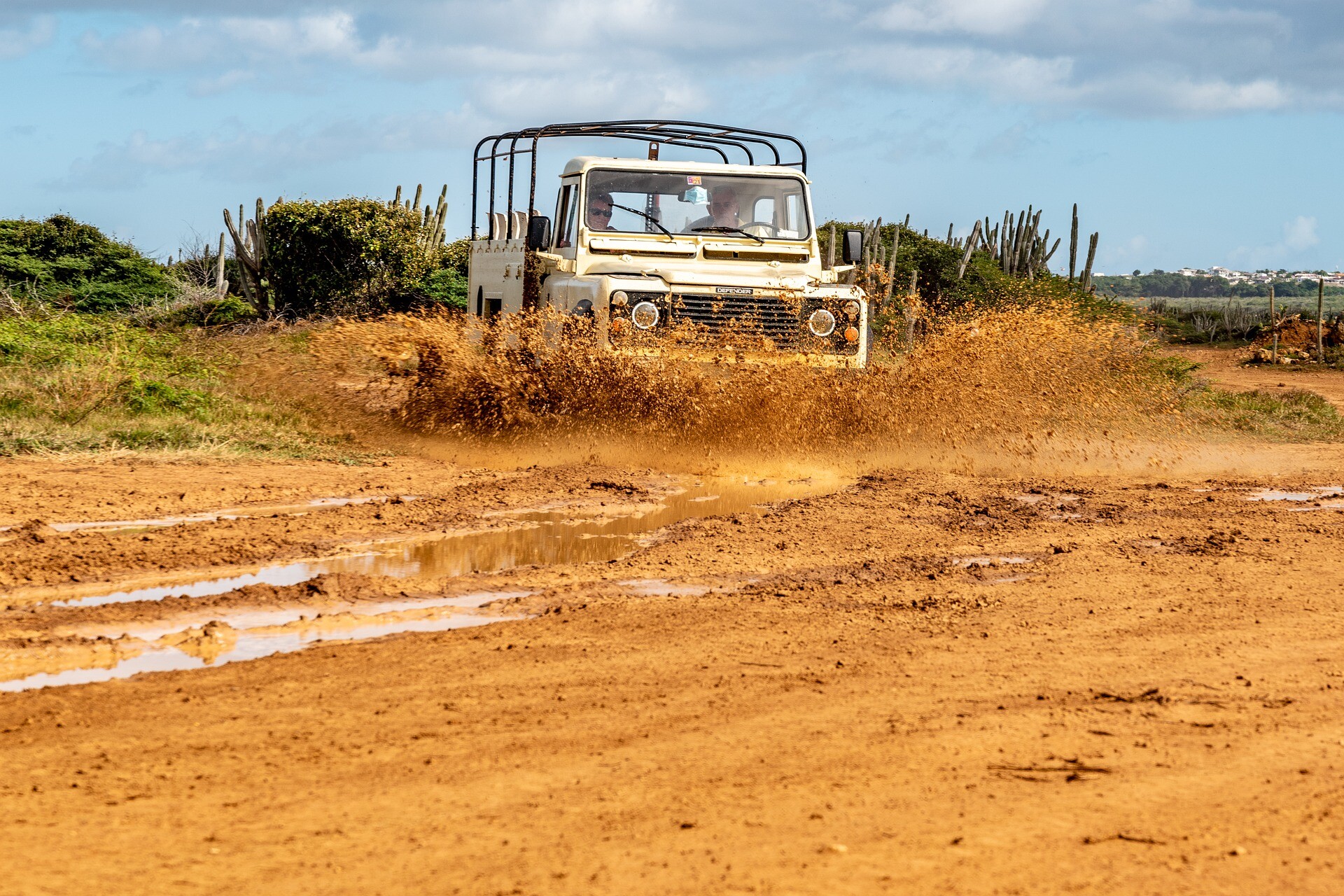
The island became a country within the Kingdom of the Netherlands on 10 October 2010 – a date Curaçaoans refer to simply as 10-10-10 – having previously been part of the Netherlands Antilles. It sits about 65 kilometres north of Venezuela and, like Aruba and Bonaire, lies outside the Caribbean hurricane belt. Willemstad, the capital, is where most of the cultural weight is concentrated, but the island rewards driving: the west and northwest hold the best beaches and the two main national parks, and the journey between them and the capital passes through a landscape of dry hills, giant cacti and restored plantation houses that gives a useful sense of what most of the island actually looks like when it is not dressed up for tourists.
Willemstad has been a UNESCO World Heritage Site since 1997 and earns the designation through the quality of its colonial urban fabric rather than any single monument. The city is divided by St Anna Bay into two historic districts – Punda to the east and Otrobanda (literally “the other side”) to the west – connected by the Queen Emma Bridge, a floating pedestrian bridge built in 1888 and supported on 16 pontoon boats, which swings open laterally to allow ships into the harbour. Watching it open is one of those small spectacles that rewards patience; the bridge disconnects from the eastern bank, rotates out across the water until it is perpendicular to the shore, and then holds there while container ships of improbable size pass through the gap. It is called the Swinging Old Lady, which is either affectionate or rude depending on your reading of it.
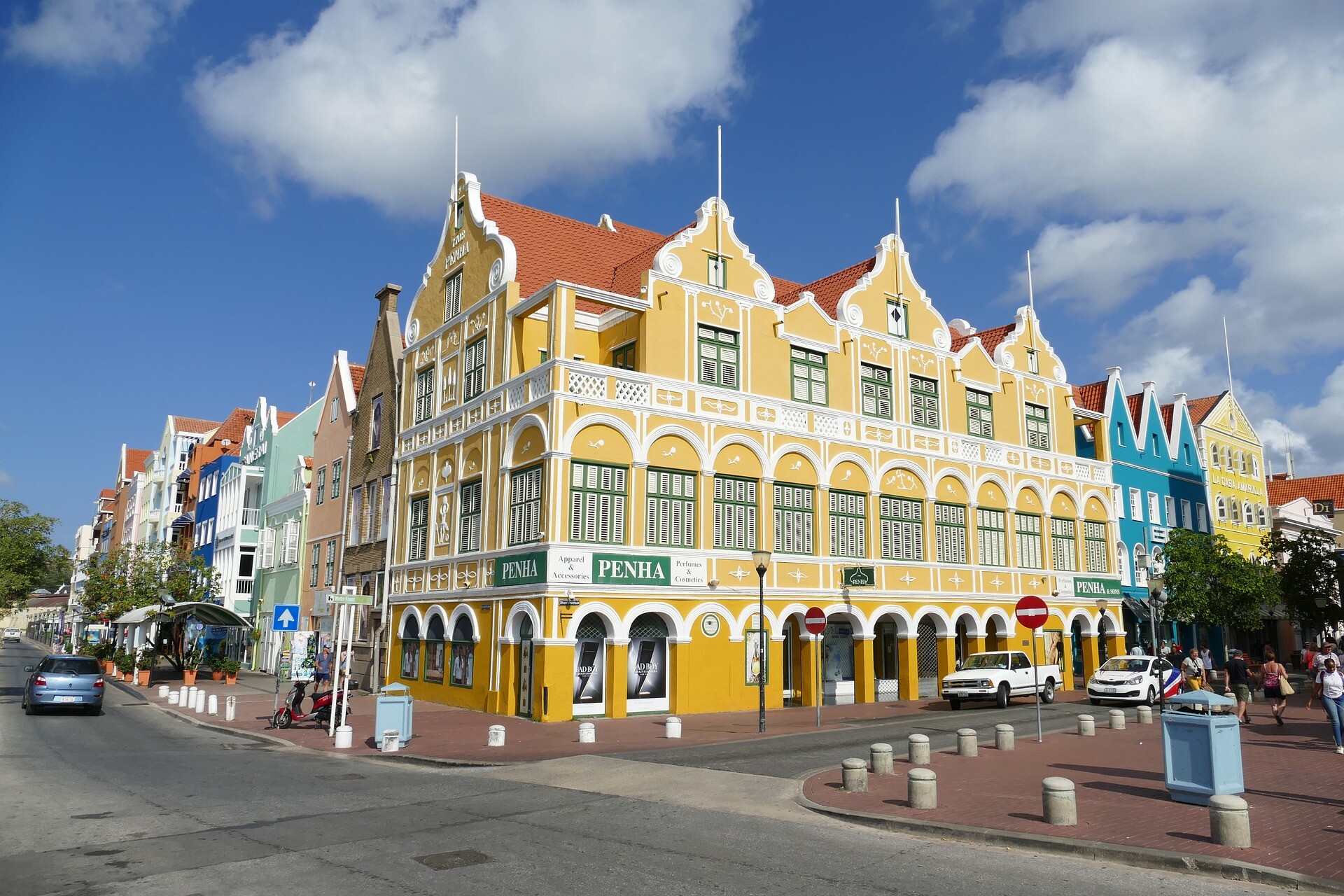
The most photographed strip is the Handelskade in Punda – a row of tall, narrow Dutch colonial buildings in pink, yellow and terracotta facing the waterfront, their gabled rooflines reflected in the harbour. A local legend holds that the governor in 1817 imposed the rule that houses could not be painted white after suffering headaches from the glare; the story is probably apocryphal, but the pastel palette is real and striking enough to deserve a better origin. Across the bridge in Otrobanda, the Kura Hulanda Museum – housed in six restored 18th-century buildings on the site of a former slave transit compound – is the most important museum on the island.
Its collections cover West African empires, the mechanics of the transatlantic slave trade, and the Middle Passage in specific, confronting detail; one exhibit reconstructs the interior of a slave ship hold at scale, which is as difficult to stand in as it sounds. The museum was founded by a Dutch businessman in 1999 and remains the most comprehensive examination of the slave trade in the Dutch Caribbean. The Pietermaai district, a five-minute walk east of Punda, is where the city’s restaurant and nightlife scene is concentrated – restored 19th-century merchant houses converted into boutique hotels, bars and galleries, with a Thursday night outdoor market and live music event called Punda Vibes that runs from 6pm to 10pm and is exactly as enjoyable as it sounds.
Location: The historic centre of the capital. The Handelskade and Queen Emma Bridge are immediately visible from the cruise terminal; the Kura Hulanda Museum is in Otrobanda, a ten-minute walk across the bridge. Pietermaai is a five-minute walk east of Punda along the waterfront.
Best time to visit: Early morning for the Handelskade before cruise passengers arrive; evenings for Pietermaai. Thursday evenings for Punda Vibes. Check the cruise ship schedule and avoid the central shopping streets on days when multiple large ships are docked simultaneously.
What to budget: Walking the city is free. Kura Hulanda Museum entry is around US$12 for adults. Most of the city’s churches and Fort Amsterdam charge small fees; the floating market on the Punda waterfront costs nothing to walk through.
Good to know: The Handelskade buildings look best from the Otrobanda side of the bridge, which is also where you get the classic photograph. The Queen Emma Bridge has a free pedestrian ferry running whenever the bridge is open for shipping, so you are never stranded on one side waiting.
Mikvé Israel-Emanuel Synagogue
The Mikvé Israel-Emanuel Synagogue in Punda – known locally as the Snoa, from the old Portuguese-Ladino word esnoga – was consecrated in 1732 and is the oldest synagogue in continuous use in the Americas. The congregation it serves is older still: Mikvé Israel, meaning the Hope of Israel, was founded in 1651 by Sephardic Jewish families from the Netherlands and Brazil, themselves descendants of Jews who had fled the Spanish Inquisition in the previous century and found sanctuary in the Dutch Republic. The Dutch West India Company, which had taken control of Curaçao in 1634, was willing to accommodate Jewish settlers in part because many Dutch Jews were founding shareholders of the Company itself and had proved commercially indispensable in Amsterdam. Twelve Jewish families arrived on the island in 1651 and were assigned agricultural land. Agriculture proved unsuitable; trade and finance did not, and the community grew to become one of the most prosperous and influential in the Caribbean.
The synagogue is tucked into a quiet street behind the commercial centre of Punda, its exterior inconspicuous, its interior extraordinary. Rows of mahogany pews, four towering brass chandeliers, carved woodwork and the carved bimah at the centre – all dating from the 18th century. And the floor, which is covered entirely in sand. The sand floor is the feature every visitor asks about, and its origin is uncertain: one explanation is that it commemorates the desert wanderings of the biblical Israelites; another, and the one with more emotional resonance, is that it echoes the practice of secret Jewish worship during the Inquisition, when synagogue floors were covered in sand to muffle the sound of footsteps from outsiders. A museum attached to the synagogue covers the full history of the Jewish community on the island. The synagogue is an active place of worship; services are held on Friday evenings and Saturday mornings, and the building is open to visitors on weekdays.
Location: Hanchi di Snoa 29, Punda, a short walk from the Handelskade and the Queen Emma Bridge.
Best time to visit: Weekday mornings when it is quietest and best lit. The building is closed on the Sabbath and Jewish holidays; check the website before visiting.
What to budget: Entry to the synagogue and museum costs around US$12 for adults. A valid ID is required for entry.
Good to know: The adjacent Jewish Cultural Historical Museum houses Torah scrolls brought to Curaçao by the first Jewish settlers, along with silverware, religious objects and a collection of grave markers from the Beit Chaim cemetery – the oldest Jewish burial ground in continuous use in the Western Hemisphere, located a short drive from Willemstad.
Shete Boka National Park
The northern coast of Curaçao looks nothing like the south. Where the south-coast beaches are sheltered, calm and backed by gentle hills, the north coast is all limestone cliffs, crashing Atlantic surf and a wind that arrives from Venezuela with nothing to slow it down. Shete Boka National Park – Shete Boka meaning seven inlets in Papiamentu, though the park actually has around ten – was established in 1994 to protect this coastline and the sea turtle nesting sites within it. It covers roughly ten kilometres of the island’s northwest shore, and it is the Curaçao that most tourists on south-coast beach holidays never see.
The entry point is Boka Tabla, where a staircase cut into the limestone leads down into the mouth of an underground cavern. The sea fills it from below on each wave; you can sit on a ledge at the very edge and watch the water surge in, which is both impressive and, during strong swell, genuinely alarming. Above the cave, a clifftop walk leads along the coast past a succession of inlets to Boka Pistol, where incoming waves are compressed through a narrow gap in the rock with enough force to shoot seawater skyward like a geyser, accompanied by a sound like a cannon shot. The name is not an exaggeration. In between, the limestone plateau is flat, exposed and occupied largely by lizards, the occasional iguana and a persistent wind that makes the heat manageable. Three species of sea turtle nest on the park’s pocket beaches – hawksbill, green and leatherback – with the nesting season running from May to December. There is almost no shade anywhere in the park, which is something to plan around rather than discover.
Location: Northwestern Curaçao, about 45 minutes by car from Willemstad. Immediately adjacent to Christoffel National Park; both parks can be visited in the same day.
Best time to visit: Early morning before the heat builds. The park opens at 9am and closes at 5pm; no entry after 4pm. Check the park website for current conditions and any closures.
What to budget: Park entry is around US$15 per person. A map of the inlets and hiking trails is available at the entrance; it is worth buying.
Good to know: Wear sturdy closed shoes rather than sandals – the limestone surface is sharp and uneven. Bring at least two litres of water per person. The hiking trails take around an hour each; most of the key inlets can also be reached by car on a rough dirt road if the heat or terrain is a concern.
Christoffelberg and Christoffel National Park
Christoffel National Park covers the northwestern corner of Curaçao and takes its name from the island’s highest point: Christoffelberg, 372 metres above sea level, which is not imposing by most standards but is the only genuine mountain on an island that is otherwise thoroughly flat. The park was established on the former Washington and Savonet plantations, and the 19th-century plantation house at Savonet now houses a museum that tells the history of slavery on Curaçao with more directness than is common in the Caribbean. The plantation’s fields were worked by enslaved people from West Africa; the museum documents their lives, the conditions under which they worked and died, and the island’s eventual abolition of slavery in 1863.
The summit hike to Christoffelberg takes between one and two hours each way from the trailhead, rising steeply through dry scrub and cactus forest on a trail that becomes increasingly rocky as it approaches the top. The views from the summit encompass most of the island, the sea in all directions and, on a clear day, the Venezuelan coast to the south. The park does not permit hikers to begin the summit ascent after 10am, which in practice means arriving at the park entrance as close to its 6am opening as possible. It is not an exceptional hike by the standards of serious mountain walking, but in the Caribbean heat and humidity, with minimal shade for the upper section, it requires more preparation than it looks. The park also contains the Savonet Museum, several other hiking trails of varying difficulty, a population of white-tailed deer, and some of the more impressive cactus formations on the island.
Location: Northwestern Curaçao, around 45 minutes by car from Willemstad. The park entrance and visitor centre are well-signposted from the main road west.
Best time to visit: The summit hike must be started before 10am – earlier is better. The park opens at 6am. Arrive early, bring substantial water and sunscreen, and allow the full morning for the summit and return.
What to budget: Park entry including the summit hike costs around US$17 per person. The Savonet Museum is included in the entry fee.
Good to know: Combining Christoffel and Shete Boka in a single day is feasible – visit Christoffelberg first in the cool of the morning, then drive to Shete Boka for the afternoon. Both parks are immediately adjacent and share the same general area of the island.
Landhuis Chobolobo and the Blue Curaçao Distillery
Almost everyone has encountered Blue Curaçao in a cocktail. Almost nobody knows where it comes from or what it actually is. Landhuis Chobolobo, a 19th-century plantation house in the Saliña district a few minutes’ drive east of Willemstad, is where Senior & Co have been producing the genuine article since 1896 – a liqueur made from the dried peel of the laraha orange, a bitter descendant of the Valencia oranges brought to the island by the Spanish around 1500, which failed to thrive in Curaçao’s arid climate and over generations evolved into something unrelated to any citrus fruit grown elsewhere. The laraha is inedible when fresh but its dried peel, once soaked in alcohol and combined with sugar, produces an oil whose flavour is sharp, bitter and distinctively orange. The Senior family invented the recipe and has been making it in the same copper still – now over 120 years old – ever since.
The blue colour, incidentally, is not from the laraha. The original liqueur is clear; the blue, orange, green and red variants are the same base product tinted with different food colouring. They are all the same flavour. The tour guides at Chobolobo enjoy telling visitors this, watching the realisation spread through the group that the distinctive electric blue of a Blue Lagoon cocktail is entirely artificial and tells you nothing whatsoever about the taste. The plantation house is free to visit; a guided tour including tasting costs a small fee. The copper stills, the drying laraha peels in the courtyard, the bottles lining the production room and the cosy bar in the former mansion’s courtyard make it a genuinely satisfying hour, rather than a tourist trap dressed up as authenticity. It is also considerably cheaper than most distillery tours of comparable quality.
Location: Landhuis Chobolobo, Saliña, Willemstad. Around ten minutes by car east of the historic centre; signposted from the main road.
Best time to visit: Weekday mornings when it is coolest in the courtyard and the tour groups are smaller. The distillery is open Monday to Friday from 8am to 5pm; check the website for weekend hours.
What to budget: Free entry. Guided tours with tasting cost around US$12–15 per person and include a cocktail or non-alcoholic drink.
Good to know: Senior & Co is the only producer authorised to use the name Genuine Curaçao Liqueur, and the only one that uses laraha from the island. The dozens of other brands labelled “Curaçao liqueur” sold around the world have no connection to the island and are typically just triple sec with food colouring.
The Western Beaches
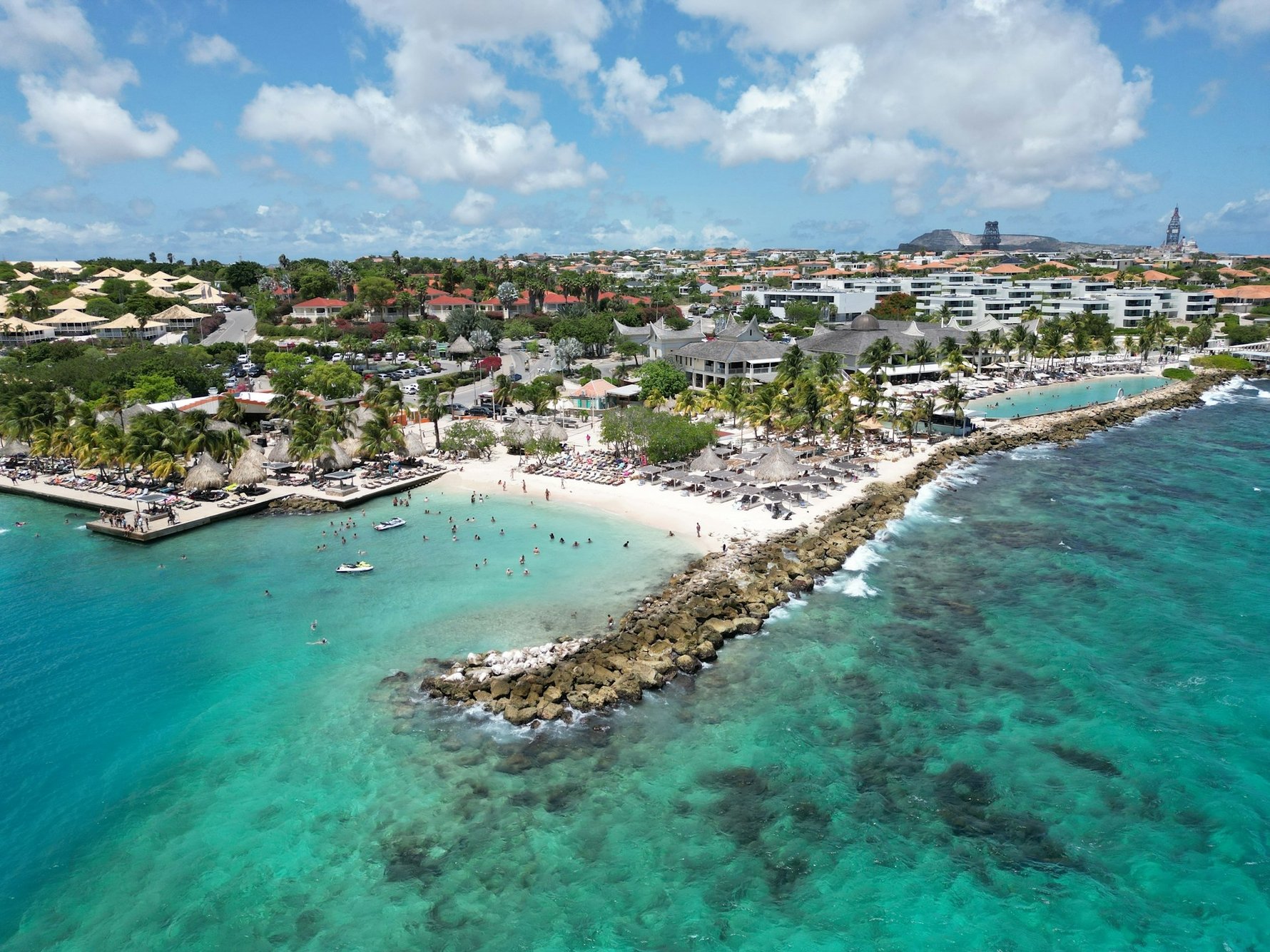
Curaçao has 38 beaches. Most of the resort development is on the south coast close to Willemstad; the beaches that reward the drive to the northwest are a different proposition. The three worth knowing about in detail are concentrated in the same general area of the island, which makes combining them in a single day straightforward.
Playa Kenepa – also known as Knip Beach – is the most consistently photographed beach on the island: a horseshoe-shaped bay with white sand and turquoise water of the kind that photography cannot quite adequately render, backed by steep limestone hills and fronted by a reef that makes snorkelling productive. It is a public beach with no entry fee, and its relative distance from Willemstad keeps it quieter than the south-coast options most of the year. Playa Lagun, a small and sheltered cove a short drive further north, is the best place on the island for snorkelling with sea turtles: a resident population of hawksbill turtles feeds on the sponges in the rocky outcrops on both sides of the bay, and sightings on calm days are close to guaranteed. The cove is narrow enough that the turtles surface to breathe within a few metres of snorkellers who wait quietly. Playa Kalki, at the far northwestern tip of the island near Westpunt, sits at the base of a dramatic cliff and is the best diving entry point in the area; Playa Forti restaurant on the clifftop above it is where local thrill-seekers jump into the sea from a platform roughly eight metres above the water, and where the view of the bay and the Venezuelan coastline on a clear afternoon is one of the better sunsets on the island.
Location: Northwestern Curaçao, around 45–60 minutes by car from Willemstad. A rental car is necessary; public transport does not reach this part of the island reliably.
Best time to visit: Weekday mornings for all three beaches. Playa Kenepa can get crowded on weekends with local families, which has its own appeal. Playa Lagun is best for turtle snorkelling in the morning on calm days.
What to budget: Playa Kenepa is free. Playa Lagun and Playa Kalki are free to access. Snorkel gear rental is available at Playa Lagun from a small shack near the beach, at reasonable rates. Playa Forti restaurant serves food and cold drinks.
Good to know: Do not feed the sea turtles at Playa Lagun – feeding disrupts their natural behaviour and several operators now run snorkel trips specifically targeting turtle interactions, some of which involve feeding. Independent snorkelling is a better option: arrive early, wade in quietly, and wait. The turtles come up regardless.