

In March 1945, with the city encircled by Soviet forces, defending German general Otto Lasch ordered the digging and preparation of a 7-metre-deep command bunker not far from the smouldering ruins of Königsberg Castle (where the House of the Soviets now stands). Following the final massive 4-day Soviet onslaught, it was here in Room 13 shortly before midnight on 9th April 1945 that Lasch went directly against Hitler's orders to “fight to the last soldier” and signed a treaty of surrender.
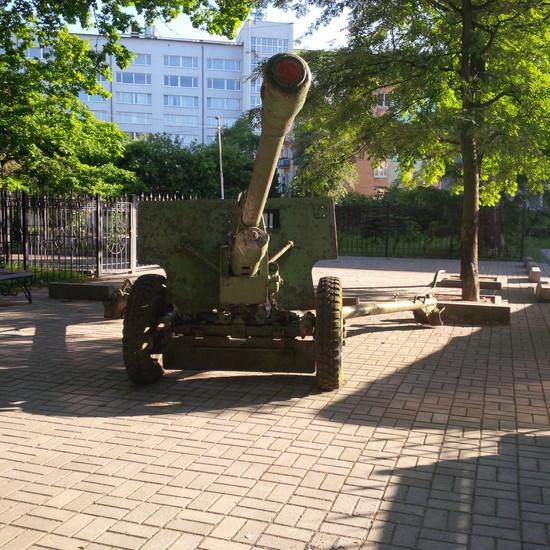
The bunker is now home to the Blindage Museum (also referred to as the Bunker Museum) and although the structure itself is of little interest, consisting of one relatively short corridor with 15 tiny cells, it provides some decent insight into the battle for Königsberg by means of photos, models and room mock-ups. Note that the bunker today sits surrounded by residential blocks and you won't see any signposting or arrows, so keep your eyes peeled for the small anti-aircraft gun fenced off under some trees which sits by the entrance.
The bunker is now home to the Blindage Museum (also referred to as the Bunker Museum) and although the structure itself is of little interest, consisting of one relatively short corridor with 15 tiny cells, it provides some decent insight into the battle for Königsberg by means of photos, models and room mock-ups. Note that the bunker today sits surrounded by residential blocks and you won't see any signposting or arrows, so keep your eyes peeled for the small anti-aircraft gun fenced off under some trees which sits by the entrance.