Chef Karl Wilder: Food Tours, East Berlin and a Time-Travelling Detective
Edited by
Yuri Barron
20 minutes
Berlin is on the shortlist (short being relative) of my favourite places in the world, and it's also one that I try to visit at least once a year. In recent years this is usually for a week or two in mid-September, and one of the highlights is always meeting up with my old buddy Karl Wilder – aka Chef Karl – and his little buddy Milou.
This usually involves drinks at a local Friedrichshain institution, and, if I'm lucky, dinner at Karl's place. This time it involved both, and for the latter Karl invited me to join his new food tour, which ended up being an incredibly delicious, politically incorrect and exceptionally memorable night with Karl, Milou and his other guests – a trio of pediatric nephrologists from the States and an adorable Norwegian writer/poetress (who hasn't accepted my repeated marriage proposals, but also hasn't given a definitive 'no' either).
To pay him back for his hospitality, I offered to return a few days later and do an interview with him for Berlin In Your Pocket. This is that interview (only finally being posted some eight months later, but Karl's stories are timeless, and we've updated the details about his current and upcoming tours, as things change rapidly these days).
Yuri: Let's start with a bit of background. How did you end up becoming a chef?
I am from the American South, and I learned to cook in self-defence. My mother was one of the best bakers on earth, but she was not a cook or a chef, and she didn't like to do it. She liked to open cans and be done with the job. So I started cooking for the family when I was a kid.
I was working as an actor for a while, but then I had the luxury of money and time when I was in California, and I went to culinary school. Then I went on what was supposed to be a short vacation in Italy, where I ended up staying for three years, being passed from restaurant to restaurant. I had no previous experience in Italian cuisine – it was entirely learning on the job. I was fortunate enough to be the only American chef ever selected to cater the Italian Trade Commission dinners in New York.
But by that point, I'd been all over Italy. I started in Venice, then Verona, Padua, Parma, Perugia, Rome. It was word of mouth, all letters of introduction: we have a guy, you need somebody, he's good, he can do this – and then you'd get a train ticket and move on to the next place.
Yuri: And what was the next place after Italy?
A very long road. I got my master's degrees in nutrition and biomedical science and was teaching for the National Institute of Sports Medicine when I saw that a country club in New Orleans was for sale. It was this beautiful venue that had been losing money for 26 years. I thought I could turn it around, bought it at a discount, and I did turn it around – very rapidly, as it happened. I won Chef of the Year, which brought a lot of attention. I was catering parties left and right. Then I sold it and moved back to New York.
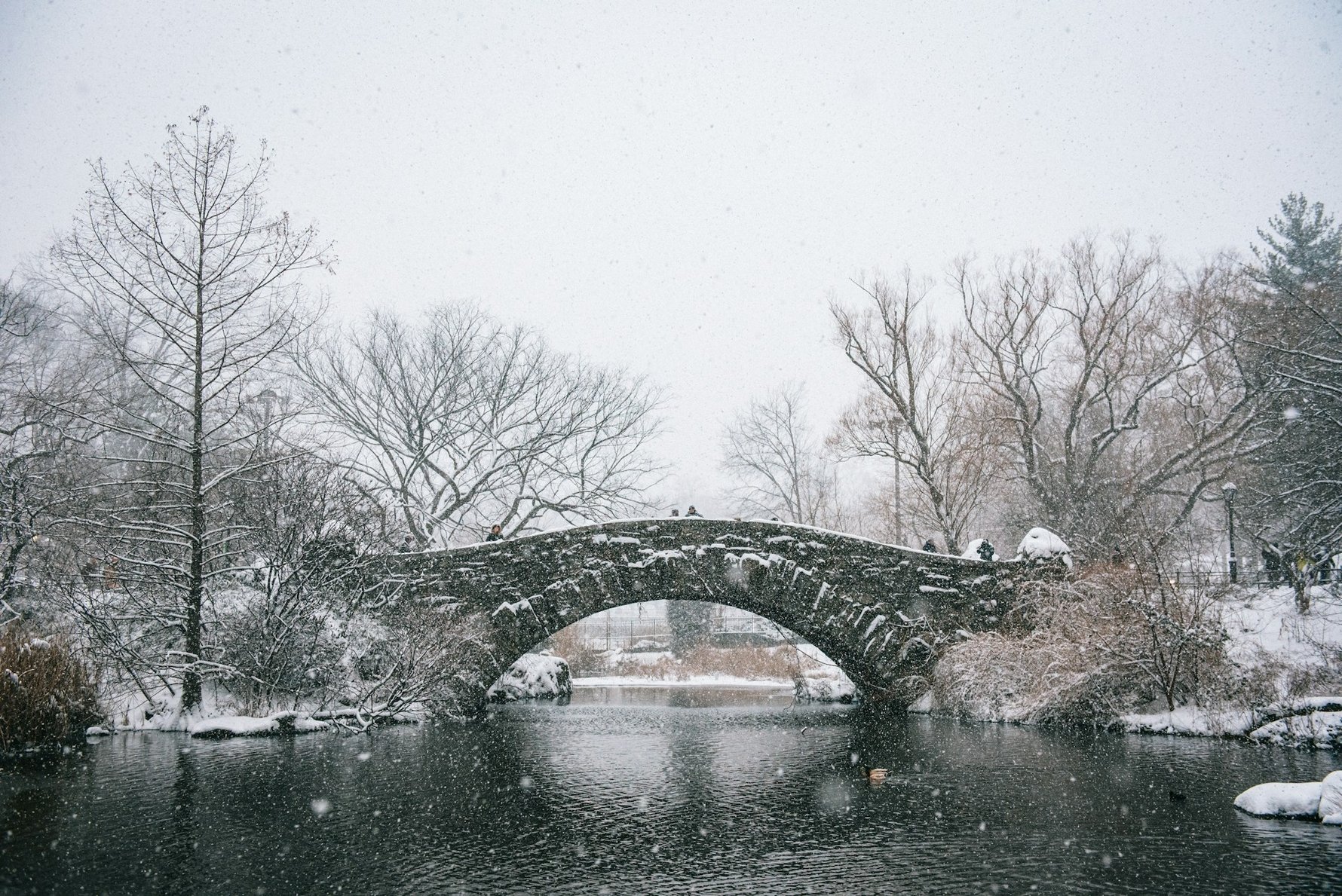
I was taking a walk in Central Park, exhausted from the country club years, when I ran into Barbara Walters. I knew her personal trainer, and it turned out Barbara had a caterer lined up for a Christmas party who had just got sick. She was desperately looking for someone. She told me the food was already sorted – all I had to do was prepare it. Which sounded simple enough, except I had absolutely no idea what the menu had been.
Central Park around Christmas time. That's almost certainly not Barbara Walters on the left there. But it could be.
Yuri: So just your typical everyday walk in the park, eh? How did the Christmas party go?
All this seafood showed up and this gorgeous rice, so I turned it into demitasses of gumbo, which I thought was a pretty good use of it. And then the sushi chef arrived. He was not entirely happy. [Laughs.] Although he was getting paid and didn't have to work, so he left. I had no idea what the menu was supposed to be, so I just did it my way, which was very different for all of the guests.
I didn't have anything set up at that point. I just showed up at Barbara's apartment on the East Side, did the food, and people started asking me for my card. I said Barbara was welcome to share my number, not wanting to admit I had no business cards because I wasn't really planning on becoming a caterer. That ended up being how I got the moniker "the celebrity caterer in New York."
The fact that I wasn't easily available actually made me more desirable, which is how these things tend to work. At one point someone showed up at my front door, having looked me up in the phone book. That ran from 2003 to 2008, when the economy collapsed and it suddenly looked bad to throw parties. Not that they couldn't afford to, but the cancellations came in a flood.
Yuri: Sounds bad for business in any case. What did you do then?
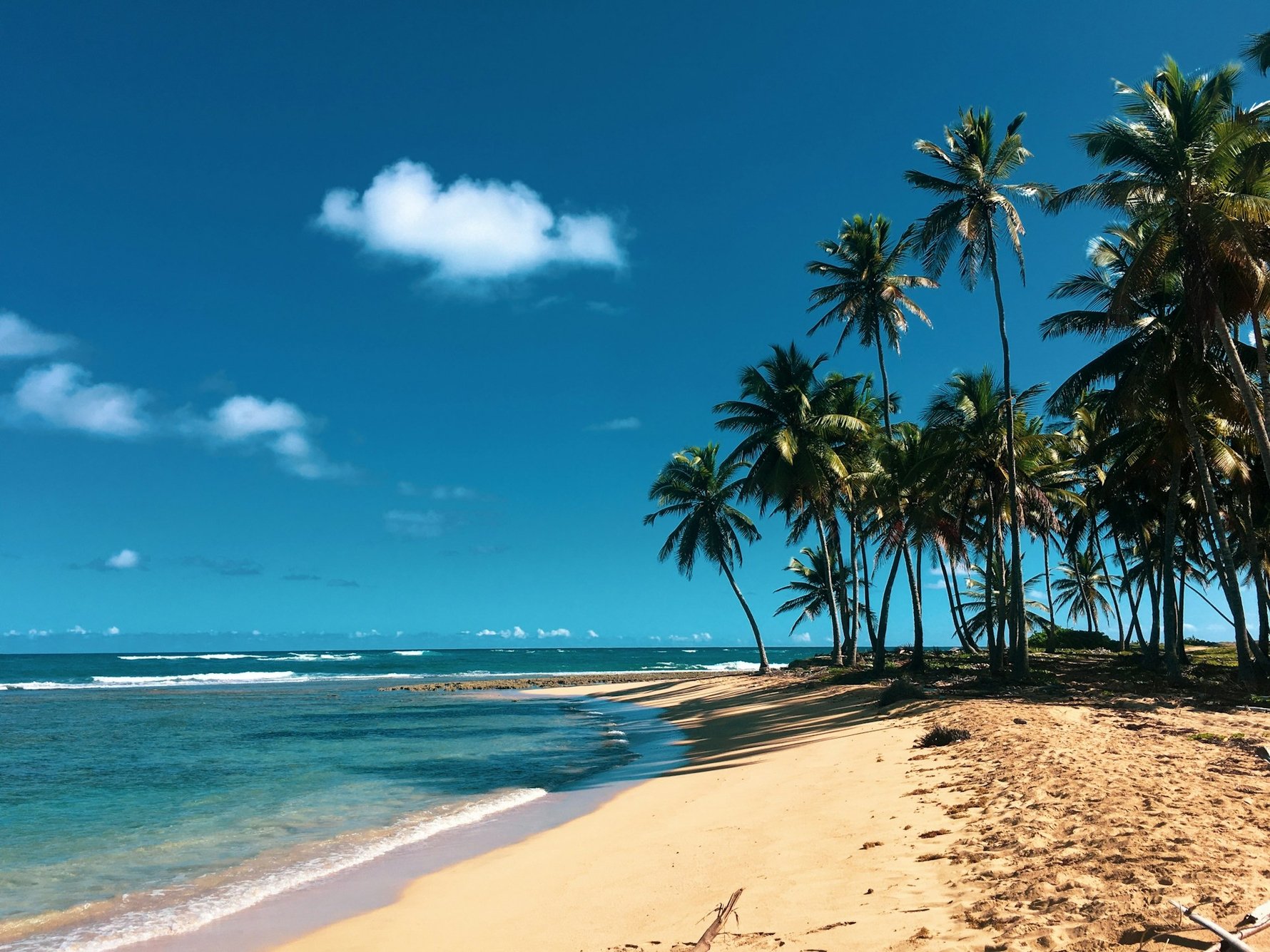
Then I got a call from the Dominican Republic asking if I was available to come work at a resort. I went, dealt with a whole new set of celebrities – some great, some less great; loved Cedric the Entertainer, he's one of my favourites to this day – and then just stayed and lived on the beach for six months because it was so beautiful and my apartment cost $150 a month including food and utilities. And the cats ate for free – they would just go and catch fish. They were giant cats. So it was really an idyllic life.
Stock photo showing just how idyllic life can be if you're living on a beach in the Dominican Republic
Yuri: But you only stayed six months?
Yeah, after that I went to San Francisco, a stint leading a programme teaching diabetics how to cook at Harlem Hospital (which Hurricane Sandy eventually killed off), and then back to New York, where I opened my own Louisiana-style restaurant. I took it seriously – I had the right bread trucked from New Orleans weekly, I wanted the authenticity. It was a big success. And then I made the decision that it wasn't for me to live in the United States anymore. I shut the restaurant down, took two cats and two suitcases, and came to Berlin.
Coming up with the recipe for the Chef's Tours
Yuri: How did the food tours come about?
I was doing a lot of writing work when I got a call from a food tourism company asking if I knew anyone who'd want to do tours in Berlin. I applied myself and took the job for six months as a tour leader. It was a budget-driven operation – everything was about how much you could spend on food, and the rest went to advertising. They essentially buy their guests from Google. That's their entire strategy.
I didn't love it, but I expanded them enormously. After six months, I said I wasn't doing tours anymore – I wanted to expand the company. They were in four cities; I took them to seven, adding San Francisco, New York and New Orleans, all three of which were strong sellers. Eventually, they put me in charge of the expansion, which I continued until the lockdowns.
After the lockdowns, I went to work for Eating Europe, running tours in Paris – a Julia Child tour, a wine tour, and evening tours. All five-star reviews. They've since closed most of those and put up generic tours. Make of that what you will. I worked for them until a better offer came along, which they then defaulted on. And then PJ called me.
Chef PJ on the right, leading one of his Paris food tours
Yuri: Who's PJ?
PJ is a real French chef who looks, acts and talks like a real French chef. He worked with me at two previous companies, and guests loved him – everybody wanted to be on his tour. He called me after I left Eating Europe and said: Start a company. That is how Chef Tours began. One phone call, about fourteen months ago. We're now opening our fifth city.
Yuri: Your Berlin experience is described as a culinary journey rather than a food tour per se. What's the distinction?
The original title was "tour at 6:30, dinner at 8:00." The resellers wouldn't approve that. So we went with Chef Karl's Berlin: Culinary Journey, and it seems to work for people. But yes, it is different. It's really an East Berlin tour that becomes a supper club. The international focus on the food came about because people kept asking me to cook – when are you going to open a restaurant, what are you going to open? And I said I'm not opening a restaurant in Berlin. The bureaucracy is overwhelming. So I began this as a response to people wanting me to cook. The tour is the frame. The dinner is the point.
Yuri: Tell us about Friedrichshain. What makes it special?
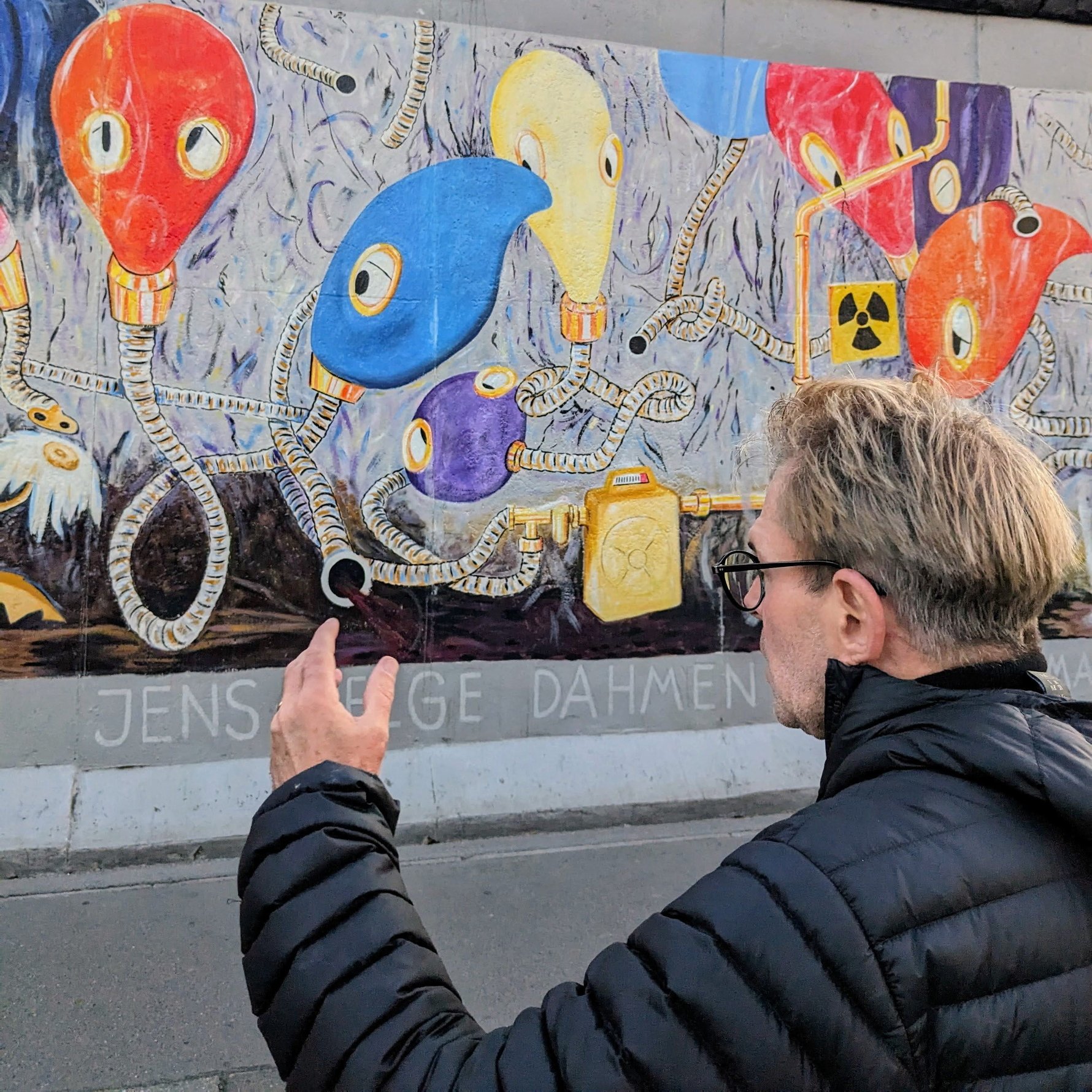
So much history within a few minutes' walk of where I live – the RAW market, the Berlin Wall, the Oberbaumbrücke, all of it is minutes from my house. I live in a really rich, wonderful area, and most tourists don't appreciate that until they come on the tour, because they go to the Brandenburg Gate and the standard tourist circuit. They don't realise how much of it was being lived here.
I try to make it a very personal tour. I don't want to recite dates and battles, and historical facts. I want to tell people how the city changed, how it impacted me, how it impacted my family who lived in Germany – and to make it real and relevant in that way. I get a lot of messages from people who say they were genuinely moved by the content, which I'm pleased about. Some tour guides are brilliant; I want to give credit where credit is due, but a lot of them just memorise a list of facts and go. That's not what I'm going for.
Yuri: Can you still feel the difference between East and West?
Enormous differences. East Berlin television was all propaganda, and many people protested by throwing their televisions out the window – just let the Soviets clean up this mess. So a lot of people were raised without a TV, raised their kids without a TV, raised their kids without a TV. You go to the West; every household has one. That got passed down through generations.
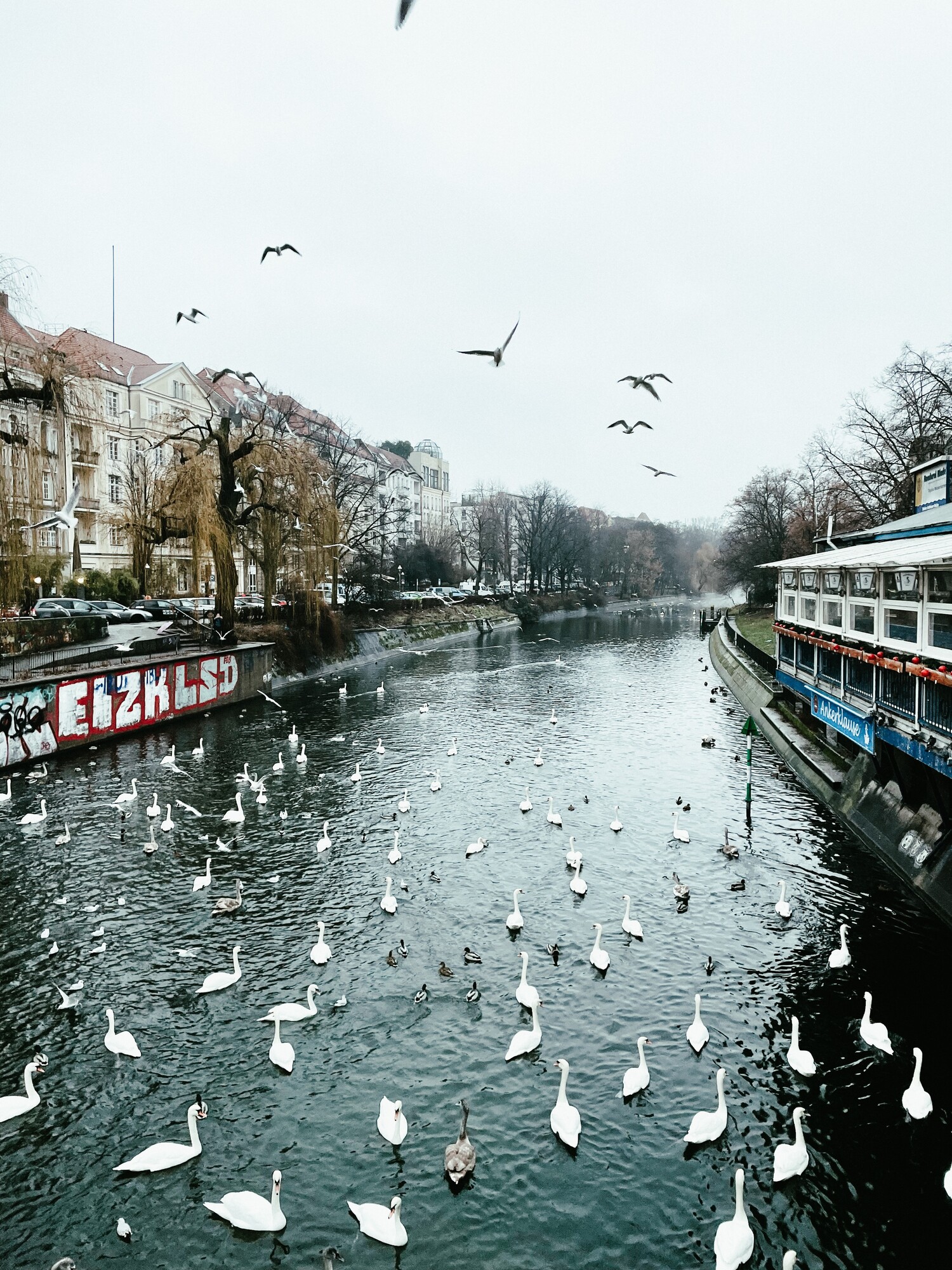
If you look at the West, you can just physically see the difference. There's graffiti everywhere in the East. We're very counterculture; they're very culture. They were occupied by the Americans, the French and the English. The French and British settlements were so small that they were almost insignificant culturally – American culture defined the whole West. The consumer culture, the advertising culture, all those values.
Whereas here, the restaurants and cafes are full, the Spätis are full of people drinking beer on the pavement; people are out and social all summer long. We live on the streets here. They live in their apartments. And those are Western-style apartments with built-in dishwashers, because America came in and told them how to live.
Yuri: Give us a taste of a typical menu.
I have a terrace and a garden plot down by the river, and I decide what to cook based on what's ripe that morning. Every tour is dictated by what's fresh and ready that day. The meats I usually get from Boxhagener Platz farmers' market – from farmers I know. I always serve home-cured meat because I turned my storage room into a curing and drying room, and I do the smoking on my. terrace. So there's usually something cured: pig candy [a preparation with bacon], ham, beef tongue – whatever is at the right stage.
Right now, I have a bumper crop of blueberries, so I've been doing a lot with those – blueberry cream pie, blueberry cheesecake, what I call blueberry pop tarts, which are blueberries in puff pastry with cream. And yes, I make my own puff pastry. I make all my own pastries. Last week I had a goose liver pâté I'd made from scratch.
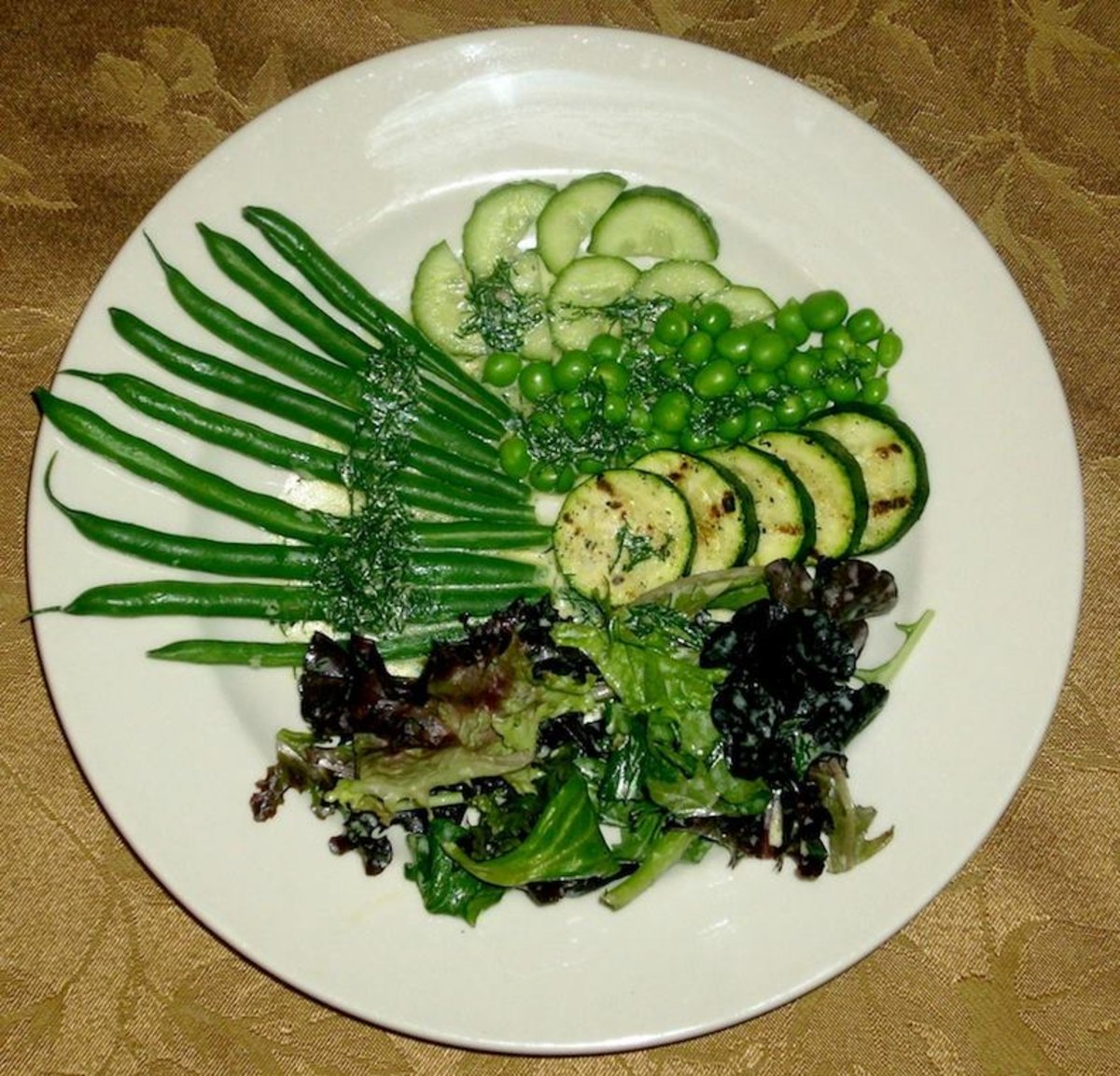
Karl's dinners are so enjoyable that I always forget to take photos. This is one he sent me to use for the interview, which in no way represents any of the dinners I've been to, but what can you do - Karl is a great host, an amazing chef and a fascinating character, but clearly not a photo editor.
Yuri: What's been the standout dish recently?
For the last tour, I'd say the star for everyone was the Blinni Romanov. I spent a lot of time in Russia and I learned to make blini and pelmeni from an actual Russian grandmother, and I loved it. The Romanov style is stuffed with beef and onion in buckwheat rather than white flour, topped with demi-glace and sour cream. Really rich, really delicious. I do those fairly regularly because everyone loves them. Pelmeni are another popular one – I stuff those with turkey and onion, make bags and bags and freeze them. Served with sour cream and fried onions.
The exception to all of this is when I have a tour of two, in which case I often do one of my grandmother's chicken recipes – chicken with a mustard and caper sauce, which is very German and very delicious. I get small chickens from a local farmer on Saturday, and my tours of two are almost always on Monday, so it works out nicely.
Yuri: You mentioned cooking something different for every tour, which sets you apart from how PJ runs Paris...
PJ likes his tour to be the same every day; he makes deals to buy really good beef so he can do the Beef Bourgogne consistently, and he doesn't want to spend ten hours in prep every day. Whereas I look at my market and my garden and let them tell me what's for dinner. That's just how I think about cooking. Prep is therapy for me. I like kneading bread.
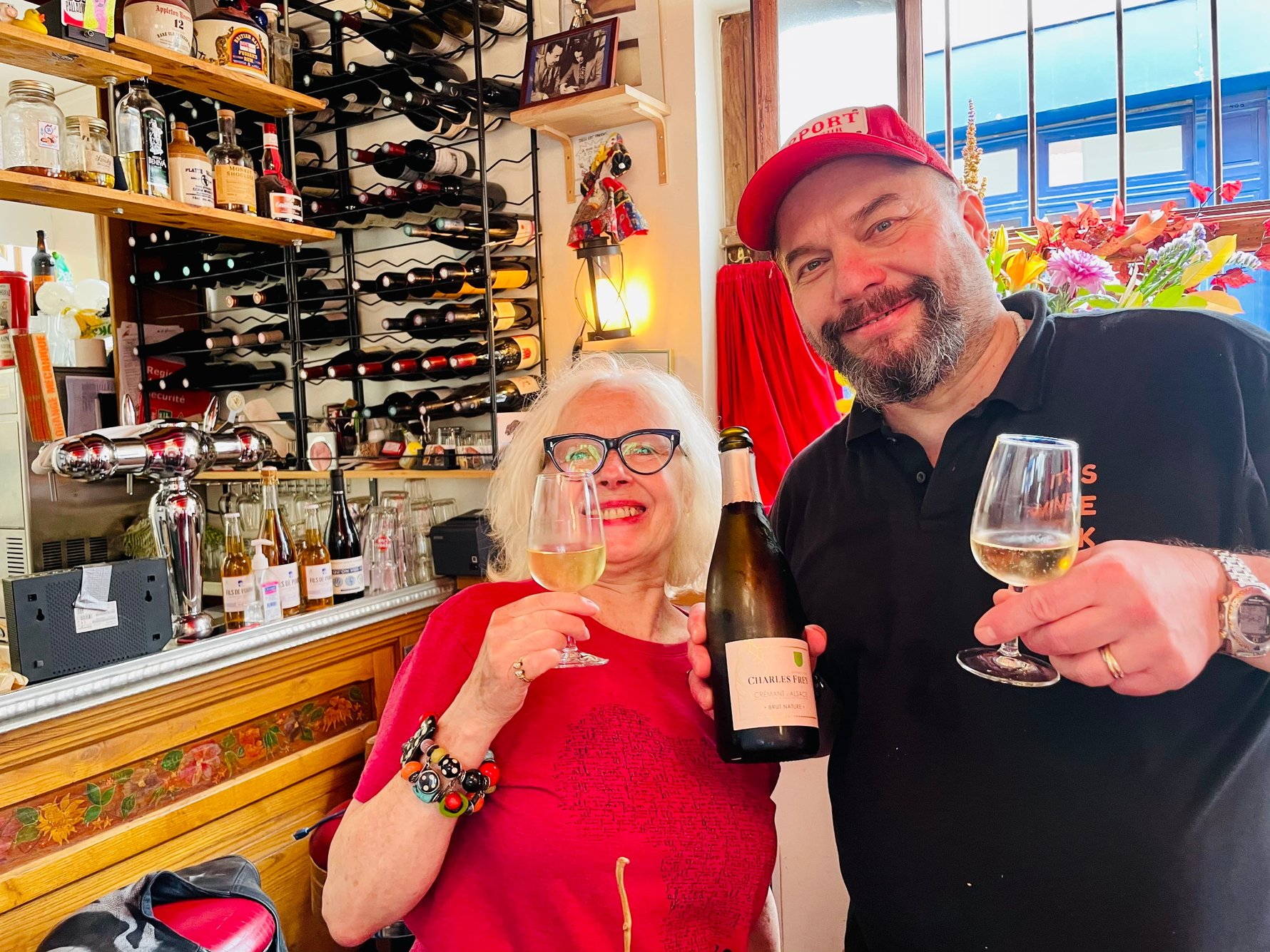
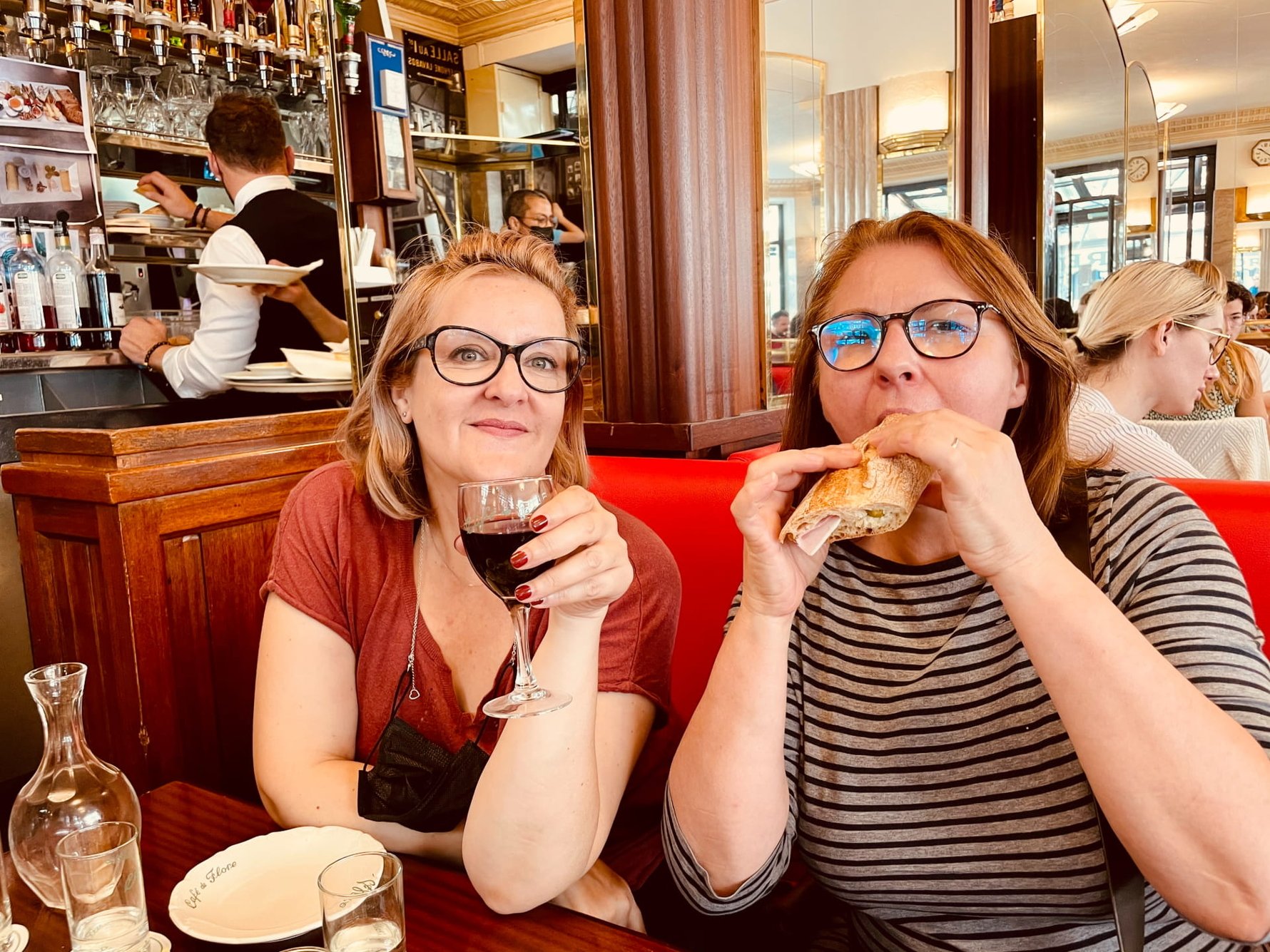
Some satisfied guests on the Chef PJ's Paris food tour
Yuri: Let's talk about the other cities. Where else is Chef Tours currently running?
We have Paris, Istanbul, Seville, Berlin, Istanbul, and Buenos Aires in November
Yuri: And how did Seville come about?
I'd visited many parts of Spain, and I'd thought about setting up in Barcelona, where I know a lot of people. But Seville is just so beautiful, and the food is so good, and they really take pride in the regional wines, and I thought: let's go somewhere I don't know, but know a little bit and do something genuinely different. So I went and learned enough Spanish to function, and that was great fun.
There's a wine tour now, and Chef Crestiani there has also created a Nuevo tapas tour – whereas most tapas tours are fixed in time and place, doing the same 1950s tortilla español and ham tasting, the Nuevo version is getting cod with honey foam and reinvented dishes from young chefs. Everything fresh and interesting and not the same old, same old.
Yuri: And Istanbul?
I ran an ad to see if I could find the right person, and I found an incredible woman who, on the very first day we met, took me straight to a place that smoked their own salmon and mussels. She just knew the unique spots – where the good places were even in the touristy parts. I said, how well do you know this area? She said: I live here. So we started the next day. Did a test tour, guests loved it, and it's been all five-star reviews since. It's one of my favourite tours because she really does know the area – we're getting to places no other food tour goes to.
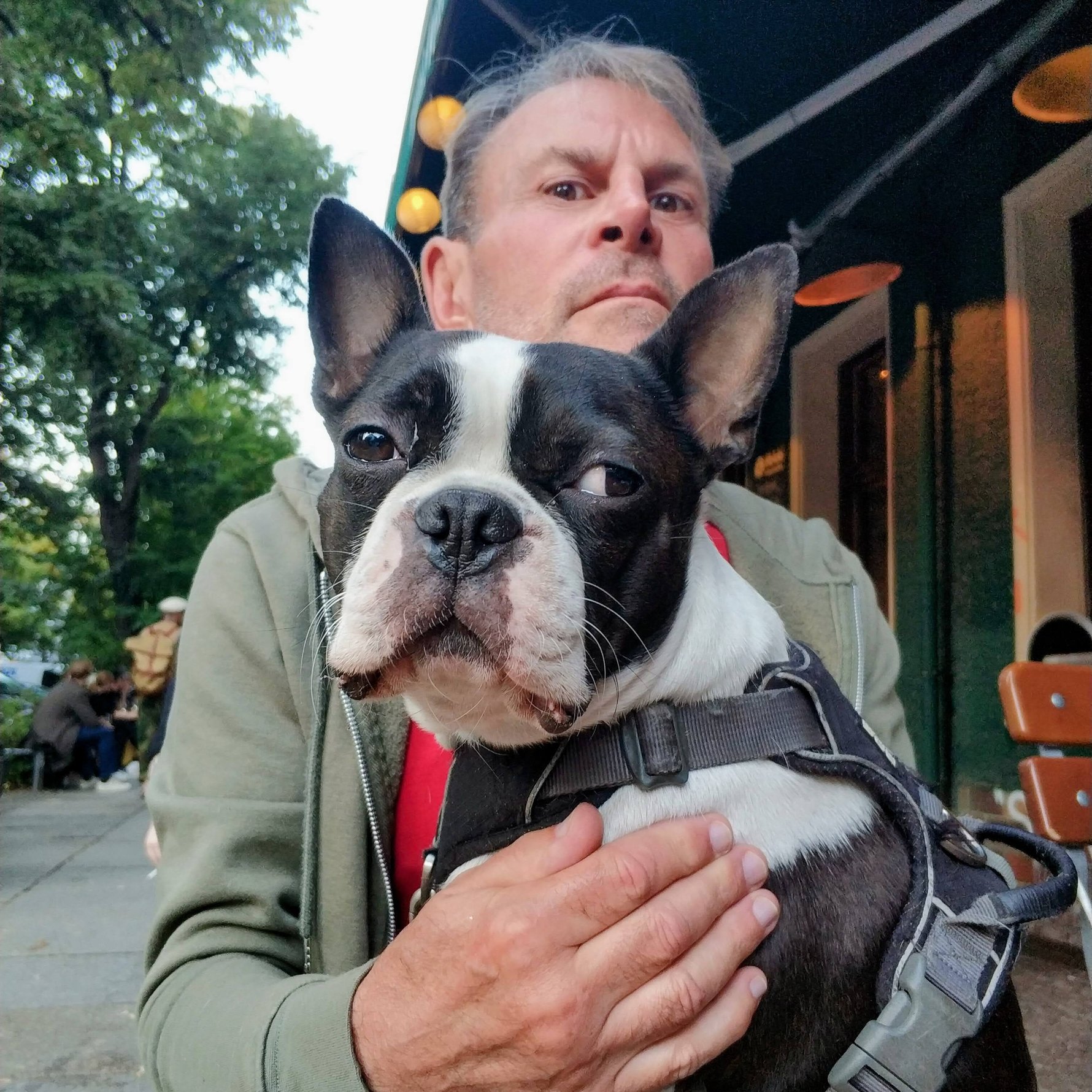
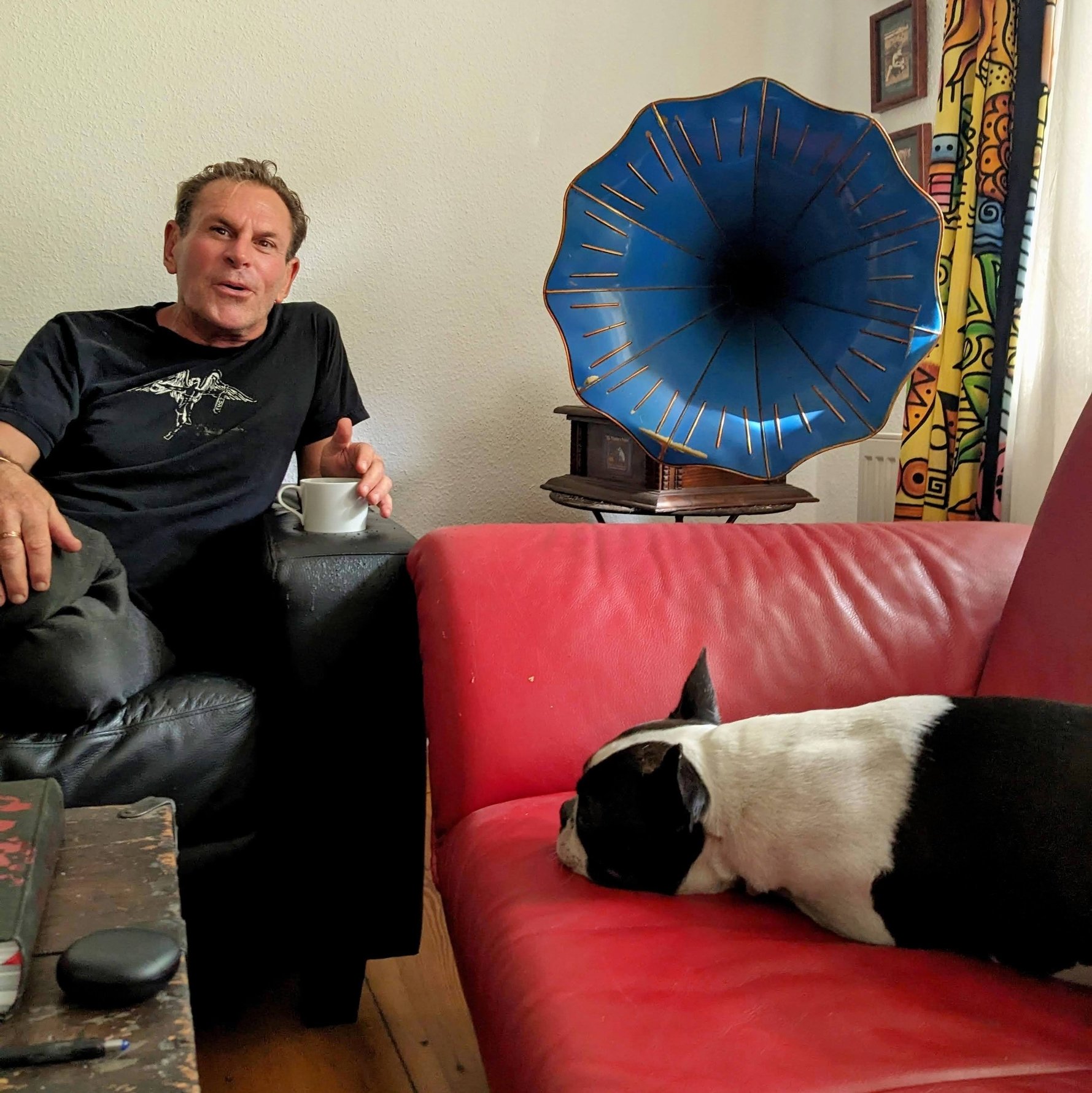
[Milo, Karl's Boston Terrier, has been sitting between us for most of the interview and has recently relocated.]
That is Milo. He is my Boston Terrier, and he is also our official company mascot. He has been on every tour in every city at least once, if not many times. He travels with me, loves doing the tours – a very social dog, loves the exercise and interaction. Ever since we made him the official mascot, the direct bookings have gone way up. That press release got picked up all over the place.
Yuri: Will he be making it to Mexico City?
He might even be a co-host. At the end of the Berlin tours, I just point and say, "show people where you live," and he runs to the front door. That's his trick.
Yuri: Mexico City is next – what can you tell us?
I'm very excited about it. It's a year-round temperate climate, tourism is up enormously right now, and Americans in particular are going to places where the dollar goes further, so the timing is good.
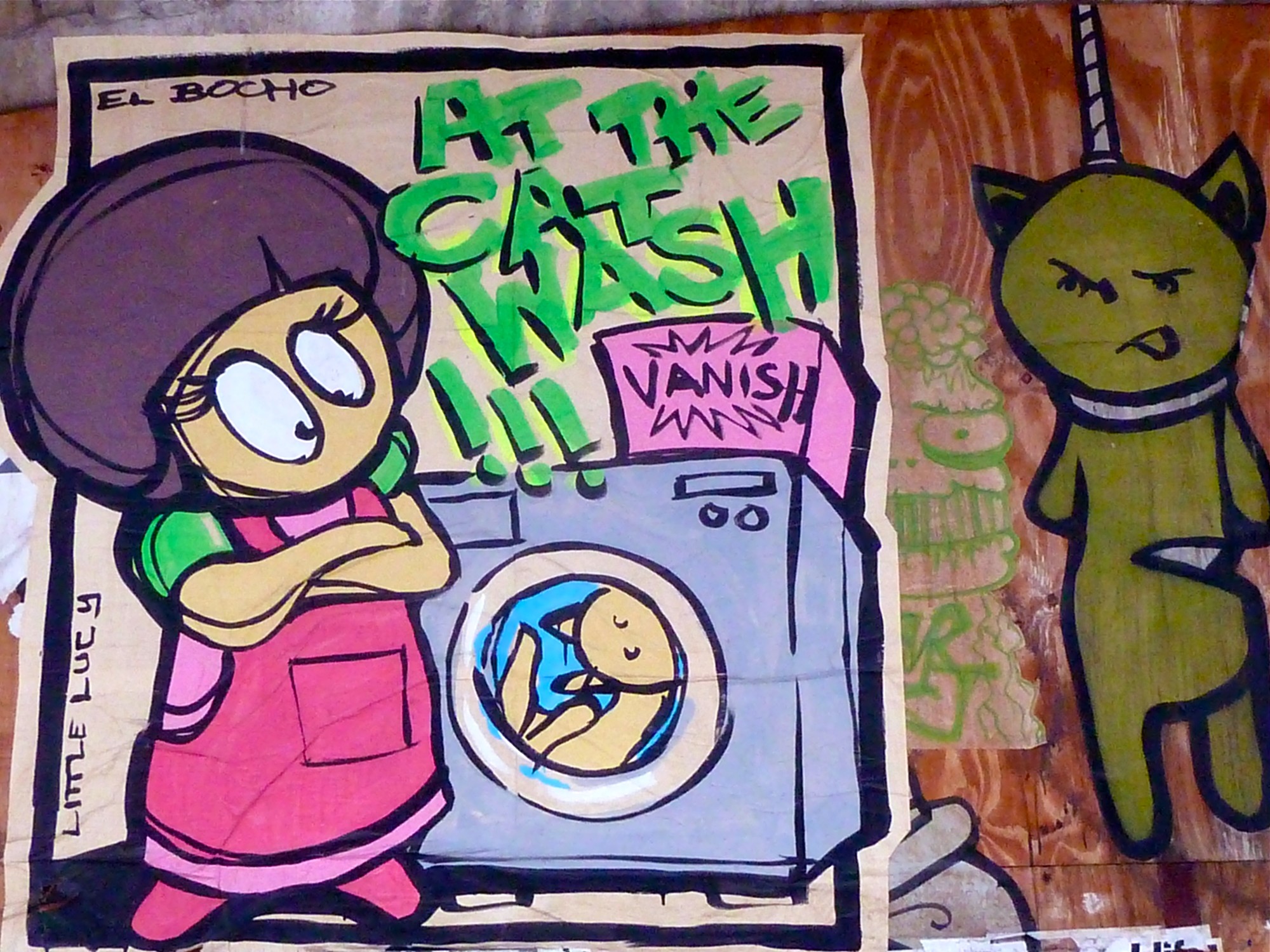
I've deliberately selected venues that don't have websites because I don't want it to be something ChatGPT can put together for anyone who asks. I was in Mexico City for a month helping a hotel's food and beverage department, and everyone who worked there wanted to take me out: nobody finds this place, only the locals know this place, you'll never find this on your own. That's going to be the evening "Confidential" tour – a mezcal bar in an underground speakeasy space, tacos through a laundromat (you go through the exit into a little alleyway restaurant), that kind of thing.
The daytime tour will be in the Bellavista Camarones neighbourhood. Not Roma Norte, which is all tourists now, and not Condesa – this is all Mexican, locals only. I made some rather nerve-wracking phone calls in my best Spanish to the places I had in mind, to see if they'd be welcoming to tour groups. And they were very excited, yes.
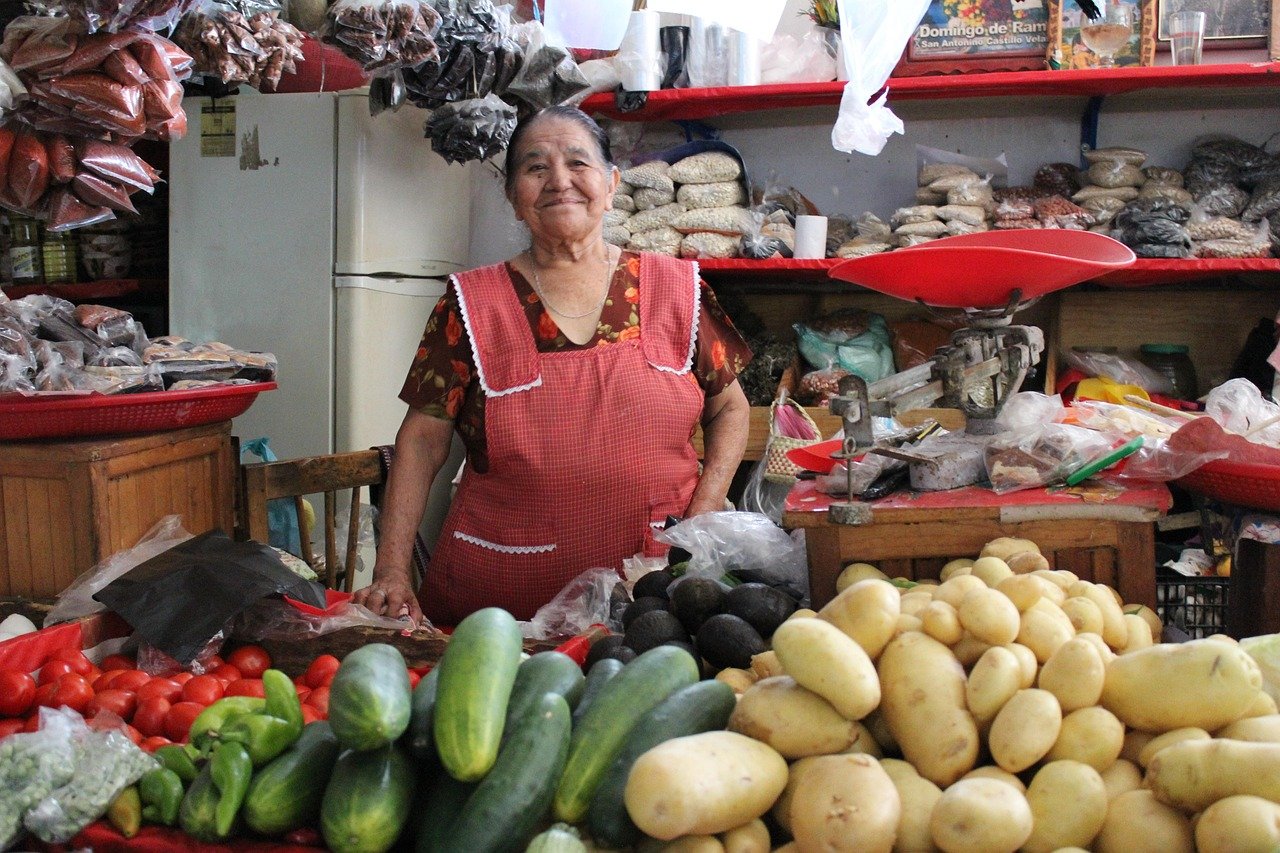
Shopping for fresh ingredients in Mexico City
Yuri: What are the long-term plans for the company?
I'll run Mexico City myself for the first six months, then hand it over to a local chef – the same model I used in Seville, where I set it up, ran it for a while, then turned it over to Crestani. I've already got someone in mind for Mexico City. Beyond that, we'll see where the right person and the right city come together.
John Evans, the time-travelling detective
Yuri: And speaking of other things – you also write detective novels?
Totally out of left field, but yes. I started writing during the lockdown because I am not a person who can sit still and do nothing for very long. I'm Zen, but I'm not that Zen.
I wrote my first book during that period, which is about my years cooking in Italy and doing voiceover work. It's called Filthy Blonde, it's a comic novel, and it immediately found a publisher who paid me quite a lot for the rights, then proceeded to go out of business before it was printed. So I need a new agent and publisher for that one. It is, I feel I should mention, still very good.
Detective novels are a separate thing.
They're about Detective John Evans, a man who participates in a government time-travel experiment and ends up in 1945 with no idea what to do or who he is. He finds out there's a Chicago detective with the same name who has just left for New Orleans, takes that identity, and becomes a detective with absolutely no idea what he's doing. Somehow, he's very good at it.
Yuri: Why 1945?
Because I want to take his life in series through to 1972 when he retires, and then back to the year 2000 where it all began. The first book begins in 2,000, the rest in New Orleans – that's where I know the history, where I know the real people. Leah Chase, of Dooky Chase's restaurant, is a character I worked with because I knew her and knew the story firsthand. There's the mayor, several real historical figures.
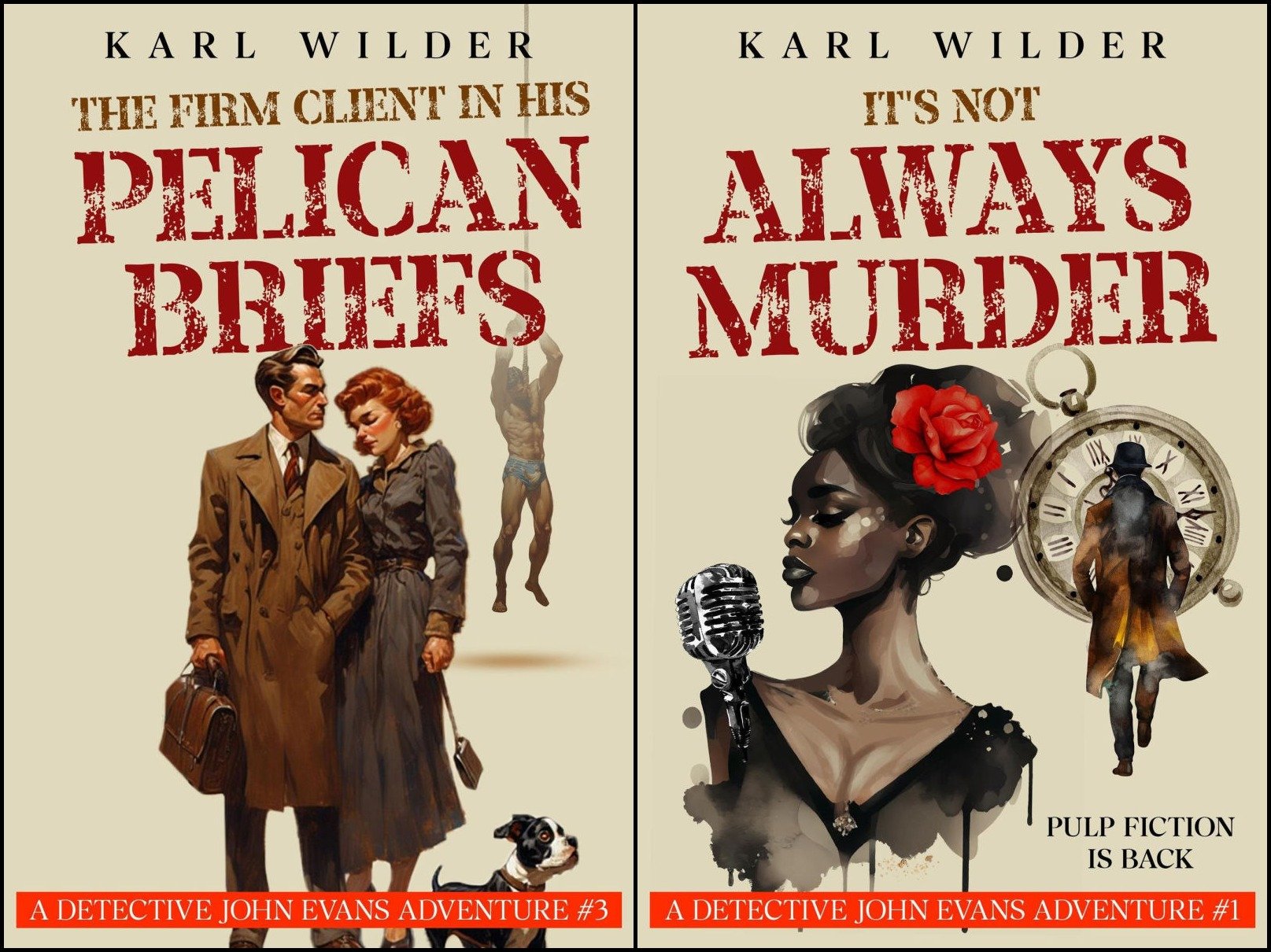
What's the point of writing pulp fiction about a time travelling detective if you can't include an homage to Milou on the cover?
Yuri: And the fourth book, which you're working on now?
The fourth gets into a real unsolved case, which has been so much fun. Gene Spankler was a Hollywood actress and activist who had an affair with Kirk Douglas and was pregnant with his child when she disappeared. The only clue ever found was her handbag with a torn strap in Griffith Park, and inside it a letter saying she was going to see Dr Scott – believed to have been the studio abortionist. Did the studio murder her? Did she die from complications, and did they cover it up? Or, as I would like to believe, did Gene escape the entire situation, stage her own disappearance, and build a new life somewhere? I don't know how to end it yet.
Yuri: Where can readers find the books?
The detective novels are in a handful of bookstores and sell very well both there and online. Filthy Blonde is still looking for its moment. As for Milou – he made it onto the cover of book three, because after I got the dog, I decided the detective needed one too. His name in the books is Shadow, which is more or less what Milou does with me. Everywhere I go.
[Editor's Note: I've now purchased and read a couple of the ebooks, and am happy to admit that they're high enjoyable!]
Yuri: Thanks, Karl! See you next year!
Chef Tours operates in Berlin, Paris, Istanbul, Seville, Mexico City and Buenos Aires launching in November. You can book directly at cheftours.com – and you should, as it's cheaper than going through resellers. Karl's detective novels are available online and in select bookstores. Filthy Blonde remains, for now, a tantalising rumour.
Yuri Barron is the Editor-in-Chief of In Your Pocket, and is technically based in Slovenia, but now spend most of his time aimlessly flitting about the globe, just kind of killing time until the aforementioned adorable Norwegian writer/poetress either finally agrees to marry him or at least gives him a definitive 'no'. Because if you're a hopeless romantic and your job is fully remote, you might as well make the most of it, right?