Santorini Is Beautiful. But Do You Know Its Story?
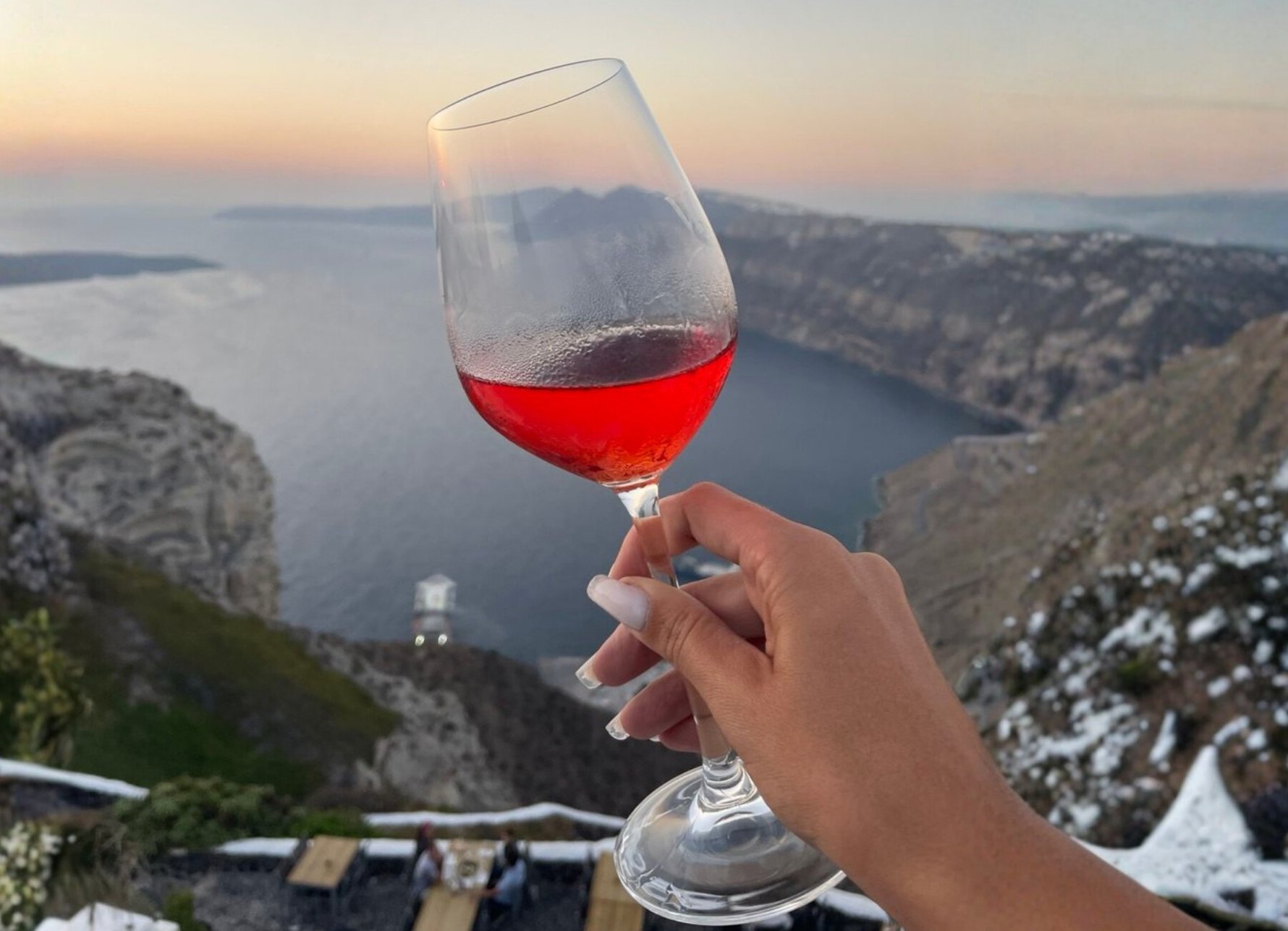
The Birth of Santorini: Volcano, Catastrophe, and Renewal
To understand Santorini, you must start with its volcano.Around 1600 BCE, a massive eruption reshaped the island, collapsing its center and forming the caldera. Entire settlements were buried under ash including Akrotiri, one of the most advanced Bronze Age cities in the Aegean.This eruption:
• Changed global trade routes
• Altered Mediterranean history
• Permanently shaped Santorini’s landscape
Yet instead of abandoning the island, people returned. They adapted and as a result wine became one of the foundations of survival.On a wine tour, guides often begin with this geological story, helping travelers understand why Santorini’s land feels so raw, dramatic, and different from any other Greek island.
Akrotiri and the First Wine Culture of Santorini
Excavations at Akrotiri reveal a sophisticated society with multi-story buildings, frescoes, drainage systems and evidence of organized agriculture.Among the discoveries were: grape seeds, storage vessels (known as amphorae) and wine-related tools. As far as we know, wine in ancient Santorini was not a luxury. It was a staple of daily life, a trade commodity and ultimately a ritual offering.During a wine tour, tasting local wines after visiting or learning about Akrotiri creates a powerful connection: you are drinking from a tradition that predates classical Greece.
How Geography Forced Innovation: The Origins of Santorini Viticulture
Santorini has always been harsh:
• Little rainfall
• Strong winds
• Poor, rocky soil
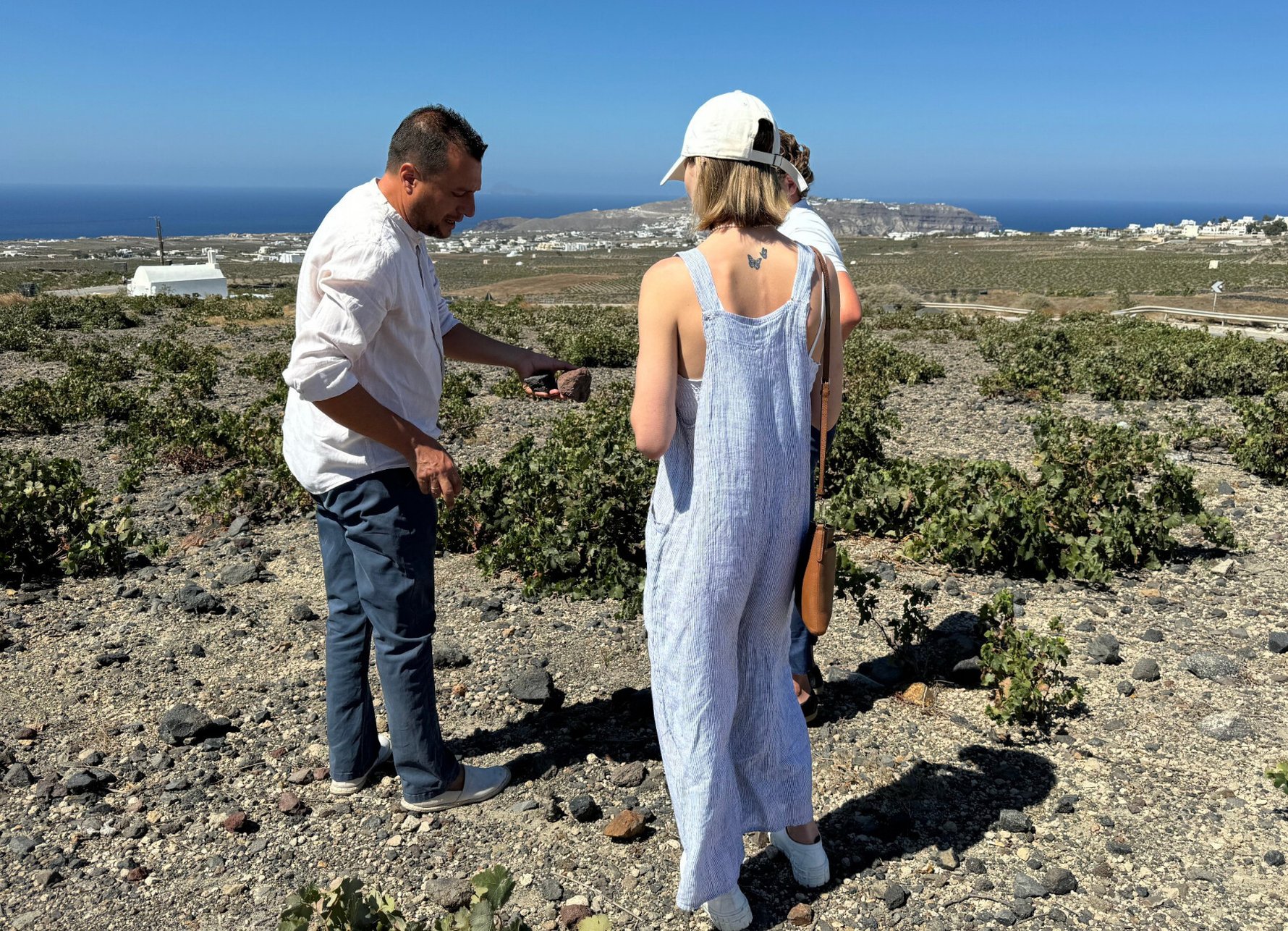
Traditional farming methods failed. Viticulture survived because locals adapted.This necessity gave birth to practices still used today, including:
• Extremely low-yield vines
• Dry farming without irrigation
• Training vines close to the ground
Wine tours often take travelers through these vineyards, not just to taste wine, but to understand how history shaped agricultural ingenuity.
Wine as Trade: Santorini’s Connection to the Wider World
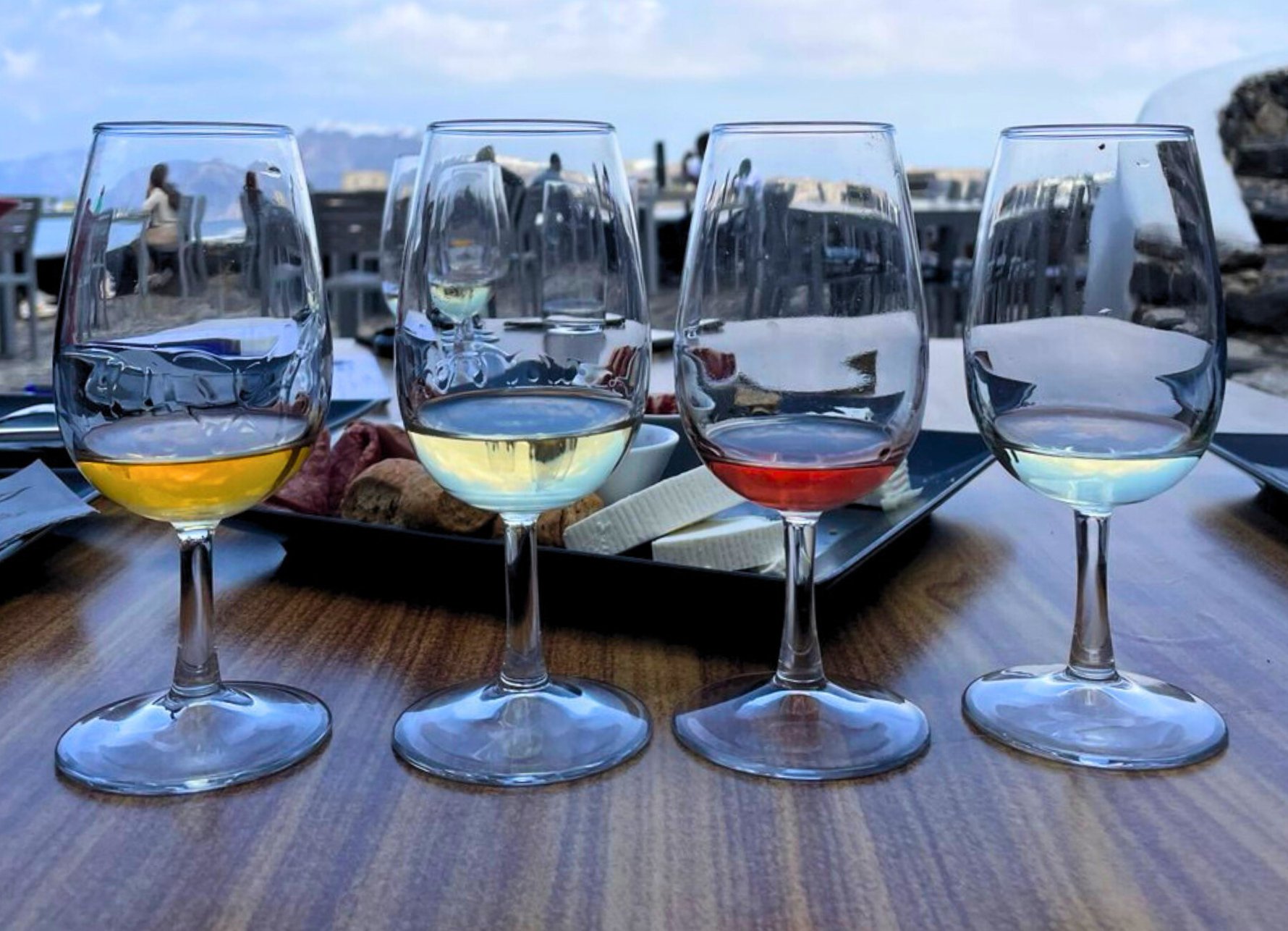
For centuries, Santorini was not isolated. Its wines traveled widely across the Aegean and beyond.During the Venetian period, Santorini wine (especially Vinsanto) became highly prized in Europe. Wine barrels left the island’s ports bound for:
• Venice
• Russia
• The Middle East
This trade brought wealth, influence, and cultural exchange, helping Santorini remain relevant even as empires rose and fell.A wine tour that includes historical storytelling reveals how wine helped Santorini stay connected to the world long before tourism existed.
Wine in Everyday Life: Community, and Survival
Beyond trade, wine played a central role in Santorini’s social fabric.Historically, wine was used for:
• Religious ceremonies
• Community gatherings
• Family sustenance
Church festivals, harvest rituals, and village celebrations revolved around wine production. Many families passed down vineyards through generations, preserving not just land, but identity.When travelers hear these stories during a wine tour, Santorini shifts from a “romantic destination” to a living cultural landscape.
The Role of Wine in Santorini’s Religious and Mythological Life
In ancient Santorini, wine was not simply consumed, it was offered. Archaeological and historical sources suggest that wine played a central role in religious rituals long before Christianity reached the island. Offerings of wine were made to the gods as symbols of fertility, protection, and gratitude, especially in a land where survival depended on harmony with nature.Later, as Christianity spread through the Cyclades, wine retained its spiritual importance. Local churches and monasteries cultivated vineyards to support sacramental needs, ensuring that wine production remained a protected and respected practice even during times of hardship. When travelers hear these stories during a wine tour, tasting becomes an act of cultural continuity, linking ancient belief systems with modern traditions that still shape Santorini’s identity.
How Wine Shaped Santorini’s Villages and Architecture
Santorini’s villages were not designed purely for beauty; they were built for survival, agriculture, and storage. Many traditional cave houses were constructed partially underground to maintain stable temperatures. This is ideal not only for living, but also for storing wine and agricultural goods.In villages like Pyrgos and Megalochori, wine cellars were often integrated into family homes, reinforcing the idea that wine was part of everyday life rather than a separate industry. Walking through these villages as part of a wine-focused cultural experience helps travelers understand how viticulture influenced settlement patterns, architecture, and community organization across the island.
Family Vineyards and Oral History: Preserving Santorini’s Past
Much of Santorini’s history was never written down. It was passed on orally, from one generation to the next. Family-owned vineyards became repositories of memory, carrying stories of volcanic eruptions, earthquakes, wars, and emigration alongside pruning techniques and harvest traditions.During intimate wine tours, especially those led by local guides or hosted at small estates, travelers often encounter these personal narratives. A single vineyard may represent centuries of resilience, with each generation adapting just enough to survive while preserving what mattered most. This human element transforms Santorini’s history from an abstract concept into something deeply personal and tangible.