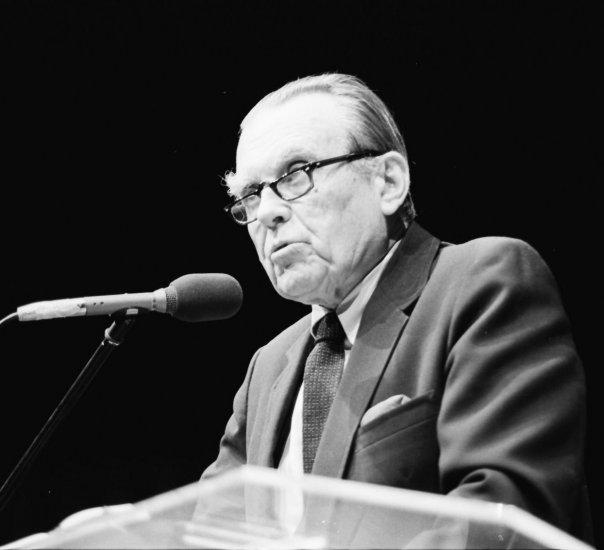
One of the Polish Greats, 1980 Nobel Prize laureate Czesław Miłosz was not only an accomplished poet, prose writer, and essayist, but also a lawyer, diplomat, literary historian, and translator. What’s more, the exceptional intellectual has more distinctions than you can shake a stick at, including the Order of the White Eagle, the title of Righteous Among the Nations, and a Neustadt International Prize for Literature. The writer’s life was a familiar tale of Cold-War-era emigration - he defected west in 1951 after serving as cultural attaché for the Republic of Poland, drawing criticism both from Polish émigré intelligentsia unhappy with his communist past and from the official figures at home. He won much of the West over with his 1953 anti-Stalinist classic The Captive Mind, but it was not until 1980 that his name was taken off the banned list back home. Until then, there was not only a bar on his books, the mere public mention of his name was forbidden, leading many Poles to be completely unaware of his existence. In the States, Miłosz taught Slavic literature at Berkeley and Harvard, composing poetry, philosophical and theological treatises, and essays in his free time; his literary career truly took off with the 1973 release of Selected Poems. The fall of the Iron Curtain allowed him to move back to Poland, and he did so in 1993, choosing to live part-time in Kraków, the closest substitute for his now-Lithuanian hometown of Vilnius. Here, he was named 'Honorary Citizen of Kraków' (a distinction also granted Mrożek, Szymborska and Lem), and laid to rest in the Crypt of Distinguished Poles underneath the Skałka Church following his death in 2004. The writer’s legacy continues to be actively celebrated: 2011 was declared Year of Czesław Miłosz, and a literary festival dedicated to his memory takes place in Kraków biennially.
Czesław Miłosz
1/4
Venue Info