We may be slightly biased. In Your Pocket was founded in Vilnius in 1992, which means we have been writing about this city for longer than most travel guides have known it exists. The Lithuanian capital spent much of the 20th century behind the Iron Curtain, emerged from Soviet occupation in 1991 to find itself largely unknown to the outside world, and has spent the decades since quietly becoming one of the most rewarding cities in northern Europe. The Old Town is a UNESCO World Heritage Site, the beer is cheap, the food has improved considerably, and the locals have developed a fine line in dry self-deprecation about their own country. We remain, despite everything, very fond of it.
Vilnius rewards the kind of attention that most cities make you fight for. The major sights are genuinely major, and the minor sights are not far behind. Prices below were accurate at time of writing; as always, verifying before you visit is sensible.
The Cathedral of St Stanislaus and St Vladislaus has stood at the heart of Vilnius since Lithuania’s official Christianisation in 1387, though the site has a longer history than that: pre-Christian Lithuanians are thought to have worshipped the thunder god Perkûnas here, and the first church was reputedly built by King Mindaugas as far back as 1251. The Grand Dukes of Lithuania were crowned here, and the crypts below hold the remains of several of them, including Vytautas the Great. The current neoclassical exterior, gleaming white with a six-column portico, is the result of an 18th-century reconstruction and looks considerably more Roman than the building’s history might suggest. During the Soviet period it functioned as an art gallery; Mass was not said here again until 1988.
The Bell Tower, standing separately to the southwest of the cathedral in Cathedral Square, is a repurposed medieval defensive tower from the original city walls, which gives it an unusual profile and a rather better story than most belfries can offer. The square itself is one of the great public spaces in the Baltic region, framing the cathedral and the tower against the green slope of Gediminas Hill behind. Look for the small cobblestone marked “Stebuklas” (Miracle) embedded in the square – tradition holds that standing on it and turning around three times will grant a wish. The starting point of the 1989 Baltic Way human chain, which stretched 675 kilometres from Vilnius to Tallinn through Riga, was a few metres from here.
Location: Katedros a. 1, Vilnius (Cathedral Square, at the foot of Gediminas Hill)
Best time to visit: The cathedral is open to visitors throughout the day but is closed during Mass – early morning and early evening. The square is worth visiting at any hour, including at night when the cathedral is lit.
Ticket prices: The cathedral is free. Admission to the crypt and treasury is charged separately – check govilnius.lt for current prices.
Good to know: The Chapel of St Casimir, accessible from inside the cathedral, is the most ornate room in the building and one of the finest examples of early Baroque in the region. Casimir is the patron saint of Lithuania; his relics are kept here.
2. Gediminas Castle Tower
The Gediminas Castle Tower is the only surviving remnant of the Upper Castle that once crowned the hill above the city, and it has been the symbol of Vilnius for long enough that its image appeared on the Lithuanian litas banknote and turns up in every piece of Lithuanian patriotic verse you care to read. According to the founding legend, Grand Duke Gediminas fell asleep on the hill after a successful hunt and dreamed of an iron wolf howling with the force of a hundred, which his court priest interpreted as a sign to build a great city. He duly built one; the first brick castle was completed in 1409 under his grandson Vytautas the Great. The tower then served successively as prison, fire watchtower, Russian military post and Soviet-era museum before arriving at its current status as a national icon with a very good view.
The moment that cemented its modern significance came on 7 October 1988, when the Lithuanian independence movement Saĵûdis raised the national tricolour from the tower for the first time since the Soviet occupation. Independence followed in March 1990. The tower now houses a branch of the National Museum covering the castle’s history from the Grand Duchy to the present day, and the viewing platform on top offers the best panorama of the Old Town available without chartering anything. The hill can be reached on foot via the path from the cathedral, or by funicular – check current status before visiting as the funicular has been intermittently closed for maintenance.
Location: Arsenalo g. 5, Vilnius (Gediminas Hill, above Cathedral Square)
Best time to visit: Morning for the best light on the Old Town; late afternoon for the glow on the cathedral below. Clear days are considerably more rewarding than overcast ones.
Ticket prices: Around €5–7. Check lnm.lt for current prices and opening hours.
Good to know: The Gediminas Tower exhibition includes an interactive installation dedicated to the Baltic Way. The Palace of the Grand Dukes of Lithuania, reconstructed at the base of the hill in 2009, is worth visiting if the history of the Grand Duchy interests you.
3. Vilnius Old Town
At 3.6 square kilometres, the Old Town of Vilnius is one of the largest surviving medieval old towns in northern Europe, and since 1994 a UNESCO World Heritage Site. The designation is deserved. What makes it unusual – and what justified its inscription – is the density and quality of its Baroque architecture: Vilnius is the easternmost Baroque city in Europe and the largest north of the Alps, having developed its own distinctive school of the style (Vilnian Baroque, naturally) that spread across the Grand Duchy of Lithuania and influenced architecture as far east as Minsk. Grand Duchy Lithuania was the last country in Europe to Christianise, not doing so officially until 1387, which meant that Western European architectural fashions arrived here a century or two behind schedule and proceeded to express themselves with considerable enthusiasm.
The practical effect of all this is that the Old Town contains 74 quarters and 1,487 buildings, of which a remarkable number are either Gothic, Renaissance, Baroque, or some layered combination of all three. Pilies Street, the main pedestrian artery running from Cathedral Square south to the Town Hall, is the obvious starting point: lined with cafes, courtyards and churches, it connects the major sites in roughly the right order. The University of Vilnius, founded in 1579 and one of the oldest in Eastern Europe, occupies a labyrinthine complex of 13 courtyards just off Pilies Street and is accessible to visitors; the Grand Courtyard and the Church of St Johns are worth the short detour.
Location: The Old Town occupies the southern half of central Vilnius. Cathedral Square is the natural starting point.
Best time to visit: Any time, though the streets are at their most atmospheric early morning and in the evening when the day-trippers have thinned. Summer weekends bring crowds; September and October are particularly good months.
Ticket prices: Free to walk. Individual attractions charge separately.
Good to know: The Town Hall Square, at the southern end of Pilies Street, is the civic centre of the Old Town and the site of the main Christmas market in December. The nearby Church of St Casimir, the oldest Baroque church in Vilnius (1618), and the Church of St Peter and St Paul, with its extraordinary interior of 2,000 stucco figures, are worth seeking out beyond the obvious circuit.
4. Gate of Dawn (Aušros Vartai)
The Gate of Dawn is the only surviving gate of the original 16th-century city walls, the other eight having been demolished by Russian imperial decree in the early 19th century. The locals believed the gate was spared because of the sacred icon inside it, a theory that the Russian authorities apparently found too uncomfortable to test. Built between 1503 and 1514, the gate was originally called the Medininkai Gate; the current name derives, probably, from a symbolic association with the Virgin Mary as the Star of the Dawn. The chapel above the gate arch contains the icon of Our Lady of Mercy, painted around 1630 in a Northern Renaissance style and venerated by Catholics, Greek Catholics and Eastern Orthodox Christians from Lithuania, Poland, Belarus and Ukraine. Pope John Paul II prayed here in 1993; the icon was blessed by Pope Francis during his 2018 Vilnius visit.
For a small building, the Gate of Dawn carries significant weight. Pilgrims have been coming here for three centuries, the walls of the chapel are lined with thousands of silver votive offerings, and on major feast days the street below the gate fills with worshippers kneeling on the pavement while Mass is said from the window above. Even for visitors with no religious investment, the accumulated intensity of devotion to this particular object in this particular city gives the place a quality that is worth experiencing. Entry to the chapel is free and the building is very small; come on a quiet weekday to appreciate it properly.
Location: Aušros Vartó g. 12, Vilnius (the southern end of the Old Town, a ten-minute walk from Cathedral Square along Pilies Street and Didżioji Street)
Best time to visit: Weekday mornings outside of service times. The gate is busiest on Marian feast days and Sundays.
Ticket prices: Free. The chapel is open daily, with some closures during services.
Good to know: The Church of St Teresa immediately adjacent to the gate is one of the finest late Baroque churches in Vilnius and is often overlooked by visitors focused on the gate itself. Worth two minutes of your time.
5. St Anne’s Church
Built between 1495 and 1500, St Anne’s Church is a masterpiece of Flamboyant Gothic architecture constructed from 33 different types of clay brick in a decorative scheme of such intricacy that the building has remained substantially unchanged for five centuries. Its red facade, climbing in pointed arches and ornamental spires to a trio of towers, is the most-photographed facade in Vilnius and one of the most distinctive Gothic church frontages anywhere in northern Europe. Napoleon, who passed through the city in 1812 on his way to Russia, is said to have expressed a wish to carry it back to Paris in the palm of his hand – a sentiment that is probably apocryphal but has been repeated often enough that the Vilnius tourism industry has formally adopted it. In practice, his soldiers used the interior as a stable on the return journey, which is a rather more historically reliable piece of information.
The interior, reconstructed in the Baroque style after various fires and wars, is considerably less interesting than the exterior, which is where everyone spends their time anyway. The adjacent Bernardine Church of St Francis and St Bernard, reached through the same courtyard, is larger, quieter and contains Gothic polychrome frescoes that are well worth seeing. The complex as a whole, sitting on the bank of the Vilnia River at the edge of the Old Town, is the natural starting point for a walk into Użupis.
Location: Maironio g. 8, Vilnius (on the east side of the Old Town, near the Vilnia River)
Best time to visit: Morning light on the facade is particularly good. The interior opening hours are limited – check current times at govilnius.lt before visiting.
Ticket prices: Free.
Good to know: The church is an active parish and also hosts occasional concerts – the acoustics of a Gothic nave being what they are. The Adam Mickiewicz Monument stands nearby, honouring the Polish-Lithuanian Romantic poet who was born in what is now Belarus and spent formative years in Vilnius, a detail that continues to generate some interesting conversations about national identity.
6. Użupis
On 1 April 1997, a group of local artists declared Użupis an independent republic. The choice of date was either accidental or extremely deliberate. The Republic of Użupis now has its own president (a poet and film director), its own flag (a hand with a hole in it, changed seasonally), a constitution displayed on mirrored plaques in 23 languages along Paupio Street, and an army that has been estimated at between 11 and 12 men depending on the source. The constitution contains 38 articles, including the right to be happy, the right to be unhappy, and “a dog has the right to be a dog.” The Pope blessed the constitution in 2018, which is either a remarkable achievement for a micronation or a comment on the Pope’s schedule.
Użupis means “beyond the river” in Lithuanian, and the neighbourhood sits across the Vilnia River from the Old Town in a bend that historically made it slightly separate. It was the Jewish quarter before the war, fell into serious disrepair during the Soviet period, and in the early 1990s became the natural destination for artists priced out of everywhere else. The process of gentrification is now fairly well advanced, but the neighbourhood retains a quality – of street art, small galleries, independent cafes and a general mood of mild but principled eccentricity – that distinguishes it from anywhere else in the city. On April 1st, the fountains reportedly run with beer.
Location: Across the Vilnia River from the Old Town; accessible from St Anne’s Church via the small footbridge. The Użupis Café on the river bank is the natural orientation point.
Best time to visit: Any time. Quieter on weekday mornings; on April 1st (Użupis Day) the neighbourhood holds a small festival and passport stamps are issued at the bridge.
Ticket prices: Free. A small fee applies if you want your passport stamped.
Good to know: The constitution plaques on Paupio Street are in Lithuanian, English, French, German, Spanish, Hebrew, Arabic, Japanese, Sanskrit and various other languages, which either reflects a genuine universalist philosophy or very good contacts in the translation industry.
7. Museum of Occupations and Freedom Fights
The Museum of Occupations and Freedom Fights – known informally, and with some accuracy, as the KGB Museum – is housed in the former headquarters of the Soviet security services on Gedimino Avenue, a large neoclassical building from which the KGB operated in Lithuania from 1940 to 1991. The building had been the Gestapo headquarters between 1941 and 1944, before that a Polish court of justice, before that a Bolshevik commissariat, and before that a tsarist courthouse – a useful condensed history of who has run this particular piece of northern Europe over the last century and a half. The KGB left in August 1991; the museum opened the following year. Much of the building’s original furniture and equipment remains in place.
The upper floors document the Soviet occupation, the partisan resistance movements, the deportations to Siberian gulags, and the long civil resistance that preceded independence. The basement is where the visit becomes genuinely difficult: the prison cells, solitary confinement chambers, execution room and water-torture facilities remain substantially as the KGB left them. The execution chamber was in use until 1969. This is not comfortable material and is not presented comfortably; it is, however, essential context for understanding what Lithuania has been through and why independence means what it does here. Allow at least two hours.
Location: Auků g. 2A, Vilnius (corner of Gedimino Avenue, a ten-minute walk west from Cathedral Square)
Best time to visit: Weekday mornings when it is quieter. The museum requires sustained attention and is best visited when you have time and energy to give it.
Ticket prices: Around €8. Check olkm.lt for current prices and guided tour options. Free entry on several Lithuanian national holidays.
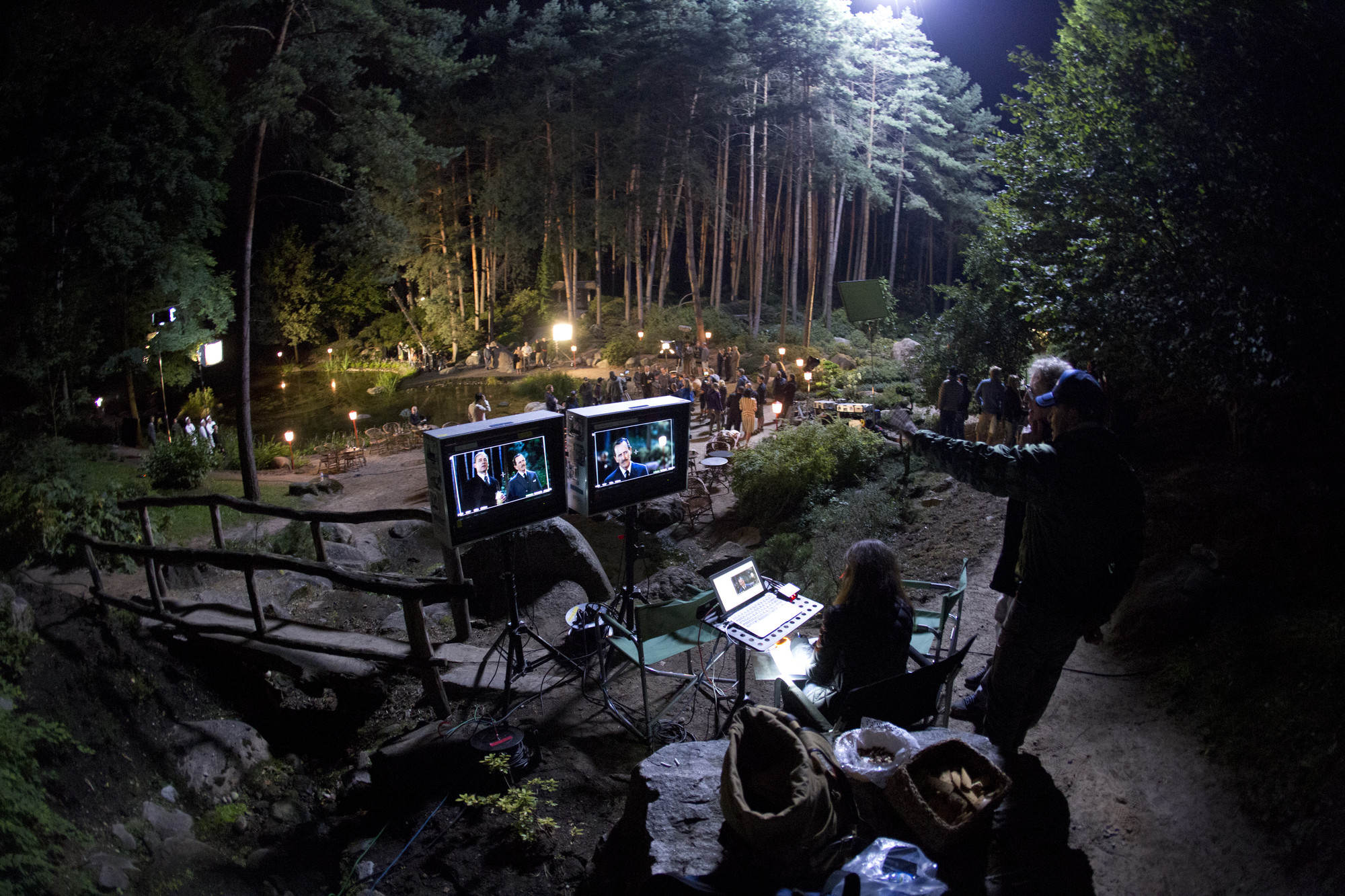
Good to know: The HBO series Chernobyl was partly filmed in this building, using the actual former KGB prison cells. The museum is candid about this, which is either an odd piece of marketing or a reasonable way of reaching audiences who might not otherwise visit. Probably both.
8. The Old Jewish Quarter
Before the Second World War, Vilnius was known as the Jerusalem of Lithuania – a title attributed to Napoleon on his 1812 passage through the city, though the concept predates him. By the 18th century the city had become one of the great centres of Jewish intellectual life in the world, home to the Vilna Gaon (Rabbi Elijah ben Solomon Zalman, 1720–1797), whose influence on Torah scholarship was so profound that his name became synonymous with the city itself. The Jewish community numbered around 100,000 before the war. Approximately 94% were murdered during the German occupation between 1941 and 1944, primarily at Paneržiai, a massacre site in the forest 10 kilometres west of the city where nearly 100,000 people were killed.
The physical quarter is largely gone: the Great Synagogue of Vilna, one of the most magnificent in Europe, was destroyed by the Nazis and its remains bulldozed by the Soviets, who built a school on the site. What survives is fragmentary but meaningful: the small streets of Żydů (Jewish), Stikliů (Glassmakers) and Antokolskio that gave the quarter its original shape; the Choral Synagogue on Pylimo Street, the only one to survive; memorials and Stolpersteine stones embedded in the pavement. The Vilna Gaon Museum of Jewish History, which operates across several sites, provides the most comprehensive account of what was lost and what remains. The newest branch, the Museum of the Culture and Identity of Lithuanian Jews, opened on Pylimo Street in 2024 and is the most thorough introduction available.
Location: The historic Jewish quarter is in the centre of the Old Town, centred on Żydů Street. The Vilna Gaon Museum main branch is at Naugarduko g. 10; the Pylimo Street branch at Pylimo g. 4.
Best time to visit: A dedicated half-day does the subject more justice than a quick walk-through. The Paneržiai memorial site, accessible by suburban train in around 20 minutes, is a separate and important visit.
Ticket prices: Museum admission around €4–6 per branch. Check jmuseum.lt for current details.
Good to know: A free walking tour of the Jewish quarter is the most efficient way to understand the spatial relationship between what existed and what is there now. Several operators run these; the tourist information office in the Old Town can provide recommendations.
9. Trakai Island Castle
Twenty-eight kilometres west of Vilnius, across flat farmland and then suddenly between lakes, Trakai Island Castle sits on an island in Lake Galvė and looks exactly as a medieval island castle should: red Gothic brick, towers at the corners, wooden bridge across the water, the whole thing reflected in the lake on calm days. Construction began under Grand Duke Kėstutis in the late 14th century and was substantially completed by his son Vytautas the Great around 1409. Vytautas died here in 1430, having spent his reign expanding the Grand Duchy from the Baltic to the Black Sea and failing, by the narrowest of margins, to be crowned King of Lithuania, a ceremony that was cancelled at the last moment by a piece of diplomatic manoeuvring that historians have been arguing about ever since. The castle then declined, fell into ruin during the 17th-century wars with Muscovy, and was reconstructed in its current form between the 1950s and 1980s.
The castle houses the Trakai History Museum, which is perfectly good but not the reason people come. The reason people come is the castle itself and the lake around it, which is particularly pleasant from a rowing boat or kayak in summer. The small town of Trakai, which straddles several lakes along a narrow peninsula, is home to the Karaim community – a small Turkic people of Judaic faith who were brought from Crimea by Vytautas in the 15th century to serve as his personal guard and have maintained a distinct presence here ever since. Their traditional pastry, kibinai, is sold at several restaurants along the main street and is the correct thing to eat.
Location: Karaímů g. 41, Trakai. Around 30 minutes by bus or train from Vilnius; buses run frequently from the main bus station.
Best time to visit: Weekday mornings in summer, before the tour buses arrive. Autumn is excellent and less crowded. The castle is striking in winter when the lake is frozen.
Ticket prices: Around €12 for the castle and museum. Check trakai-visit.lt for current prices.
Good to know: The train station in Trakai is a 3km walk from the castle; the bus drops closer. If you arrive by train, the walk along the lake is pleasant but worth knowing about in advance.
10. Gate of Dawn to Paneržiai: A Day of Memory
Vilnius carries its history in ways that many cities do not, and some of the most important things to understand about it require a little more effort than a walk through the Old Town provides. We’ve grouped the Paneržiai Memorial here not because it fits neatly with the Gate of Dawn geographically, but because the two sites together – one of survival and devotion, one of annihilation – bracket a history of this city that is difficult to understand without both. Paneržiai (Ponary in Polish and Yiddish) was the primary site of mass murder during the German occupation of Vilnius: between 1941 and 1944, approximately 70,000 Jews, 20,000 Poles and 8,000 Soviet prisoners of war were shot here in the forest pits originally dug as Soviet fuel storage tanks. It is one of the largest Holocaust massacre sites in Europe.
The memorial site is now a peaceful stretch of pine forest with earthen mounds marking the mass graves, a small museum documenting the events, and several memorials in Lithuanian, Yiddish, Hebrew and Polish. It requires no more than an hour on-site but considerably more time before and after to absorb. The suburban train from Vilnius station takes around 20 minutes; the site is a short walk from Paneržiai station. It is not a comfortable visit, nor is it meant to be.
Location: Agrasty g. 15, Paneržiai, Vilnius. Accessible by suburban train from Vilnius station (direction Trakai or Kaunas, alighting at Paneržiai), around 20 minutes.
Best time to visit: Any time during daylight hours. The site is open year-round; the museum has limited hours – verify before visiting.
Ticket prices: Free. A small admission is charged for the museum.
Good to know: A separate entry for the Paneržiai Memorial appears on the IYP Vilnius site with fuller historical context and practical information. The train to Trakai passes through Paneržiai station, making a combined visit to both sites in one day logistically straightforward.
What else is there to see in Vilnius?
A city that was the capital of the largest country in Europe – at its 15th-century peak the Grand Duchy of Lithuania stretched from the Baltic to the Black Sea – has more than ten things worth seeing, and Vilnius is no exception. The Church of St Peter and St Paul in the Antakalnis district, a ten-minute walk east of the Old Town, contains the most extraordinary interior in the city: a Baroque confection of approximately 2,000 stucco figures covering every surface of the walls and vaulting, commissioned in the 1680s by the Lithuanian hetman Mykolas Kazimieras Pac and executed by Italian craftsmen over several decades. It is genuinely astonishing and consistently undervisited. The Bernardine Garden, the restored riverside park below the castle hill, is the best green space in the city centre and the place where Vilnius residents walk and sit in reasonable weather. The Literati Street (Literatů gatvė), a short lane near the University covered in ceramic plaques, small sculptures and artworks dedicated to Lithuanian writers and literary works, is one of the more charming minor attractions in any city we cover.
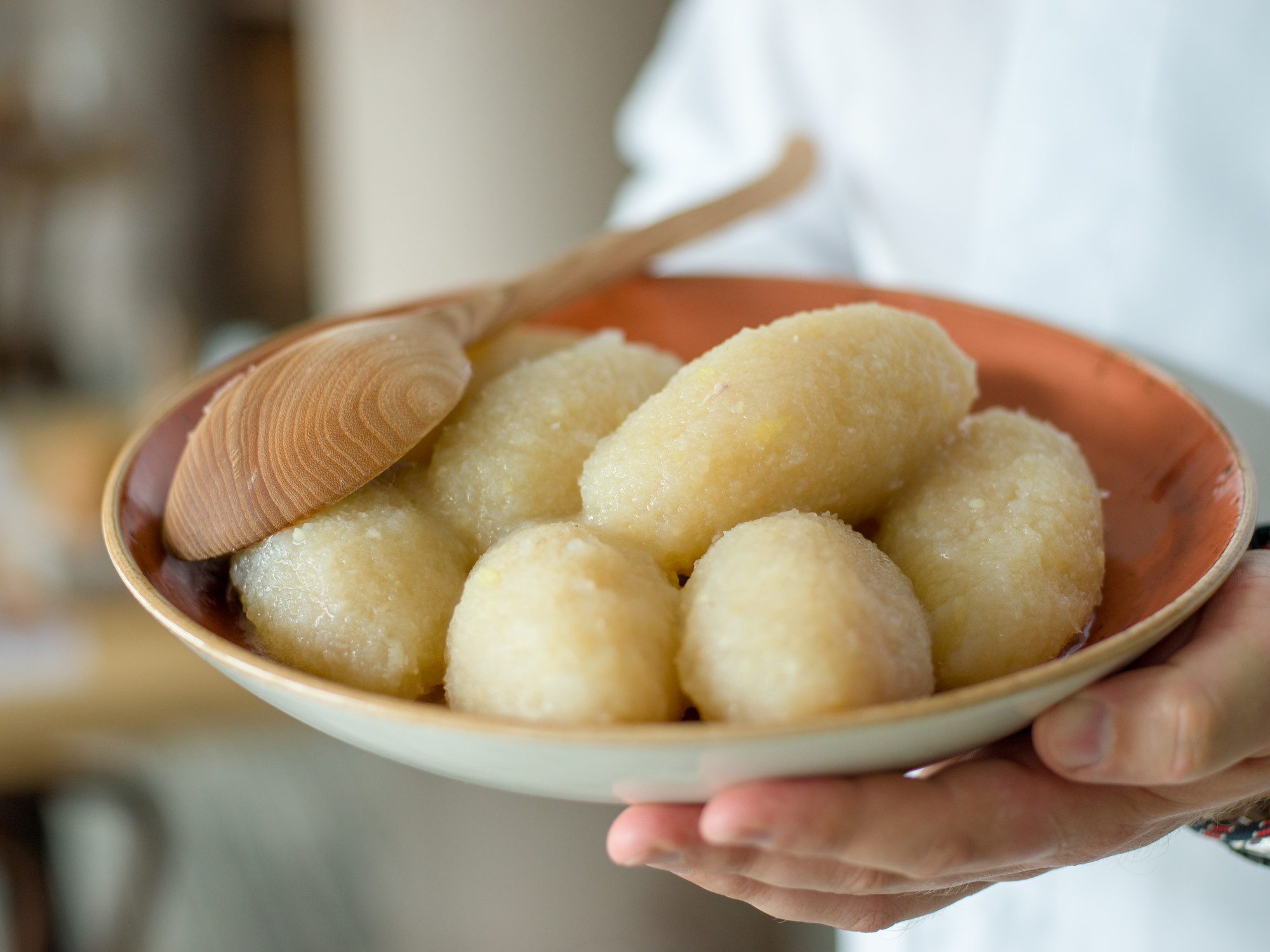
Vilnius eats well and drinks well by any regional standard. Šaltibaršçiai, the cold beet soup that arrives in an alarming shade of pink and is considerably better than it looks, is the thing to order in summer. Çepeliniaí – large zeppelin-shaped potato dumplings stuffed with meat or curd – are the thing to order when you are very hungry and unconcerned about the next two hours. The old town contains enough good restaurants and cafés to sustain several days of eating without repetition, and the craft beer scene, which did not exist twenty years ago, has developed in a direction that would have surprised everyone who was drinking the original Svyturys in 1992. For day trips beyond Trakai, the Hill of Crosses near Šiauliai – a pilgrimage site of approximately 100,000 crucifixes accumulated over centuries of Polish-Lithuanian devotion and Soviet-era defiance – is three hours north and unlike anywhere else on earth.