The capital isn't the destination – it's the starting gun
Land in Podgorica, look around, start planning the escape. That's the move – and it's the right one.Montenegro is a country built for motion. The slow, window-down, pull-over-and-stare kind, the type that only really clicks when someone's behind a wheel with nowhere urgent to be. Podgorica sits almost dead-center in the country, which makes it less a destination and more a launchpad – the Adriatic is 60 kilometers west, Kotor's old walls are 90 minutes away, Albania begins just south of town. For a capital of under 180,000 people, the directions worth heading in are frankly embarrassing in number.
Getting a car here: less painful than expected
Montenegro's bus network is fine. Trains run – eventually. Neither is built for the kind of spontaneity that defines a good Balkan road trip. Someone who wants to catch a waterfall at dawn and be eating grilled fish in Budva by sunset needs a rental car. That's just the reality.Car rental in Podgorica ranges from airport chains to smaller local operators dotted around the city center. Comparing rates across providers used to mean opening twelve browser tabs and losing the will to travel at all – aggregator platforms like Localrent pull listings from multiple suppliers into a single view, which cuts that process down considerably. Prices are generally reasonable by European standards, noticeably more so outside the July–August peak.
Before picking up the keys, a few things are worth knowing:
- Some nationalities need an International Driving Permit alongside a standard license – worth confirming before arrival, not after.
- Montenegro drives on the right, and speed limits drop fast inside towns – 50 km/h is the norm and enforcement is real.
- Mountain roads look manageable on Google Maps and feel considerably less so in person. The bends are tight, the drops are significant.
- Petrol stations cluster around Podgorica but thin out fast heading into remoter terrain – filling up before leaving the city is less paranoia and more basic planning.
West to the Adriatic: the coastal run
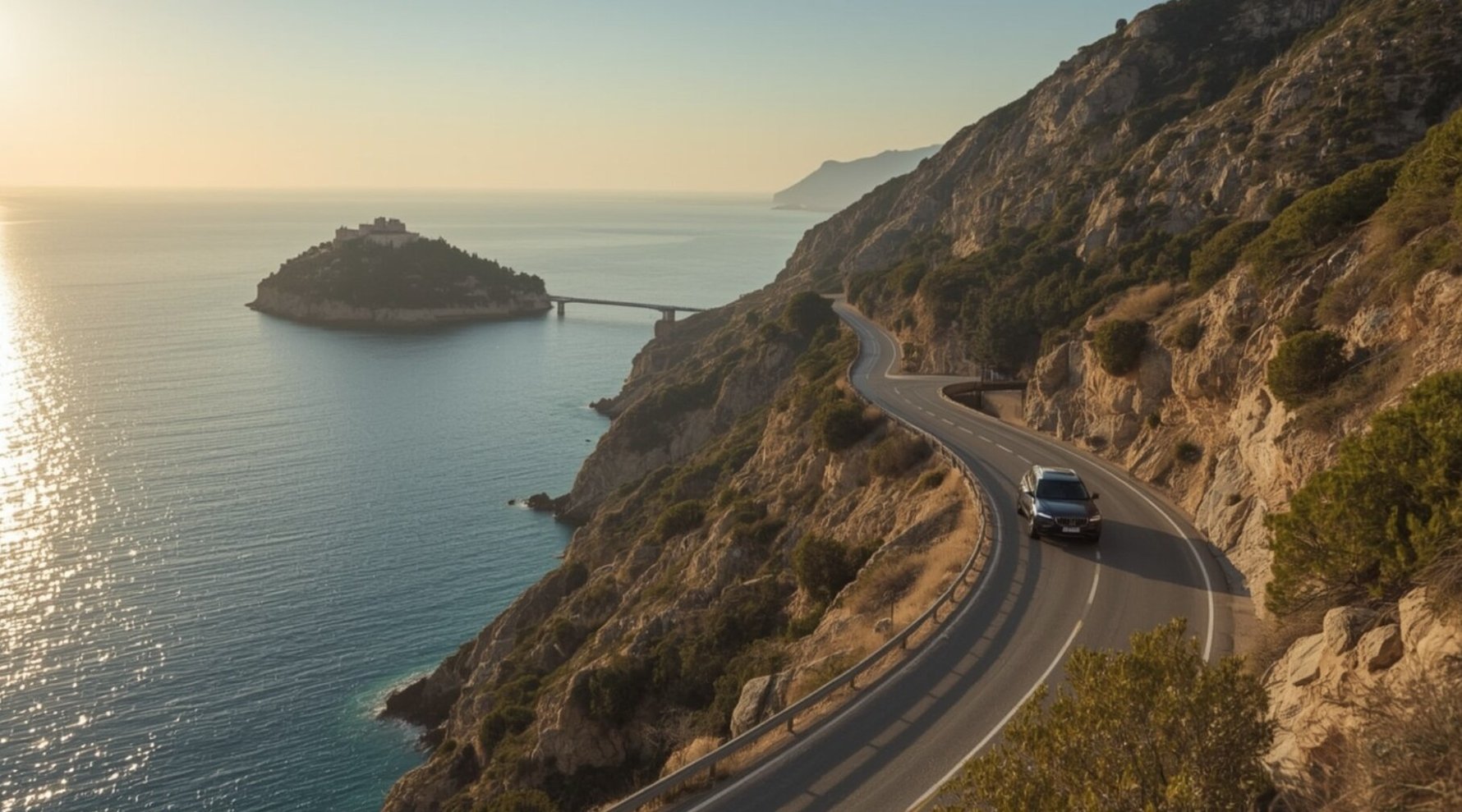
The most-traveled road trip from Podgorica follows the E762 west toward Bar – a working port city with an appealing old town and Stari Bar (the medieval hilltop ruins above) that most visitors skip entirely, which is their loss. Bar sits outside the standard tourist circuit and moves at its own pace because of it.From Bar, the Adriatic Highway (Jadranska Magistrala) runs north along the coast. The road is winding, the views are relentless, and the towns arrive in quick succession. Petrovac comes first – a crescent bay resort that somehow hasn't been overrun yet, the kind of place where a two-hour lunch stretches into four without any sense of guilt. Then Budva, which is altogether different.
Budva is Montana's coastal headline act. The old walled town pushes into the sea, the beaches pack out in summer, and the nightlife has a reputation that precedes it considerably. It demands at least a full day. A few kilometers further south, Sveti Stefan – the iconic island village on its narrow causeway – provides the kind of view that genuinely stops people mid-stride. It appears suddenly around a bend in the road. That moment never really loses its effect.
The inland detour worth the extra day
Travelers with time to spare (and they should make time to spare) tend to loop south before heading to the coast, pulling in two stops that are, without exaggeration, among the most remarkable sights in the entire Balkans.Lake Skadar begins about 30 kilometers south of Podgorica. The largest lake in the region – anywhere between 370 and 530 square kilometers depending on seasonal water levels – it sits across the Montenegrin and Albanian border, ringed by wetlands, ancient vineyards, and half-submerged monasteries that look like they were placed there specifically to be painted. The village of Virpazar is the obvious base; boat trips onto the lake run regularly, cost very little, and deliver disproportionate rewards.
Ostrog Monastery is harder to explain until someone actually sees it. Built directly into a near-vertical cliff face northwest of Podgorica, it draws pilgrims and secular visitors alike – the road up is a switchback adventure in itself, and the views across the valley below are genuinely vertiginous. The monastery and the rock it occupies have become so intertwined over the centuries that it's difficult to say where one ends and the other begins.
When to go – and when not to
Peak season runs late June through August. The coast during this stretch is brilliant and relentlessly busy – Budva parking on a Saturday in July is a character-building experience that seasoned Montenegro travelers generally agree to never repeat. Shoulder season, May to June or September to October, offers the same scenery at a considerably lower volume, with rental rates to match.Spring driving through the interior produces a particular oddity worth seeking out: mountain peaks still white with snow while coastal towns below are already warm enough to swim. The contrast between altitudes during the drive between the two is the kind of thing that ends up being the photo people keep coming back to.