

The city’s museums reflect both its long history and its forward-looking spirit. Classical masterpieces coexist with contemporary art, while scientific achievements are presented alongside social and political history. Many of these institutions are internationally recognised, yet deeply rooted in Munich’s identity as a centre of knowledge and creativity.
This article takes a closer look at some of the best museums in Munich, highlighting their focus areas and explaining why they play such an important role in the city’s cultural landscape.
WOW Museum
The WOW Museum in Munich is an immersive, hands-on museum dedicated to optical illusions, perception, and media art. Here, you don’t just observe exhibits—you step inside them, experiment with perspectives, and discover how easily the senses can be challenged. The experience is designed to spark curiosity and encourage playful learning, making complex ideas about vision and perception accessible and fun.Perfectly located in the city centre, the WOW Museum fits seamlessly into any Munich itinerary. In about 90 to 120 minutes, it delivers a memorable highlight that pairs effortlessly with sightseeing, shopping, or dinner plans. Every installation invites interaction and doubles as a striking photo opportunity, turning visitors into part of the artwork itself.
Whether you’re visiting as a couple, with family, as a team, or simply looking for something different to do, the WOW Museum offers a fresh, climate-controlled indoor experience that inspires wonder across all ages.
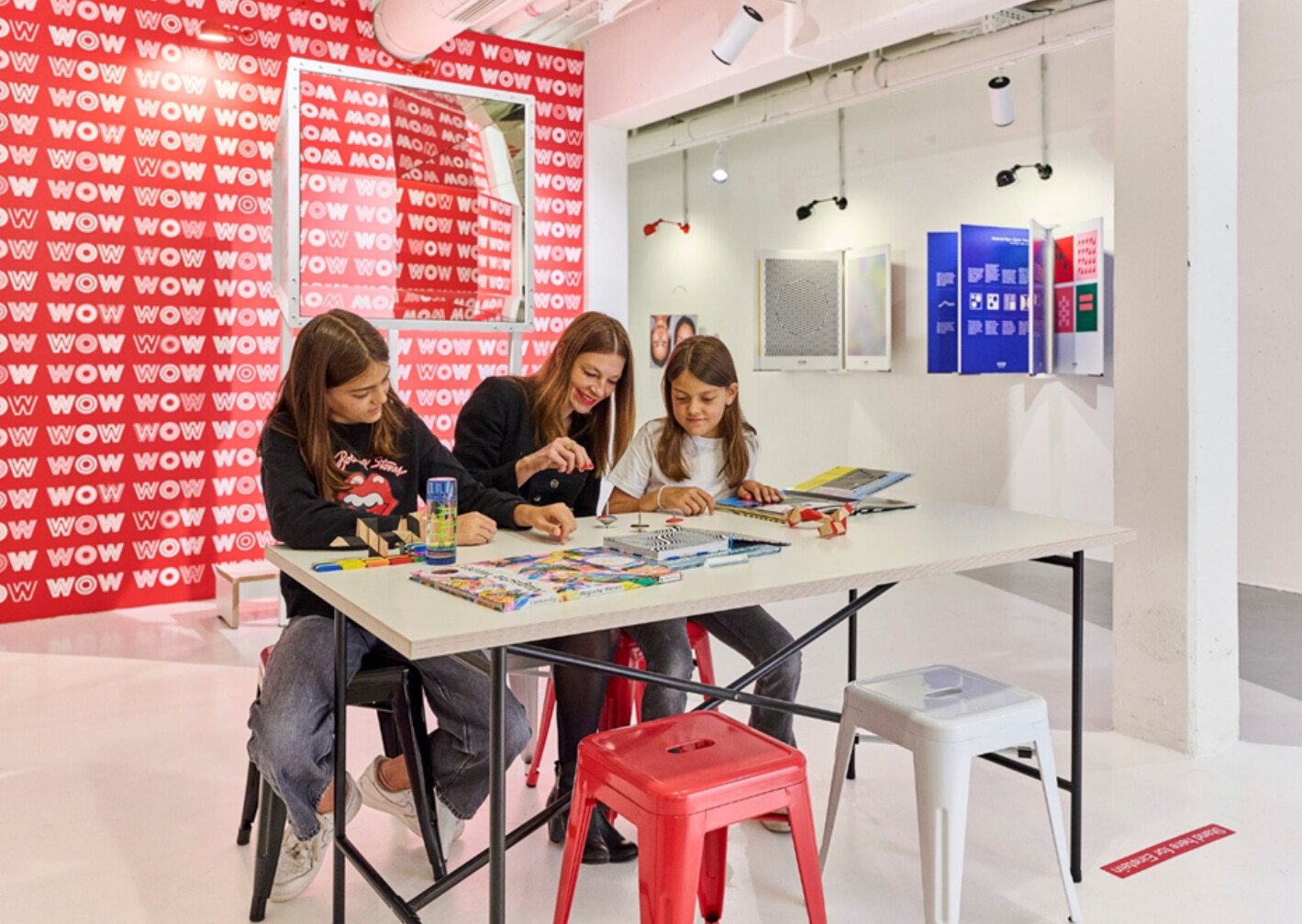
In addition, the WOW Museum positions itself as a place where scientific principles and artistic expression intersect. Optical illusions are used to demonstrate how perception works and how easily the brain can be misled. This approach adds an educational layer to the experience, encouraging reflection alongside entertainment.
Haus der Kunst
Haus der Kunst is one of Munich’s leading institutions for modern and contemporary art, located at the edge of the English Garden. Unlike many museums, it does not hold a permanent collection, allowing it to focus entirely on changing exhibitions, performances, and music events. This flexibility makes it possible to present a wide range of international artistic perspectives and to engage with key issues of our time, such as climate change, postcolonialism, feminism, and inclusion.Over recent years, the museum has showcased works by renowned artists as well as emerging voices, creating a dynamic and evolving programme. At the same time, Haus der Kunst openly addresses its own history through archival exhibitions that critically reflect its origins during the National Socialist era. A visit is often complemented by the historic Goldene Bar, which serves as a café and meeting place within the building.
Alte Pinakothek
The Alte Pinakothek is regarded as one of Europe’s most important painting galleries and houses one of the world’s largest collections of European art from the 14th to the 18th century. More than 700 masterpieces are on display, including key works by Albrecht Dürer and Peter Paul Rubens, as well as significant paintings by Rogier van der Weyden, Hans Memling, Raphael, Titian, Albrecht Altdorfer, Lucas Cranach, Jan Brueghel the Elder, Anthony van Dyck, Rembrandt and Frans Hals.The museum’s exceptional collection is rooted in the art holdings of the Wittelsbach dynasty and was expanded over several centuries. Today, the Alte Pinakothek forms part of Munich’s renowned Kunstareal and belongs to the Bavarian State Painting Collections.
Glyptothek
Located at Munich’s Königsplatz, the Glyptothek is the city’s oldest public museum and the only museum worldwide dedicated exclusively to ancient sculpture. Its collection focuses on outstanding Greek and Roman marble statues, presented in light-filled halls that allow the artworks to stand freely in space and be experienced in a calm, timeless atmosphere.Founded by King Ludwig I of Bavaria, the museum was conceived as a place for masterpieces of the highest artistic quality.
The building itself, designed by architect Leo von Klenze between 1816 and 1830, reflects classical ideals, with a façade inspired by Greek temples and interiors reminiscent of Roman baths. Together with its neighbouring institutions, the Glyptothek makes Königsplatz one of Europe’s most important centres for ancient art.
Museum Brandhorst
Located in the heart of Munich’s renowned Kunstareal, Museum Brandhorst sits close to the Alte Pinakothek, Neue Pinakothek and the Pinakothek der Moderne. The building itself is a striking landmark: designed by Berlin-based architects Sauerbruch Hutton, its façade of 36,000 ceramic rods in 23 different colours reflects the diversity of the art inside.The museum houses the collection of Udo and Anette Brandhorst, which was transferred into a foundation in 1993 and opened to the public in 2009. Today, the collection comprises more than 2,000 works and offers a comprehensive overview of 20th- and 21st-century art, making it one of Germany’s most significant contemporary art collections.
FC Bayern Museum
Located inside the Allianz Arena, the FC Bayern Museum offers an extensive overview of the club’s history from its foundation in 1900 to the present day. As Germany’s largest club museum, it presents the development of FC Bayern München through original exhibits, multimedia installations and clearly structured thematic sections across around 3,300 square metres of exhibition space.The permanent exhibition documents sporting milestones, title wins and defining moments, complemented by historical jerseys, trophies and biographical insights into influential players from different eras. Film material and interactive elements provide contextual background rather than a purely emotional narrative. Located at one of Munich’s major sports venues, the museum can also be combined with a guided tour of the stadium, offering insight into both football history and contemporary sports infrastructure.
Museum "Nymphenburger Porzellan"
The Marstallmuseum houses the Museum of Nymphenburg Porcelain, presenting a remarkable private collection of porcelain produced between the 18th and 20th centuries. Located on the first floor, the exhibition traces the development of the Nymphenburg Porcelain Manufactory, founded in 1747, with a particular focus on artistic craftsmanship and design history.Key highlights include figurative works by Franz Anton Bustelli, whose expressive models once adorned courtly tables, as well as refined Jugendstil porcelain featuring innovative forms and decorations. The collection was originally established by Albert Bäuml and has been continuously expanded by his family, complemented by pieces from the Bavarian Palace Administration. Displayed in historic rooms, the porcelain offers insight into both artistic trends and court culture across several centuries.
Comments