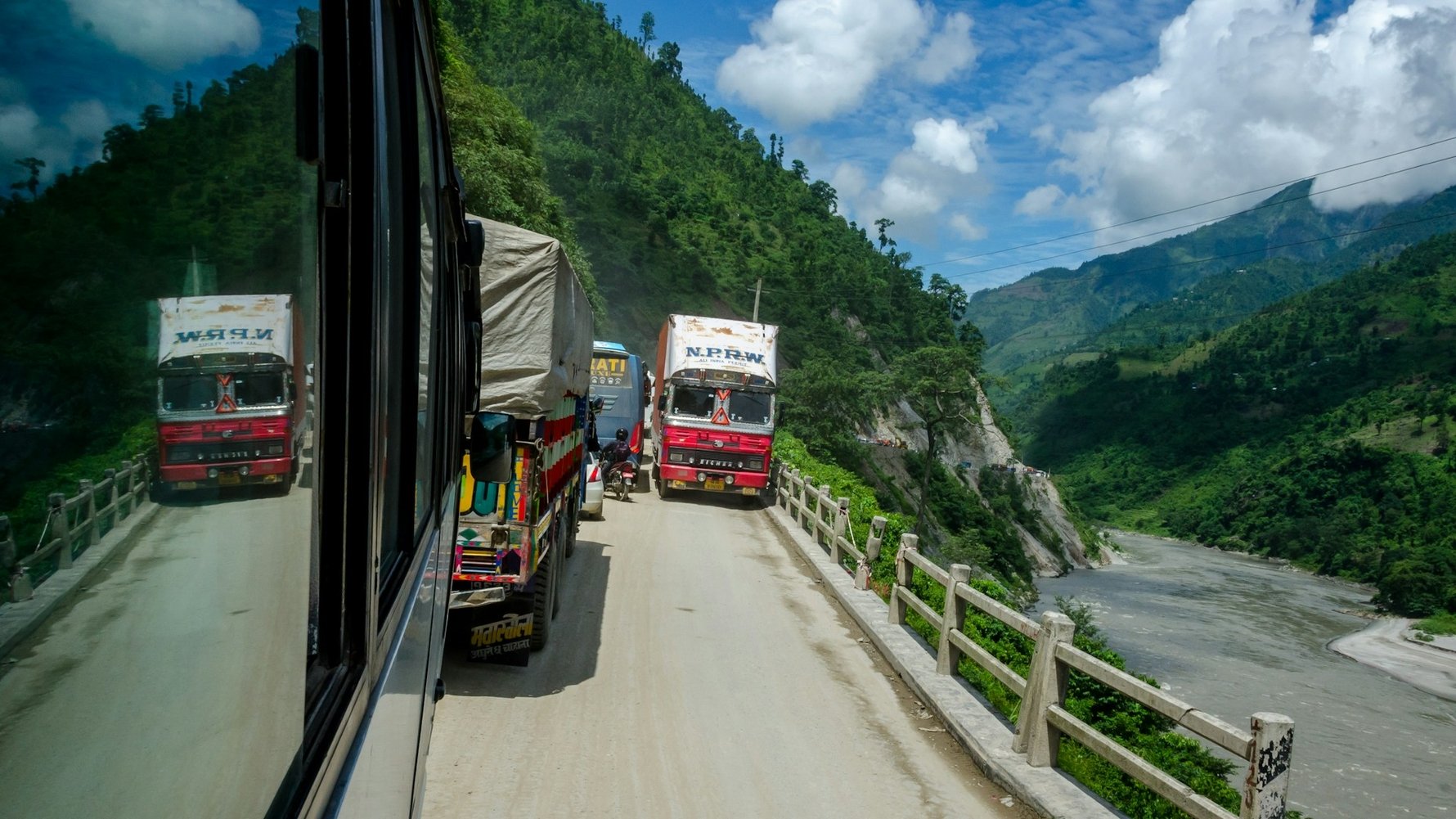
The most popular way to get between Kathmandu and Pokhara is the tourist bus, and for most visitors it's the right call. Yes, it takes the best part of a day. Yes, the road is winding and the traffic can be grim coming out of Kathmandu. But the Prithvi Highway is one of Nepal's more dramatic drives – river gorges, terraced hillsides, hill towns with roadside dal bhat joints – and arriving in Pokhara having actually seen a slice of the country between the two cities feels meaningfully different from stepping off a 25-minute flight having seen nothing but clouds. Nepal is not a place that rewards rushing through, and the bus is in keeping with that.
The flight exists, it's spectacular, and there are legitimate reasons to take it – we'll cover all of that too. But if you have the time and a reasonable tolerance for a long road journey, the bus is where to start.
Caption
By Tourist Bus
The road between Kathmandu and Pokhara is approximately 200 kilometres along the Prithvi Highway, following the Trishuli River gorge through a succession of hill towns, river valleys, and terraced farmland. It is a genuinely beautiful drive. It is also a long one.
All tourist buses depart from Sorhakhutte (also written Sorakhutte), a ten-minute walk northwest of Thamel, at 7am sharp. There are no later scheduled tourist bus departures in the morning. The tourist bus park is easy to find; your guesthouse or hotel can point you there or arrange a ticket in advance, which is strongly recommended in peak season (October–November, March–April).
Journey time: officially 6–7 hours. Realistically, with current road improvement works along sections of the Prithvi Highway, expect 8–10 hours, and occasionally more during festivals or particularly bad traffic days. The road is winding and the buses stop three times – typically at Naubise (toilet break), Malekhu (breakfast), and Damauli (lunch) – so pace yourself accordingly.
Bus categories:
Deluxe/Standard (NPR 800–1,200): Air-conditioned, reclining seats, a bottle of water. Perfectly comfortable for the journey.
VIP Sofa Bus (NPR 1,600–2,500): Wider seats (some even in a 2+1 configuration), more legroom. Worth the premium for taller travellers or anyone who values the extra space on a long road.
Greenline Luxury (USD 25): The premium option – newer coach, included buffet lunch, air conditioning that works consistently. Departs from Tridevi Marg in Thamel rather than Sorhakhutte. Not dramatically better than a good VIP sofa bus for most travellers, but the most comfortable if that's what you're after.
Buses arrive at Pokhara's tourist bus park, which is at the northern edge of Lakeside – a short walk or three-minute taxi to most hotels.
Night buses exist (departing around 7–8pm, arriving around 4am) and are strictly not recommended. Arriving in an unfamiliar city at 4am with your luggage is unpleasant at best; driving mountain roads in the dark is a safety consideration worth taking seriously.
By Air
Multiple airlines operate the Kathmandu–Pokhara route daily: Buddha Air, Yeti Airlines, Shree Airlines, and Surya Air are the main carriers. Flights depart frequently throughout the morning from Tribhuvan International Airport and the journey takes 25–30 minutes.
Fares for foreign nationals run roughly USD 80–130 one way depending on the airline, season, and how far ahead you book. Yes, that's higher than the equivalent for Nepali nationals – Nepal's domestic aviation sector charges a two-tier system for foreigners, which is not unique to Nepal and is worth knowing about rather than being surprised by. Book directly through airline websites or through a reputable local travel agent; prices can vary.
The view: on a clear morning, the flight north of the Kathmandu Valley takes you parallel to the entire Himalayan range at low altitude. If you're flying out of Kathmandu without having already seen the mountains, this is your introduction. Sit left departing Kathmandu, right returning.
The caveat: mountain weather is unpredictable. Flights are frequently delayed or cancelled during the monsoon (June–September) and on misty winter mornings. Do not book a connecting international flight on the same day as a domestic Nepal leg; leave at least a full day of buffer. Airlines generally do refund or reschedule cancelled flights, but being stranded in Pokhara because your Kathmandu domestic connection fell through is an unpleasant start to a trip home.
From the airport: Pokhara's domestic terminal is a short taxi ride from Lakeside – around NPR 400–600, or less via InDrive or Pathao. The prepaid taxi booth inside the terminal is slightly more expensive but hassle-free.
By Local Bus
Local buses to Pokhara depart from the main Gongabu Bus Park (New Bus Park) near Balaju. They're considerably cheaper than tourist buses – around NPR 600–900 – but slower, more crowded, stop more frequently, and are significantly less comfortable for a journey of this length. Fine for budget travellers with time to spare and a high tolerance for a crowded seat; not a realistic option for most visitors.
By Private Vehicle
A private car or jeep hired for the Kathmandu–Pokhara run costs in the range of NPR 12,000–18,000 (approximately USD 90–135) depending on vehicle type and negotiation. For groups of three or four splitting the cost, this becomes competitive with flights while offering door-to-door flexibility and the option to stop wherever you like en route.
Worth considering if you want to stop at Manakamana (accessible by cable car from Kurintar), Bandipur (the beautifully preserved Newari hill town about halfway along the route), or simply at viewpoints along the Trishuli River valley. A private vehicle makes the road journey something to enjoy rather than endure.
Your guesthouse, a local travel agent, or your trekking agency can arrange a reputable driver. Agree the full price upfront including any planned stops and confirm the exact drop-off point in Pokhara.
The Road Itself
Whichever option you choose, it's worth knowing what the Prithvi Highway actually looks like. The road out of Kathmandu climbs through suburban sprawl before dropping into the Mahesh Khola valley at Naubise, then follows river gorges for much of the middle section – the Trishuli is a big, fast river and the road hugs its bank for long stretches, with occasional white-water visible below. At Mugling the highway turns west and the landscape opens up. Closer to Pokhara the paddy fields flatten out and the sky starts to feel bigger. On a clear afternoon, you'll see the first white smudge of the Annapurnas on the horizon an hour or so out.
The scenery is genuinely good. The traffic can be bad, the road quality is variable (improvements are ongoing as of 2026), and motion sickness is not uncommon on the winding sections. If you're susceptible, sit near the front, keep your eyes on the horizon, and come prepared.