The ABC islands share a geography, a colonial history, a language and a position outside the Caribbean hurricane belt. They do not share a personality. Aruba, Bonaire and Curaçao are three genuinely different islands that happen to sit in the same corner of the southern Caribbean, and choosing between them is less a matter of which one is best and more a matter of which one is right for you. The answer to that question depends almost entirely on what you are actually looking for from a trip.
We have covered all three islands in detail in our individual guides. This piece is for anyone who has not yet decided which one to visit, is trying to choose between them, or is wondering whether it makes sense to visit more than one on the same trip. We will give you honest assessments of each island’s strengths and weaknesses, some direct verdicts on who each island suits and does not suit, and a clear answer on whether island-hopping is worth the effort. There is no diplomatic fence-sitting here: the islands are very different and pretending they are all equally good for all purposes is a disservice to the people trying to plan a holiday.
Before getting into comparisons, some context is useful, because the three islands are often grouped together in a way that implies they are more similar than they are.
Aruba is the smallest of the three geographically (around 180 square kilometres) but by far the most visited, receiving close to two million tourists per year. It is the westernmost of the group, sitting 27 kilometres off the Venezuelan coast. Tourism is heavily concentrated on the northwestern hotel strip, particularly Palm Beach, which has a dense concentration of large resort hotels, casinos, chain restaurants and beach clubs. The island has excellent beaches, reliable sunshine and well-developed tourist infrastructure. It is the easiest of the three islands to visit, in the sense that everything is set up for visitors and very little requires effort to access.
Bonaire is the smallest in population (around 24,000 people) and the quietest in character. It sits roughly 80 kilometres from Venezuela, further out than the other two, and is a special municipality of the Netherlands rather than an autonomous country. Tourism is primarily driven by diving: the Bonaire National Marine Park, established in 1979, offers some of the most accessible and best-preserved coral reef diving in the Caribbean. The island has made conservation its defining identity, which shapes the experience in ways that not every visitor anticipates.
Curaçao is the largest (around 444 square kilometres), the most populous (around 160,000 people) and the most culturally complex. Willemstad, its UNESCO-listed capital, has a depth of history and architectural interest that no other ABC island capital can match. The island has 38 beaches, two national parks, a genuinely diverse food culture and a history that includes a major role in the transatlantic slave trade, which its museums address with more directness than is common in the Caribbean. It is the ABC island that rewards exploration most and the one that most resembles a destination in its own right rather than a beach holiday backdrop.
Beaches: An Honest Assessment
This is usually the first comparison people make, and the honest answer is more complicated than most comparison articles acknowledge.
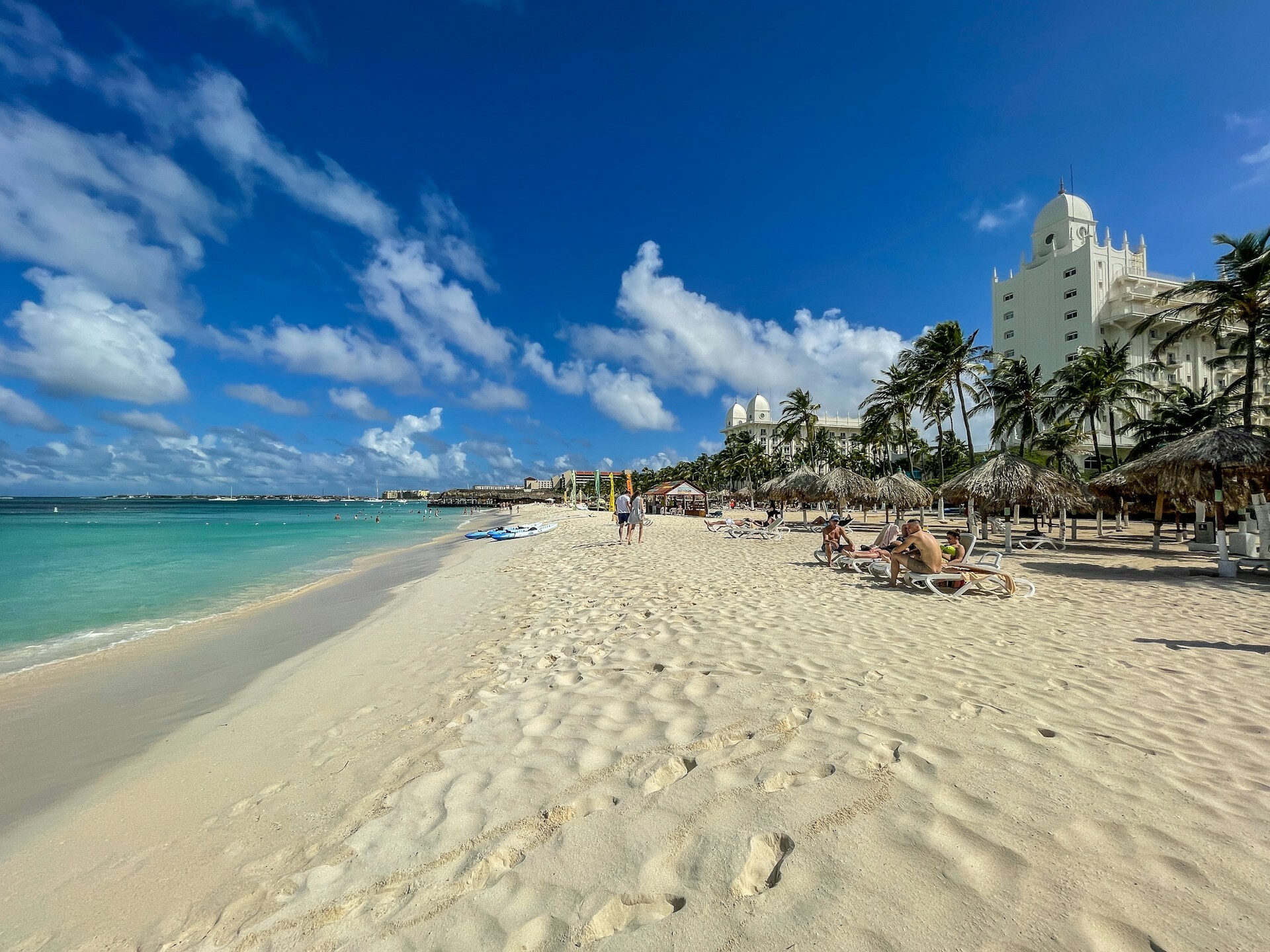
Aruba has the best beaches of the three islands, and it is not particularly close. Eagle Beach is wide, calm, well-maintained and beautiful. Palm Beach is similarly beautiful but significantly more crowded. Baby Beach, in the south, offers exceptional snorkelling in a sheltered lagoon. If long, sandy, swimming-friendly beaches are your primary criterion, Aruba wins.
Curaçao has the most beaches (38 versus Aruba’s roughly 20 and Bonaire’s handful), and the best of them – Playa Kenepa, Playa Lagun, Playa Kalki – are genuinely stunning. However, they require a car and a 45-minute drive from Willemstad to reach, and they are smaller and more intimate than Aruba’s main beaches. The south-coast beaches close to Willemstad are adequate rather than exceptional. Curaçao wins on variety and on the quality of its best options; it loses on convenience and on the consistency of the mid-range options.
Bonaire does not have beaches in the traditional sense, and visitors who arrive expecting Aruba-style sandy strands will be disappointed. The coastline is mostly ironshore – rough volcanic rock – with a few small sandy pockets. Te Amo Beach near the airport is pleasant but modest. The point of Bonaire is not above the waterline.
Diving and Snorkelling
All three islands offer good underwater experiences. They are not, however, equivalent.
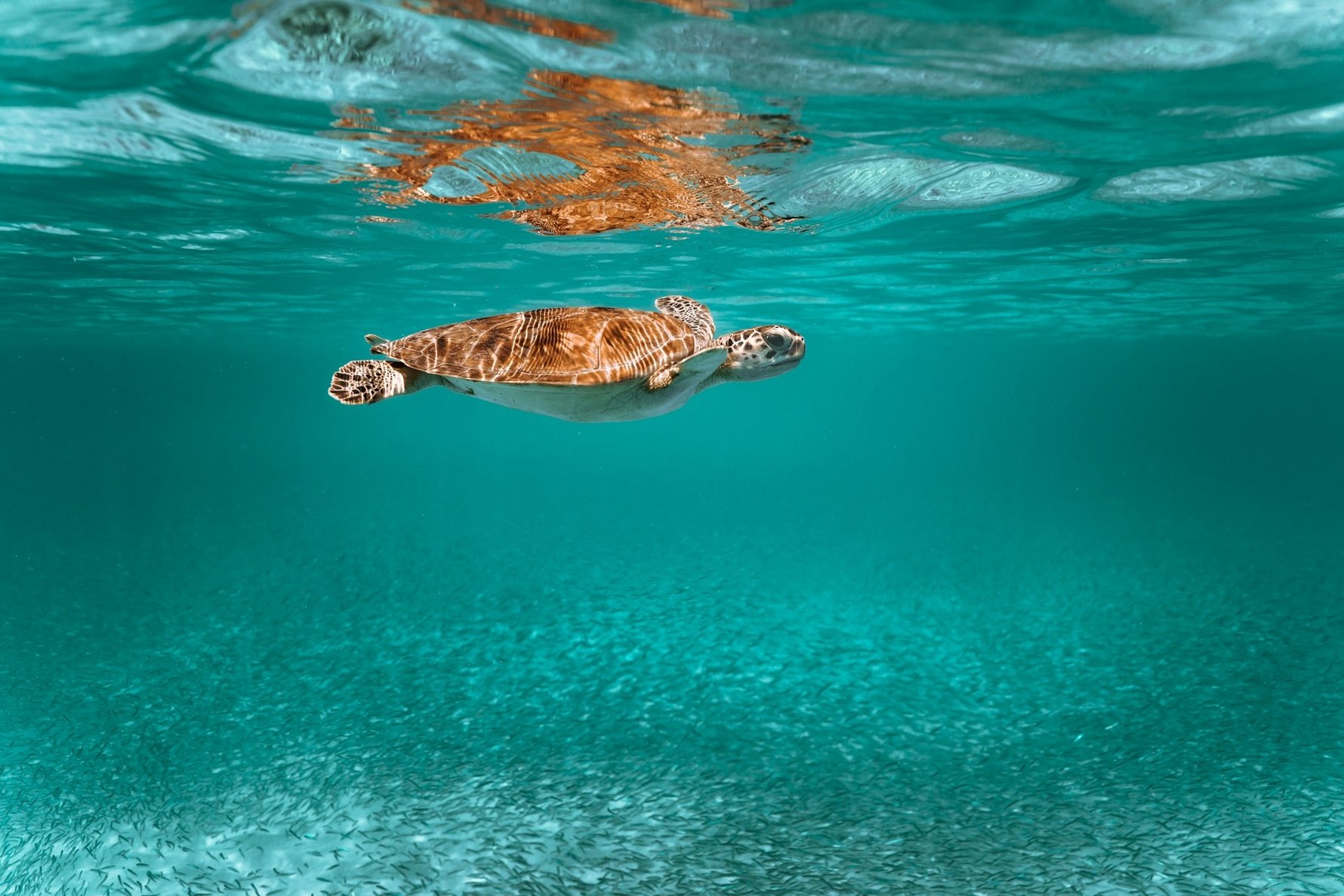
Bonaire is in a category of its own for diving. The Bonaire National Marine Park has 86 designated dive sites, 54 of which are accessible directly from shore without a boat, reef that begins within metres of the shoreline, visibility that commonly exceeds 30 metres, and water temperatures that rarely drop below 26°C. The conservation rules are strict, actively enforced, and directly responsible for the reef’s condition. For certified divers, particularly those interested in shore diving, Bonaire is the reason to choose the ABC islands over any other Caribbean destination. For snorkellers, the shallow reef around Klein Bonaire and the western shore sites is also exceptional.
Curaçao has excellent diving with more than 60 documented dive sites, a healthy reef system and good visibility. The swim to the reef from shore is generally longer than in Bonaire (typically 50–100 metres versus Bonaire’s virtually zero), which makes boat diving more practical. The Tugboat wreck near Caracas Bay is one of the best shallow wreck dives in the Caribbean. Curaçao is a good diving destination; it is simply not Bonaire.
Aruba has the Antilla, the largest shipwreck in the Caribbean, which is genuinely outstanding for both diving and snorkelling. The rest of the diving is solid if unremarkable. Most visitors come for the beaches and add diving as an activity rather than the other way around.
Culture and History
This is where the islands diverge most dramatically.
Curaçao has the most to offer historically and culturally, and it is not close. Willemstad is a genuinely interesting city with real architectural distinction, a UNESCO designation that reflects the quality of its colonial heritage, and a range of museums – the Kura Hulanda covering the transatlantic slave trade, the Mikvé Israel-Emanuel Synagogue covering the oldest Jewish congregation in the Americas, the Christoffel National Park’s Savonet Museum covering plantation history – that address the island’s past with unusual honesty. Curaçao also has the most diverse food scene of the three, the most active arts scene and the most genuine urban life.
Aruba has Oranjestad, which is a pleasant capital with Fort Zoutman, a good Archaeological Museum and the San Nicolas street art scene. These are worth visiting and would be the highlights of a less well-endowed destination. Against Willemstad, they are modest.
Bonaire has Kralendijk, which is a quiet, small-town waterfront capital with a handful of attractions. The island’s history – including the salt pan slave huts in the south, which are among the most sobering historical sites in the Dutch Caribbean – is significant, but the cultural infrastructure to contextualise it is limited. Bonaire’s identity is nature-first, and that is reflected in where the investment has gone.
Nightlife and Entertainment
Aruba has by far the most active nightlife of the three, centred on the Palm Beach resort strip. Casinos, beach clubs, bars, live music and organised entertainment are all plentiful. For visitors who want a lively evening scene, Aruba is the obvious choice.
Curaçao has a genuine local nightlife scene in Pietermaai and Punda, with the Thursday Punda Vibes market and live music event being the social highlight of the week. It is lower-key than Aruba but more authentically local in character.
Bonaire goes to bed early. The evening options in Kralendijk are pleasant but limited. If your idea of a good holiday involves staying out after midnight, Bonaire will test your adaptability.
Crowds and Tourism Pressure
Aruba is the most visited island by a significant margin and feels it, particularly around Palm Beach and in Oranjestad on cruise ship days. The resort infrastructure handles the volume competently, but the experience of feeling like part of a crowd is unavoidable in the main tourist areas.
Curaçao is quieter than Aruba, though Willemstad can become congested on days when multiple cruise ships are docked simultaneously. The beaches in the west are relatively uncrowded. The island attracts a mix of European and American visitors with a predominantly European character outside the cruise terminal.
Bonaire is the quietest of the three by a considerable margin. The island has made a deliberate decision not to develop large-scale resort infrastructure, and the result is a destination that still feels genuinely unhurried. Cruise ships visit occasionally but the port has limited capacity.
Getting There
This is a practical consideration that affects the comparison more than most articles acknowledge.
Aruba has the most direct flight connections from North America and Europe, with non-stop services from major US cities including New York, Miami, Atlanta, Boston and Charlotte. It is the easiest ABC island to reach from most departure points, and the volume of competition on those routes keeps prices relatively competitive.
Curaçao has good but fewer direct connections, primarily from Amsterdam (KLM operates regular non-stop flights), and from a smaller number of US cities. It is easier to reach from Europe than Bonaire but slightly more effort than Aruba from most American cities.
Bonaire has the fewest direct connections. Most visitors fly via Aruba or Curaçao on regional carriers, or connect through Amsterdam. This adds time and cost to the journey, which is worth factoring into the planning stage. There is no ferry service between any of the three islands; flying is the only option for inter-island travel.
Island Hopping: Is It Worth It?
The islands are further apart than they look on a map, and there is no ferry. Inter-island flights take 25–35 minutes in the air but require the usual preamble of airports, and the regional carriers serving the routes are small propeller aircraft with limited luggage allowances. That said, combining two or three islands in a single trip is feasible and, for the right kind of traveller, very rewarding.
The combination that makes the most practical sense is Curaçao and Bonaire: the larger island for culture, beaches and varied experiences, the smaller for diving and conservation. They are 25 minutes apart by air, their characters complement each other well, and a week split between the two covers more ground than a week on either alone.
Adding Aruba to the itinerary makes sense if beach variety and nightlife are priorities, but adding all three can feel rushed if the trip is under ten days. The logistics of three airports, three sets of transfers and three different bases of operation eat into the time that would otherwise be spent on the islands themselves.
For a two-week trip, all three islands is achievable and rewarding. For ten days or less, two islands is the realistic maximum if you want to actually experience each one rather than simply pass through it.
Who Should Go Where: The Honest Summary
Rather than a diplomatic non-conclusion, here is a direct verdict:
Go to Aruba if: You want reliable beach weather, excellent sandy beaches, plenty of watersports, a lively resort atmosphere, casino entertainment, and the ease of a well-developed tourist infrastructure. Aruba is the least demanding of the three islands, in the sense that everything is organised for visitors and very little requires planning or initiative. That is not a criticism; it is what a significant proportion of holidaymakers actually want.
Go to Bonaire if: You are a certified diver, or a serious snorkeller, or both. Go to Bonaire if you value conservation over convenience, quiet over lively, and nature over nightlife. Go to Bonaire if you are happy to drive past a lack of sandy beaches and significant evening entertainment options in exchange for one of the most remarkable marine environments accessible to recreational divers anywhere on the planet. Do not go to Bonaire expecting Aruba.
Go to Curaçao if: You want the most varied and culturally substantial experience of the three. Curaçao suits travellers who want a combination of good beaches, a genuine city with real history and architecture, good food, decent diving and enough variety to fill a week without repeating themselves. It also suits travellers who are interested in engaging honestly with the colonial history of the Caribbean, including the uncomfortable parts.
Go to all three if: You have the time, the budget and the appetite for logistics. Each island adds something the others lack, and the contrast between them is itself instructive – particularly the transition from Aruba’s resort infrastructure to Bonaire’s conservation-first quietness.
The shorthand version that circulates online – Aruba for beaches, Bonaire for diving, Curaçao for culture – is reductive but not wrong. It just understates how different the three islands actually feel on the ground, and how much that difference matters when you are deciding where to spend a week of your annual leave.