Thirty minutes by train from Amsterdam Centraal and approximately one-third of the tourists, Utrecht manages to be a genuinely compelling city rather than simply a convenient day trip from somewhere better. It is the fourth-largest city in the Netherlands, a university town of around 360,000 people, older than Amsterdam by several centuries, and possessed of a canal system with a quirk that no other Dutch city shares. It also has the tallest church tower in the country, a 100-year-old De Stijl masterpiece, an underground Roman fortress and a museum dedicated entirely to machines that play music by themselves. There is rather more going on here than most visitors expect.
Utrecht is compact and eminently walkable. The historic centre sits within a twenty-minute walk of Utrecht Centraal station – or a ten-minute cycle, which is the preferred mode of transport for the approximately 380,000 people who commute through the station daily, making it the busiest in the Netherlands. Prices below were correct when we wrote this; verify before visiting.
The Domtoren has stood over Utrecht for more than 700 years, and at 112 metres it remains the tallest church tower in the Netherlands. Construction began in 1321 and was completed in 1382, during which time the tower was attached to St Martin’s Cathedral – then the largest church in the Netherlands. In 1674, a rare summer tornado tore through the city, collapsing the nave of the cathedral entirely and leaving the tower standing in isolation on one side of what was suddenly a very large square. The rubble took decades to clear. The nave was never rebuilt. The tower has stood alone ever since, its disconnection from the cathedral giving the Domplein one of the more unusual open spaces in northern Europe.
The tower can only be visited on a guided tour, which starts at the Tourist Information Centre on the Domplein and takes around 75 minutes. The guides cover 2,000 years of history from the Roman fort below to the current view above, passing through the chapel, the bell chamber (with its 51 bells, the largest weighing over 7,500 kg) and two external galleries at 70 and 95 metres before the final climb to the top at 112 metres. The staircase has 465 steps and is genuinely steep in places; the views from the observation platform are, as you would expect of the highest point for a considerable distance, exceptional. On a clear day you can see Amsterdam.
Location: Domplein 9, Utrecht city centre. A 10–15 minute walk from Utrecht Centraal station, or bus 2 to Domplein.
Best time to visit: Book in advance, particularly on weekends and in summer when tour slots fill up. Tuesday at noon the city carillonneur gives a free outdoor concert from the tower.
Ticket prices: Around €14.50 for adults. Tours depart on regular schedules; check the official website for times.
Good to know: Bags of all kinds must be stored in the free lockers before you enter the tower. The staircase is very narrow and there are sections where groups pass each other going up and down – the guides are experienced at managing this, but it does require a reasonable level of mobility.
2. Oudegracht and the Wharf Cellars
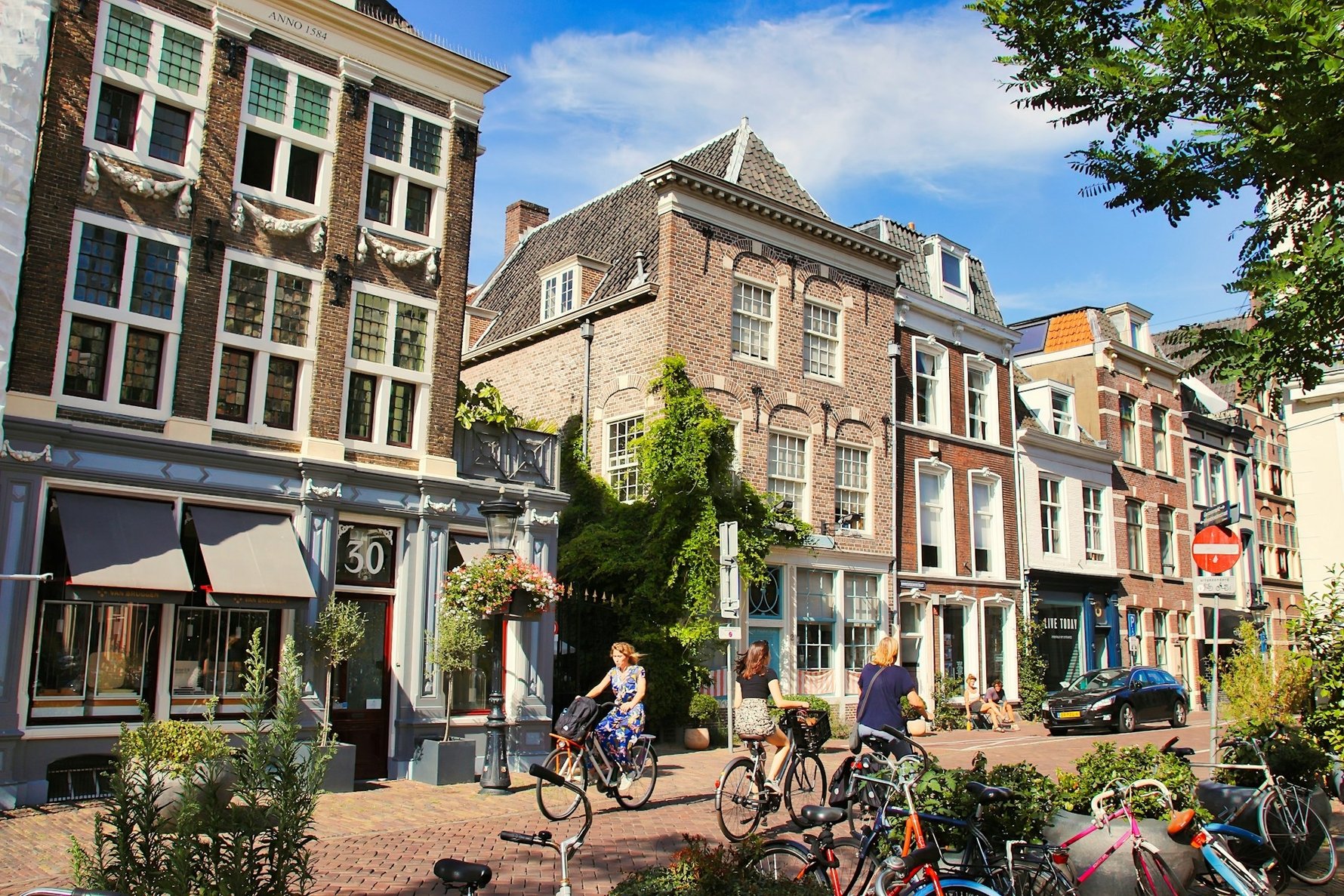
The Oudegracht – the Old Canal – is the waterway that runs through the heart of Utrecht and distinguishes the city’s canal system from any other in the Netherlands. Unlike Amsterdam, where the canal runs at street level, the Oudegracht operates on two levels: the street above, lined with 17th and 18th century buildings, and below it a lower quayside – the wharves – running along the water’s edge. Between the wharves and the buildings above are a series of medieval vaulted cellars, originally used to load and unload goods directly from boats onto storage below street level. The boats are gone, but the cellars remain, and the majority have been converted into bars, restaurants, cafés and the occasional bookshop.
The effect is to give the Oudegracht a double life: one Amsterdam-style experience of looking down at the canal from the bridge and the street, and another, quieter and somehow more intimate experience of sitting at water level beneath the city’s feet, with the canal immediately beside you and the buildings rising above on both sides. On a warm evening, the lower wharves are among the most pleasant places to drink a beer in any Dutch city. In winter, the canal occasionally freezes and the wharves become an ice-skating venue, which is even better.
Location: Running north–south through the historic centre; the most atmospheric stretch is between Gaardbrug and Viebrug. A short walk from the Dom Tower.
Best time to visit: Summer evenings for the terrace culture on the lower wharves; Saturday mornings for the market stalls along the upper street.
Ticket prices: Free. The canal itself costs nothing; the cafés and restaurants are priced as you would expect.
Good to know: Canal boat tours operate from the Oudegracht in summer, offering a different perspective on the wharf architecture from the water. They are a good way to appreciate the two-level system.
3. DOMunder
Beneath the Domplein – the square left behind when the cathedral nave collapsed in 1674 – lie the remains of 2,000 years of continuous occupation: a Roman military fort, a succession of churches, medieval foundations, and the shattered masonry of the collapsed nave itself. DOMunder is the archaeological attraction that makes this visible, accessible and – unusually for a site of this nature – genuinely engaging for visitors who are not already archaeology enthusiasts.
The tour runs for around 75 minutes and begins at the Tourist Information Centre on the Domplein before descending to 4.7 metres below the surface. Each visitor is given an interactive flashlight; when pointed at sensors embedded in the ruins, it activates narration through headphones explaining what you are looking at. The Roman fortress Trajectum, established here in the 1st century AD to mark the northern frontier of the empire, is visible in the foundations. So is the outline of the medieval cathedral, the evidence of several earlier churches built on the same site, and the dramatic disruption left by the 1674 storm. The pavement of the Domplein above, marked with the footprint of the lost nave, suddenly makes a great deal more sense after you have stood in its foundations.
Location: Entrance via the Tourist Information Centre, Domplein 9. Tours depart on regular schedules.
Best time to visit: Book in advance – the limited capacity per tour means slots sell out, particularly in summer and at weekends.
Ticket prices: Around €12–€15 for adults, with some dynamic pricing. Check the official website for current prices and tour times. Closed Mondays.
Good to know: DOMunder and the Dom Tower can be visited as a combination, going underground first and then climbing up. The Tourist Information Centre sells tickets for both.
4. Dom Church
The Domkerk – St Martin’s Cathedral – is the truncated survivor of what was once the largest church in the Netherlands. Only the choir and the transept remain; the nave collapsed in the 1674 storm and the space it occupied is now the Domplein. The coloured paving stones in the square mark exactly where the nave stood, which means that anyone walking from the cathedral door to the Dom Tower is crossing the footprint of the largest church interior in the medieval Low Countries without necessarily realising it.
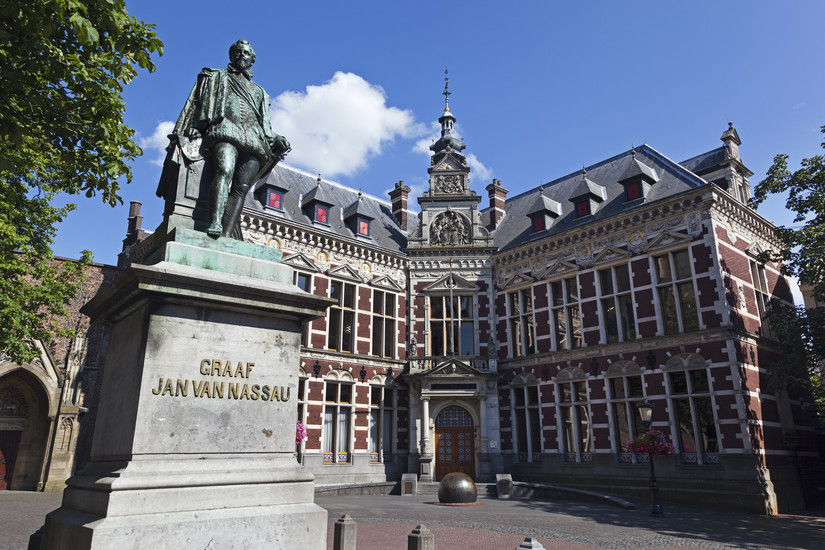
What survives is considerable. The choir – built in the late 13th and early 14th centuries in Brabantine Gothic – is soaring and beautifully proportioned, with stained glass windows, medieval stone carvings and floor slabs covering the graves of bishops, nobles and clerics. Parts of the building now house Utrecht University, which has occupied various sections of the cathedral complex since the Reformation. The small cloister garden directly adjacent – the Pandhof – is one of the most peaceful spots in the city: a medieval courtyard garden maintained by the university, free to enter and almost entirely overlooked by day-trippers.
Location: Domplein, directly across the square from the Dom Tower.
Best time to visit: Weekday mornings for the church; any time for the cloister garden (open 10am–4pm, closed for occasional university events).
Ticket prices: Free to enter the church. Guided tours are available for a fee; check the website for schedules.
Good to know: Saturday afternoon concerts are held regularly in the cathedral. The acoustics are good and admission is generally free or low-cost.
5. Museum Speelklok
Museum Speelklok – the word means musical clock – is housed in the medieval Buurkerk, a former parish church a few minutes’ walk from the Domplein, and is dedicated entirely to self-playing musical instruments. This is either a niche proposition or, once you are inside and the instruments are playing, one of the most joyfully strange museum experiences in the Netherlands. It is very much the latter.
The collection spans centuries of mechanical ingenuity: tiny music boxes with hair-thin pins activating individual notes, elaborate musical clocks with automata, pianolas, orchestrions (self-playing orchestras in a box, used in cafes and cinemas before recorded music), and the enormous Dutch street organs – draaiorgels – that were once a fixture of urban street life across the Netherlands. Most of the instruments are in working condition and are demonstrated by guides on hourly tours that are included in the ticket price. Hearing a 200-year-old barrel organ fill the nave of a medieval church is one of those experiences that is genuinely difficult to anticipate from a description. The restoration workshops at the back of the museum, where craftspeople work on keeping these mechanisms alive, are visible through glass.
Location: Steenweg 6, a short walk from Domplein. Bus 2 to Domplein stop.
Best time to visit: The hourly guided tours are the point – plan your visit around the tour schedule. Open Tuesday to Sunday from 10am.
Ticket prices: €15.50 for adults; €8 for ages 4–12. The guided tour is included in the admission price.
Good to know: Museum Speelklok and the Dom Tower offer a combination ticket, valid for seven days, available at the Museum Speelklok desk or the Tourist Information Centre on the Domplein.
6. Centraal Museum
The Centraal Museum is Utrecht’s main municipal museum, founded in 1838 and housed in a former 15th-century convent, and has accumulated one of the more eclectic and rewarding collections of any regional museum in the Netherlands. The permanent collection covers Utrecht art from the medieval period to the present – including a significant holding of Utrecht Caravaggisti paintings from the early 17th century, work by Jan van Scorel and Hendrik ter Brugghen – alongside fashion, industrial design, applied arts and city history.
The highlights for most visitors are the world’s largest collection of Rietveld objects (furniture, models, scale drawings – a comprehensive record of one of the 20th century’s most important designers), and the reconstructed studio of Dick Bruna, creator of Miffy (Nijntje in Dutch), who was born in Utrecht and worked in the city until his death in 2017. The studio has been preserved exactly as it was, down to the pencil stubs and the postcards pinned to the walls. The museum also contains the Utrecht Ship – a thousand-year-old merchant vessel discovered in the 1930s, sitting in the museum basement smelling of preserved wood – and runs both the Miffy Museum across the street and the Rietveld Schröder House.
Location: Agnietenstraat 1, south of the city centre. Bus 8 or 28 to Centraal Museum stop, or a 20-minute walk from Utrecht Centraal station.
Best time to visit: Weekday mornings. The museum opens at 11am on Tuesdays.
Ticket prices: Around €15 for adults; free for under-5s. The Miffy Museum across the street is included with a Centraal Museum ticket.
Good to know: The museum café looks over a garden courtyard and serves lunch on chairs designed in the Rietveld manner – comfortable enough for a coffee, character-building for a long sit.
7. Rietveld Schröder House
In 1924, Gerrit Rietveld – a Utrecht furniture designer best known for his angular Red and Blue Chair – built a house for Truus Schröder, a recently widowed mother of three who wanted a home designed without conventional rooms and without any relationship to the bourgeois domestic tradition. What he produced, in collaboration with Schröder herself, was the Rietveld Schröder House: a two-storey structure at Prins Hendriklaan 50 in eastern Utrecht that looks unlike any other building constructed before or since, and which UNESCO listed as a World Heritage Site in 2000.
The house operates entirely on De Stijl principles: straight lines, primary colours against white, grey and black, and an interior that refuses to separate inside from outside. The upper floor is a single open space that can be divided into three rooms by a system of sliding and folding walls – a radical idea in 1924, and still radical-looking today. Schröder lived in the house from its completion until her death in 1985, and Rietveld himself lived there from 1958 until he died in 1964. The house is managed by the Centraal Museum and visits are by guided audio tour, with groups limited to allow for proper engagement with the space. It faces a motorway built in the 1960s, which Schröder strenuously but unsuccessfully opposed. She bought the empty field opposite in the 1930s to protect her view; the motorway came anyway.
Location: Prins Hendriklaan 50. A 20-minute bus ride from the city centre; bus 28 from Utrecht Centraal to Rietveld Schröderhuis stop.
Best time to visit: Advance booking is essential – group sizes are very small and slots sell out.
Ticket prices: Around €16 for adults, including the audio tour. Book through the Centraal Museum website.
Good to know: Photography inside is permitted with the audio guide player but not with standalone cameras or tripods. The house is small and the tours are intimate; it is not suitable for visitors who find confined spaces uncomfortable.
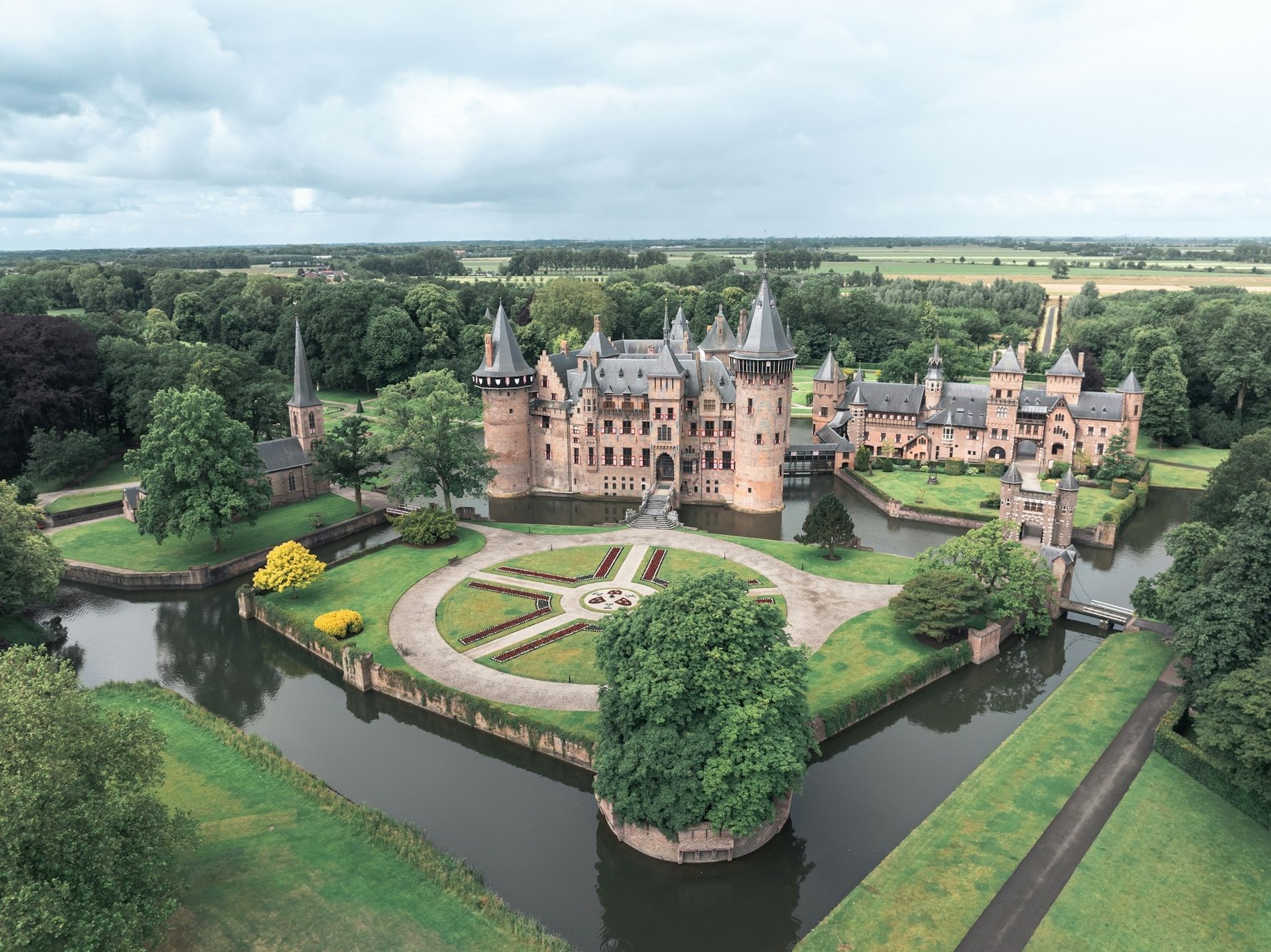
The Kasteel De Haar is 12 kilometres west of Utrecht in the village of Haarzuilens, and is the largest castle in the Netherlands, which it became through one of the more extravagant restoration projects in Dutch history. The original medieval castle had been falling into ruin since the 15th century when, in the 1890s, it was inherited by Baron Etienne van Zuylen van Nyevelt, who had married into the Rothschild banking family. The baron commissioned architect Pierre Cuypers – who had also designed the Rijksmuseum and Amsterdam Centraal station – to restore it. Cuypers spent 20 years on the project, completing it in 1912. He used different brickwork to distinguish old from new, though the overall effect is overwhelmingly neo-Gothic rather than medieval.
The results are considerable. The castle has over 200 rooms, a moat, drawbridges, turrets and battlements of the fairy-tale variety, and 55 hectares of grounds designed in the style of Versailles. The interior is decorated with the Rothschild family’s collection: Dutch master paintings, Flemish tapestries, Japanese lacquerware and furniture of considerable quality. The castle was equipped at construction with electricity (its own generator), central heating, refrigeration and a kitchen with the largest set of copper pots and pans still extant in the Netherlands. The Van Zuylen family retained the right to spend one month per year in residence, and invited their friends: Coco Chanel, Yves Saint Laurent, Gregory Peck and Brigitte Bardot are among the guests recorded in the visitors’ book. To accommodate the 7,000 mature trees transported across Utrecht for the grounds, a village that previously occupied the site was demolished and rebuilt a kilometre away. The new village is also neo-Gothic.
Location: Kasteellaan 1, Haarzuilens, around 12km west of Utrecht. By car, 25 minutes from Utrecht. By public transport, take a train to Vleuten and bus 127 toward Brink/Haarzuilens, then a 15-minute walk.
Best time to visit: Spring for the rose garden (over 1,200 roses, 79 species); the castle closes on Mondays.
Ticket prices: Around €19 for adults (castle and grounds); €7 for the park alone. Parking costs extra. Free with the Dutch Museumkaart.
Good to know: The castle is not wheelchair accessible due to its many stairs. The grounds, however, are fully accessible and worth the visit independently of the interior.
9. Pandhof van de Dom
The Pandhof van de Dom is the medieval cloister garden of the Dom Church, a small enclosed courtyard immediately beside the cathedral on the south side. It is owned by Utrecht University, which occupies parts of the broader cathedral complex, and is open to the public during university hours – typically 10am to 4pm, though it closes for occasional university events. The garden is laid out in a pattern of low hedges around a central space planted with herbs and flowers, unchanged in its basic form for several hundred years.
It appears in no major tourist guide, is marked on no prominent signpost, and receives approximately none of the visitor traffic that the Dom Tower and DOMunder attract on the other side of the square. It is one of the most peaceful places in any Dutch city. The cloister walks surrounding it have their original medieval stonework and provide a covered space to sit in when it rains, which in the Netherlands is a practical consideration. There is also a smaller courtyard garden called Flora’s Hof on the other side of the Domplein, beside the Dom Tower rather than the church – also largely unknown, also worth finding.
Location: Directly beside the Dom Church on the south side; the entrance is on Servetstraat. A two-minute walk from the Dom Tower.
Best time to visit: Any weekday morning. Open 10am–4pm; occasionally closed for university events.
Ticket prices: Free.
Good to know: Utrecht has a number of other hofjes – enclosed courtyard gardens – hidden around the city centre. The Sint Catharinaconvent, now a museum of religious art, has a particularly fine one.
10. Het Spoorwegmuseum
The Het Spoorwegmuseum – the National Railway Museum – occupies the former Maliebaan station, a beautifully preserved 19th-century terminus at the eastern edge of the city centre that was in regular service until the 1930s and has been a museum since 1954. Utrecht is the logical home for the Dutch national railway collection: it has the busiest railway station in the Netherlands, and the country’s rail network radiates from it in all directions. The museum makes good use of its setting – the historic station building provides the atmosphere that purpose-built museum structures cannot manufacture.
The collection covers the full history of Dutch rail from the first trains in the 1830s through the steam era, the electrification period and into the present, with around 60 locomotives, carriages and other vehicles on display. The highlights include a royal carriage used by King William III in the 19th century, the golden coach of Queen Wilhelmina, and a range of steam locomotives in various states of restoration. There are also immersive recreation areas, a simulator and a programme of special events involving working steam. It is an excellent museum for all ages and one of the few in Utrecht that can comfortably absorb most of a day.
Location: Maliebaanstation 16. A 15-minute walk east from the city centre, or bus 8 from Utrecht Centraal to Spoorwegmuseum.
Best time to visit: Weekday mornings to avoid school groups; check the website for special steam event days.
Ticket prices: Around €17.50 for adults; free for under-4s. Free with the Dutch Museumkaart.
Good to know: The museum is closed on Mondays. The station building itself – wrought iron, high glass roof, original platform furniture – is worth the trip independently of the collection.
What else can you see in Utrecht?
Utrecht has more to offer than a single day allows. The Centraal Museum’s satellite the Miffy Museum (Nijntje Museum) directly across the street is entirely designed for children aged two to six: a series of bright, hands-on rooms built around Dick Bruna’s rabbit character, which was created in Utrecht in 1955 and is one of the most reproduced children’s illustrations in history. Adults who visit the Centraal Museum get free admission to the Miffy Museum with their ticket, and the combination works well. The Sonnenborgh Observatory, built inside a former city fort on the Singel canal, holds regular evening observation sessions and daytime visits. The Hortus Botanicus Utrecht – the botanical garden of Utrecht University, founded in 1723 – is one of the oldest academic gardens in the Netherlands and a good afternoon retreat from the city centre.
Utrecht’s food and drink scene has improved considerably in recent years, driven partly by the university student population and partly by a growing interest in local produce. The city has a strong café culture centred on the Oudegracht and Neude square; the brown cafés along the wharf cellars are particularly good. For something more substantial, the covered Vredenburg Market on Saturday mornings is the largest open-air market in the Netherlands, covering the entire Vredenburgplein with food stalls, street food and a significant stroopwafel presence. The stroopwafel, invented in Gouda but now enthusiastically produced throughout the Netherlands, is best eaten fresh and warm from a market stall, not from a plastic-wrapped packet in a service station, and the difference is genuinely significant.
Day trips from Utrecht spread in all directions. Gouda, 45 minutes south, has a Thursday cheese market from April to August that is one of the more photogenic markets in the country, and a collection of stained-glass windows in the St Janskerk that are among the finest in northern Europe. Kasteel De Haar has its own entry in this list and is the obvious castle excursion. Further afield, Arnhem and the Hoge Veluwe National Park, an hour east, offer the Kröller-Müller Museum – which has the second-largest collection of Van Gogh paintings in the world after the Van Gogh Museum in Amsterdam, as well as one of the best sculpture gardens in Europe – alongside cycling through an exceptionally beautiful national park.