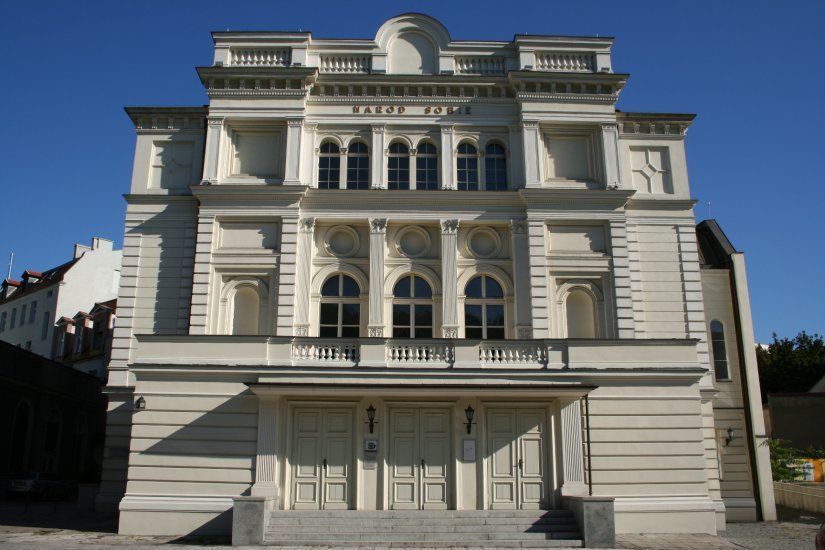
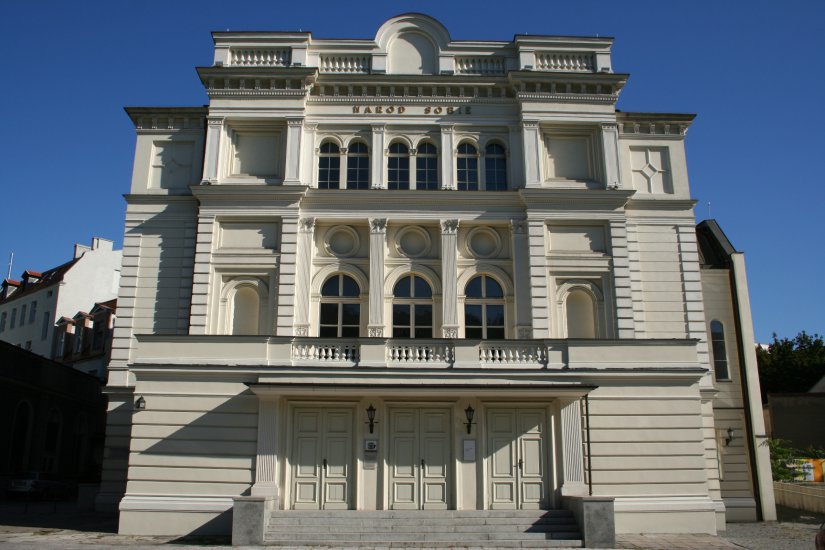
This theatre is an important symbol of Polish national identity, born at a time when Polish culture was being suppressed in Poznań. In the 1870s, city authorities removed the Polish language from schools and churches, arrested hundreds of Polish activists and priests (including the Archbishop), and restricted the freedom of the press as part of a culture war against Poles and the Catholic Church (a strong defender of Polish rights). Ironically, the creation of the Polish Theatre was only possible thanks to the lifting of a ban on non-German-language stage performances. The result of a strong campaign that brought in donations from all parts of the partitioned Polish lands, the Polish Theatre differed from others in that it was not meant only for the elite, but for all of Polish society. The ‘Naród sobie’ inscription on the facade conveys the building’s ‘by the people, for the people’ origins and philosophy.
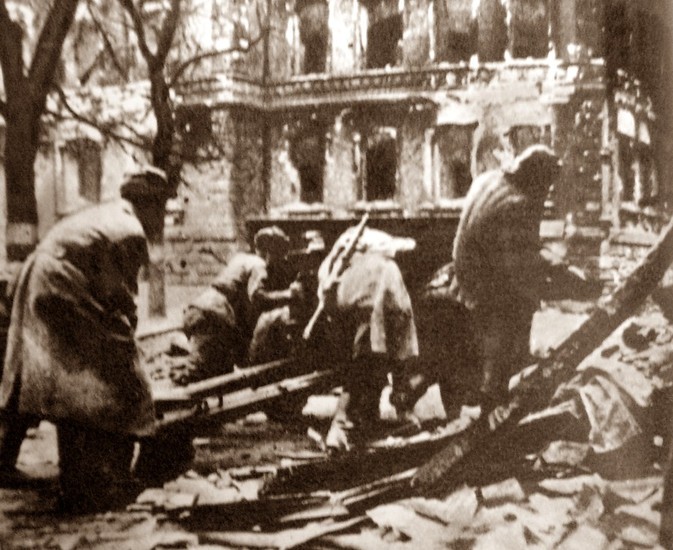
Inaugurated in 1875, the monumental Renaissance-inspired building was originally set in a courtyard with a fountain in front of it, behind a long, grand Polish-owned tenement building that was rented out to fund the theatre’s operation. Although the theatre largely escaped damage during World War II, the frontage buildings did not, and they were eventually torn down in the 1970s, creating the wide sidewalks and greenery along the street today.
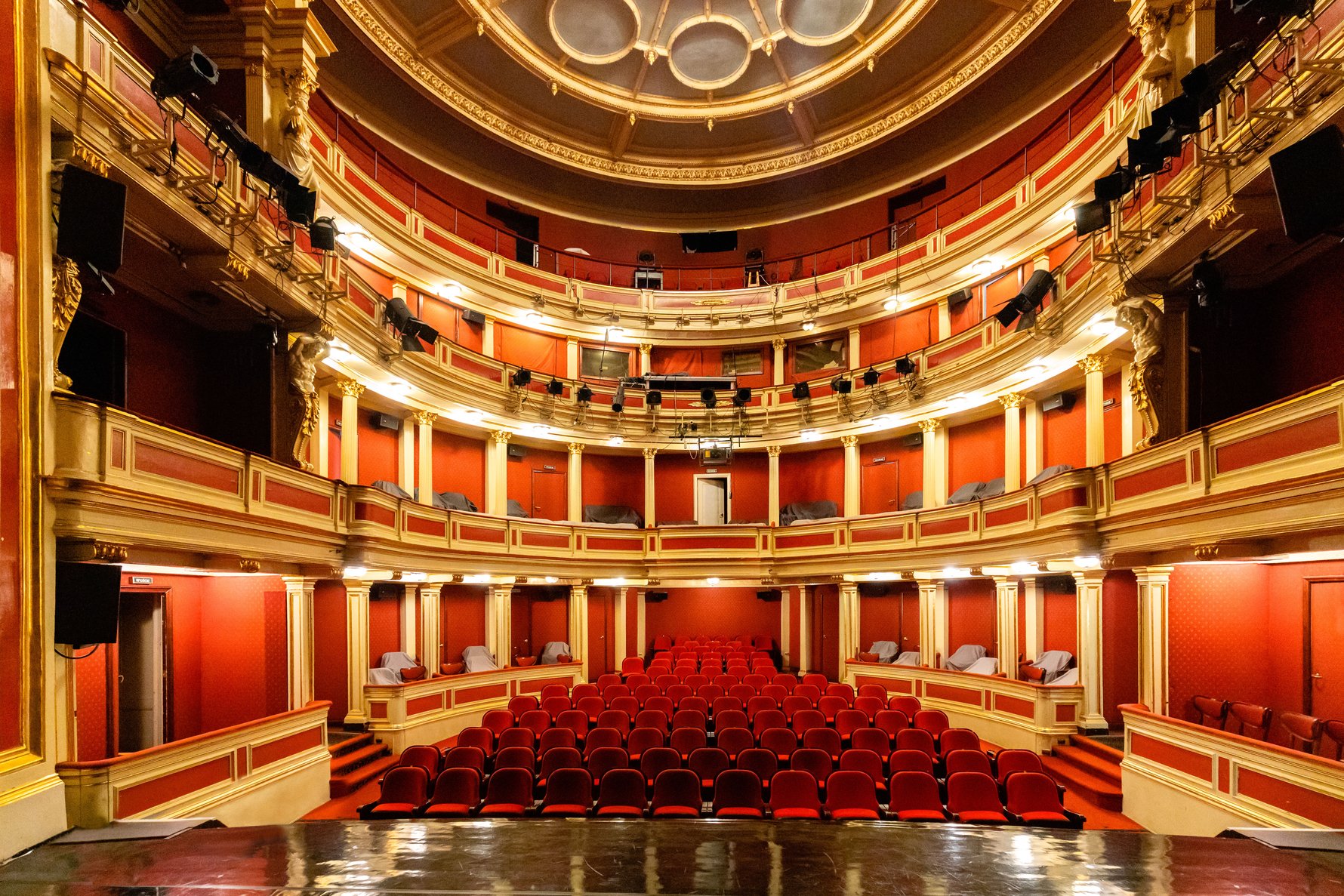
Inside Teatr Polski; photo by Sławomir Szady.
In addition to performances on its grand main stage, the Polish Theatre has several smaller stages, including the 'Paint Shop' (Malarnia), 'Gallery' (Galeria) and 'Basement under the Stage' (Piwnica pod Sceną). They also organise occasional outdoor concerts and other events. Proper guided tours of the theatre are possible, but must be arranged via email: monika.stasik@teatr-polski.pl.