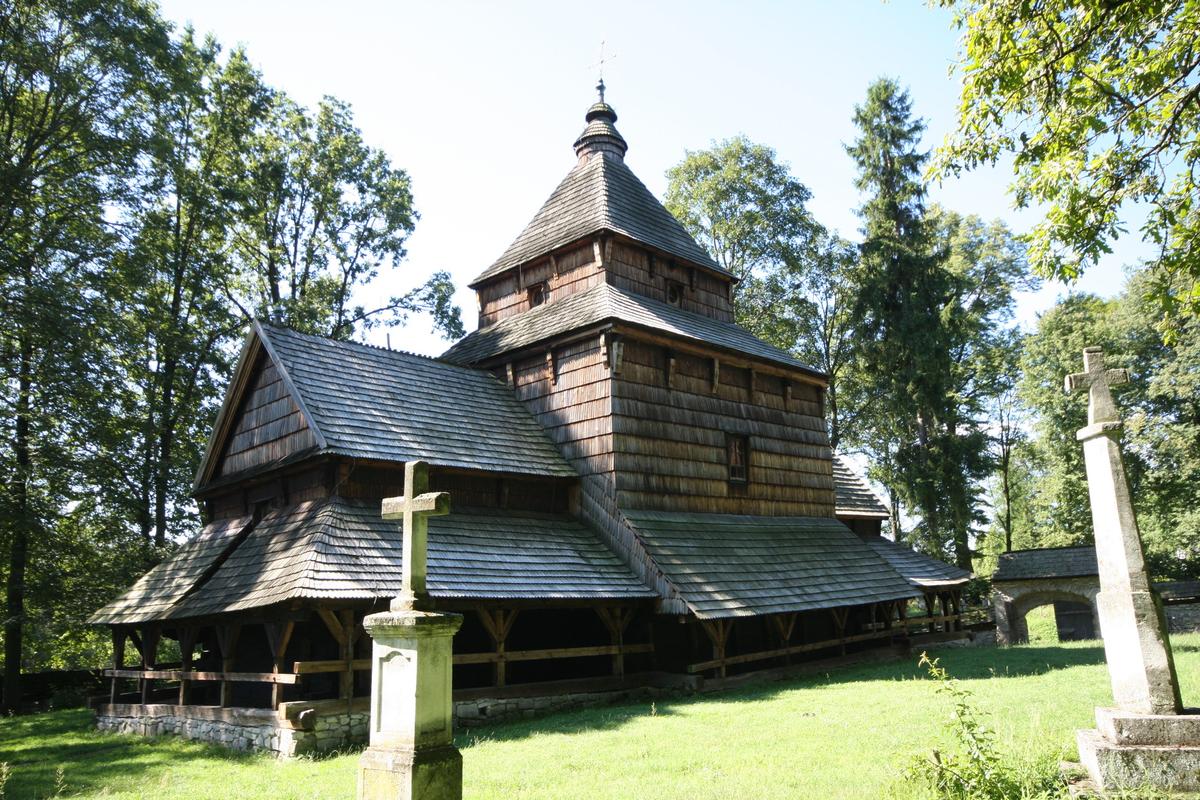


One of the oldest wooden Eastern Orthodox churches in Poland, the sublime 16th-century tserkva in Radruż is steeped in myth and history. While primarily a place of worship, it also provided a defensive function and is surrounded by a stone wall from 1825. According to legend, traces of Tatar axe blows can still be seen on the door.
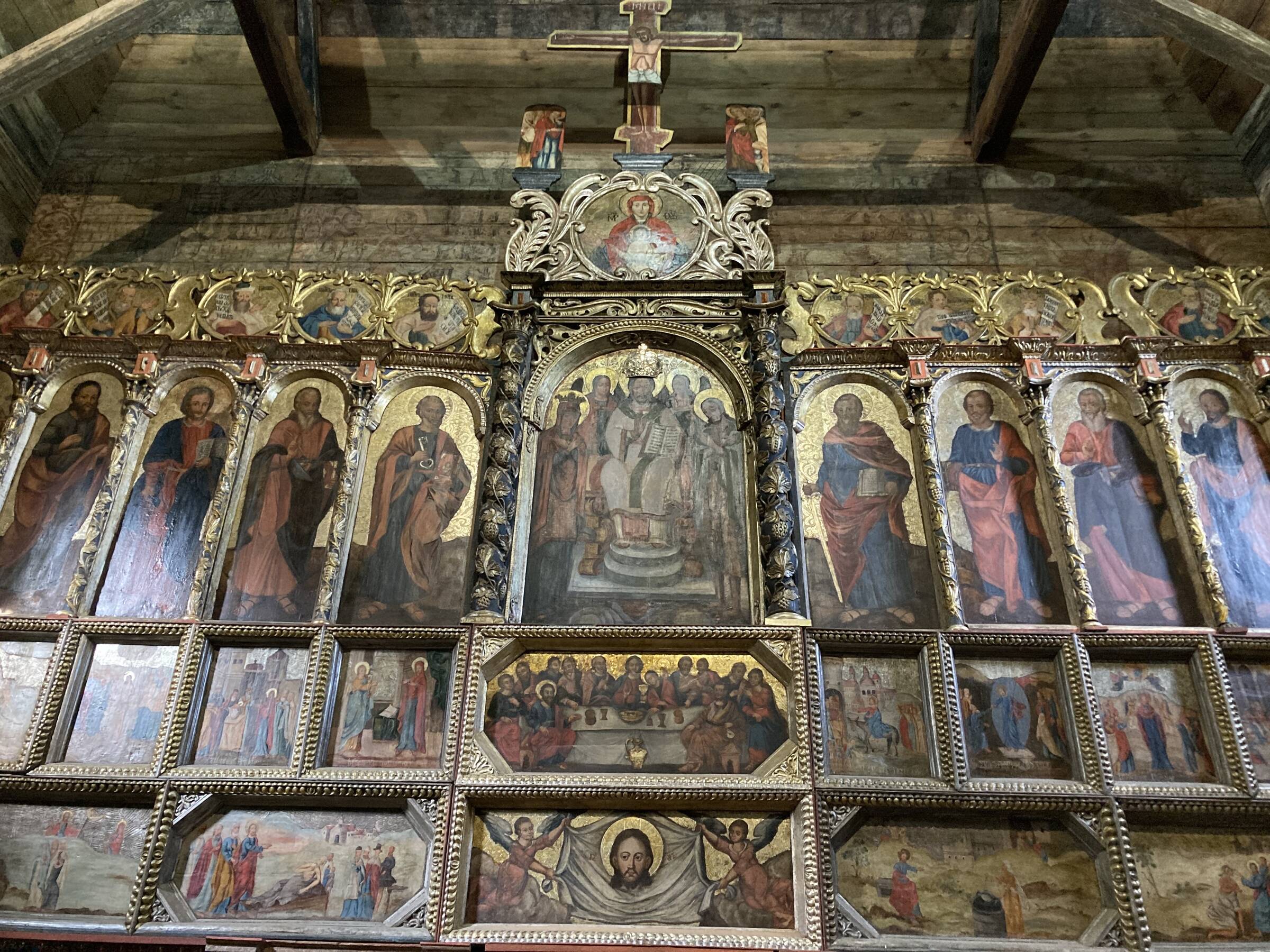
Strikingly, in the nave and the chancel, the original figural and ornamental polychrome decorations have survived. Figural paintings can be seen arranged in three tall horizontal rows separated with ornamental friezes. They depict various prophets, Biblical scenes and Church fathers, as well as a Mandylion supported by two angels. Original altars from the tserkva's rebuilding in the 1700s have also been preserved.
Located just metres from the Ukrainian border, the local population of the area was forcefully expelled after World War II and the site was not used for many years thereafter. Between 1963-1965 the building was completely restored, and during the conservation eight ‘shilling’ coins of King John Casimir from 1665 were found. In 2013, the church was entered onto the UNESCO World Heritage List, and the interiors can be visited on guided tours (Polish-only, arrange in advance for English). The complex includes a wooden belltower, two stone outbuildings and two historic cemeteries.
Strikingly, in the nave and the chancel, the original figural and ornamental polychrome decorations have survived. Figural paintings can be seen arranged in three tall horizontal rows separated with ornamental friezes. They depict various prophets, Biblical scenes and Church fathers, as well as a Mandylion supported by two angels. Original altars from the tserkva's rebuilding in the 1700s have also been preserved.
Located just metres from the Ukrainian border, the local population of the area was forcefully expelled after World War II and the site was not used for many years thereafter. Between 1963-1965 the building was completely restored, and during the conservation eight ‘shilling’ coins of King John Casimir from 1665 were found. In 2013, the church was entered onto the UNESCO World Heritage List, and the interiors can be visited on guided tours (Polish-only, arrange in advance for English). The complex includes a wooden belltower, two stone outbuildings and two historic cemeteries.