
While most people still visit Belgrade primarily for its unparalleled nightlife, culinary excesses or simply for business, you can rest assured that the Serbian capital boasts more than its fair share of classic tourist attractions - enough to keep you busy whether you're in town for two days or two weeks. We've gone ahead and distilled the enormous selection down to the more manageable, yet incredibly diverse, list of the ten truly must-visit attractions below.
Kalemegdan
Church of St Sava
Churches in the Balkans don’t come much more monolithic than this. That is a descriptor and a fact, as the Church of St Sava is the largest in the region and one of the biggest Orthodox cathedrals on the planet. Built on the spot where the eponymous saint’s remains were supposedly burned to dust in 1594, work on the church began in the late 19th century and continues to this day. That work was understandably interrupted by World War II, before Tito and the socialists decided it would make a good place for a car park. It wasn’t until 1985 that work on what many assumed was an old castle continued. The interior is still under construction, but that adds a certain humanity to this most impressive of spiritual buildings.
Pobednik
The major symbol of Belgrade, the Pobednik (Victor) statue stands tall in the upper part of the city’s fortress, proudly looking out over the Sava river towards New Belgrade and on to the rest of Europe. Victory is given the form of a naked man with a falcon in one hand and a sword in the other, and this déshabillé was the reason behind the statue’s current position. It was initially supposed to be located on Terazije, but the elderly in the neighbourhood weren’t happy at the prospect of looking at bronze buttocks all the time. The monument was thus moved to Kalemegdan where it has stayed ever since, although it has slowly been tilting.
Republic Square
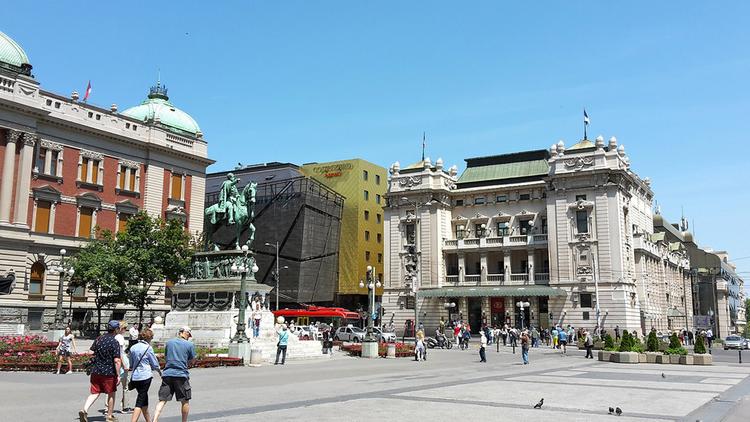
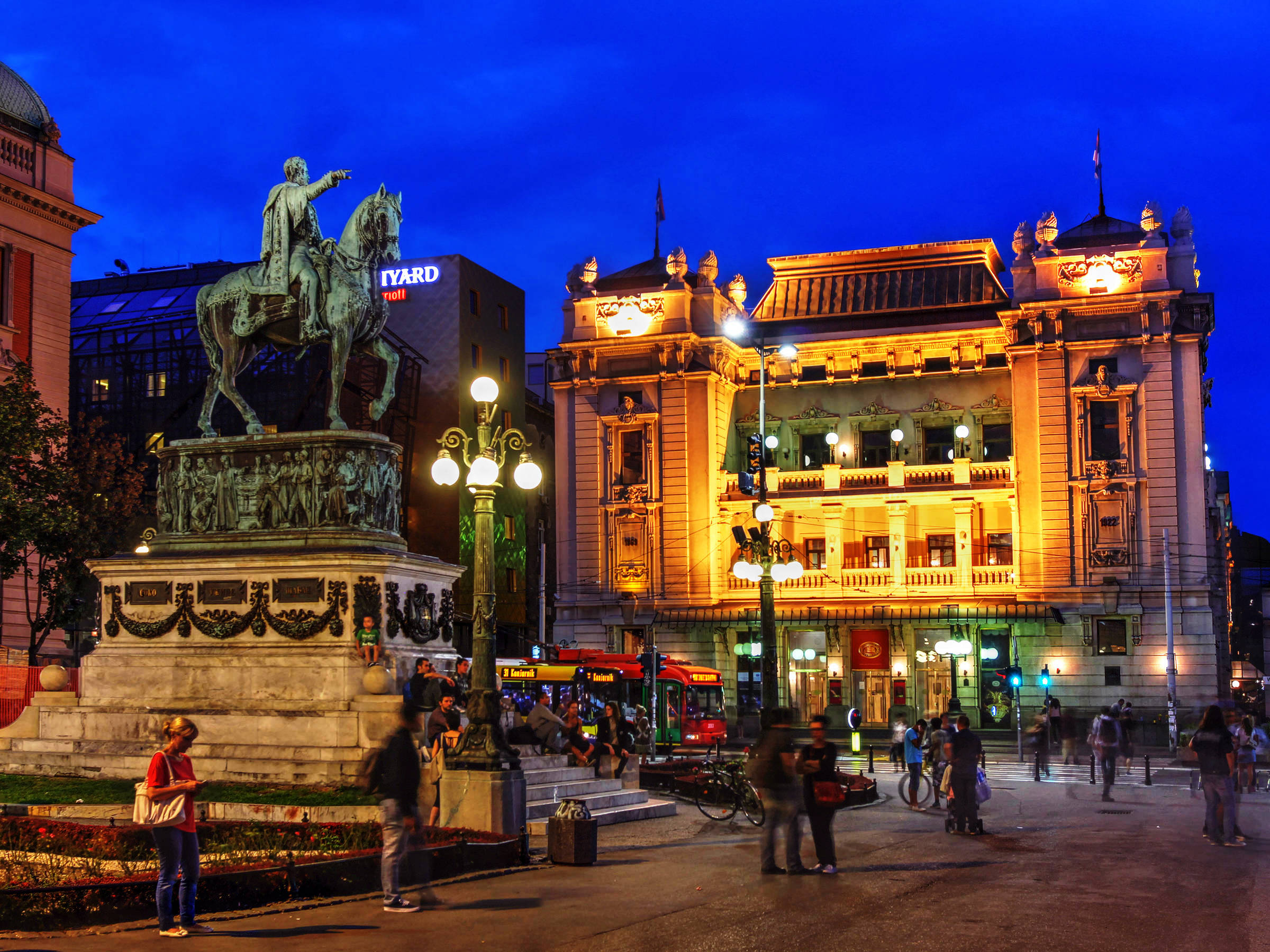
If you’re making plans to meet with friends in the centre of Belgrade, you are more than likely going to be meeting here. We could probably even narrow that down to meeting ‘kod konja’ (‘below the horse’), and Belgrade’s Republic Square is well and truly the central meeting point in the city. It also happens to be ringed by some seriously impressive sights, including the National Museum, National Theatre and more. The horse in question is the statue of Prince Mihailo atop his trusty steed.
Knez Mihailova Street
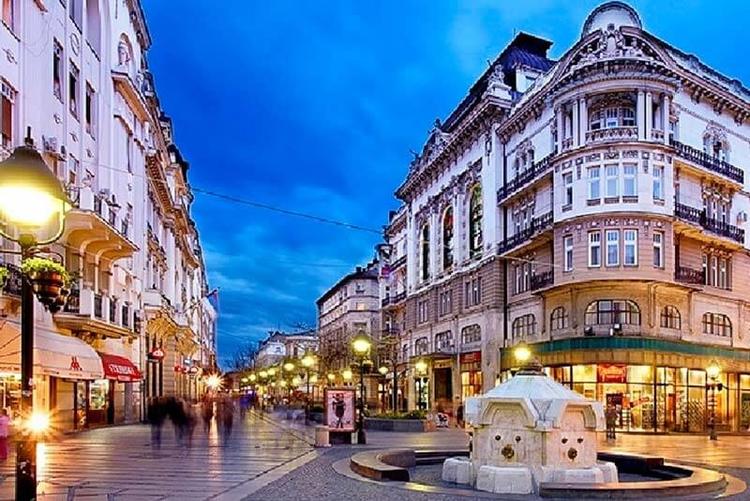
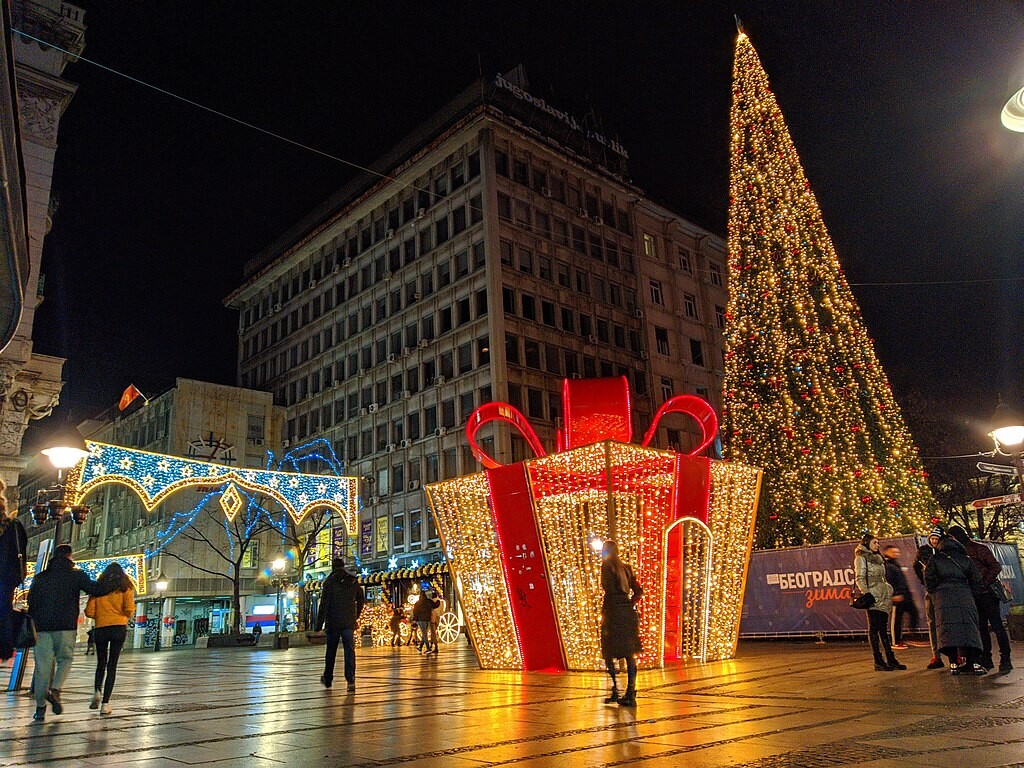
It might not be the geographical centre of the city, but it is hard to argue against Knez Mihailova being the middle of Belgrade’s intangible essence. The most famous street in the city is also its most popular, and all generations of Belgraders can be found strolling up and down its tiles from early in the morning until late at night. The street is lined with shops, cafes, restaurants and buildings of interest, along with a roster of buskers that range from dishevelled squawkers all the way to impeccable orchestral quartets.
Skadarlija
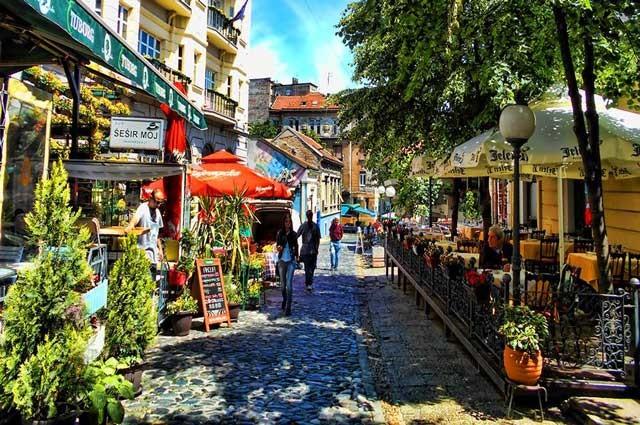
Belgrade’s Bohemian Quarter isn’t entirely Bohemian and constitutes more of a street than a quarter, but that doesn’t make it any less essential when visiting the Serbian capital. A cobblestoned thoroughfare lined by restaurants, bars and artisanal stores from top to bottom, it has come a long way from being where those the city deemed undesirable were forced to live in the 19th century. The early 20th century saw the writers, artists and drunks of the city move in, filling the kafanas with intense creative thought and emptying the cellars of whatever booze was available. The artists have now been replaced with tourists, but the street remains one of the most energetic spots of this most energetic city.
Museum of Contemporary Art
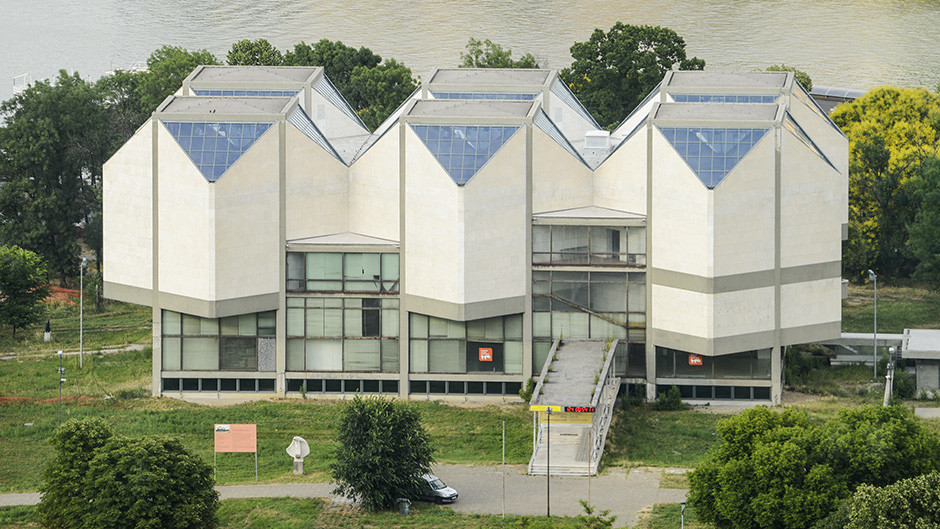
After being closed for more than 10 years, the newly renovated museum of contemporary art is an important stop when visiting the left side of the river. Besides the historical relevance that it holds, the museum is a testimony for Yugoslavian and Serbian art, something people don’t hear about too often. Explore the five levels of this unique building as an introduction to the various galleries, exhibitions and festivals you might stumble across, as well as the brutalist architecture you will be seeing around the city.
Nikola Tesla Museum
Undoubtedly the most popular Serbian of the last century, Nikola Tesla’s life is covered in this small museum in Vračar. A short video gives a strong overview of the great man, before visitors get the chance to interact with some of his most famous inventions. The rest of the museum is given over to a Tesla-centric exhibition. If you are in any way curious about the life of the Electric Jesus, be sure to make a beeline for the Nikola Tesla Museum.