
Alexander Dubček was born in the village of Uhrovec on November 27, 1921. But it wasn’t long before the family was compelled by their devotion to socialism to heed the Soviet Union’s call to help build the Soviet state. In 1925 this took them to the glorious city of Frunze, now known as Bishkek, the capital of Kyrgyzstan, better known as the country nobody can ever remember how to spell.
Life in Kyrgyzstan wasn’t exactly glorious either. Many children who moved with their families to put in the hard work died of malaria fairly early on, and nobody was paid for the first year or so. The common language in the co-operative was Ido, a constructed language looking to build on the mistakes identified in Esperanto. For those looking to surprise and impress new chums, ‘How are you?’ would be ‘Quale vu standas?’. Linguistic originality aside, the co-operatives received little support from the Soviets and were fairly miserable places to be. The Dubčeks moved to the industrial town of Gorki (250 miles east of Moscow) in 1933, but just three years later Julius fell seriously ill. Back to Czechoslovakia once more for the Dubčeks. 13 years after moving to the Soviet Union they returned to their homeland, just in time to welcome the Nazis as they rolled into the Sudetenland.
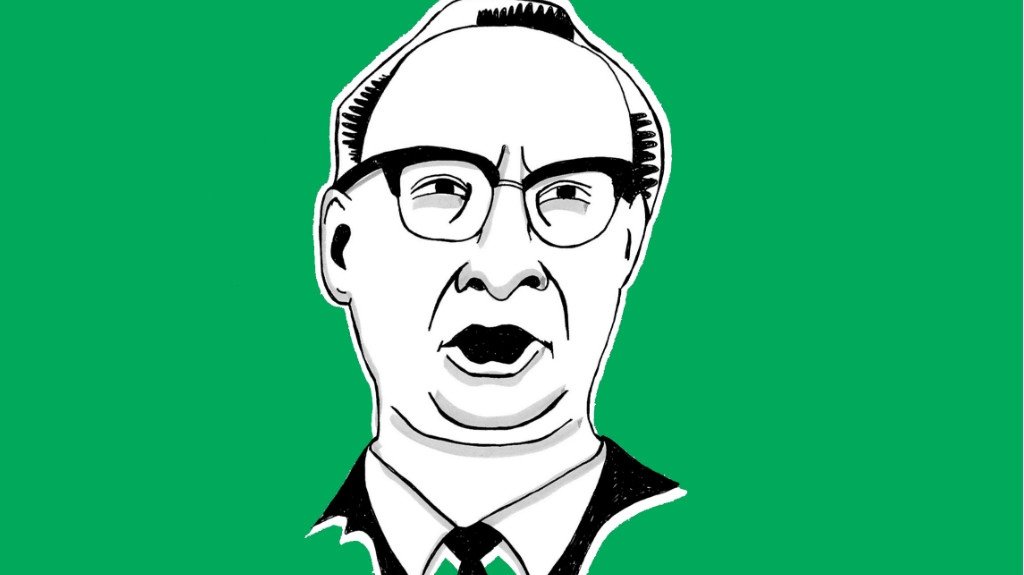
As World War Two burst into flames in Europe, Slovakia became the most fanatical of Nazi puppet states. The vehemently socialist Dubček family was obviously a little perturbed by this, and both sons joined the illegal communist party almost immediately. In 1944 they both participated in the Slovak national revolt against the damn fascists. Alexander was wounded twice, Julius once, although Julius’ wound was more being killed than wounded. Reconciling himself after this tragic event, Alex married in 1945. Interestingly enough the wedding took place in church and was blessed by the pope, despite the intensely socialist leanings of Alex and his family.
Everything seemed to be coming up Milhouse just a few years later as the Communists came into power in Czechoslovakia. Prior to this Alex had worked an impressively varied amount of menial jobs in such thrilling locations as a factory, a gas station and cars. New hope of an exciting future came with the reds though, and Dubček was given a position in the party. From 1949 to 1955 he held various positions in the Slovakian Communist Party in Trenčín, Bratislava and Banská Bystrica. In the latter he was actually the regional secretary, his main role involved doing whatever necessary to increase agricultural production.
1956 saw Mr. Khrushchev give his famous speech at the Twentieth Party Congress, telling all and sundry of the various crimes committed by Stalin in prior decades. The ideology Dubček was surrounded by had been shaken to its core, but with this came renewed hope of a reformed version of socialism. Dubček returned to Czechoslovakia in 1958 and was subsequently made regional secretary of the party in the Slovak capital of Bratislava. His rise through the party had begun, and a year later he replaced Karol Bacílek as First Secretary of the Slovak Communist Party.
Antonín Novotný was the First Secretary of the Communist Party of Czechoslovakia, and he was what could be described as a ‘hardline Stalinist dude’. He had been in charge since 1953, and had continued Czechoslovakia’s attempt to mimic the Soviet Union at quite the pace. Show trials led to around 100,000 party members jailed. The economy was in ruins, and the make up of the party was heavily skewed in favour of the Czechs as opposed to their Slovak brethren. The people of Slovakia were growing more and more miffed at being run by the Czechs from the former Bohemian capital of Prague.
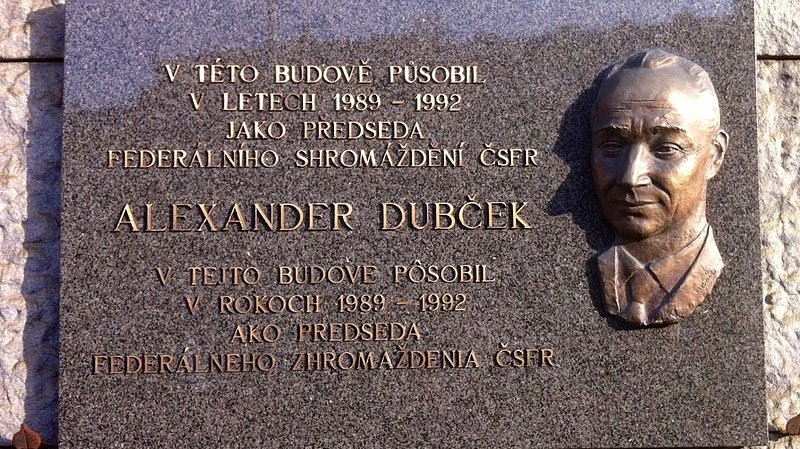
If Novotný hadn’t done such a spectacularly guff job of running the communist party in Czechoslovakia, Alexander Dubček would have almost certainly have faded into obscurity (not unlike a teabag). Dubček had actually allowed (and encouraged, to a certain degree) criticism of Novotný in the Slovakian media, and by the autumn of 1967 it’s fair to say the writing on Novotný’s wall was engraved into the plaster. Within the first week of 1968 Antonin had found himself on his way out of the driver’s seat, and our dependable teabag from Uhrovec landed himself in pole position.
Dubček’s ascension to the top of Czechoslovakia was in equal respects both shocking and expected. It was shocking in that he was the most important nobody in international politics, as memorable as Stoke City vs. Fulham in the 2008-09 English Premier League. It was expected for precisely this very same reason. Dubček had impeccable socialist credentials and had proven himself dedicated to the cause time and again, so the hardliners were in favour of his rise. He was also Slovakian and a believer in the idea of two states within a Czecho-Slovakia, and the fact that many top Czechs were allies of Novotný and irrevocably tainted by that association also helped. If I haven’t rammed home the point enough by now, Dubček was nothing more than a modest chap who enjoyed football. Things were about to get a lot more interesting for our teabag.