
Madrid became the capital of Spain in 1561 because Philip II decided it should be, it being conveniently central and lacking the awkward regional loyalties of cities like Toledo or Valladolid. It has spent the intervening five centuries accumulating palaces, museums, boulevards and a social culture so nocturnal that dinner before 9pm is considered an eccentricity. The result is a city that takes some getting used to and then becomes very difficult to leave.
The art museums alone would justify the trip. Three of the finest in Europe sit within fifteen minutes’ walk of each other on the Paseo del Prado, a fact that Madrid mentions with characteristic understatement. Everything else – the parks, the markets, the food, the sheer scale of the royal architecture – is supplementary, but only just. Prices below were correct at time of writing, though given how frequently Madrid’s museums adjust their free-entry windows and reduced-rate conditions, confirming on official websites before you go is worth the effort.
Velázquez’s ‘Las Meninas’ hangs in Room 12, where it has been stopping people in their tracks since 1819. Goya is spread across multiple rooms, from the early court portraits to the Black Paintings, executed directly onto the walls of his own home in the last decade of his life and representing some of the most psychologically unsettling work in the entire Western canon. The Prado does not suffer from a shortage of highlights; the difficulty is deciding where to stop.
The state rooms open to visitors include the Throne Room, with its ceiling fresco by Giovanni Battista Tiepolo; the Royal Armoury, one of the finest collections of historical weaponry in the world; and a succession of rooms decorated with the kind of accumulated opulence that several centuries of monarchy produce when budgets are not a particular concern. The adjacent Royal Collections Gallery, opened in 2023 in a new building by Emilio Tuñón and Luis Moreno Mansilla, houses works from the royal collection that were previously in storage.
Picasso’s ‘Guernica’ occupies Room 206 and has done since returning to Spain from New York’s MoMA in 1981, following Picasso’s instruction that it should only return once democracy was restored. The painting, created in response to the 1937 Nazi bombing of the Basque town of Gernika during the Spanish Civil War, is considerably larger and more affecting in person than its ubiquity as a reproduced image might suggest. Salvador Dalí and Joan Miró are also represented in depth; the breadth of the collection beyond the famous names rewards visitors who look further.
The Estanque Grande, the large artificial lake at the park’s centre, has rowing boats for hire and a monument to Alfonso XII of such confident scale that it functions as an unofficial grandstand. The Palacio de Cristal, a cast-iron and glass pavilion built in 1887 for a Philippines colonial exhibition, is now used for temporary art installations by the Reina Sofía and is free to enter. On weekends the park fills with Mадrilenos of every description, and the atmosphere is considerably more festive than the word ‘park’ generally implies.
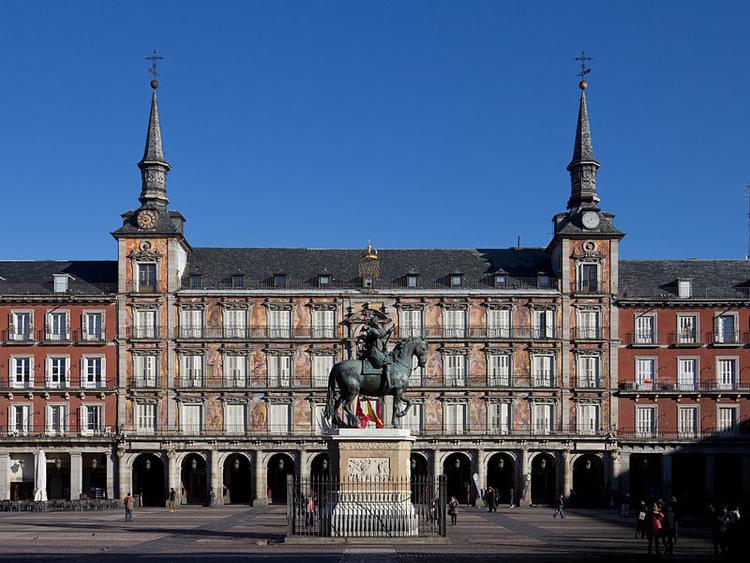
The square is undeniably touristy, a fact acknowledged by everyone including the locals who still occasionally eat and drink here. The buildings, painted ochre and terracotta with 237 balconied windows looking down on the central space, are genuinely beautiful, and the nine entrance arches connect to the surrounding tapas bars of the La Latina neighbourhood, which are not touristy at all and are very good. The two are naturally combined.
The collection is particularly strong in areas the other two museums do not cover: German Renaissance painting, Dutch 17th-century genre scenes, American Realism and the Impressionist and Post-Impressionist rooms. Hopper, Klimt, Schiele, Caravaggio, Dürer and Van Gogh all appear; the breadth is the point. The Carmen Thyssen Collection, displayed in an annex, added another 230 works when it was incorporated in 2004.
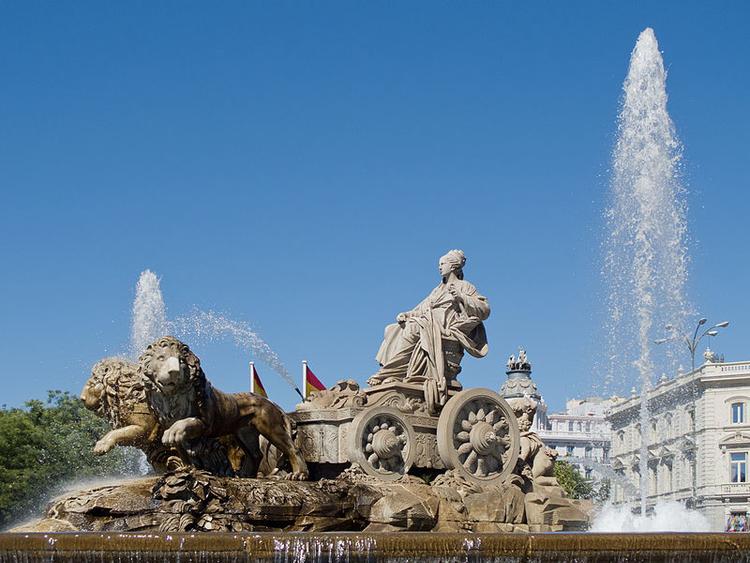
The Paseo del Prado, the grand boulevard running south from the city centre past the three art museums to Atocha station, was laid out in the 18th century as part of a Bourbon-era urban improvement programme and is now a UNESCO World Heritage Site in its own right. The Fuente de Cibeles at its northern end, featuring the goddess Cibeles on a chariot drawn by lions, is one of Madrid’s most recognisable landmarks and the traditional gathering point for Real Madrid fans after major victories, which in Madrid happens at a frequency that makes the fountain permanently relevant.
The location, on a small hill above the Manzanares river valley, produces one of the better sunsets in the city, which has given the temple a secondary career as a viewpoint. It can be visited inside on a timed basis, though the exterior and the surrounding park provide most of the appeal. The juxtaposition of a Ptolemaic Egyptian temple with the Madrid skyline is one of those things that Madrid presents without comment, as though it were entirely normal.
The market is at its fullest between 10:00 and 14:00, after which it begins to wind down. The best finds, according to longstanding market wisdom, go to those who arrive earliest; the best atmosphere belongs to those who arrive when the surrounding bars open and the neighbourhood settles into the extended Sunday lunch that is one of Madrid’s finer social institutions. The two approaches are not incompatible.
The streets around Plaza del Dos de Mayo contain independent bookshops, vintage clothing stores, music venues, cafés of the lived-in variety and bars that tend to stay open until the question of whether it is very late or very early becomes genuinely ambiguous. The Plaza del Dos de Mayo itself commemorates the 2nd of May 1808 uprising against Napoleonic occupation, an event Goya painted with characteristic unflinching clarity. For a less gentrified Madrid neighbourhood experience, Lavar piés, just to the south, is more abrasive and more interesting for it.
Madrid’s football culture is a serious matter and the city has two of the most successful clubs in European history. The Santiago Bernabéu, Real Madrid’s stadium, offers tours and has a museum covering a trophy cabinet that requires considerable shelf space. Atlético de Madrid’s Civitas Metropolitano offers the same. Both are worth visiting if football is your thing; if it is not, the sheer scale of the Bernabéu is impressive regardless.
For day trips from Madrid, Toledo is 30 minutes by high-speed train and contains enough medieval architecture, El Greco paintings and Moorish heritage for a full day. Segovia, 28 minutes by train, has a Roman aqueduct, a fairy-tale castle and the best roast suckling pig in Spain. Salamanca, 90 minutes away, has one of Europe’s oldest universities and a Plaza Mayor that makes Madrid’s look modest, which is saying something.
The art museums alone would justify the trip. Three of the finest in Europe sit within fifteen minutes’ walk of each other on the Paseo del Prado, a fact that Madrid mentions with characteristic understatement. Everything else – the parks, the markets, the food, the sheer scale of the royal architecture – is supplementary, but only just. Prices below were correct at time of writing, though given how frequently Madrid’s museums adjust their free-entry windows and reduced-rate conditions, confirming on official websites before you go is worth the effort.
1. Museo Nacional del Prado
The Museo Nacional del Prado is one of the great art museums of the world, and unlike some institutions that carry that description, it justifies it without qualification. Opened in 1819 and built around the former royal collection, it holds over 8,600 works, of which around 1,700 are on permanent display at any given time. The strengths are in Spanish painting – Velázquez, Goya and El Greco are represented with a comprehensiveness unavailable anywhere else – but the Flemish and Italian collections are equally serious, and Hieronymus Bosch’s ‘The Garden of Earthly Delights’ triptych, acquired by Philip II, is alone worth the visit.Velázquez’s ‘Las Meninas’ hangs in Room 12, where it has been stopping people in their tracks since 1819. Goya is spread across multiple rooms, from the early court portraits to the Black Paintings, executed directly onto the walls of his own home in the last decade of his life and representing some of the most psychologically unsettling work in the entire Western canon. The Prado does not suffer from a shortage of highlights; the difficulty is deciding where to stop.
- Location: Calle Ruiz de Alarcón, 23, 28014 Madrid. On the Paseo del Prado, adjacent to the Retiro Park.
- Best time to visit: Tuesday to Thursday mornings for the quietest galleries. Free entry Monday to Saturday from 18:00 to 20:00 and Sunday from 17:00 to 19:00, though these slots fill quickly; arrive early and expect a queue.
- Ticket prices: Around €15 general admission. The Paseo del Arte card covering the Prado, Reina Sofía and Thyssen costs around €32 and represents genuine value if you plan to visit all three. Book online; same-day tickets are not always available.
- Good to know: Photography is not permitted in the Prado, which is either an admirable policy or a source of frustration depending on your habits. The museum shop has a serious art book section. The temporary exhibition programme is consistently strong; check what’s on before your visit.
2. Palacio Real
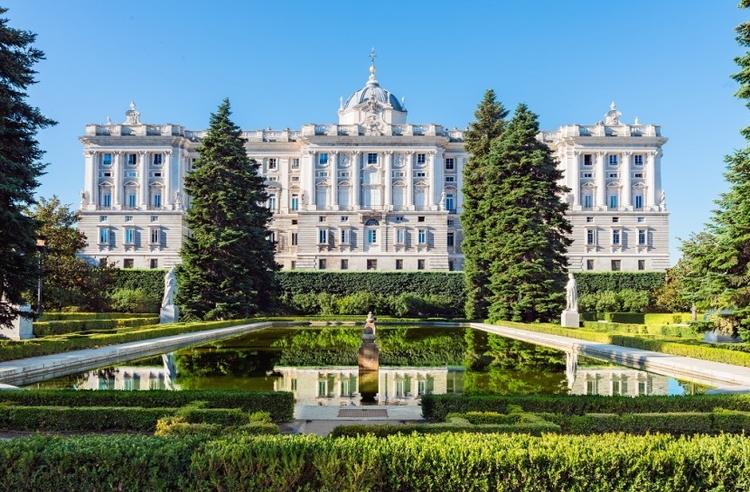
The Palacio Real is the largest royal palace in Western Europe by floor area, a fact that becomes entirely plausible once you are inside it. Built between 1738 and 1755 on the orders of Philip V, who wanted something to replace the Alcázar destroyed by fire on Christmas Eve 1734, the palace contains 3,418 rooms, of which 50 are open to the public. The official residence of the Spanish royal family, it is no longer used as a day-to-day living space – the current king prefers the rather more manageable Palacio de la Zarzuela on the outskirts of the city – but it is used for state ceremonies, which is a sensible division of labour.The state rooms open to visitors include the Throne Room, with its ceiling fresco by Giovanni Battista Tiepolo; the Royal Armoury, one of the finest collections of historical weaponry in the world; and a succession of rooms decorated with the kind of accumulated opulence that several centuries of monarchy produce when budgets are not a particular concern. The adjacent Royal Collections Gallery, opened in 2023 in a new building by Emilio Tuñón and Luis Moreno Mansilla, houses works from the royal collection that were previously in storage.
- Location: Calle Bailén, s/n, 28071 Madrid. Opposite the Almudena Cathedral.
- Best time to visit: Weekday mornings. EU citizens and residents get free entry on Monday to Thursday afternoons – times vary by season, check the official website and bring ID.
- Ticket prices: Around €14–16 general; reduced rates for students and over-65s. The Changing of the Guard takes place on Wednesdays, Saturdays and the first Wednesday of each month for the Solemn version; both are free to watch from outside.
- Good to know: The Almudena Cathedral immediately opposite is free to enter and worth twenty minutes, particularly the crypt. The view from the Jardines de Sabatini on the palace’s north side, across toward the Casa de Campo, is one of the better free viewpoints in the city.
3. Museo Nacional Centro de Arte Reina Sofía
The Museo Reina Sofía is Spain’s national museum of 20th and 21st-century art, housed in a former 18th-century hospital on the southern end of the Paseo del Arte, with a glass lift tower added by Ian Ritchie in 1990 that caused the usual amount of architectural controversy and now looks entirely natural. The collection covers the major movements of Spanish art from around 1900 onwards, and the permanent collection contains more important works per square metre than almost anywhere else in Europe.Picasso’s ‘Guernica’ occupies Room 206 and has done since returning to Spain from New York’s MoMA in 1981, following Picasso’s instruction that it should only return once democracy was restored. The painting, created in response to the 1937 Nazi bombing of the Basque town of Gernika during the Spanish Civil War, is considerably larger and more affecting in person than its ubiquity as a reproduced image might suggest. Salvador Dalí and Joan Miró are also represented in depth; the breadth of the collection beyond the famous names rewards visitors who look further.
- Location: Calle Santa Isabel, 52, 28012 Madrid. At the southern end of the Paseo del Arte, near Atocha station.
- Best time to visit: Weekday mornings. Free entry Monday and Wednesday to Saturday from 19:00 to 21:00, and Sunday from 12:30 to 14:30.
- Ticket prices: Around €12 general. The Paseo del Arte card covers the Reina Sofía alongside the Prado and Thyssen.
- Good to know: The Reina Sofía’s galleries in the Retiro Park were temporarily closed for renovation at time of writing; check the website for current status. The museum bookshop is one of the better art bookshops in Madrid.
4. Parque del Buen Retiro
The Parque del Buen Retiro has been a public park since 1868, when the revolution that deposed Queen Isabella II resulted in, among other things, the royal gardens being opened to the citizens of Madrid. Before that it had been a royal retreat since the 17th century, and the formal gardens, the large lake, the Palacio de Cristal and the Palacio de Velázquez all survive from various phases of that history. It was added to the UNESCO World Heritage list in 2021 as part of the Paseo del Prado and Retiro landscape, which made the 125 hectares of park even more official than they already were.The Estanque Grande, the large artificial lake at the park’s centre, has rowing boats for hire and a monument to Alfonso XII of such confident scale that it functions as an unofficial grandstand. The Palacio de Cristal, a cast-iron and glass pavilion built in 1887 for a Philippines colonial exhibition, is now used for temporary art installations by the Reina Sofía and is free to enter. On weekends the park fills with Mадrilenos of every description, and the atmosphere is considerably more festive than the word ‘park’ generally implies.
- Location: Plaza de la Independencia, 7, 28001 Madrid. Multiple entrances; the Puerta de Alcalá entrance is the most grand.
- Best time to visit: Weekday mornings for relative quiet; weekend afternoons for the full social spectacle. The Palacio de Cristal is best in good light.
- Ticket prices: Free. Rowing boats on the lake charge a small hourly rate.
- Good to know: The park is directly adjacent to the Prado, making it the natural place to decompress after several hours of serious art. The Rose Garden (Rosaleda) in the southern part of the park is best in May and June.
5. Plaza Mayor
Plaza Mayor was completed in 1619 under Philip III, whose equestrian statue occupies the centre of the square and has been doing so since 1848. The arcaded rectangle, 129 by 94 metres, has hosted royal proclamations, bullfights, markets, executions and, during the Inquisition, autos-da-fé – a varied programme by any measure. Today it hosts tourists, overpriced café terraces, a small weekend market in stamps and coins, and a Christmas market in December that is among the more atmospheric in Spain.The square is undeniably touristy, a fact acknowledged by everyone including the locals who still occasionally eat and drink here. The buildings, painted ochre and terracotta with 237 balconied windows looking down on the central space, are genuinely beautiful, and the nine entrance arches connect to the surrounding tapas bars of the La Latina neighbourhood, which are not touristy at all and are very good. The two are naturally combined.
- Location: Plaza Mayor, 28012 Madrid. Five minutes’ walk from Puerta del Sol.
- Best time to visit: Early morning before the crowds arrive, or late evening when the lighting is good and the temperature has dropped. Midday in summer is best avoided at the terrace prices.
- Ticket prices: Free to enter. The tourist information office has a branch in the square if you need maps or advice.
- Good to know: The Cava Baja and Cava Alta streets in La Latina, a ten-minute walk from the square, contain some of Madrid’s finest traditional tapas bars. Sunday lunchtime is when these streets are at their most animated, following El Rastro market nearby.
6. Museo Thyssen-Bornemisza
The Museo Thyssen-Bornemisza occupies the Palacio de Villahermosa on the Paseo del Prado and contains one of the most comprehensive private art collections ever assembled, acquired by the Thyssen-Bornemisza family across several decades and purchased by the Spanish state in 1993. Where the Prado focuses on Spanish and Flemish masters and the Reina Sofía covers the 20th century, the Thyssen fills the gaps: Italian primitives through to Impressionism, Expressionism and American abstraction, arranged chronologically across three floors in a way that functions as a survey of Western art history.The collection is particularly strong in areas the other two museums do not cover: German Renaissance painting, Dutch 17th-century genre scenes, American Realism and the Impressionist and Post-Impressionist rooms. Hopper, Klimt, Schiele, Caravaggio, Dürer and Van Gogh all appear; the breadth is the point. The Carmen Thyssen Collection, displayed in an annex, added another 230 works when it was incorporated in 2004.
- Location: Paseo del Prado, 8, 28014 Madrid. Directly across the road from the Prado.
- Best time to visit: Weekday mornings. Monday is the closing day.
- Ticket prices: Around €13 general; reduced rates for students and over-65s. Free on Mondays from 12:00 for the permanent collection. Covered by the Paseo del Arte card.
- Good to know: The Thyssen is the most accessible of the three Paseo del Arte museums in terms of queues and visitor numbers. If the Prado is heaving, the Thyssen is often considerably more manageable, which is one more reason to have the Paseo del Arte card rather than individual tickets.
7. Puerta del Sol and the Paseo del Prado
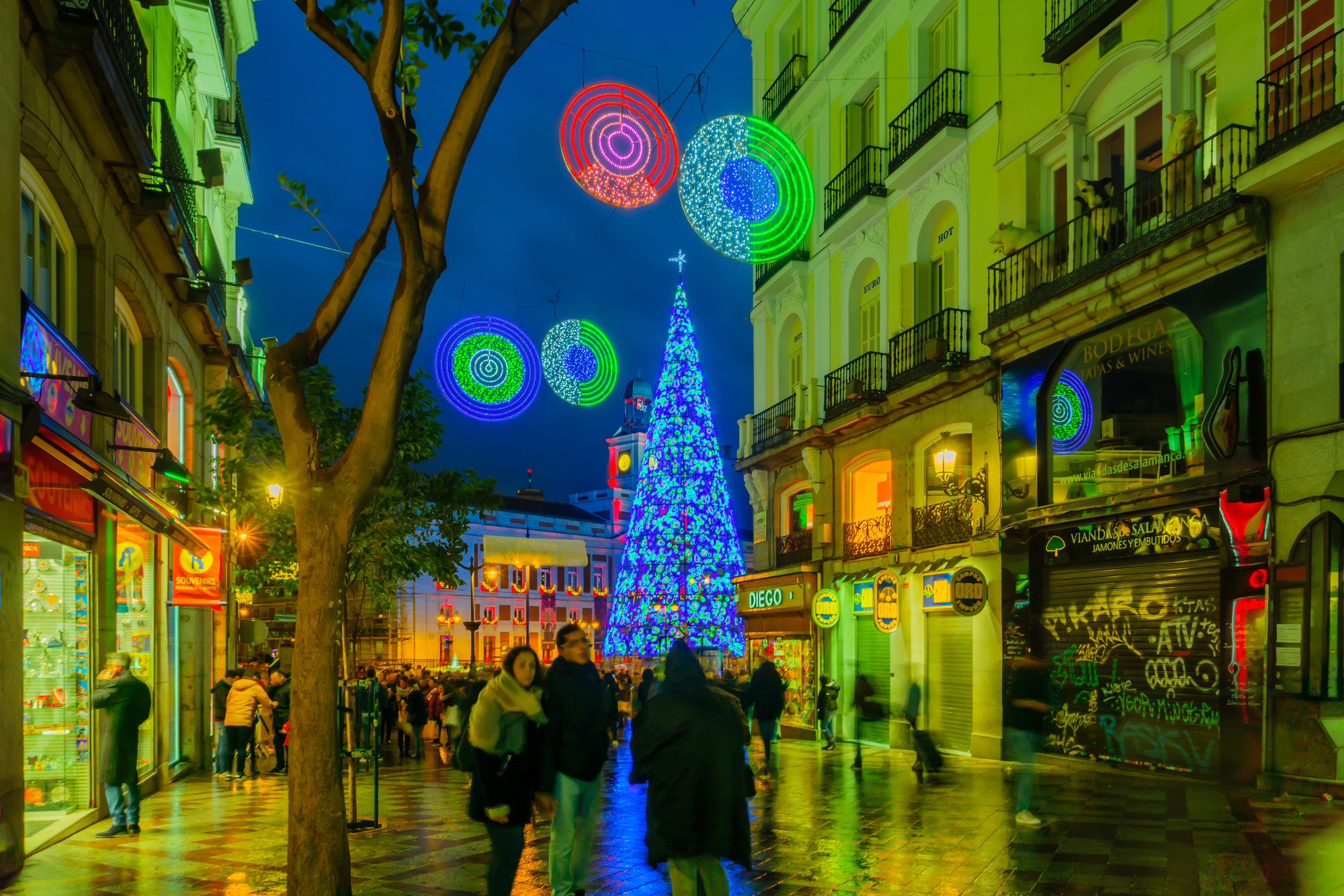
Puerta del Sol is the geographical and symbolic centre of Spain: the Kilométro Cero plaque set into the pavement outside the old Casa de Correos marks the point from which all Spanish national road distances are measured. The square itself is a large, pedestrianised oval that functions as Madrid’s main crossroads, transport hub and impromptu public gathering space. On New Year’s Eve, thousands of people pack in to eat twelve grapes in time with the clock’s midnight chimes, a tradition that requires more coordination than it sounds.The Paseo del Prado, the grand boulevard running south from the city centre past the three art museums to Atocha station, was laid out in the 18th century as part of a Bourbon-era urban improvement programme and is now a UNESCO World Heritage Site in its own right. The Fuente de Cibeles at its northern end, featuring the goddess Cibeles on a chariot drawn by lions, is one of Madrid’s most recognisable landmarks and the traditional gathering point for Real Madrid fans after major victories, which in Madrid happens at a frequency that makes the fountain permanently relevant.
- Location: Puerta del Sol is at the heart of central Madrid; the Paseo del Prado runs south from Plaza de Cibeles to Atocha.
- Best time to visit: The Paseo is best walked in the morning or evening. Puerta del Sol is always busy; early morning is as quiet as it gets.
- Ticket prices: Free. Both are public spaces.
- Good to know: The Bear and the Strawberry Tree sculpture in Puerta del Sol, representing Madrid’s coat of arms, is where everyone arranges to meet. The Gran Vía, Madrid’s main commercial boulevard, begins a short walk north and is worth the walk for the early 20th-century architecture alone.
8. Temple of Debod
The Temple of Debod is an ancient Egyptian temple, built in the 2nd century BC, that stands in the Parque de la Montaña in central Madrid. It is there because Egypt gave it to Spain in 1968 in gratitude for Spanish engineering assistance in rescuing Nubian monuments threatened by the construction of the Aswan High Dam. The temple was dismantled, shipped to Madrid and reassembled, a process that sounds straightforward and most certainly was not. It is now one of only three Egyptian temples outside Egypt, the others being in New York and Leiden, and it is the oldest structure in Madrid by a margin of approximately 2,100 years.The location, on a small hill above the Manzanares river valley, produces one of the better sunsets in the city, which has given the temple a secondary career as a viewpoint. It can be visited inside on a timed basis, though the exterior and the surrounding park provide most of the appeal. The juxtaposition of a Ptolemaic Egyptian temple with the Madrid skyline is one of those things that Madrid presents without comment, as though it were entirely normal.
- Location: Calle Ferraz, 1, 28008 Madrid. Five minutes’ walk from the Royal Palace.
- Best time to visit: An hour before sunset, when the light on the stone is good and the view westward is at its best. Arrive early for interior visits as timed slots fill up.
- Ticket prices: Free, including the interior visit. Timed entry passes must be collected in advance; check the Madrid city website for current booking arrangements.
- Good to know: The Parque de la Montaña surrounding the temple is a pleasant green space connecting to the much larger Casa de Campo park to the west. The Royal Palace is visible from the temple’s viewing area.
9. El Rastro
El Rastro is Madrid’s famous Sunday flea market, held every Sunday morning and on public holidays in the La Latina neighbourhood south of Plaza Mayor. It has been operating in some form since the 15th century and now spreads across several streets centred on the Ribera de Curtidores, with around 3,500 stalls selling antiques, vintage clothing, second-hand books, tools, furniture, prints, ceramics and a considerable quantity of things whose original purpose is not immediately apparent. It is large, loud and requires comfortable shoes.The market is at its fullest between 10:00 and 14:00, after which it begins to wind down. The best finds, according to longstanding market wisdom, go to those who arrive earliest; the best atmosphere belongs to those who arrive when the surrounding bars open and the neighbourhood settles into the extended Sunday lunch that is one of Madrid’s finer social institutions. The two approaches are not incompatible.
- Location: Ribera de Curtidores and surrounding streets, La Latina, 28005 Madrid. Take the metro to La Latina or Embajadores.
- Best time to visit: Sundays from 09:00 for the serious browsing; from 11:00 for the atmosphere. It does not operate on Saturdays.
- Ticket prices: Free to browse. What you spend inside is, again, your own business.
- Good to know: The La Latina tapas bars on Cava Baja are at their most packed on Sunday afternoons following El Rastro. Booking a table at one of the better ones, or arriving early and accepting a wait, is a reasonable strategy.
10. Malasaña
Malasaña is the neighbourhood that emerged from the counterculture of the Movida Madrileña, the explosion of creative energy that followed Franco’s death in 1975 and produced a decade of music, art, film and general licence that Madrid has been dining out on ever since. The neighbourhood is no longer the chaotic, anything-goes district it was in the 1980s – it has gentrified, as these things tend to, and the rents reflect it – but it retains more character than most Spanish city neighbourhoods that have undergone similar transformations.The streets around Plaza del Dos de Mayo contain independent bookshops, vintage clothing stores, music venues, cafés of the lived-in variety and bars that tend to stay open until the question of whether it is very late or very early becomes genuinely ambiguous. The Plaza del Dos de Mayo itself commemorates the 2nd of May 1808 uprising against Napoleonic occupation, an event Goya painted with characteristic unflinching clarity. For a less gentrified Madrid neighbourhood experience, Lavar piés, just to the south, is more abrasive and more interesting for it.
- Location: North of Gran Vía, centred on Plaza del Dos de Mayo, 28004 Madrid. Metro: Tribunal or Noviciado.
- Best time to visit: Evening and onwards. The neighbourhood comes to life from around 20:00 and does not stop until considerably later.
- Ticket prices: Free. It is a neighbourhood.
- Good to know: The Museo de Historia de Madrid on Calle Fuencarral, with its extraordinary Churrigueresque Baroque doorway and a scale model of Madrid from 1830, is on the edge of Malasaña and is free. The nearby Museo del Romanticismo covers 19th-century Spanish bourgeois life with more charm than the description implies.
What else can you see in Madrid?
The San Miguel market, a covered gourmet market in an early 20th-century iron structure just off Plaza Mayor, is the most beautiful food market in the city and rather more expensive than El Rastro. The Real Jardín Botánico, adjacent to the Prado, is a serious botanical garden covering two and a half centuries of plant collection and is free on certain days. The Ermita de San Antonio de la Florida, a small chapel near the Royal Palace, contains Goya frescoes of exceptional quality and remarkable intimacy – and the artist himself is buried beneath them.Madrid’s football culture is a serious matter and the city has two of the most successful clubs in European history. The Santiago Bernabéu, Real Madrid’s stadium, offers tours and has a museum covering a trophy cabinet that requires considerable shelf space. Atlético de Madrid’s Civitas Metropolitano offers the same. Both are worth visiting if football is your thing; if it is not, the sheer scale of the Bernabéu is impressive regardless.
For day trips from Madrid, Toledo is 30 minutes by high-speed train and contains enough medieval architecture, El Greco paintings and Moorish heritage for a full day. Segovia, 28 minutes by train, has a Roman aqueduct, a fairy-tale castle and the best roast suckling pig in Spain. Salamanca, 90 minutes away, has one of Europe’s oldest universities and a Plaza Mayor that makes Madrid’s look modest, which is saying something.