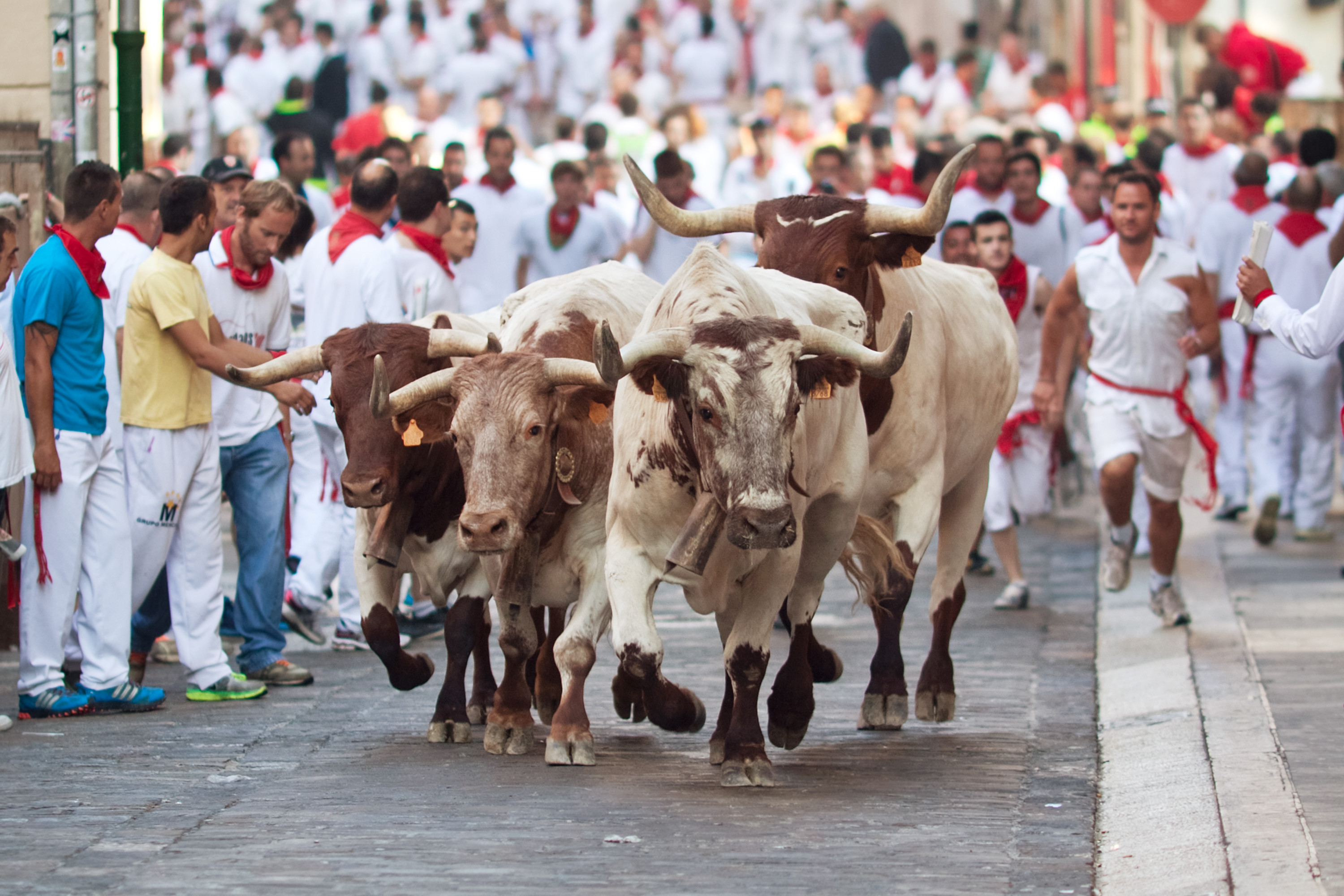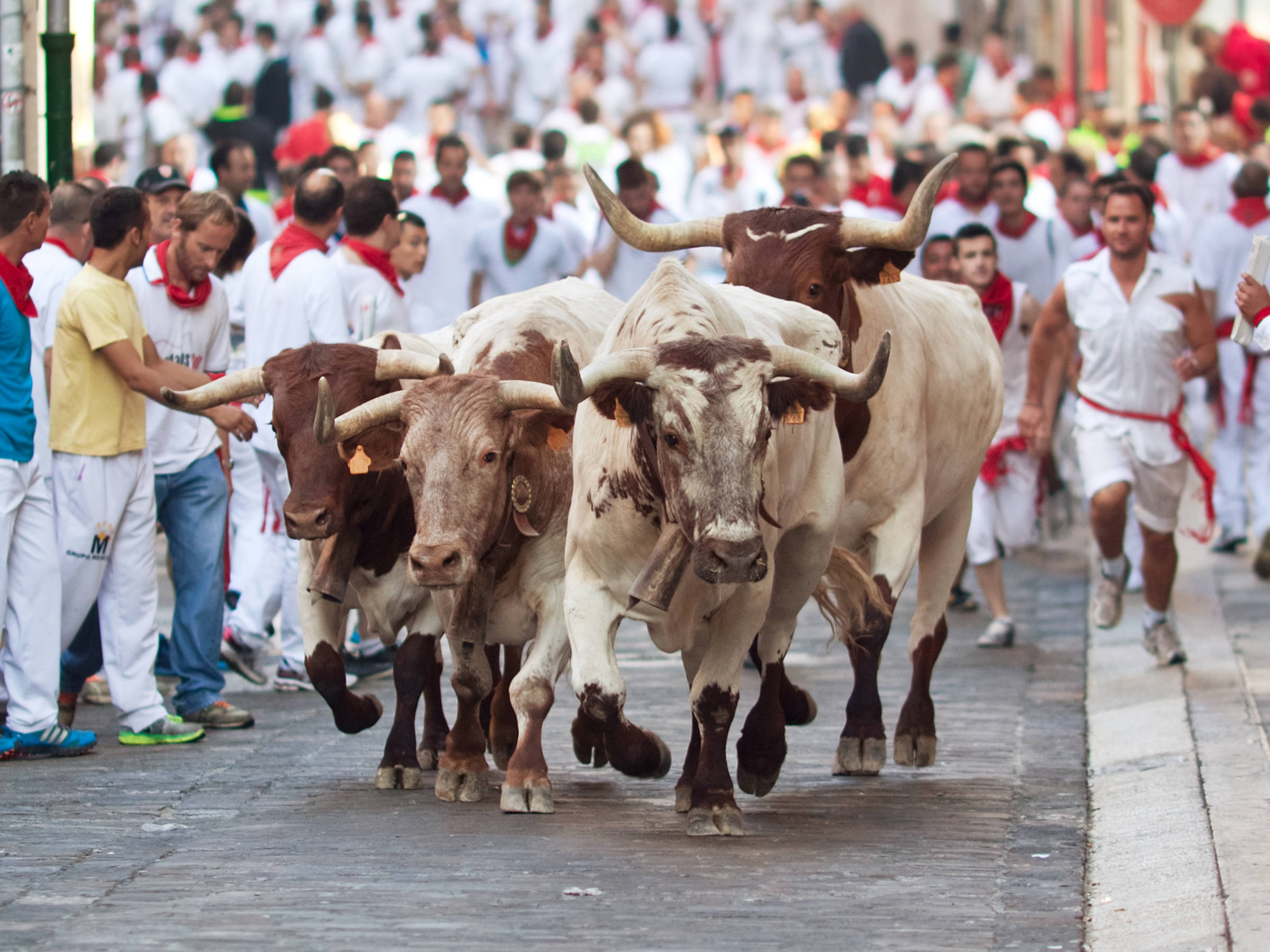

Most people who have heard of Pamplona know exactly one thing about it: every July, a significant number of people voluntarily run through its streets in front of bulls. Ernest Hemingway wrote about it, the internet has not stopped talking about it since, and the city has been gently trying to remind the world that it exists for the other eleven months of the year ever since.
It turns out there is quite a lot to see. Pamplona is the ancient capital of the Kingdom of Navarra, a city with Roman foundations, a medieval old town in excellent condition, and a relaxed, walkable character that rewards visitors who arrive without a particular agenda. Prices below were correct at time of writing, which may or may not have been recently enough to matter.
The cathedral complex has been substantially expanded by the Occidens museum, which uses the results of archaeological excavations beneath the building to tell the history of the site from Roman times onwards. The tomb of Carlos III of Navarra and his wife Doña Leonor, dating from the 15th century, sits in the nave and is the most elaborate piece of sculpture in the city. The bell tower climb, which takes place at 11:15 every morning, rewards the effort with views over the old town and the walls.
The standout pieces are in the lower floors: the Mapa de Abauntz, a Palaeolithic engraving on stone that represents one of the oldest maps in the world; a first-century Roman mosaic depicting the Triumph of Bacchus from the ancient town of Andelos; Romanesque capitals from Pamplona’s original cathedral; and a Moorish ivory chest of considerable refinement. Higher up, the collection includes a portrait of the Marquis of San Adrián by Goya. It is the kind of museum that justifies the existence of regional museums as a concept.
The Ciudadela, a pentagonal Renaissance citadel built between 1571 and 1645 on the western edge of the old town, is the centrepiece of the fortifications. It was a serious military installation for three centuries and is now a public park and cultural centre, its former powder magazine, armoury and other buildings used for exhibitions and events. The green space surrounding it is one of the most pleasant in Pamplona and connects to a ring of parks that encircles much of the old city. On summer evenings the walls host theatrical reenactments; the programme varies by year.
The arcaded buildings that frame the square contain bars, restaurants and shops, and the whole thing has the comfortable self-assurance of a place that knows it is the best square in town and sees no reason to prove it. Café Iruña, on the northern side, is covered separately below; the rest of the terraces are worth occupying for as long as you have the afternoon spare.
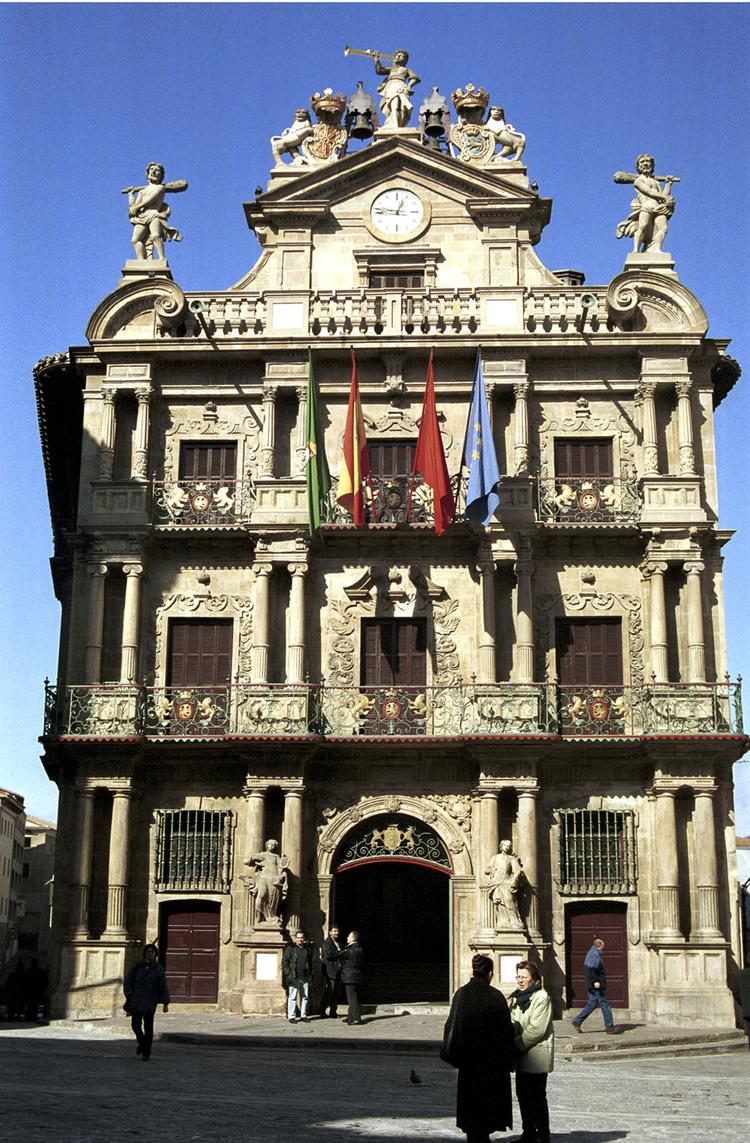
The City Hall is not open for general tourist visits, being a functioning municipal building rather than a museum, but the exterior is worth seeing and the square in front of it is pleasant. The building represents the point at which Pamplona’s three medieval boroughs were finally unified in 1423 under Carlos III, ending what the records suggest were several decades of enthusiastic civic quarrelling.
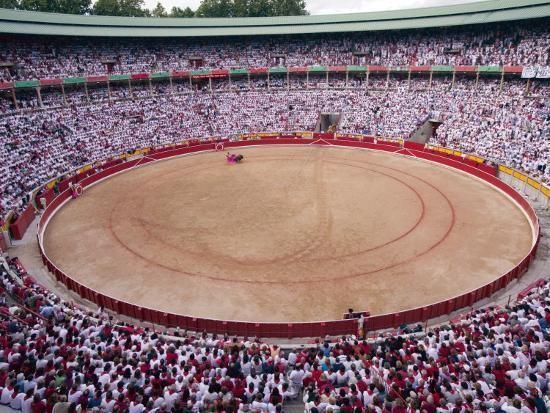
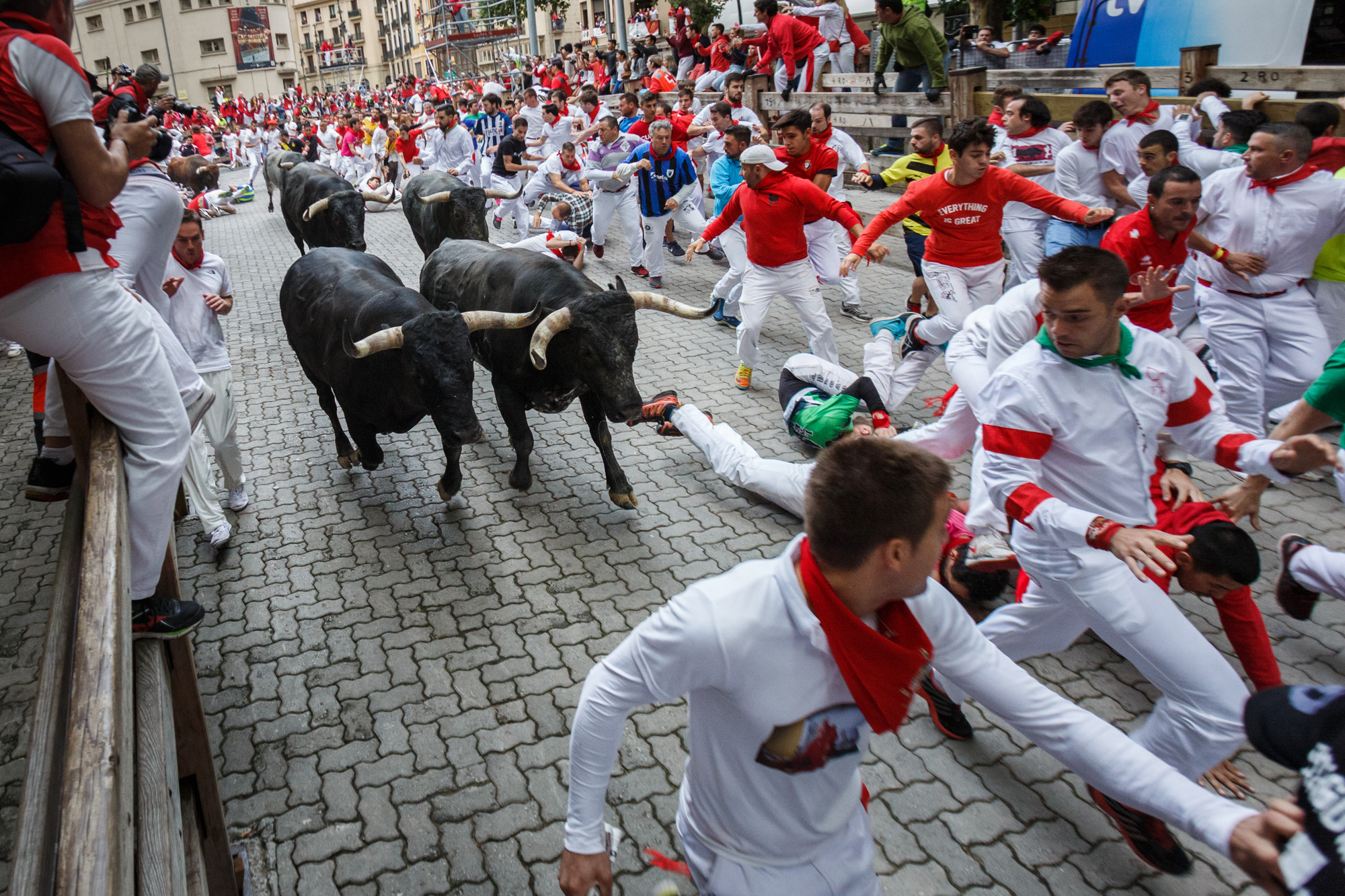
Whatever your feelings about the event itself, the bullring and the route it terminates are central to understanding Pamplona. The encierro route runs 875 metres from the corrals on the Cuesta de Santo Domingo to the bullring, passing through the famous Calle de la Estafeta. Walking the route outside of festival season is a perfectly good way to understand the geography of the run, and the bronze monument on Avenida de Roncesvalles, depicting the chaos of the chase in mid-stride, is one of the more dramatic pieces of public sculpture in Spain.
The streets surrounding it constitute the best of the old town: the Church of San Saturnino (also known as San Cernin), a 13th-century Gothic church that was the site of the first Christian baptisms in Pamplona; the Church of San Nicolás; the old medieval boroughs of La Navarrería and San Cernin with their narrow lanes and modest plazas. Pamplona’s old town is compact enough to cover on foot in an afternoon, and rewarding enough that most people find the afternoon has disappeared before they intended it to.
It is, in the end, a café rather than a museum, and should be treated as such: sit down, order something, and watch the Plaza del Castillo from under the arcade. The pintxos are good and the coffee is exactly what it should be. The Hemingway connection attracts a steady stream of literary tourists, which you can either embrace or quietly resent depending on your disposition.
The viewpoint over the river Arga and the allotments below is one of the quieter pleasures the city offers, the kind of view that makes you understand why people choose to live somewhere. The gardens are popular with families and with anyone who has spent a productive morning in museums and feels the need to sit under a tree for a while.
The surrounding area is pleasant for a walk: the Paseo de Sarasate, a broad promenade named after the Pamplona-born violin virtuoso Pablo Sarasate, runs from the palace toward the city walls and is lined with the kind of 19th-century architecture that makes northern Spanish cities rather more interesting to walk through than they sometimes get credit for.
The river Arga runs around the eastern and northern edges of the old town and the parks that follow it provide 12 kilometres of walking and cycling routes through a landscape that manages to feel rural while remaining five minutes from the Plaza del Castillo. The medieval bridges along the route, particularly the Puente de la Magdalena on the Camino de Santiago, are worth seeking out.
Pamplona is also an excellent base for the surrounding region. The Bardenas Reales, a semi-desert badlands landscape that looks as though it has been imported from New Mexico, is 80 kilometres south and unlike anything else in northern Spain. The Camino de Santiago passes directly through the city, and the Pyrenean town of Roncesvalles, 48 kilometres north and the traditional starting point for pilgrims crossing from France, is an easy half-day trip with scenery to justify the drive.
It turns out there is quite a lot to see. Pamplona is the ancient capital of the Kingdom of Navarra, a city with Roman foundations, a medieval old town in excellent condition, and a relaxed, walkable character that rewards visitors who arrive without a particular agenda. Prices below were correct at time of writing, which may or may not have been recently enough to matter.
1. Cathedral of Santa María la Real
The Cathedral of Santa María la Real is Pamplona’s finest building, though it has the slightly confusing quality of not looking like one from the outside. The Neoclassical facade, added between 1782 and 1804, is perfectly respectable but gives little indication of the 14th-century Gothic interior behind it, which is considerably more dramatic. The cloister, begun in 1280 and considered one of the best-preserved Gothic cloisters in Europe, is the highlight: its delicate stonework includes oak-leaf carvings of real fineness, and the overall effect is of a space that has been quietly excellent for seven centuries without making too much fuss about it.The cathedral complex has been substantially expanded by the Occidens museum, which uses the results of archaeological excavations beneath the building to tell the history of the site from Roman times onwards. The tomb of Carlos III of Navarra and his wife Doña Leonor, dating from the 15th century, sits in the nave and is the most elaborate piece of sculpture in the city. The bell tower climb, which takes place at 11:15 every morning, rewards the effort with views over the old town and the walls.
- Location: Calle Dormitalería, 1, 31001 Pamplona
- Best time to visit: Weekday mornings. The cathedral is closed on Sundays for tourist visits.
- Ticket prices: €5 adults; reduced rates for pilgrims, pensioners and children. The ticket covers the cathedral, cloister and museum.
- Good to know: The bell tower visit at 11:15 is included in your ticket but requires picking up a number in advance. Monday to Saturday only.
2. Museo de Navarra
The Museo de Navarra occupies a 16th-century former hospital on the Cuesta de Santo Domingo, its Renaissance facade the only surviving example of civil Renaissance architecture in Pamplona. Inside, four floors are arranged chronologically from prehistoric times to the 20th century, and the collection is considerably stronger than the modest entry fee might lead you to expect.The standout pieces are in the lower floors: the Mapa de Abauntz, a Palaeolithic engraving on stone that represents one of the oldest maps in the world; a first-century Roman mosaic depicting the Triumph of Bacchus from the ancient town of Andelos; Romanesque capitals from Pamplona’s original cathedral; and a Moorish ivory chest of considerable refinement. Higher up, the collection includes a portrait of the Marquis of San Adrián by Goya. It is the kind of museum that justifies the existence of regional museums as a concept.
- Location: Cuesta de Santo Domingo, 47, 31001 Pamplona
- Best time to visit: Weekday mornings. Free on Saturday afternoons and Sundays, which also makes those good options if your budget is under strain.
- Ticket prices: €2 adults; €1 reduced. Free on Saturday afternoons, Sundays and certain public holidays.
- Good to know: Closed Mondays. The museum is a three-minute walk from the cathedral, making the two a natural pairing for a morning.
3. The City Walls and the Ciudadela
Pamplona has been fortified since Roman times and the current city walls represent the accumulated defensive thinking of several centuries, with the bulk of the existing structure dating from the 16th and 17th centuries. They are among the best-preserved urban fortifications in Spain: substantial, walkable and offering elevated views over the surrounding countryside that make it clear why someone decided to build a city here in the first place.The Ciudadela, a pentagonal Renaissance citadel built between 1571 and 1645 on the western edge of the old town, is the centrepiece of the fortifications. It was a serious military installation for three centuries and is now a public park and cultural centre, its former powder magazine, armoury and other buildings used for exhibitions and events. The green space surrounding it is one of the most pleasant in Pamplona and connects to a ring of parks that encircles much of the old city. On summer evenings the walls host theatrical reenactments; the programme varies by year.
- Location: The Ciudadela entrance is on Avenida del Ejército, 31002 Pamplona. The walls are accessible from multiple points around the old town perimeter.
- Best time to visit: Late afternoon, when the light is good and the parks are busy with locals. Summer evenings for the reenactments.
- Ticket prices: Free. The park and walls are open to all. Exhibition spaces within the Ciudadela may charge separately depending on what’s on.
- Good to know: The walk along the walls from the Ciudadela around to the Portal de Francia gives a good sense of the city’s scale and its relationship to the river Arga below.
4. Plaza del Castillo
Pamplonan locals refer to the Plaza del Castillo as their living room, which tells you most of what you need to know about it. The large rectangular square at the heart of the old town has been the social centre of the city for centuries, hosting military parades, political demonstrations and bullfights at various points in its history, and now hosting a more peaceable rotation of café terraces, free concerts and the general business of city life.The arcaded buildings that frame the square contain bars, restaurants and shops, and the whole thing has the comfortable self-assurance of a place that knows it is the best square in town and sees no reason to prove it. Café Iruña, on the northern side, is covered separately below; the rest of the terraces are worth occupying for as long as you have the afternoon spare.
- Location: Plaza del Castillo, 31001 Pamplona. Impossible to miss.
- Best time to visit: Any time, though evenings bring the best atmosphere. Free concerts take place here in summer.
- Ticket prices: Free. What you spend at the cafés is your own business.
- Good to know: The square is the natural starting point for any walk through the old town and is five minutes’ walk from everything on this list.
5. Pamplona City Hall
The Pamplona City Hall (Ayuntamiento) stands on the Plaza Consistorial, a short walk from the Plaza del Castillo, and has the most consequential balcony in Navarra. Every 6 July at noon, the mayor appears on it to launch the Chupinazo, a rocket that signals the beginning of the San Fermín festival, at which point the square below becomes one of the louder places in Spain. The building itself, combining Baroque and Neoclassical elements, was begun in the 15th century and substantially rebuilt in the 18th. The facade is one of the more ornate in the city.The City Hall is not open for general tourist visits, being a functioning municipal building rather than a museum, but the exterior is worth seeing and the square in front of it is pleasant. The building represents the point at which Pamplona’s three medieval boroughs were finally unified in 1423 under Carlos III, ending what the records suggest were several decades of enthusiastic civic quarrelling.
- Location: Plaza Consistorial, s/n, 31001 Pamplona
- Best time to visit: The exterior is worth a look any time. 6 July at noon if you want to experience the Chupinazo, though the square will be very full.
- Ticket prices: Free to view the exterior. The main hall can sometimes be entered briefly.
- Good to know: The Plaza Consistorial is also where the Tourism Information Office is located, which is a useful first stop if you want maps or advice.
6. Plaza de Toros and the Encierro Route
The Plaza de Toros de Pamplona, built in 1920 and the third-largest bullring in the world with a capacity of around 19,500, is where the Running of the Bulls ends every morning during San Fermín. For the other 358 days of the year it is open for guided tours, which take in the arena, the pens, the chapel where runners traditionally pray before the encierro, and the Centro Temático del Encierro y los Sanfermines, an exhibition space dedicated to the history and mechanics of the festival.Whatever your feelings about the event itself, the bullring and the route it terminates are central to understanding Pamplona. The encierro route runs 875 metres from the corrals on the Cuesta de Santo Domingo to the bullring, passing through the famous Calle de la Estafeta. Walking the route outside of festival season is a perfectly good way to understand the geography of the run, and the bronze monument on Avenida de Roncesvalles, depicting the chaos of the chase in mid-stride, is one of the more dramatic pieces of public sculpture in Spain.
- Location: Paseo Hemingway, s/n, 31002 Pamplona. The Encierro monument is on Avenida de Roncesvalles, a short walk away.
- Best time to visit: Outside San Fermín for the tours; inside San Fermín for the event itself, if that’s what you’re here for.
- Ticket prices: Guided tours around €7 full price, €5 reduced, though hours and availability vary considerably by season. Check ahead.
- Good to know: The bust of Ernest Hemingway stands just outside the bullring, commemorating the writer whose 1926 novel ‘The Sun Also Rises’ introduced much of the world to Pamplona. He visited the city nine times.
7. Calle de la Estafeta and the Old Town
Calle de la Estafeta is the most famous street in Pamplona, the long straight stretch of the encierro route that features most prominently in photographs of the bull run. For eleven months of the year it is simply a pleasant old-town street lined with pintxo bars, traditional shops and the kind of architecture that accumulates without anyone planning it. The wooden balconies from which spectators watch the run during San Fermín give it a distinctive character year-round.The streets surrounding it constitute the best of the old town: the Church of San Saturnino (also known as San Cernin), a 13th-century Gothic church that was the site of the first Christian baptisms in Pamplona; the Church of San Nicolás; the old medieval boroughs of La Navarrería and San Cernin with their narrow lanes and modest plazas. Pamplona’s old town is compact enough to cover on foot in an afternoon, and rewarding enough that most people find the afternoon has disappeared before they intended it to.
- Location: Calle de la Estafeta runs through the heart of the old town. Start at the Plaza Consistorial end.
- Best time to visit: Morning for the pintxo bars at their freshest; evening for the general atmosphere.
- Ticket prices: Free. The churches are free to enter as places of worship; San Saturnino charges a small fee for tourist visits to certain areas.
- Good to know: Thursday evenings bring the Juevintxo, when many bars on Calle San Nicolás and surrounding streets offer a pintxo with every drink at a reduced price. This is an institution and should be treated as one.
8. Café Iruña
Café Iruña opened in 1888 on the northern arcade of the Plaza del Castillo and has been the social heart of Pamplona ever since, to the point where its continued existence feels like a civic duty rather than a commercial enterprise. Hemingway drank here during his visits and wrote about the place in ‘The Sun Also Rises’, a fact commemorated by a bronze statue of the writer at the bar, which a certain type of tourist photographs at length. The interior, with its painted ceilings, mirrored walls and Belle Époque fittings, has been maintained with admirable fidelity to the original.It is, in the end, a café rather than a museum, and should be treated as such: sit down, order something, and watch the Plaza del Castillo from under the arcade. The pintxos are good and the coffee is exactly what it should be. The Hemingway connection attracts a steady stream of literary tourists, which you can either embrace or quietly resent depending on your disposition.
- Location: Plaza del Castillo, 44, 31001 Pamplona
- Best time to visit: Mid-morning or early evening, when it is busy but not impossible.
- Ticket prices: Not a museum. Order something.
- Good to know: The café gets very crowded during San Fermín. The rest of the year it is considerably more manageable and considerably more enjoyable.
9. Taconera Gardens
The Taconera Gardens occupy a section of the old city walls on the southwestern edge of the old town, a formal 19th-century park that combines ornamental fountains, a small lake, shaded walkways and a modest zoo with deer, peacocks and various other animals that seem entirely content with their circumstances. The park connects to the ring of green space that runs around the Ciudadela and along the walls, forming one of the more generous urban park systems in a Spanish city of Pamplona’s size.The viewpoint over the river Arga and the allotments below is one of the quieter pleasures the city offers, the kind of view that makes you understand why people choose to live somewhere. The gardens are popular with families and with anyone who has spent a productive morning in museums and feels the need to sit under a tree for a while.
- Location: Calle Vuelta del Castillo, s/n, 31001 Pamplona. Accessible from the Portal de Francia, one of the old town’s medieval gates.
- Best time to visit: Morning or late afternoon. Popular with locals at weekends.
- Ticket prices: Free.
- Good to know: The Portal de Francia next to the gardens is one of the best-preserved of Pamplona’s medieval gates and worth a look in its own right. The Ciudadela is a ten-minute walk from here along the walls.
10. Palacio de Navarra
The Palacio de Navarra is the seat of the regional government of Navarra, a Neoclassical building from 1840 designed by José de Nagusia that occupies a prominent position just off the Plaza del Castillo. It is, in most respects, a functioning government building rather than a tourist attraction, but it makes this list for two reasons. First, the facade is one of the handsomest in the city, and the building’s clock plays the Hymn of Navarre at noon, which is a fine excuse to be standing outside it at midday. Second, the palace contains a portrait of Fernando VII by Goya, which can be seen on guided tours when these are available.The surrounding area is pleasant for a walk: the Paseo de Sarasate, a broad promenade named after the Pamplona-born violin virtuoso Pablo Sarasate, runs from the palace toward the city walls and is lined with the kind of 19th-century architecture that makes northern Spanish cities rather more interesting to walk through than they sometimes get credit for.
- Location: Avenida de Carlos III, 4, 31002 Pamplona
- Best time to visit: Around noon to catch the clock. Guided tours are available on selected occasions; check with the tourist office.
- Ticket prices: The exterior is free. Guided interior visits, when available, may be free or carry a small charge.
- Good to know: The Museo Pablo Sarasate, dedicated to the violinist who was born in Pamplona in 1844 and became one of the great performers of his era, is nearby on Calle de la Companía. Small, free and worth twenty minutes.
What else can you see in Pamplona?
The University of Navarra Museum (Museo Universidad de Navarra), opened in 2016 in a Rafael Moneo building on the university campus, has been compared to the Guggenheim effect in Bilbao for the ambition of its programme if not yet the scale of its impact. Its collection includes works by Picasso and Kandinsky donated by María Josefa Huarte, and the temporary exhibition programme is taken seriously. It is about fifteen minutes’ walk from the old town and worth the effort if contemporary art is your thing.The river Arga runs around the eastern and northern edges of the old town and the parks that follow it provide 12 kilometres of walking and cycling routes through a landscape that manages to feel rural while remaining five minutes from the Plaza del Castillo. The medieval bridges along the route, particularly the Puente de la Magdalena on the Camino de Santiago, are worth seeking out.
Pamplona is also an excellent base for the surrounding region. The Bardenas Reales, a semi-desert badlands landscape that looks as though it has been imported from New Mexico, is 80 kilometres south and unlike anything else in northern Spain. The Camino de Santiago passes directly through the city, and the Pyrenean town of Roncesvalles, 48 kilometres north and the traditional starting point for pilgrims crossing from France, is an easy half-day trip with scenery to justify the drive.