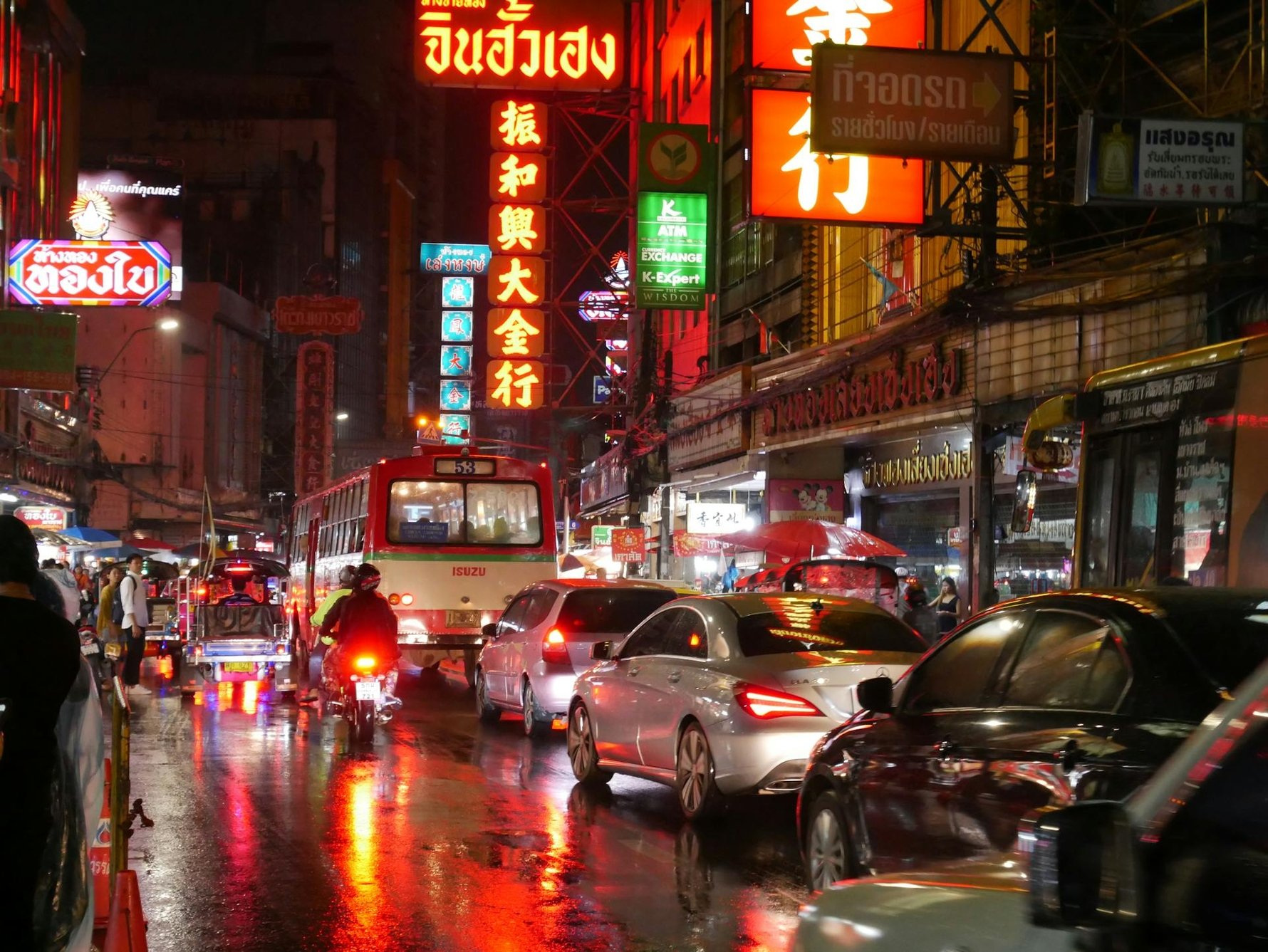
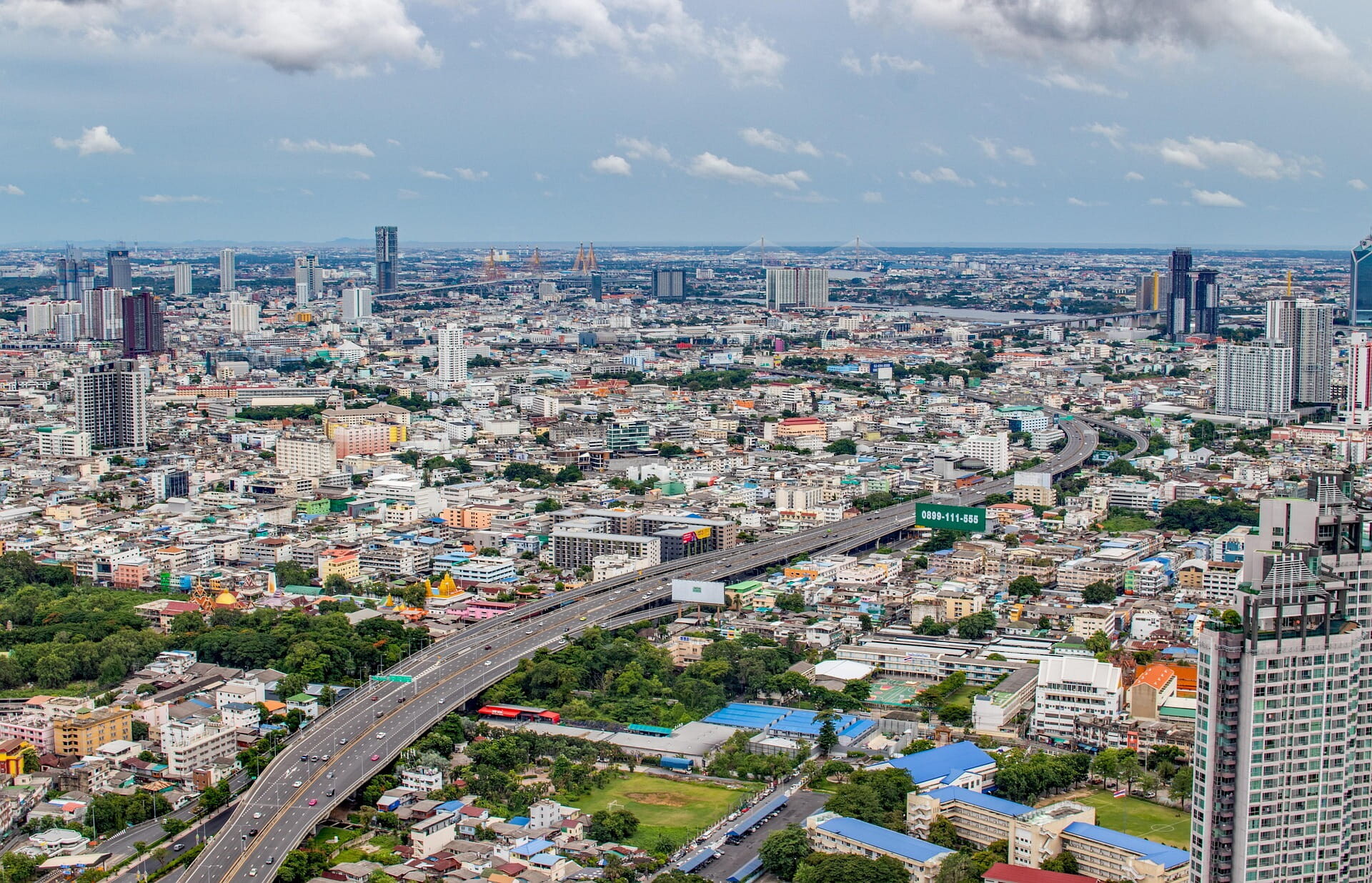
Bangkok's traffic is not a rumour. It is a physical, daily, entirely non-metaphorical phenomenon that has shaped the city's infrastructure, its culture, and the mental health of everyone who has ever tried to cross it in a taxi at 5:30pm on a weekday. The average commute here is among the longest in Asia, and a city that sprawls across 1,569 square kilometres with a population nudging eleven million is not going to solve that problem quietly.
The good news is that Bangkok has, over the past two decades, built its way around the problem. The elevated rail network is fast, cheap, and largely excellent. The river ferries are one of the great underused pleasures of the city. Grab works. And once you have a basic mental map of how the pieces connect, you will find yourself moving through Bangkok with a competence that will feel slightly disproportionate to the effort you put in to acquiring it. This guide covers everything you need.
The BTS Skytrain is the backbone of Bangkok's tourist transport network and the single most useful thing to understand before you arrive. It runs above the roads on two main lines – the Sukhumvit Line running roughly east–west, and the Silom Line curving south toward the river – with the two meeting at Siam station, which functions as the de facto centre of modern Bangkok. A short Gold Line branch connects Krung Thon Buri with the ICONSIAM shopping complex on the riverside.
The system runs daily from around 05:15 to midnight, with trains every two to three minutes during peak hours and every five to seven minutes off-peak. It is air-conditioned, clearly signed in English, and reliably on time in a way that Bangkok road transport essentially never is. Fares are distance-based, running from 17 to 65 THB per journey following a restructuring in November 2025. A one-day unlimited pass costs 150 THB and makes good economic sense on any day involving serious sightseeing.
The Rabbit Card is the stored-value card for the BTS. It costs 200 THB to acquire (100 THB issuance fee plus 100 THB initial credit) and saves you the daily queue at ticket machines. It works on the BTS Sukhumvit, Silom, and Gold Lines, as well as on the MRT Yellow and Pink Lines. It does not work on the MRT Blue or Purple Lines – a distinction that catches people out. Take your passport to buy one at any BTS ticket office.
Key stations for visitors: Siam (central interchange, major malls), Asok (connects to MRT Sukhumvit, busy mid-Sukhumvit hub), Phrom Phong (EmQuartier, Thong Lo end of Sukhumvit), Sala Daeng (connects to MRT Si Lom, Silom/Patpong area), Saphan Taksin (Chao Phraya river piers, for Rattanakosin-bound boat connections), Mo Chit (Chatuchak Weekend Market, connects to MRT Chatuchak Park), and Phaya Thai (Airport Rail Link for Suvarnabhumi).
The MRT
The MRT (Mass Rapid Transit) is Bangkok's underground and elevated metro network, separate from the BTS and operated by a different company – a fact that explains why your Rabbit Card won't work on it. The most useful line for visitors is the Blue Line, which loops through the city and – crucially – serves Chinatown (Wat Mangkon station) and the area near the Grand Palace (Sanam Chai station), giving rail access to the Old City that the BTS doesn't provide.
The MRT Blue and Purple Lines now accept contactless bank cards (Visa and Mastercard) directly at the turnstile, which is genuinely convenient and bypasses the need for a separate stored-value card on those lines. The Mangmoom Card, launched in August 2025, is an integrated card that works across all MRT lines and is the cleaner long-term solution for anyone staying more than a few days. Single-journey tokens are available from machines at every station as always.
MRT Blue Line fares run from 17 to 45 THB. Key interchanges with the BTS are at Sukhumvit/Asok, Chatuchak Park/Mo Chit, and Si Lom/Sala Daeng. The MRT also connects with the Airport Rail Link at Phetchaburi station.
The Purple, Yellow, and Pink Lines extend into the outer suburbs and are of limited relevance to most visitors. The SRT Red Line commuter rail is worth knowing about for one specific reason: it runs to Don Mueang Airport (DMK), Bangkok's second airport, from Bang Sue Grand Station, which is also an MRT interchange.
The Airport Rail Link
The Airport Rail Link connects Suvarnabhumi Airport (BKK) to Phaya Thai station on the BTS, covering the 28-kilometre journey in approximately 30 minutes. It runs from around 06:00 to midnight and costs 15–45 THB depending on how many stops you travel. Phaya Thai is on the BTS Sukhumvit Line, putting you one interchange away from almost anywhere you need to be.
This is the most reliable way to get from the airport to the city during rush hours, when a taxi on the expressway can take anywhere from 45 minutes to two hours depending on conditions. If you're carrying large luggage and staying in an area not well served by the rail network, a metered taxi with expressway is the practical alternative – budget 300–500 THB including tolls.
For Don Mueang Airport (DMK), there is no direct rail connection to the BTS, but the SRT Red Line runs to Bang Sue Grand Station (an MRT interchange) and A1 and A2 buses serve Mo Chit BTS station. A taxi from Don Mueang to central Bangkok runs 300–500 THB plus tolls and takes 45 minutes to well over an hour depending on traffic.
The River Boats
The Chao Phraya River is Bangkok's original highway, and the express boat service running along it is faster, cheaper, and considerably more pleasant than anything involving road transport for journeys along the riverbank. It is also badly underused by tourists who haven't found out about it yet, which means the boats tend to be manageable even when the streets nearby are not.
The main hub is Sathorn Pier (also called Central Pier), accessible directly from BTS Saphan Taksin via a covered walkway. Piers to the north are numbered N1, N2, and so on; piers south are S1, S2. The key tourist stops run from Sathorn up to N13 (Phra Arthit/Banglamphu, near Khao San Road), serving Chinatown, Rattanakosin, Wat Pho, the Grand Palace area, and the cross-river point for Wat Arun along the way.
Which boat to take: The orange-flag express boats are the local workhorse – frequent, cheap (16 THB flat fare), and the sensible choice for most journeys. The blue-flag Chao Phraya Tourist Boat covers the same key stops with English-language commentary, runs from 09:30 to 19:00, and costs 60 THB single or 150 THB for an all-day hop-on/hop-off pass. The day pass is good value if you're doing a river-heavy day of sightseeing; the orange boat is fine if you know where you're getting off.
Cross-river ferries are the tiny wooden boats that shuttle between opposite banks at various points, costing 4–8 THB. The most useful for visitors is the Tha Tien crossing (Pier N8), which takes you directly to Wat Arun from the Wat Pho side in about three minutes. These are the cheapest river journeys in Bangkok and among the most satisfying.
Long-tail boats can be chartered from various piers for canal tours – the khlong (canal) network on the Thonburi side gives access to a quieter, older Bangkok that feels genuinely removed from the city around it. Agree the price and duration before boarding.
Grab
Grab is the ride-hailing app that operates across Southeast Asia and is the standard way to book a car or motorbike in Bangkok. Download it before you arrive, register with a phone number, and link a card or use cash payment. Prices are fixed at the time of booking – no meter negotiations, no wondering whether you're being taken the long way round, and no language barrier at the destination. For journeys that the rail network doesn't serve conveniently, this is the reliable adult option.
Grab cars in Bangkok are more expensive than metered taxis (especially during surge pricing) but significantly less stressful, particularly at night or when carrying luggage. GrabBike (motorbike) is faster in traffic and cheaper for short hops, though the Bangkok traffic environment makes this a decision to make with full awareness of what you're agreeing to.
Metered Taxis
Bangkok's metered taxis are plentiful, cheap by most international standards, and perfectly usable outside of rush hour. Flag fall is 35 THB, and a reasonably long journey through calm traffic might cost 80–150 THB. The practical complications: drivers frequently decline trips they consider inconvenient (short distances, awkward destinations, or simply not the direction they fancy going), and some – particularly near major tourist sites and airports – will try to negotiate a flat fare rather than use the meter. Insist on the meter. If they won't, get out and find another one.
The other complication is traffic. A journey that looks like 4km on Google Maps can take 45 minutes at the wrong time of day. If you're considering a taxi during the 07:00–09:00 or 17:00–19:30 rush windows, and the journey involves any major road, take the train instead.
Tuk-Tuks
The tuk-tuk is Bangkok's most iconic vehicle and its most reliably expensive one. For tourists unfamiliar with local rates, the negotiated price will almost always be higher than a metered taxi would charge for the same journey. This is fine if you've factored it in as the price of the experience, less fine if you're expecting it to be a cheap way to get around.
Tuk-tuks near major tourist sites – the Grand Palace, Khao San Road, Wat Pho – sometimes operate in partnership with gem shops, suit tailors, and other establishments that pay commission for tourist deliveries. The "temple is closed today" approach, where a friendly driver steers you toward a shopping detour instead of your actual destination, has been running since approximately the invention of tourism in Thailand. Tuk-tuks hailed away from these areas, or used for short neighbourhood hops, are a different and more straightforward experience.
Motorbike Taxis
Men in orange or yellow vests stationed at the entrances to sois (side streets) offer motorbike rides for short distances, typically 10–30 THB. They are faster than any other road option in traffic and are used daily by millions of Bangkok residents with no particular drama. They are also motorbikes in Bangkok traffic, which is a sentence that should do its own work. For non-riders unaccustomed to weaving between lanes at speed, this is a risk calculation to make consciously rather than by accident.
The Khlong Saen Saeb Canal Boats
Slightly separate from the Chao Phraya system, the Khlong Saen Saeb express boat service runs along a canal from Banglamphu (near Khao San Road) eastward through the city to the Ramkhamhaeng area, with a stop near the Jim Thompson House. It is fast, cheap (around 10–19 THB), and genuinely useful for cutting across the middle of the city in a way the rail lines don't. It is also more chaotic than the river boats – boats don't always stop, boarding involves some urgency, and the canal itself is not fragrant. Worth knowing about, particularly if you're moving between the Old City and the Siam/Sukhumvit areas.
A Practical Strategy
The approach that works: plan your days loosely around BTS and MRT stations, use the river boats for anything near the Chao Phraya, use Grab for anywhere the rail doesn't reach, and accept that a small amount of the city will simply take longer than you expect. This is not a failure of planning. It is Bangkok.
Rush hour (07:00–09:00, 17:00–19:30 on weekdays) is when road transport becomes genuinely punishing. Build activities around this if you can – being inside the Grand Palace or a market during peak commute time is a much better use of those hours than being in a taxi.
Google Maps works well for Bangkok public transport planning and will correctly route you through BTS, MRT, and river connections. The official BTS and Bangkok MRT apps exist and are serviceable if you prefer dedicated transit tools.
For the full picture on where these transport options connect to what you want to see and where you might want to stay, see Bangkok Neighbourhoods. For getting to Bangkok in the first place, the airport logistics are covered in Bangkok: Everything You Need to Know.