Alaska resists the kind of summarising that works for other American destinations. It is too large, too varied, and too serious about its own scale to be managed in a list of highlights – and yet the list is necessary, because the alternative is paralysis. The state is bigger than Texas, California, and Montana combined. It has more coastline than the rest of the United States put together. It contains seventeen of the twenty highest peaks in the country.
It has more pilots per capita than any other state, which is not a statistic but a practical fact: in much of Alaska, a small plane is not a luxury but the only way in. What follows is an attempt to organise the most significant experiences the state offers, from the accessible to the genuinely remote, in a sequence that moves roughly from the well-known to the less visited. Most of the entries concern activities rather than sites, because Alaska rewards doing over sightseeing.
All prices and logistics were accurate at time of writing. Alaska’s tourist season runs broadly from mid-May to mid-September, though winter travel for aurora viewing and dog sledding has its own logic entirely; the relevant entries address this. Anchorage is the practical base for most of what follows.
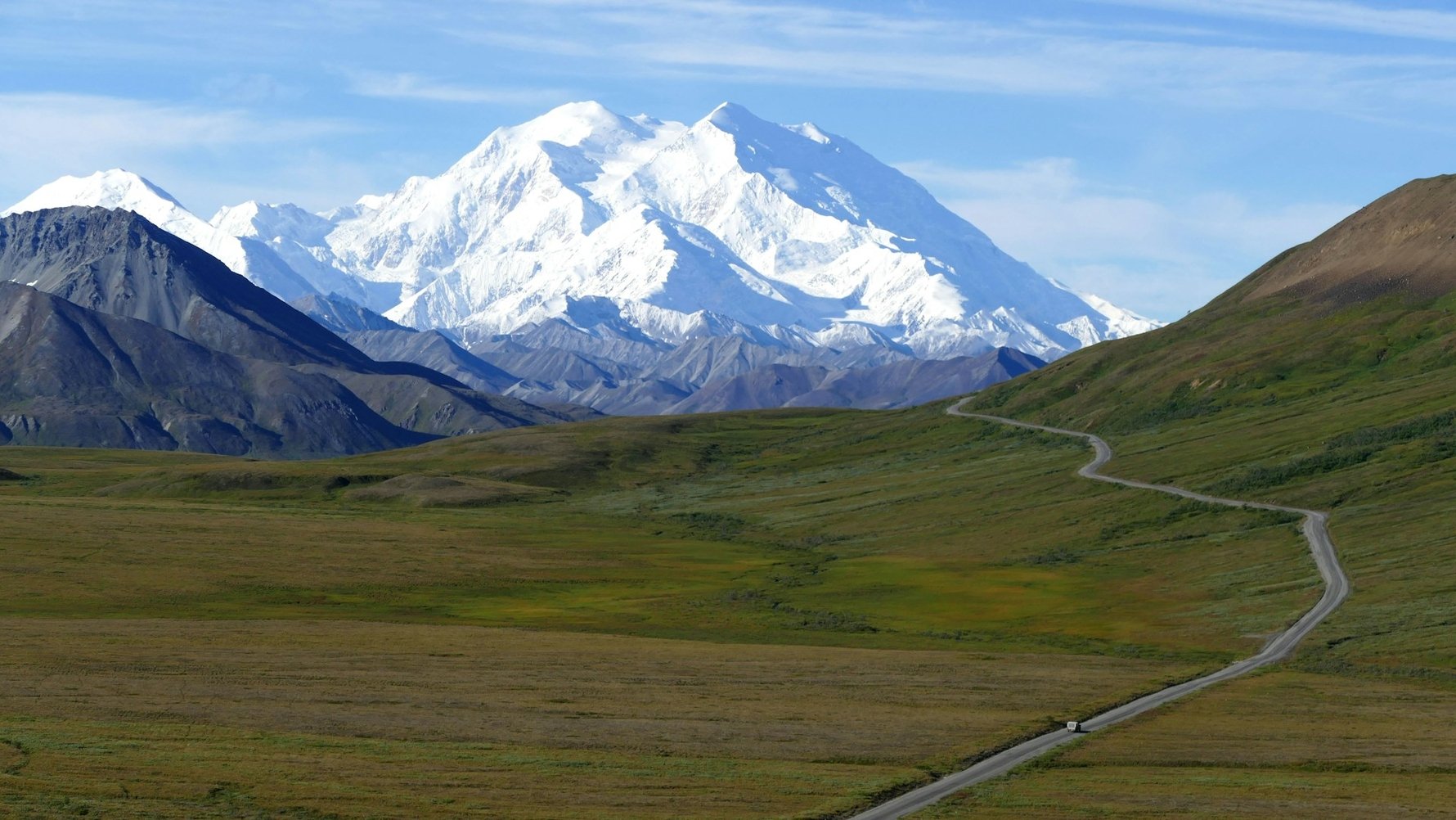
Denali stands 20,310 feet above sea level, making it the highest peak in North America – and because it rises almost vertically from a base at relatively low elevation, its actual vertical rise from base to summit is greater than that of Everest. The Athabascan Koyukon people, who have inhabited the region for millennia, named it Denali, meaning “the Great One.” On a clear day it is visible from Anchorage, 130 miles to the south. On most days it is not visible at all, which is one of the things that makes the clear-day sighting something people remember for the rest of their lives.
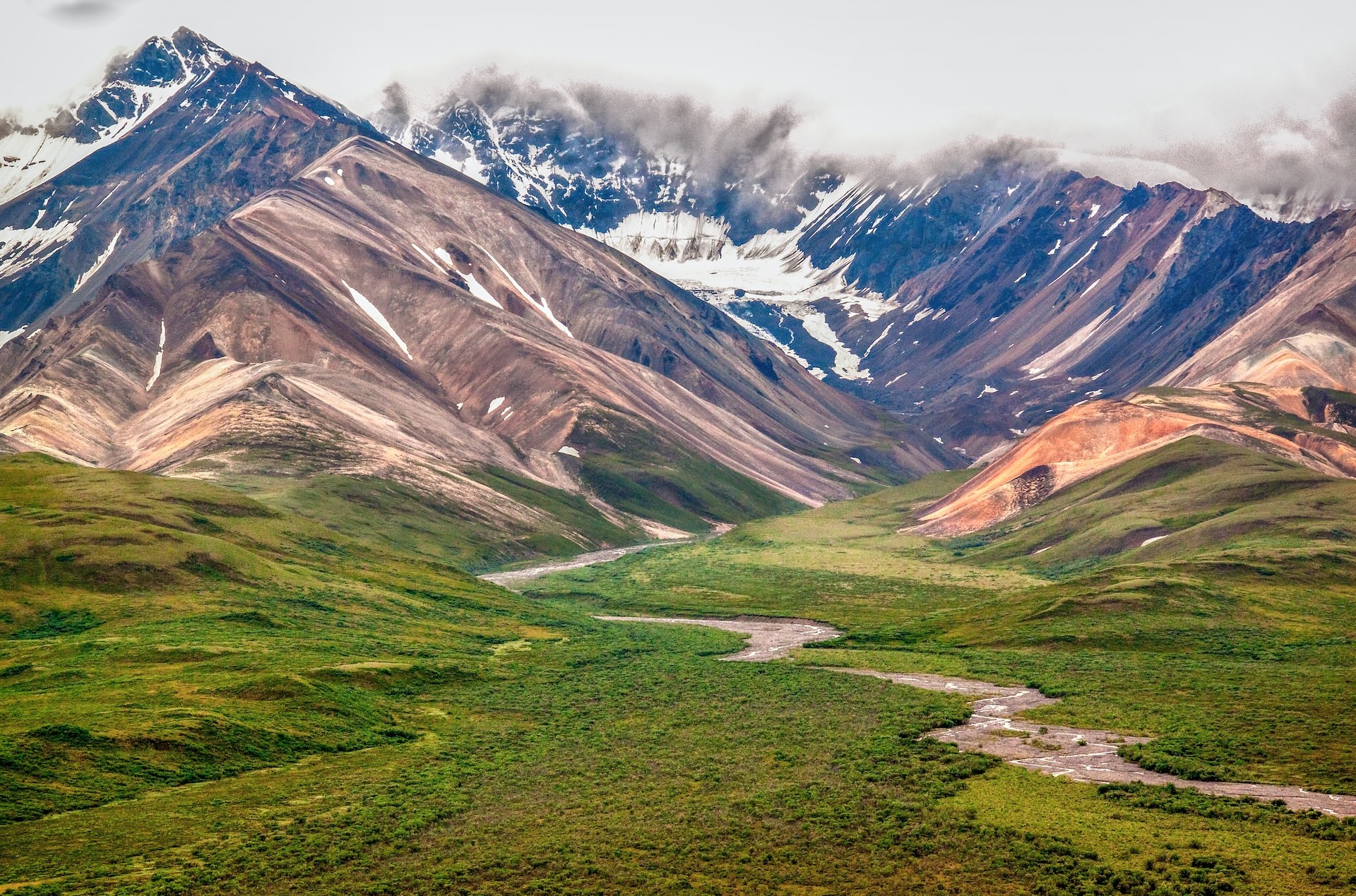
Denali National Park and Preserve covers six million acres of subarctic wilderness – a complete ecosystem of braided glacial rivers, alpine tundra, and boreal forest that is home to what the park calls the Big Five: grizzly bear, wolf, moose, caribou, and Dall sheep. The single park road runs 92 miles into the backcountry, but private vehicles are restricted to the first 15 miles; beyond the Savage River checkpoint, travel is by park bus only. This is deliberate. The restriction keeps the road quiet enough that wildlife treats it as part of the landscape rather than a hazard, and the wildlife viewing on a full-day bus transit is consequently extraordinary – grizzlies digging for ground squirrels on open tundra hillsides, caribou crossing the road in front of the bus, wolves occasionally visible at distance across the river valleys. In 2026 the road is accessible to mile 43 due to ongoing construction work on a landslide bypass; check the park’s current status before booking.
Getting there: Denali is 240 miles north of Anchorage by road (around 4–5 hours on the Parks Highway), or accessible by the Alaska Railroad’s Denali Star service, which runs between Anchorage and Fairbanks with a stop at the park entrance. The train is the more scenic option and avoids driving.
Best time to visit: Mid-May to mid-September, when the park road and bus system are operating. Peak wildlife viewing is generally mid-June to early August. Autumn brings tundra colour and thinner crowds but shorter operating windows for park services.
Ticket prices: Park entrance is around $15 per person for a 7-day pass. Bus reservations are required and sell out far in advance for popular summer dates; book via recreation.gov as early as possible. Narrated tour buses are more expensive than transit buses; both access the same road.
Good to know:Talkeetna, a small town 100 miles south of the park entrance, is the base for flightseeing operations over Denali (see entry 9) and worth an overnight in its own right. The view of Denali from Talkeetna on a clear day, across the river flats, is one of the finest unobstructed mountain views available from a road.
2. Kenai Fjords National Park Wildlife Cruise
Kenai Fjords National Park protects 669,000 acres of coastal mountains and ocean on the Kenai Peninsula, south of Anchorage. The park takes its name from the drowned glacial valleys – fjords – that the receding Harding Icefield has carved into its coastline, and it is defined by the intersection of two worlds: the glaciers above, calving ice into the water below, and the wildlife that inhabits the cold, nutrient-rich waters of the Gulf of Alaska. A boat tour from the harbour town of Seward into the park is, by some distance, the single best wildlife experience available in Alaska that does not require a bush plane.
A full-day cruise covers Resurrection Bay, the outer coast of the park, and one of the tidewater glaciers deep in the fjords. The wildlife checklist is extensive and, in summer, largely achievable: humpback whales breaching in the open bay, orca pods moving through the passage, Steller sea lions hauled out on rock shelves, harbour seals on ice floes at the glacier face, sea otters floating on their backs in the kelp, tufted puffins and rhinoceros auklets in the water, bald eagles overhead, mountain goats on the cliffs above the waterline. The glacier itself – Holgate or Aialik, depending on the route – presents a wall of blue and white ice rising several storeys above the water, shedding bergs with concussive cracks that echo across the fjord. The combination is, by most accounts of people who have done it, one of the best days they have spent outdoors anywhere.
Getting there: Seward is 127 miles south of Anchorage by road (2.5 hours on the Seward Highway, which is one of the most scenic drives in the state). The Alaska Railroad’s Coastal Classic train offers a four-hour scenic route that traces Turnagain Arm before heading south through the Kenai Mountains – an excellent option for those who prefer not to drive.
Best time to visit: Late May through September. July offers the warmest conditions and the widest range of wildlife; late August and September bring fewer crowds and the chance of seeing bears on the hillsides above the waterline.
Ticket prices: Full-day cruises into the national park typically run $200–$230 per adult. Half-day wildlife cruises in Resurrection Bay are around $100–$130. Major operators include Kenai Fjords Tours and Major Marine Tours; book well in advance for summer dates.
Good to know:Exit Glacier, the only road-accessible part of Kenai Fjords, is worth visiting before or after the boat tour. A short trail leads to the glacier face, with markers along the path showing where the ice reached in previous decades; the retreat visible within a single lifetime is confronting. Admission to the glacier area is covered by the standard park entrance fee.
3. Glacier Bay National Park
Glacier Bay was, 250 years ago, a single massive glacier that filled the entire bay – some 20 miles wide and 4,000 feet thick. Captain George Vancouver documented it as a solid wall of ice when he passed in 1794. By the time naturalist John Muir arrived in 1879, the glacier had retreated far enough for him to paddle a canoe 40 miles into the bay, and his accounts of the place – the groaning of the ice, the blue light through the bergs, the silence of the landscape – were so vivid that they placed Glacier Bay on the map for the early cruise ships that began visiting in the 1880s. Today the bay is 65 miles long, the ice is still retreating, and the national park that surrounds it covers 3.3 million acres of Southeast Alaska. It is part of a 25-million-acre UNESCO World Heritage Site that also encompasses the adjoining Canadian parks of Kluane and Tatshenshini-Alsek.
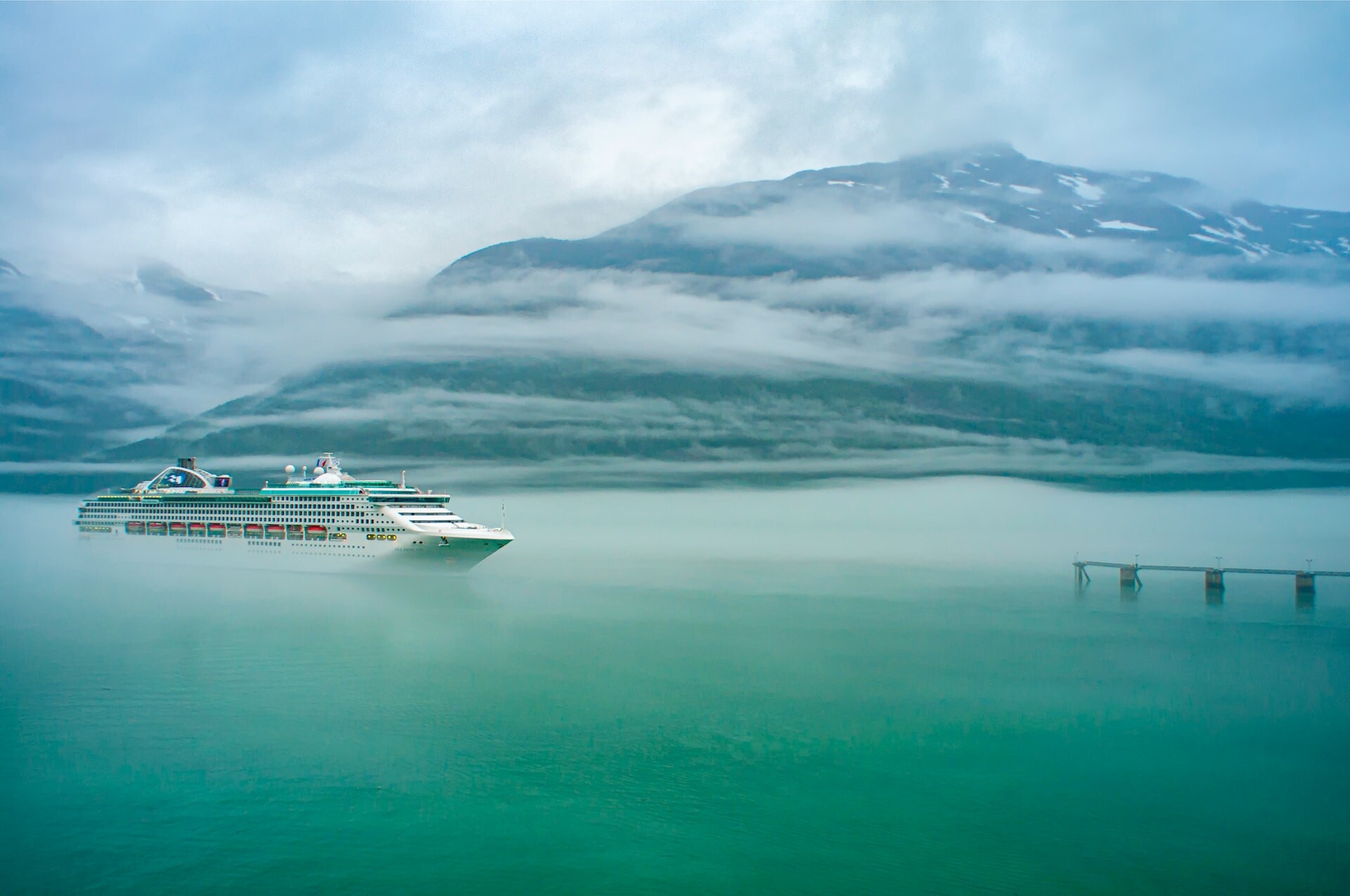
The park is accessible only by air or sea, which means it is experienced almost exclusively from cruise ships and charter boats. Large cruise ships are limited to two per day to protect the environment, and their passage through the bay – past tidewater glaciers that still reach the water and actively calve – is one of the signature experiences of any Alaska cruise itinerary. National Park Service rangers board ships in Bartlett Cove and narrate the journey into the upper bay, where the Margerie Glacier presents a mile-wide face of blue ice rising 250 feet above the waterline. The sounds of glacial calving – a deep crack, a pause, a concussive boom as the ice hits the water – carry across the bay. The Huna Tlingit people inhabited this land before the glaciers advanced and have maintained a deep cultural connection to it; the Huna Tribal House at Bartlett Cove, opened in recent years alongside the main visitor centre, represents a formal recognition of this relationship by the park service.
Getting there: Almost all visitors arrive by cruise ship as part of an Inside Passage or Gulf of Alaska itinerary. Independent access is possible via small plane or charter boat from Juneau (50 miles east); the town of Gustavus, the park’s gateway community, has a small lodge and limited accommodation.
Best time to visit: May through September, when cruise ships are operating. Mid-summer offers the longest days and the best wildlife viewing; late May and early September are the quietest periods.
Ticket prices: Access for cruise passengers is included in cruise fare. Independent visitors pay a national park entrance fee of around $15 per person; check nps.gov/glba for current rates. Charter flights from Juneau to Gustavus run $200–$400 per person depending on operator and group size.
Good to know: Kayaking in Glacier Bay is, for those with the experience and planning to do it properly, one of the finest wilderness paddle routes in the world. Permits are required and numbers are restricted; contact the park well in advance.
4. The Inside Passage
The Inside Passage is the sheltered coastal waterway that runs from Puget Sound in Washington north through the islands of British Columbia and into the Gulf of Alaska – roughly 1,000 miles of fjords, channels, and straits between the mainland coast and the chain of islands that screens it from the open Pacific. It is where Alaska cruising happens, and has been since the 1880s: the gold rush traffic of the 1890s, John Muir’s journeys, the early tourist steamships, and now the cruise lines, all following essentially the same route through the same scenery that prompted Muir to describe Alaska as “a land of pure wildness.”
The port towns along the Inside Passage are where most visitors encounter Alaska at street level, and they are more interesting than the cruise ship context tends to suggest. Juneau, the state capital, is accessible only by air or sea and sits between Mount Juneau and Gastineau Channel; the Mendenhall Glacier is 13 miles from downtown and accessible by city bus, its retreating face a dramatic presence in what is effectively a suburban setting. Skagway, at the head of the Lynn Canal, was the staging point for the Klondike Gold Rush of 1898 – 100,000 people passed through in two years, heading for the Chilkoot and White Pass trails into the Yukon – and the Klondike Gold Rush National Historical Park preserves its wooden-fronted main street largely intact. Ketchikan, at the southern end of the passage, calls itself the Salmon Capital of the World and is home to Totem Bight State Historical Park, with the finest collection of totem poles in Alaska. Sitka, on the outer coast, was the capital of Russian Alaska until the 1867 sale to the United States, and retains the onion dome of St. Michael’s Cathedral and the grounds of the Russian Bishop’s House as evidence of that history.
Getting there: By cruise ship from Seattle or Vancouver, or by the Alaska Marine Highway System ferry, which provides scheduled service between Bellingham, Washington and Southeast Alaska ports – a slower, more independent, and considerably less expensive way to travel the same route.
Best time to visit: May through September for cruise travel. The Alaska Marine Highway runs year-round.
Ticket prices: Cruise fares vary enormously by line, itinerary, and cabin; plan for $150–$300 per person per night as a rough mid-range guide. The Alaska Marine Highway ferry from Bellingham to Juneau (around 3 days) runs $400–$600 per person for a basic cabin; check dot.alaska.gov/amhs for current fares.
Good to know: The difference between a 7-day Inside Passage cruise (round-trip from Seattle, same ports on the way back) and a one-way Gulf of Alaska cruise (Seattle or Vancouver to Anchorage) is significant: the latter covers more ground, includes Glacier Bay and Hubbard Glacier, and ends at a different point – worth considering if the itinerary permits.
5. Bear Viewing at Katmai
The image is so ubiquitous it has become a kind of symbol: a brown bear, massive and unhurried, standing at the edge of a waterfall with a sockeye salmon frozen in the air in front of its open mouth. This is Brooks Falls in Katmai National Park and Preserve, 300 miles southwest of Anchorage on the Alaska Peninsula, and it is one of the places in the world where wildlife viewing reaches the level of spectacle. Each summer, millions of sockeye salmon run up the Brooks River from Naknek Lake to their spawning grounds, and at the four-foot waterfall the salmon must leap – repeatedly, frantically, all day – and the bears, which know this, line up along the lip of the falls and wait. At the peak of the July run, as many as 60 bears may be visible from the elevated viewing platforms, with dominant males occupying the prime spots at the falls and younger bears watching from below. Katmai is home to over 2,200 brown bears in total – North America’s largest protected population – and many of them are visible from Brooks Camp throughout the season.
Katmai was proclaimed a national monument in 1918, initially to protect the landscape altered by the 1912 eruption of Novarupta – the largest volcanic eruption of the 20th century, which created the Valley of Ten Thousand Smokes, a 40-square-mile landscape of ash flows and fumaroles still visible on guided tours from Brooks Camp. The bears came to define the park’s identity later, as the salmon runs and the viewing platforms became established, and the park’s live bear cameras now attract millions of online viewers each summer, including during the annual “Fat Bear Week” competition in October.
Getting there: There are no roads to Katmai. The standard route is a commercial flight from Anchorage to King Salmon, followed by a floatplane or small plane to Brooks Camp. Day trips from Anchorage by floatplane are available through operators including Rust’s Flying Service and Anchorage Aero; these are expensive but allow a full day at the falls without the need for overnight accommodation.
Best time to visit: July for the peak salmon run and the highest density of bears at the falls. September brings a second, smaller run of silver salmon and significantly fewer visitors. Booking for Brooks Camp (the only accommodation within the park) must be done through recreation.gov and competition for summer dates is intense; the lottery opens in January.
Ticket prices: Day flights from Anchorage to Brooks Falls typically run $800–$1,100 per person, covering the flight and a full day at the park. Brooks Lodge overnight packages are considerably more; check katmailand.com for current rates. Park entrance is around $15 per person.
Good to know: A mandatory “bear school” orientation is required for all visitors upon arrival at Brooks Camp, covering bear behaviour and park safety protocols. It takes 15 minutes and is worth paying attention to: the bears at Brooks Camp share the camp roads and trails with visitors and encounters at close range are routine.
6. The Northern Lights
The aurora borealis is produced when charged particles from the sun interact with gases in the Earth’s upper atmosphere, releasing energy as light. The colours – green most commonly, then red, purple, and pink depending on the altitude and composition of the gases involved – move across the sky in curtains, arcs, and spirals that shift and pulse in real time, sometimes slowly and sometimes with a speed that is disorienting. No photograph prepared for it adequately. It is one of those rare natural phenomena that exceeds its own reputation.
Fairbanks, Alaska’s second city, sits at 65 degrees north latitude, directly beneath the Auroral Oval – the ring-shaped geomagnetic zone where aurora activity is most concentrated. The University of Alaska Fairbanks Geophysical Institute publishes daily aurora forecasts based on solar wind data, and local tour operators use them to position their groups at the best dark-sky locations outside the city. The aurora season runs from late August to late April, with the peak intensity window between September and March. Three nights in Fairbanks during this period, actively seeking the lights each night, gives a 90% statistical chance of a significant sighting. The winter experience – temperatures below –20°C, the snow on the ground reflecting the green light back upward, the silence – is the version most people who have seen it describe as the one they remember.
Getting there: Fairbanks is 360 miles north of Anchorage by road (the Parks Highway, passing through Denali), or accessible by air from Anchorage year-round. The Alaska Railroad’s Denali Star connects Anchorage to Fairbanks in summer (the train does not run in winter), making a combined summer and winter trip the logical approach for visitors wanting both Denali and the aurora.
Best time to visit: Late September to late March for peak aurora season combined with reasonable travel conditions. Mid-winter (December–February) offers the longest dark hours and the highest viewing probability; early autumn (late August–September) combines aurora viewing with the last of accessible temperatures and fall foliage.
Ticket prices: Aurora viewing tours from Fairbanks run $80–$150 per person for a guided evening; some include transport to heated viewing shelters, hot drinks, and the guide’s phone wakeup call if the lights appear after midnight. Accommodation in Fairbanks during peak aurora season books up well in advance.
Good to know:Chena Hot Springs, 60 miles east of Fairbanks, is a geothermally heated resort that combines soaking in outdoor hot pools with aurora viewing – one of the better ways to spend a winter night in Alaska. The resort operates its own Ice Museum year-round, carved fresh each winter.
7. Dog Sledding and the Iditarod
The Iditarod Trail Sled Dog Race covers 1,049 miles from Anchorage to Nome across some of the most unforgiving terrain in North America – the Alaska and Kuskokwim mountain ranges, 150 miles of the Yukon River, and the sea ice of Norton Sound. It begins with a ceremonial start on Fourth Avenue in downtown Anchorage on the first Saturday of March, continues with the official start in Willow the following day, and ends in Nome eight to fifteen days later, depending on conditions and the speed of the leading teams. The name comes from the Iditarod Trail, the historic supply route used by dog teams from the early 20th century, and the race itself was created in 1973 to commemorate the 1925 serum run – the relay of 20 mushers and 150 dogs that carried diphtheria antitoxin 674 miles from Nenana to the ice-locked city of Nome, saving the population from an epidemic.
Dog sledding as a visitor experience is available year-round and does not require March travel or a connection to the Iditarod. Summer kennel tours and cart rides – using wheeled sleds on dry ground or forest trails – are offered by several operations, including Seavey’s IdidaRide in Seward, operated by the Seavey family, who have won eight Iditarod races between them. In winter, actual on-snow sled rides are available from operations in the Anchorage area, Fairbanks, and near Denali. The dogs – Alaskan Huskies, bred for endurance rather than appearance – are invariably the highlight for visitors who did not expect to care about dogs.
Getting there: Seavey’s IdidaRide in Seward is easily combined with the Kenai Fjords boat tour (entry 2). Anchorage-area sled dog operations are accessible by car or tour from the city. The Iditarod ceremonial start is on Fourth Avenue in downtown Anchorage – a free public event that draws large crowds.
Best time to visit: The first week of March for the Iditarod. Summer kennel tours run May through September. Winter sled rides run December through March, snow conditions permitting.
Ticket prices: Summer kennel tours and cart rides at Seavey’s run around $50–$80 per adult; check ididaride.com for current rates. Winter sled rides vary by operator and length; expect $150–$300 per person for a substantive experience.
Good to know: The Iditarod Trail Sled Dog Race Headquarters in Wasilla, 40 miles north of Anchorage, is open year-round and houses a museum covering the race’s history, memorabilia from past races, and a gift shop. In summer it offers rides pulled by actual Iditarod dogs. It is a low-key stop that tends to exceed expectations.
8. Wrangell–St. Elias National Park
Wrangell–St. Elias National Park and Preserve is the largest unit in the United States national park system, covering 13.2 million acres – larger than Yellowstone, Yosemite, and Switzerland combined. It contains the convergence of four mountain ranges: the Wrangell, St. Elias, Chugach, and Nutzotin. It holds nine of the sixteen highest peaks in the United States. Its single piedmont glacier, the Malaspina, covers more than 1,500 square miles – an area larger than Rhode Island. Over a third of the park is permanent glacial ice. It is, in the language of national park superlatives, impossible to contextualise adequately without visiting it, at which point no further contextualising is necessary.
What distinguishes Wrangell–St. Elias from the other Alaskan parks in this list is its inaccessibility and its human history. Two unpaved roads enter the park. The 60-mile McCarthy Road, following the bed of the old Copper River and Northwestern Railway, leads to the tiny community of McCarthy and the nearby ghost town of Kennecott – a former copper mining operation that extracted $200 million worth of copper between 1903 and 1938 and was then abandoned overnight, leaving its mill buildings, bunkhouses, and processing facilities intact on a ridge above the glacier. The National Park Service now manages Kennecott as a historical site; the mill building has been stabilised and guided tours are available. The surrounding glacier – the Root Glacier – is walkable with crampons, and guided glacier hikes are the most popular activity in the park. Local air taxis offer flightseeing over the Bagley Icefield, the Malaspina, and the St. Elias peaks, which approach the experience from the only direction adequate to their scale.
Getting there: The Copper Center Visitor Center is 190 miles from Anchorage on the Glenn Highway. The McCarthy Road adds another 60 miles on unpaved surface – a high-clearance vehicle is strongly recommended and a spare tyre is essential. The drive from Anchorage to McCarthy takes around 5–6 hours. Small plane access from Glennallen, McCarthy, or Chitina provides an alternative.
Best time to visit: June through August for glacier hiking and Kennecott tours, when the McCarthy Road is reliably passable. September brings the most dramatic light and significantly fewer visitors.
Ticket prices: No entrance fee. Guided glacier hikes from McCarthy run $80–$150 per person depending on length and operator; check kennicottguides.com. Kennecott mill tours are ticketed; check nps.gov/wrst for current prices.
Good to know: McCarthy has no ATMs and intermittent phone signal. Bring cash. The drive on the McCarthy Road is itself part of the experience – the old railway bed crosses gorges and river valleys that have not changed significantly since the mining era, and the sense of arriving somewhere genuinely at the end of the road is not manufactured.
9. Flightseeing
Alaska has more registered pilots per capita than any other US state, and more small aircraft per capita than any other region in the world. This is not because Alaskans are unusually enthusiastic about aviation; it is because much of the state is inaccessible by road and a bush plane is the only practical way to get there. The network of small planes, floatplanes, and ski-equipped aircraft that connects Alaska’s roadless communities and wilderness areas is also, from a visitor’s perspective, the access point for experiences that are otherwise unreachable – and at the scale Alaska operates, seeing its landscapes from the air is categorically different from seeing them from a road or a boat.
The most popular and accessible flightseeing experience is the Denali glacier landing out of Talkeetna. A 90-minute bush plane flight takes passengers from the Talkeetna airstrip across the Susitna Valley, through the Alaska Range – past the sheer granite walls of the Ruth Gorge, described as the world’s deepest gorge at nearly two miles from rim to floor – and within six miles of Denali’s summit, before landing on the Ruth Glacier in the Sheldon Amphitheater, a bowl of rock and ice surrounded by peaks on all sides. Passengers step off the plane onto a glacier at 7,000 feet, surrounded by silence. The experience is weather-dependent – Denali creates its own cloud cover and flights are cancelled or rerouted regularly – but operators refund cancelled flights and the wait, if necessary, is generally worth it. Beyond Talkeetna, flightseeing options extend to Katmai, the Brooks Range, Glacier Bay, the Wrangell–St. Elias icefield, and the Arctic National Wildlife Refuge – essentially anywhere in Alaska that a road does not reach, which is most of it.
Getting there: Talkeetna is 115 miles north of Anchorage on the Parks Highway (around 2 hours by road), or reachable by the Alaska Railroad. The main Talkeetna operators for Denali flightseeing include K2 Aviation, Talkeetna Air Taxi, and Sheldon Air Service.
Best time to visit: May through September for Denali glacier landings, with June and July offering the most daylight hours and the warmest glacier temperatures. Winter flights are available but glacier landings are more weather-dependent.
Ticket prices: A standard Denali flightseeing tour with glacier landing runs $350–$450 per person depending on tour length and operator. Longer tours that include the full Denali circumnavigation are priced higher; check individual operators. A $15 National Park Service fee is charged per person at the time of departure for flights entering the park.
Good to know: Weight limits apply on all bush planes and passengers are asked for their weight at booking. Dress in layers regardless of the summer weather on the ground; temperatures on the glacier are significantly colder, and the UV exposure at altitude is intense. Sunglasses are essential.
10. The Kenai Peninsula
The Kenai Peninsula extends south from Anchorage between Cook Inlet and the Gulf of Alaska – an area roughly the size of West Virginia that contains, in compressed form, most of what people come to Alaska to find. It is the only part of the state where the full range of experiences – glaciers, wildlife, fishing, coastal scenery, wilderness hiking – is accessible by road from Anchorage in a single day. This makes it the logical base for visitors who prefer driving to flying, and a self-contained week for those who want depth rather than breadth.
The Seward Highway, which leaves Anchorage south along the shore of Turnagain Arm, is one of the most scenic roads in America from the first mile: the arm is a 40-mile inlet of Cook Inlet with bore tides that move at 15 miles per hour, beluga whales that chase salmon on the incoming water, and Dall sheep visible on the cliffs above the road. At the town of Seward the highway ends; from there, the boat tours of Kenai Fjords depart (see entry 2). The Sterling Highway branches west from the Seward Highway at Tern Lake and runs to Homer, at the end of the Kenai Peninsula, 200 miles south of Anchorage. Homer sits on Kachemak Bay with a panoramic view of glaciated mountains across the water; the Homer Spit, a 4.5-mile gravel bar that extends into the bay and holds the town’s fishing harbour, restaurants, galleries, and charter operations, is the most immediately pleasurable piece of coastal Alaska accessible by road. Homer calls itself the Halibut Fishing Capital of the World, and the charter fleet that departs from the Spit most summer mornings makes a reasonable case for the claim. Cooper Landing, on the upper Kenai River midway along the Sterling Highway, is the centre of the most famous king salmon fishery in the state: from late May to late July, fly-fishing guides and drift boats line the river for miles.
Getting there: All of the Kenai Peninsula is accessible by road from Anchorage. The Seward Highway south is the starting point; from there the peninsula opens in multiple directions. A rental car from Anchorage is the practical approach for a Kenai Peninsula week. The Alaska Railroad’s Coastal Classic train covers the Anchorage–Seward leg.
Best time to visit: Mid-May through September. King salmon fishing peaks in June and July; halibut is available throughout summer; the Kenai Fjords wildlife cruise season runs May to September. Autumn on the peninsula is quieter and beautiful, with the cottonwood turning gold along the Kenai River.
Ticket prices: Halibut fishing charters from Homer typically run $250–$350 per person for a full day, including gear but not fishing licence; check Homer Ocean Charters or Central Charters for current rates. Kenai River guided drift trips run $200–$350 per person. The Pratt Museum in Homer, covering the natural and cultural history of Kachemak Bay, charges a small admission and is worth a half-hour.
Good to know:Kachemak Bay State Park, accessible by water taxi across the bay from the Homer Spit, is one of Alaska’s most beautiful and least visited state parks – 400,000 acres of coastal wilderness with no road access. Day hikes to the Grewingk Glacier and overnight camping at Halibut Cove are the main draws. Water taxis from the Spit charge around $30–$40 per person round-trip.
What else can you do in Alaska?
Anchorage itself is a reasonable base rather than a destination – but the Tony Knowles Coastal Trail, an 11-mile paved path that runs from downtown along the shore of Cook Inlet with views of Denali on clear days, is one of the finest urban trails in America, and the Anchorage Museum provides an excellent introduction to Alaskan history, ecology, and indigenous culture for those arriving with limited prior knowledge. The Alaska Native Heritage Center, on the eastern edge of the city, presents the cultures of Alaska’s eleven distinct Native cultural groups through traditional structures, demonstrations, and storytelling, and is well worth a morning before heading out to the parks.
Lake Clark National Park, 150 miles southwest of Anchorage and accessible only by small plane, is one of the least-visited national parks in the country and offers brown bear viewing on the coastal flats at Silver Salmon Creek that rivals Katmai at a fraction of the crowding. Gates of the Arctic National Park, above the Arctic Circle and entirely without roads or visitor infrastructure, is the most remote national park in the United States; visiting it requires a bush plane from Fairbanks and a willingness to be genuinely self-sufficient in the wilderness, but those who manage it describe the experience in terms that exceed anything else on this list. The Dalton Highway, the only road to cross the Arctic Circle in Alaska, runs 414 miles from Fairbanks to Deadhorse on the Arctic Ocean through the Brooks Range – mostly gravel, mostly empty, and entirely serious – and the journey along it, with overnight stops at Coldfoot and Wiseman, is one of the great North American road trips for those equipped to attempt it.
For those whose Alaska ambitions are primarily nautical, Prince William Sound – the sheltered bay east of Anchorage, accessible from the port town of Whittier through the longest highway tunnel in North America – offers glacier viewing, sea kayaking, and orca watching in waters that the Exxon Valdez oil spill of 1989 damaged but did not permanently destroy. Charter cruises from Whittier into the sound, past the Columbia Glacier and through the calving ice, are a quieter alternative to the Kenai Fjords for those who have already done the latter.