Cardiff is a young capital by European standards – it was not officially designated as the capital of Wales until 1955, by which point it had already been shaped almost entirely by coal. The Marquesses of Bute arrived in the 18th century, built the docks that would make Cardiff the world’s greatest coal-exporting port, and spent some of the resulting fortune on one of the most extraordinary exercises in Victorian architectural fantasy that these islands produced. The coal is gone, the docks have been regenerated, the Welsh Parliament meets in a Richard Rogers building by the waterfront, and the city centre still has more Victorian covered arcades than anywhere else in the UK. It is a compact, walkable city with a good deal more to offer than it is generally given credit for. Prices below were correct at time of writing; verify before visiting.
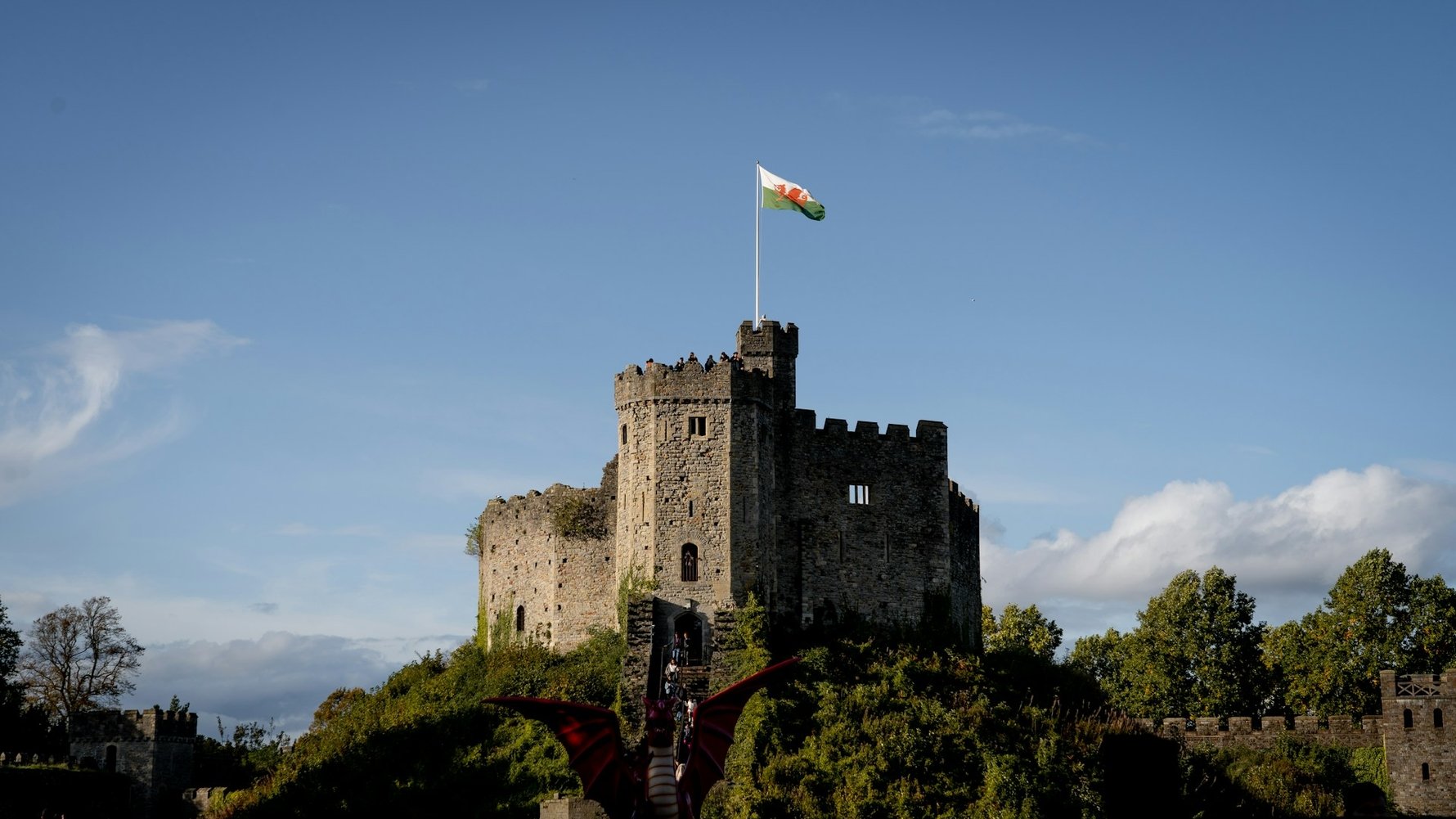
Cardiff Castle is, in spatial terms, a Roman fort inside a Norman castle inside a Victorian Gothic fantasy palace, and it has the unusual quality of being genuinely surprising on the inside regardless of how many photographs you have seen of the outside. The Romans built the first fort here around 55 AD; the Normans raised the motte in the late 11th century; and in 1865 the third Marquess of Bute – reputedly the richest man in Britain, having inherited a fortune built on South Wales coal – invited the architect William Burges to show him what he could do with it. The two men discovered a shared obsession with medieval Gothic architecture and the medieval Islamic world and proceeded to spend the next sixteen years realising it at extraordinary expense. Burges died in 1881 with the project unfinished; his assistants completed it according to his drawings.
The Victorian apartments are among the most extraordinary interiors in Britain: the Clock Tower with its nine-foot planet statues and gold-leaf ceilings; the Arab Room with its Moorish muqarnas dome in gilded wood, cedar cabinets inlaid with silver, and gilded parrots on the cornice; the Banqueting Hall; the Library with its Darwin-mocking monkeys carved around the chimneypiece. The Norman keep on its motte, the Roman walls reconstructed to the south, and the wartime tunnels built under the castle walls during the Cardiff Blitz add further depth. The 5th Marquess gave the castle to the city in 1947, which, given the state of his finances, was probably a relief to both parties.
Location: Castle Street, Cardiff CF10 3RB (city centre, adjacent to Bute Park). A ten-minute walk from Cardiff Central station.
Best time to visit: Weekday mornings. The Victorian apartments are accessed by guided tour only; check availability at cardiffcastle.com and book in advance.
Ticket prices: Grounds, keep and wartime tunnels included in general admission (around £14). Victorian apartment tours are an additional charge. Check cardiffcastle.com for current prices.
Good to know: The Animal Wall along Castle Street – carved stone animals designed by Burges, completed after his death by his assistant William Frame – is free to see and worth five minutes of your time before entering. The animals include a pelican, a lynx and a bear. Cardiff has opinions about which animal is best.
2. Castell Coch
Eight kilometres north of Cardiff, in a beech wood above the village of Tongwynlais, Castell Coch (“the Red Castle” in Welsh) rises from the trees with three conical towers and a working drawbridge and looks exactly like the thing it is: a Victorian gentleman’s idea of what a medieval castle ought to look like. The 13th-century ruins were acquired by the Bute family, the same pairing of Marquess and Burges that produced Cardiff Castle was applied here from 1875, and the result is, if anything, more concentrated in its fantasy. Burges designed everything – the furniture, the door latches, the ceiling paintings of birds and monkeys and mythological scenes – and died in 1881 before the interior was complete. His drawings were followed to the letter by his assistants, and the castle was finished in 1891. The historian Joseph Mordaunt Crook described it as “recreating from a heap of rubble a fairy-tale castle which seems almost to have materialised from the margins of a medieval manuscript.”
The Marquess of Bute, having lavished vast sums on it, visited the castle approximately twice. His widow used it occasionally; subsequent family members rather less. In 1950 it was handed to the state and administered by Cadw. It has since been regularly voted the public’s favourite building in Wales, which is a reasonable verdict. The bus from Cardiff city centre takes around 25 minutes and stops in the village.
Location: Castell Coch, Tongwynlais, Cardiff CF15 7JS. Bus 26 from Cardiff city centre to Tongwynlais; 1km walk from the village. Alternatively, the Taff Trail cycling and walking route connects Cardiff Castle to Castell Coch (approximately 10km).
Best time to visit: Weekday mornings. The castle is managed by Cadw and can be busy at weekends in summer.
Good to know: The beech woods around the castle are part of Fforest Fawr, which has waymarked walking trails. Arriving on foot via the Taff Trail and returning by bus, or vice versa, is the most satisfying way to combine castle and countryside.
3. National Museum Cardiff
The National Museum Cardiff, in the Edwardian civic quarter of Cathays Park, is the national museum of Wales and holds two collections of genuinely international standing in a single building: the natural history and geology collections, and the art collections. Entry is free, funded by the Welsh Government, which is the correct arrangement for a national museum and one that Cardiff should be credited for maintaining despite considerable financial pressures.
The art collection’s anchor is the bequest of the Davies Sisters – Gwendoline and Margaret, granddaughters of the coal magnate David Davies – who spent the early 20th century buying French Impressionist and Post-Impressionist art with the informed enthusiasm of people who had both the means and the eye. Their collection, bequeathed to the museum in stages through the 1950s and 1960s, includes Monet’s Water Lilies series, Van Gogh’s Rain at Auvers, Cézanne’s The François Zola Dam (the first Cézanne to enter any British public collection), Renoir’s La Parisienne (shown at the first Impressionist exhibition in 1874), and a cast of Rodin’s The Kiss. The museum also holds the largest collection of Daumièr paintings in the world. Welsh art – Augustus John, Gwen John, Kyffin Williams, Ceri Richards – is comprehensively represented. The natural history section contains a humpback whale skeleton and the world’s largest leatherback turtle.
Location: Cathays Park, Cardiff CF10 3NP. A 20-minute walk from Cardiff Central station or 10 minutes from the castle.
Best time to visit: Weekday mornings. The museum was subject to a brief closure in February 2025 due to a mechanical fault and faces ongoing funding pressures; check museum.wales/cardiff before visiting to confirm opening hours.
Ticket prices: Free. Parking available behind the museum off Museum Avenue.
Good to know: The museum holds works by Epstein behind glass, which is perhaps the safest arrangement. His other Cardiff commission — a 16-foot aluminium Christ suspended above the nave at Llandaff Cathedral — is considerably more exposed, which would have surprised no one familiar with the rest of his output.
4. Llandaff Cathedral
Llandaff Cathedral sits in a natural hollow by the River Taff in what was once a village and is now a northern suburb of Cardiff, and it has the quality of having been catastrophically damaged and restored so many times that its current interior is a layered palimpsest of medieval architecture, pre-Raphaelite art and mid-20th century modernism. Owain Glyndŵr’s forces damaged it in 1400; Parliamentarian troops stabled horses in it during the Civil War; a Great Storm destroyed a tower in 1703. The decisive blow came on 2 January 1941, when a German parachute mine demolished the nave roof, the south aisle and the chapter house. Post-war restoration was entrusted to the architect George Pace, who made a characteristically bold mid-century decision: rather than simply rebuilding the medieval interior, he erected a concrete parabolic arch across the nave and placed on top of it a cylindrical organ case, and on the west face of that – a 16-foot aluminium figure of Christ in Majesty by Jacob Epstein, unveiled in 1957. The figure is known as the Majestas.
Epstein was, at this point in his career, the most controversial sculptor in Britain, a practising Jew who had spent decades producing explicitly physical figures of the human body for public spaces and watching them be vandalised, covered up or removed. The Llandaff commission was itself contested; local artists protested their exclusion, and letter-writers invoked the Second Commandment. On the eve of the unveiling, the newly appointed curate sat silently beside Epstein in the completed nave. Eventually the sculptor turned and said simply: “Well?” After the curate had told him what he saw, he added – with, we must assume, the foolishness of youth – whether it had been difficult for Epstein, as a practising Jew, to create a Christ for a Christian congregation. Epstein replied: “All my life I have searched for truth and beauty and, in the end, I discovered that it is in the idea of the Christ that they are to be found.” The Majestas is one of the most remarkable works of post-war public art in Wales. The Rossetti triptych Seed of David (1856) and a John Piper window are also here.
Location: Cathedral Close, Llandaff, Cardiff CF5 2LA. Bus routes 24, 25, 62 and 63 from the city centre; around 20 minutes.
Best time to visit: The cathedral is open daily from 9am (7am Sundays). Avoid service times if you wish to view the interior quietly. The village of Llandaff surrounding the cathedral is worth a short walk.
Ticket prices: Free. Donations welcomed. Check llandaffcathedral.org.uk for service times and events.
Good to know: The approach down the steep hill from Llandaff village towards the cathedral hollow gives the best first view of the building. The medieval ruined Bishop’s Castle stands in the grounds and is free to explore.
In 1913, Cardiff Docks exported 13 million tonnes of coal – more than any other port in the world. By the 1980s the docks were derelict, the coal trade having collapsed with the decline of the South Wales coalfield. The regeneration of the area, renamed Cardiff Bay, was the largest urban renewal project in Europe when it began in the 1980s, and the result is a mixed bag of the kind that large-scale regeneration projects reliably produce: some good buildings, some mediocre ones, a lot of apartments, a waterfront that gets most things right and a freshwater barrage that eliminated a significant tidal mudflat habitat in the process of creating the harbour.
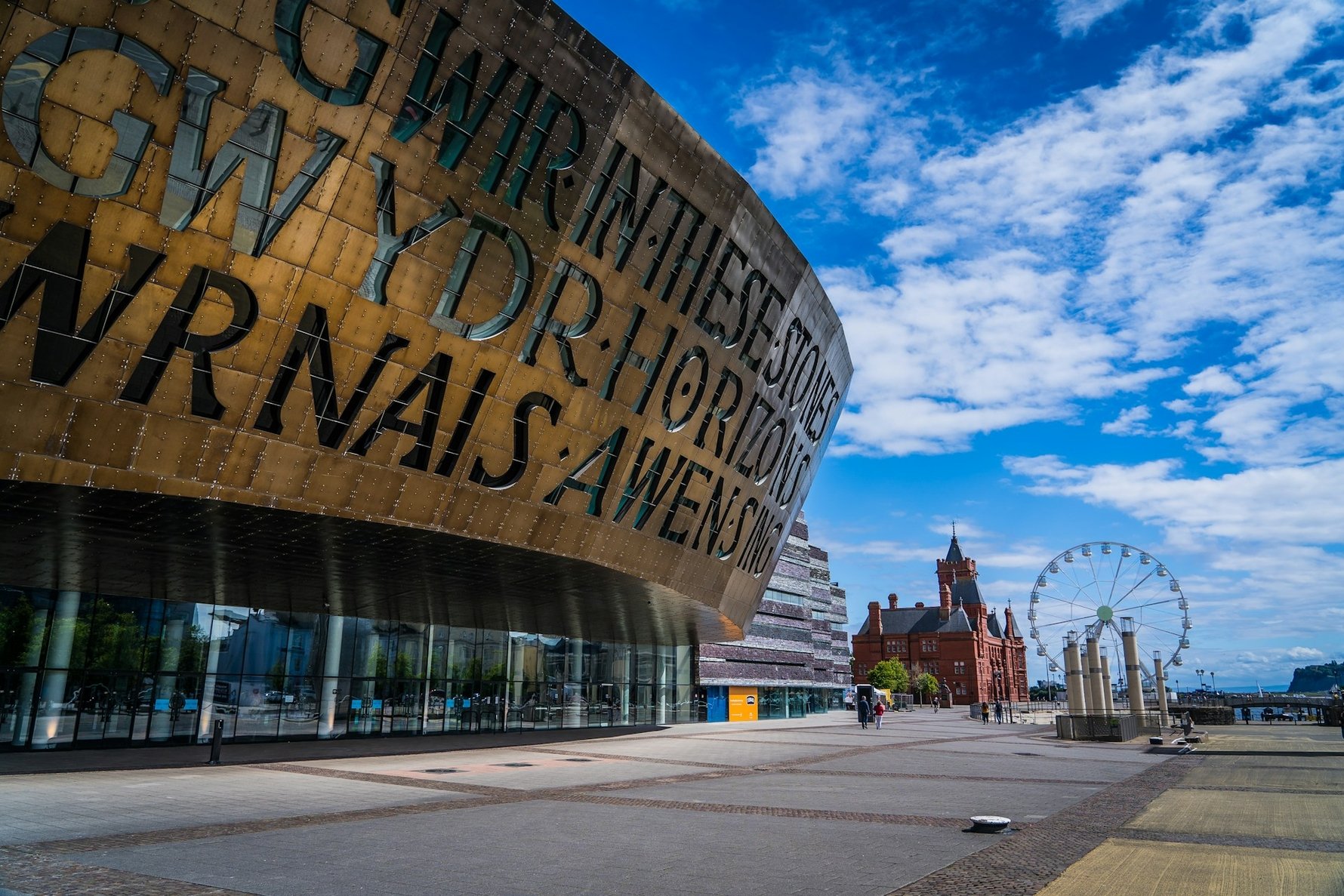
The building that justifies the journey is the Senedd – the Welsh Parliament – designed by Richard Rogers (Pritzker Prize, Pompidou Centre, Lloyd’s of London) and opened on St David’s Day, 1 March 2006. The building is constructed from Welsh slate, steel and oak, uses passive ventilation through a distinctive funnel roof, and achieved the highest BREEAM environmental rating ever awarded in Wales at the time. It is also the most openly accessible parliament building in Britain: the public debating gallery above the Siambr (chamber) is free to enter, debates can be watched live, and the ground floor café is open to anyone. The Wales Millennium Centre next door – the home of Welsh National Opera, with its extraordinary inscribed bronze and slate facade – and the Roald Dahl Plass around which both buildings sit provide the context.
Location: Cardiff Bay, Cardiff CF99 1SN. Cardiff Bay rail station (direct from Cardiff Central, 12 minutes) or bus 6 from the city centre.
Best time to visit: Check the Senedd’s sitting schedule at senedd.wales – watching a live debate from the public gallery is considerably more interesting than visiting when the chamber is empty.
Ticket prices: Free. The Wales Millennium Centre foyer and Roald Dahl Plass are free to access. Check wmc.org.uk for performance listings.
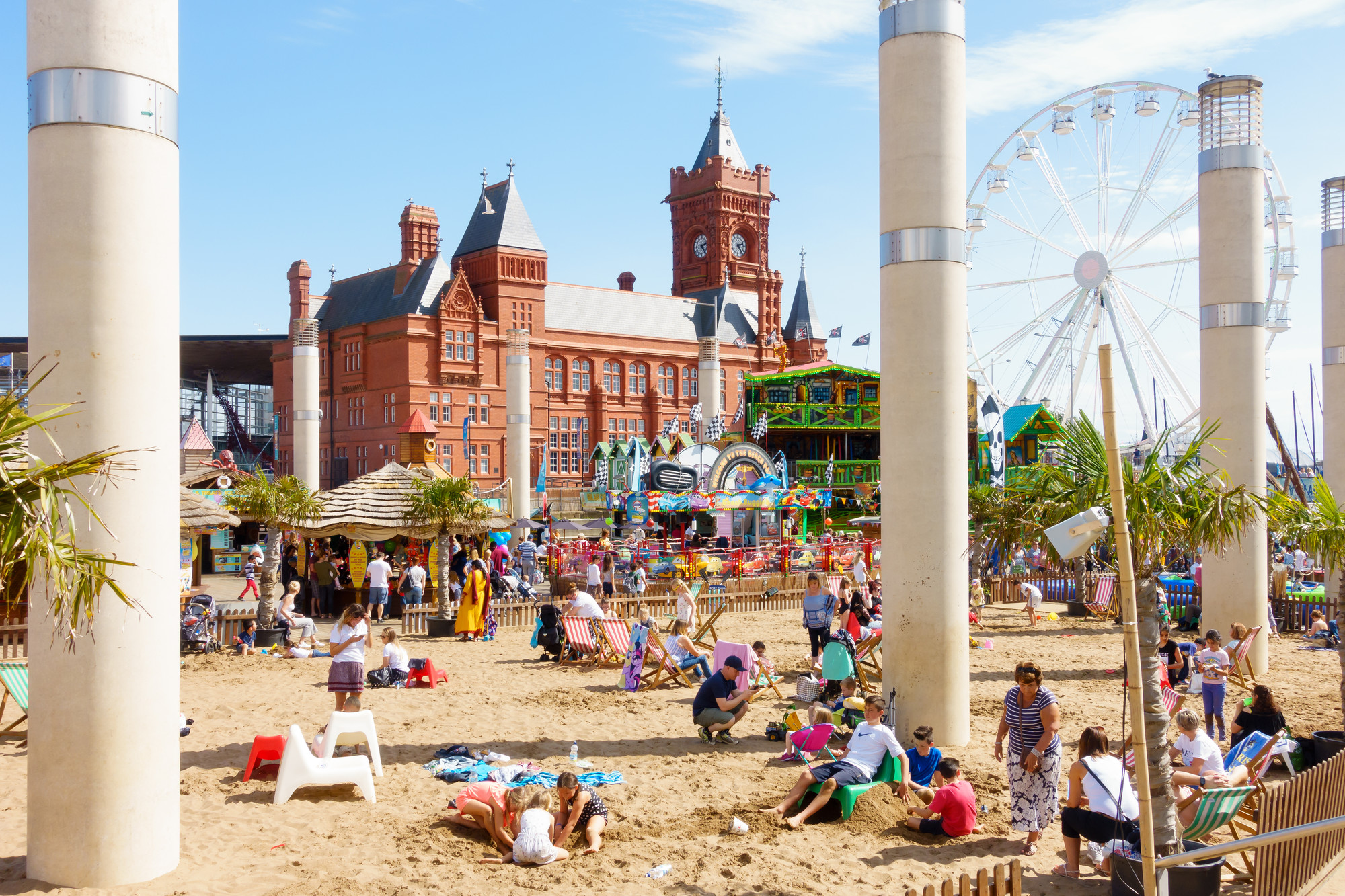
Good to know: The Grade I listed Pierhead Building (1897), directly adjacent to the Senedd, contains a free exhibition on Welsh democracy and is worth 20 minutes. The Norwegian Church on the waterfront, where Roald Dahl was baptised, now operates as an arts centre and café.
6. The Civic Centre and Cathays Park
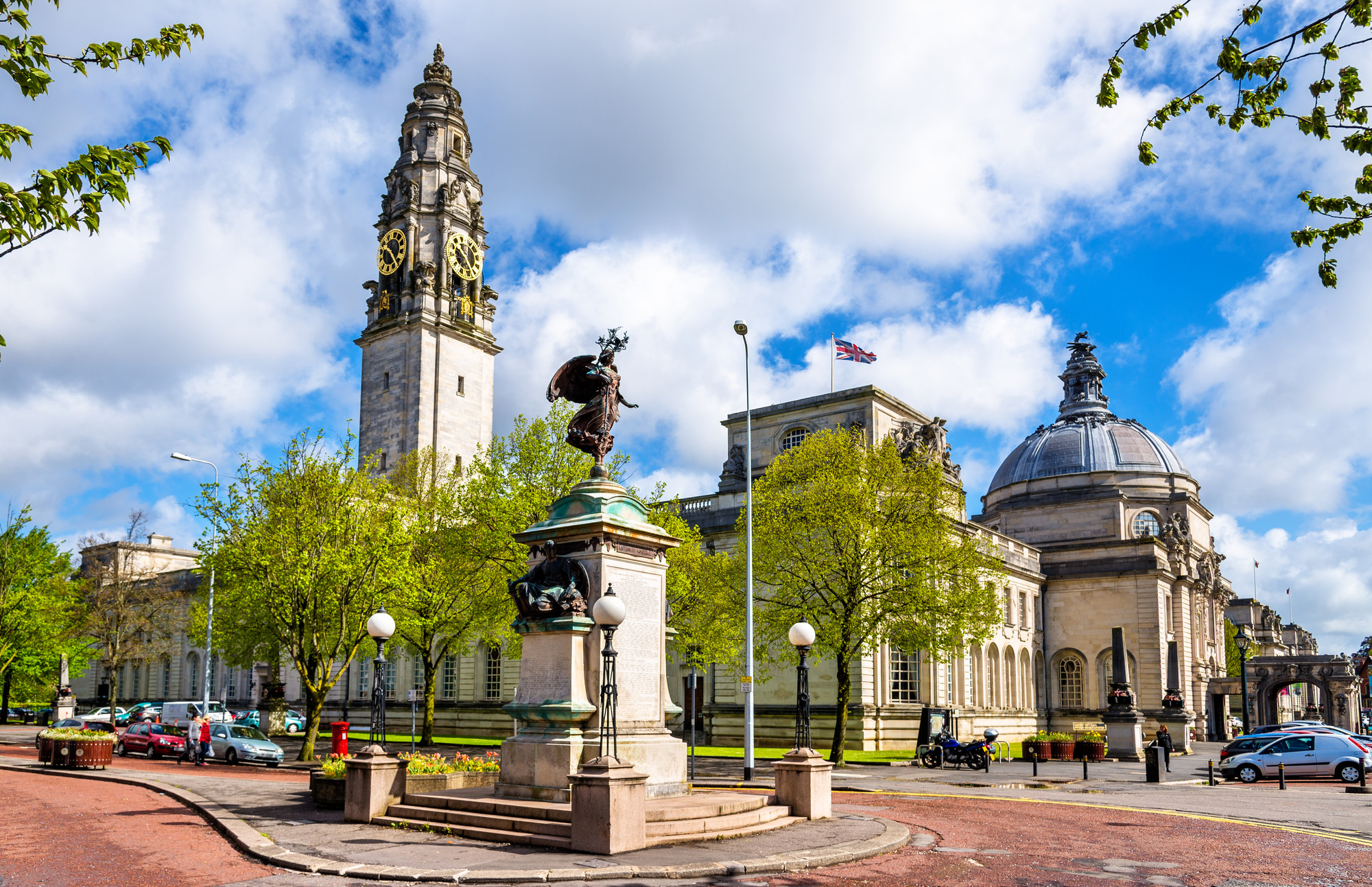
Cathays Park, north of the castle, is the civic quarter that Cardiff built between 1898 and 1938, and it is one of the finest planned Edwardian civic ensembles in Britain. The buildings – the City Hall, the Law Courts, the National Museum, the Welsh Government offices, the University of Wales registry – are all faced in Portland stone, arranged around a formal garden, and constructed in a loose Edwardian Baroque that gives the whole ensemble a coherence that most British city centres signally lack. The City Hall in particular, with its dragon-topped dome and its marble hall inside containing a series of statues of Welsh historical figures – Owain Glyndŵr, Dafydd ap Gwilym, Giraldus Cambrensis, Hywel Dda – is a statement of Welsh national identity in stone that the Edwardian era managed with rather more confidence than the decades before or after.
The neighbourhood of Pontcanna, immediately west of Cathays Park along Cathedral Road and its side streets, is the part of Cardiff that residents most consistently recommend to visitors. The Victorian terraced housing is good quality and well-maintained, the independent restaurants and cafes on the main streets are the best in Cardiff, and the quantity of television production companies clustered in the area has given it the informal nickname of “Notting Hill-on-Taff,” which is either a compliment or a warning depending on your view of Notting Hill.
Location: Cathays Park, Cardiff CF10 3NP (City Hall and Civic Centre). A 15-minute walk north of Cardiff Central station.
Best time to visit: Any time; the formal gardens and exterior of the buildings are accessible at all times. The City Hall interior is open on weekdays during office hours.
Ticket prices: Free to walk the park and visit the City Hall public areas. Check cardiff.gov.uk/cityhall for current opening hours.
Good to know: The war memorial at the southern end of Cathays Park, by Ninian Comper, and the small gardens immediately surrounding it are among the most quietly affecting public spaces in Cardiff.
7. The Arcades
Cardiff has more Victorian and Edwardian covered shopping arcades than any other city in the United Kingdom – seven in total – and they constitute the most distinctive feature of its city centre retail environment. The arcades predate the shopping mall by about a century and do the same job considerably more elegantly: get shoppers out of the rain, extend the retail frontage between two streets, and provide a covered pedestrian route through the city block. Cardiff acquired so many because the city was growing rapidly in the 1850s–1900s at precisely the moment when arcade construction was fashionable, and because the Bute family’s ownership of much of the city centre allowed for coordinated development rather than piecemeal construction.
The Royal Arcade (1858), the oldest, runs between The Hayes and St Mary Street and was Cardiff’s first covered shopping centre; its glass roof supported by fretted iron ribs is still largely intact. The connected Morgan Arcade (1896), with its curving glass ceiling and original Venetian windows and wooden shopfronts, is the most beautiful of the seven and one of the best-preserved Victorian arcades in Britain. The Castle Arcade (1887), opposite the castle, is the only two-storey arcade in the city and the one most likely to produce the sensation of being inside a Victorian novel. Between them the three contain around 80 predominantly independent shops, cafes and restaurants, and provide a route across the centre of Cardiff that is significantly more agreeable than the alternatives.
Location: The Royal and Morgan Arcades connect The Hayes to St Mary Street; the Castle Arcade runs between Castle Street and High Street. All are in the city centre, within five minutes’ walk of each other.
Best time to visit: Any time during trading hours. Less crowded on weekday mornings.
Good to know: Wally’s Delicatessen and Kaffeehaus in the Royal Arcade, opened in 1947, is one of the oldest continental delis in Wales and a good place to stop. Spillers Records, in the Morgan Arcade, claims to be the oldest record shop in the world (founded 1894) and is still independent.
8. St Fagans National Museum of History
St Fagans National Museum of History is six kilometres west of Cardiff city centre, set in the grounds of a Grade I listed Elizabethan manor house donated to the nation by the Earl of Plymouth in 1946, and it is one of the finest open-air museums in Europe. The concept, modelled on Skansen in Stockholm, is to gather representative historic buildings from across Wales, dismantle them stone by stone, transport them to the site, and rebuild them in a parkland setting that preserves their character. The collection now runs to over forty buildings – farmhouses, cottages, barns, a workmen’s institute, a Victorian school, a toll house, a medieval church with restored pre-Reformation wall paintings, a 17th-century cockfighting pit – spanning Welsh life from the Iron Age to the 20th century, all in a 100-acre park beside St Fagans Castle.
The museum opened in 1948 under the name the Welsh Folk Museum, underwent a six-year £30 million redevelopment completed in 2018, and won the Art Fund Museum of the Year award in 2019. Entry is free, funded by the Welsh Government. Working craftspeople – blacksmith, potter, weaver, miller – demonstrate traditional trades throughout the year. It is the most visited heritage attraction in Wales and, in 2011, was named the UK’s favourite visitor attraction by Which? magazine, which is the kind of accolade that is easy to dismiss until you visit.
Location: St Fagans, Cardiff CF5 6XB. Bus 32A from Cardiff city centre (around 25 minutes) stops in the museum car park. By car: signposted from junction 33 of the M4.
Best time to visit: Weekday mornings for smaller crowds. The summer programme of demonstrations and events is the most rewarding time to visit. Allow at least three hours.
Ticket prices: Free. Car parking £5. Check museum.wales/stfagans for opening hours and seasonal events.
Good to know: St Fagans Castle and its formal gardens are included in the visit and are often overlooked by visitors focused on the open-air buildings. The castle rooms have been restored and are worth seeing. The on-site bakery sells bread made in the working flour mill.
9. Roald Dahl Plass and the Wales Millennium Centre
Roald Dahl Plass – plass being Norwegian for “place” or “square”, a nod to the Norwegian seafarers who made Cardiff Docks their home in the 19th century – is the large public space at the heart of Cardiff Bay, around which the major Bay buildings cluster. Roald Dahl himself was born in Cardiff to Norwegian parents in 1916 and was baptised in the Norwegian Church on the waterfront, which now operates as a café and arts space. The plass, with its oval basin and illuminated water features, functions as the civic gathering point for the Bay and the stage for major public events.
The Wales Millennium Centre, which forms the southern backdrop to the plass, is the most architecturally significant building in Cardiff Bay and one of the more successful large cultural buildings completed in Britain in the early 21st century. Designed by Jonathan Adams and opened in 2004, it is clad in bronze steel and Welsh slate, and its facade carries a bilingual inscription by the poet Gwyneth Lewis cut 2.5 metres deep into the stone: In These Stones Horizons Sing / Creu Gwir Fel Gwydr O Ffwrnais Awen (Creating Truth Like Glass From The Furnace Of Inspiration). The building is the home of Welsh National Opera, the BBC National Orchestra of Wales, and several other arts organisations, and its public spaces – the foyer, the bars, the waterfront terrace – are open without ticket.
Location: Cardiff Bay waterfront, Cardiff CF10 5AL. Cardiff Bay rail station (12 minutes from Cardiff Central) or bus 6.
Best time to visit: The foyer and plass are worth seeing at any time. Attending a performance at the Wales Millennium Centre in the evening gives the building its best context. Check wmc.org.uk for listings.
Ticket prices: Plass and WMC foyer free. Performance tickets vary.
Good to know: The Pierhead Building and Senedd are immediately adjacent. The walk along the Bay waterfront from the Plass to Mermaid Quay takes ten minutes and passes the Norwegian Church, the Pier Head and several points of interest related to the history of the docks.
10. Bute Park
Bute Park runs north from Cardiff Castle along the west bank of the River Taff for two kilometres, a long green corridor of parkland, arboretum and formal gardens that connects the city centre to the leafy northern suburbs without a single road crossing. It was the private garden of the Bute family, laid out in the 1870s under the direction of the castle’s head gardener Andrew Pettigrew with contributions from Burges (the Swiss Bridge, the early plans for the Animal Wall), and given to the city in 1947 along with the castle. It is now the largest open park in Cardiff and one of the better urban parks in Wales: the arboretum section in the northern portion is a particular strength, with specimen trees planted over 150 years covering species from across the temperate world.
The park is the natural walking route between Cardiff Castle and Castell Coch – the Taff Trail follows the river north from the park through to Tongwynlais – and provides the best views of the castle’s Victorian towers from across the water. The formal walled garden near the castle entrance, the bandstand, and the Bute Park outdoor café make the southern end particularly amenable on a good day. The park hosts the Cardiff Festival, the Green Man Urban Garden and various other outdoor events through the summer months.
Location: Bute Park, Cardiff CF10 3EU. Main entrance at Castle Street adjacent to Cardiff Castle. Open daily, no admission charge.
Best time to visit: Any time. The arboretum is best in autumn for colour; the formal gardens in summer. The park is the starting point for the Taff Trail walking and cycling route north to Pontypridd and beyond.
Good to know: The ruins of Blackfriars Friary, a 13th-century Dominican priory, are preserved in the southern section of the park and easily missed. The information board explaining the site is worth reading.
What else is there to see in Cardiff?
Several entries nearly made the list. The Principality Stadium (formerly the Millennium Stadium), on the banks of the Taff in the city centre, is one of the finest rugby and football venues in the world and runs guided tours daily when no event is scheduled; the retractable roof and the scale of the place are worth experiencing even without a match. The Cardiff Market, a Victorian covered market on St Mary Street running between the arcades, is the city’s indoor food and produce market and worth a morning visit for the combination of traditional butchers, fishmongers and cooked food stalls. The Pontcanna Fields, extending west from Pontcanna into Llandaff Fields along the Taff, is the best flat green space in Cardiff for an aimless walk and connects the city to Llandaff Cathedral on foot via the river path.
Cardiff eats better than its reputation suggests and considerably better than it did twenty years ago. The restaurant scene in Pontcanna and the city centre has broadened and improved substantially, and the arcades continue to provide the best concentration of independent food options in the city centre. Welsh food – laverbread, cockles from the Gower, Welsh lamb, Perl Wen cheese – is worth seeking out when it appears on menus, which is more frequently than it used to be. For day trips, the Brecon Beacons (now the Bannau Brycheiniog National Park) are an hour north; the Gower Peninsula, with some of the finest beaches in Britain, is 50 minutes west by train to Swansea; the Vale of Glamorgan coast – Southerndown, Dunraven Bay, the Heritage Coast – is 40 minutes south by bus.