This In Your Pocket Guide is available as

Bookmark and Share

Gdansk | Sightseeing | Places of interest

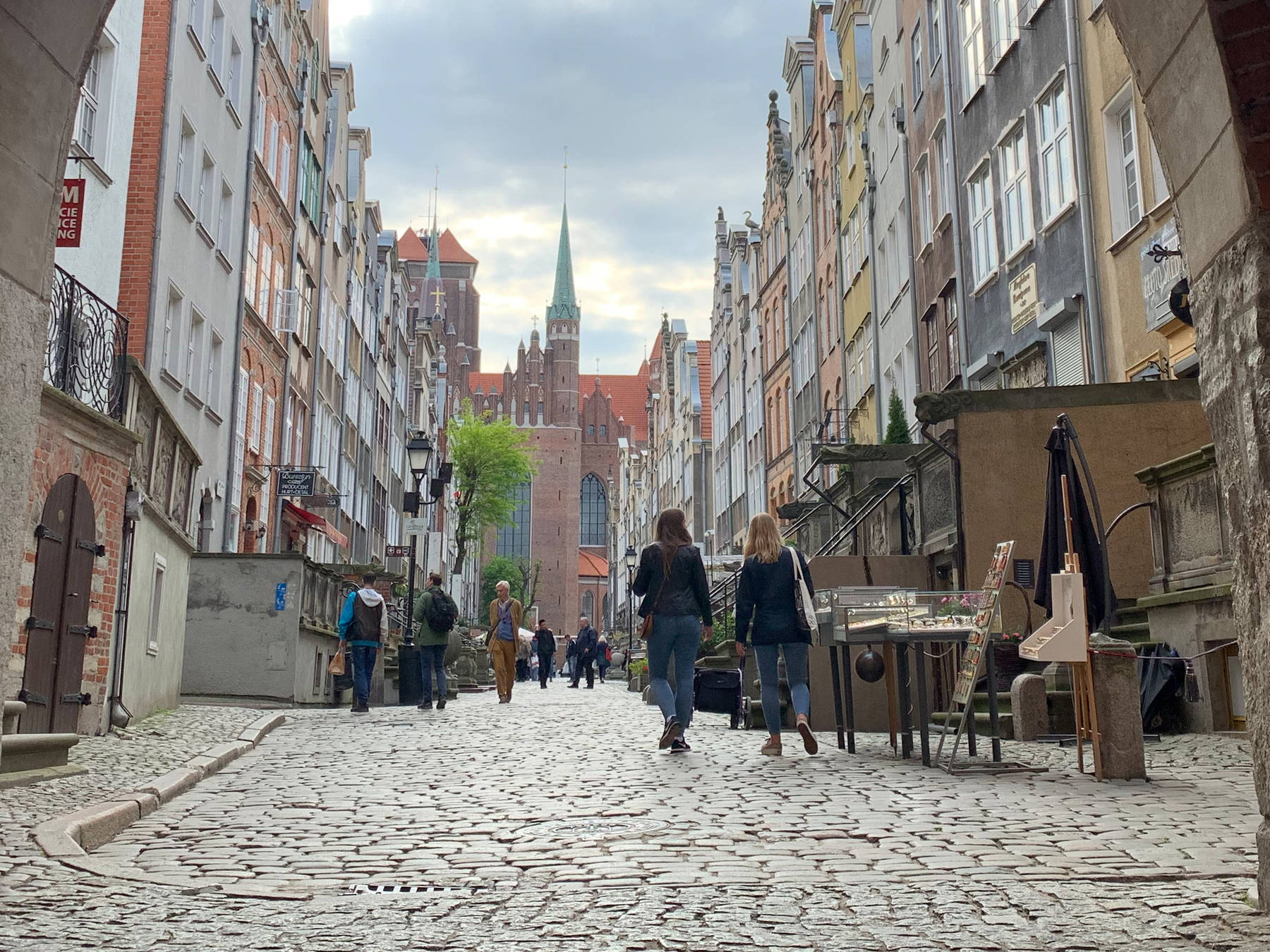
A walk along ul. Biskupia into the Biskupia Góra district is a brief but poignant trip to Danzig's pre-war past. Cobblestones and traces of German lettering remain in the steep winding streets lined with random staircases and gardens. Although there is little to see, and the area is renowned for its hostile natives, this is nonetheless a must see for those wanting a trip back in time. [...]


Add your comment

ul. 3 Maja 9a

tel. (+48) 58 300 08 42

Open 08:30 - 15:30, Sar, Sun 10:00 - 17:00. Closed Mon. From July open 10:00 - 17:00. Closed Mon.
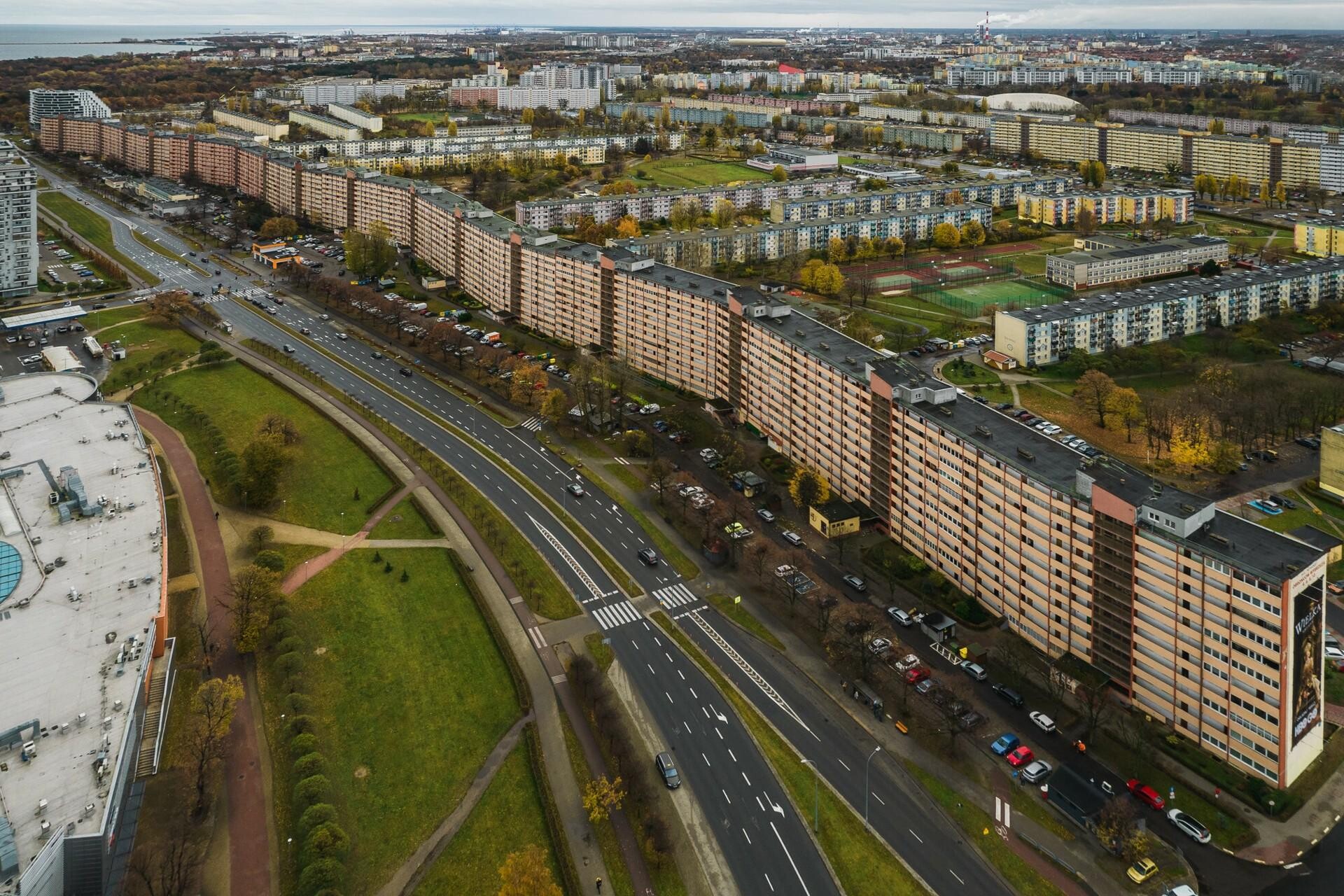
Falowiec
You have absolutely no reason to visit the district of Przymorze apart from to marvel at the longest residential building in Europe. Known as Falowiec (The Wave), the communist-era residential block stretches for over one kilometre, boasts three kilometres of drainpipes, and has three separate bus stops to service its estimated 7.000 residents. Constructed between 1970 and 1973, the monstrosity was originally four separate ten-storey tower blocks. Possibly to alleviate housing shortages, more likely in a moment of madness, city planners decided to go hell for leather and link each building together. For whatever reason the link-up work did not run in a straight line and the completed structure runs in a meandering line, hence its nickname. All this a far cry from the 1950s, when Przymorze had no asphalt roads and was little more than a few potato fields. If you’re curious to see for yourself head up to ul. Obrońców Wybrzeża. [...]


Add your comment

Set in 130 hectares of prime countryside inside a charming valley, and one of the biggest zoos in the country, Gdańsk Zoo just northwest of Oliwa offers scores of animals from tiny hippos to kangaroos to penguins to a series of cages stuffed with apes. Renowned for being one of Eastern Eur [...]


Add your comment

ul. Karwieńska 3 (Gdańsk - Oliwa)

tel. (+48) 58 552 17 51

Last entrance 60 minutes before closing. Open 09:00-15:00. From April Open 09:00-16:00.
Granary Island
These granaries - no more than a skeletal set of ruined brick walls today - were the most important source of income for Gdańsk in the 16th century, contributing to its status as the largest Baltic harbour and one of Europe's richest cities. In the 14th century over 300 granaries operated on Wyspa Spichrzów; only one survived WWII, following which 20 were rebuilt. A moat was built around the area in case of fires. The granaries had names like Gloria and Bear Dance and serviced over 200 ships a day, supplying 300,000 tonnes of grain a year. Plans to restore the ruined granaries have repeatedly stalled, and they remain a moving reminder of the devastation of WWII and make for a nice walk - providing you don't run into any urinating vagrants. [...]


Add your comment

The Great Armoury was built in 1600-09 on the medieval line of the city walls. A working arsenal until the 1800s, the armoury remains the finest example of Renaissance architecture in the city. It was designed by Opperghen and is the most impressive of his works in Gdańsk. The well-like st [...]


Add your comment

Targ Węglowy 6

Built by the Teutonic Knights in 1350, this magnificent edifice with its rising tiled roof is the grandest civil construction in Gdańsk. Until 1356 when the Radunia Canal was built, the mill was powered by slaves turning 18 huge wheels. It was the largest industrial plant in Europe during [...]


Add your comment

ul. Wielkie Młyny 16

Old Town Hall, ul. Korzenna 33/35

tel. (+48) 58 301 10 51

 
Nowy Port Lighthouse
A fascinating delve into Gdańsk‘s maritime history, the city‘s Nowy Port Lighthouse was inspired by a long-lost lighthouse built in 1871 in Cleveland, Ohio, in the USA. This one in front of you was built in 1893, the 28-metre tower functioned as a lighthouse, harbour pilot’s tower and time-ball station until it was finally decommissioned in 1984. Its principal claim to fame is its use by German soldiers in September 1939, and it was from the upper floors that a machine gun emplacement fired the very first shots of WWII. The machine gun nest was destroyed in the exchange that followed, quite possibly making the Germans manning it the first casualties of a war which would claim over seventy million lives. Painstakingly restored by an amiable Polish Canadian the centrepiece of the lighthouse is a time ball, unveiled on May 21, 2008. During its former life it was synchronised to the Royal Astronomical Observatory in Berlin but today it takes its signal from Physikalisch-Technische Bundesanstalt (PTB) in Braunschweig which is broadcast as a DCF77 long-wave radio signal by the European Time Centre in Mainflingen, Germany. Time-balls were originally designed to allow ships’ captains out at sea to sychronise their on-board clocks exactly before they headed back out, the dropping of the ball being the signal to mark the hour. This would allow them to calculate longitude resulting in more accurate navigation. Although made redundant by technological advances, the skipper of the Polferries ferry Scandinavia, which docks close by, has taken to waiting for the time-ball to drop before moving the ferry’s machine telegraph handle to ‘slow ahead’ to begin the cruise to Stockholm. The lighthouse is closed from the beginning of October until the end of April, but still very much worth a walk around on account of its unlikely place in world history.
[...]


Add your comment

ul. Przemysłowa 6a

tel. (+48) 601 15 02 51


This marvellous 16th-century Renaissance building was once home to the office of the Polish astronomer and city councillor Johann Hevelius, whose statue can be found in the park in front of the building. The former headquarters of the Council of Gdansk, the Old Town Hall served as the headquarters of the Soviet Army during the dying days of WWII, probably because it was practically the only building left standing in the city at the time. Today the building is open to the public and has become the focus of much creativity. Concerts are held upstairs, and the superb Baltic Sea Cultural Centre (see Culture) now have their offices there. There's also a cellar restaurant, and a good bookshop on the ground floor. [...]


Add your comment

ul. Korzenna 33/35

tel. (+48) 58 301 10 51

Open 09:00-18:00,
Sat 10:00-18:00,
Sun 10:00-18:00.
Over thirty classic Volkswagen’s ranging from camper vans to beetles to rather dashing sporty efforts. The exhibition is the fruit of four decades of collecting, and the premises includes homely lodgings, a campsite and of course, the opportunity to rent a VW – check out the cool lookin [...]


Add your comment

ul. Armii Krajowej 50 (Pępowo)

tel. (+48) 604 704 050

Until the 16th century, when the growing Westerplatte peninsula finally separated it from the sea, Wisłoujście Fortress stood on the seashore and served as a lighthouse. It also served as a strategic point of defence for Poland, with about 40 bronze cannons and room inside for 1,000 men. The fortress was later seized by the Prussians and used as a prison. To get here, take bus N°106 from the Music Academy on Łąkowa streetand ask the driver to drop you at the Wisłoujście stop. Closed for winter and spring, so any sightseeing you'll be doing will be from the outside.
[...]


Add your comment

ul. Stara Twierdza 1

tel. (+48) 58 343 14 05

Closed till May