Watching football
Poland is a country with a rich football heritage, fanatical supporters and a major European tournament to look forward to hosting. However there are major problems with corruption, incompetent administration of the game and a pretty serious hooligan issue. So while watching a game here is not discouraged, do exercise caution when attending a game particularly the local derby between Warsaw’s two major clubs.
Poland as a national side has finished 3rd in 2 World Cups and the older fans among you will remember the likes of Grzegorz Lato (Golden Boot winner at the West German World Cup of 1974), Kazimierz Deyna and Zbigniew Boniek (one half of the great Juventus midfield pairing with Michel Platini). The national side can boast some talented players such as Arsenal’s Wojciech Szczesny and Borrusia Dortmund’s Jakub Blaczykowski but the depth of the squad is poor and the trainer, Franciszek Smuda has tried to remedy this by recruiting foreign players with Polish ancestry. The lack of competitive matches and this wholesale rebuilding of the team has Poles thankful that they qualify for Euro 2012 by way of being hosts but fearful that this will result in a series of high profile thrashings at the hands of some of the continent’s bigger sides.
At club level there are some positive signs for the future. With the national side typically recruiting players plying their trade in foreign leagues, Polish clubs are even worse off and this is reflected in the fact that their last representatives in the group stage of the Champions League were Widzew Lodz in 1996. The 2011/12 season did see champions Wisla Krakow reach the last CL qualifying round before dropping into the Europa League where they were joined by Legia Warsaw and this improvement along with a number of new stadia openings has given the Polish supporters something to be positive about. That said the standard of the Polish league (Ekstraklasa) is poor, the smell of corruption continues to hang over the game (currently over 100 people, including club officials and refs, have been arrested in connection with corruption dating back over many years) and attendances are very low in comparison to western European leagues.
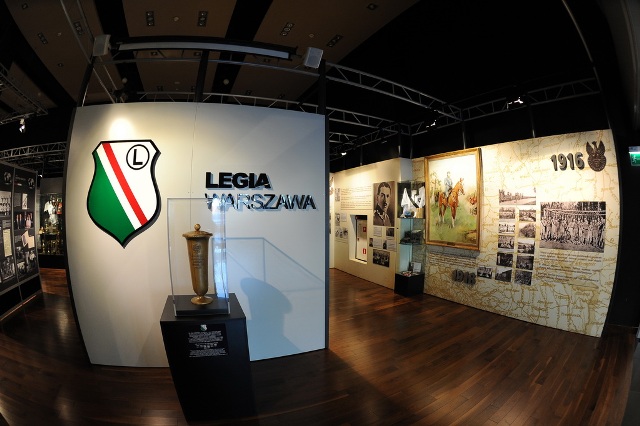
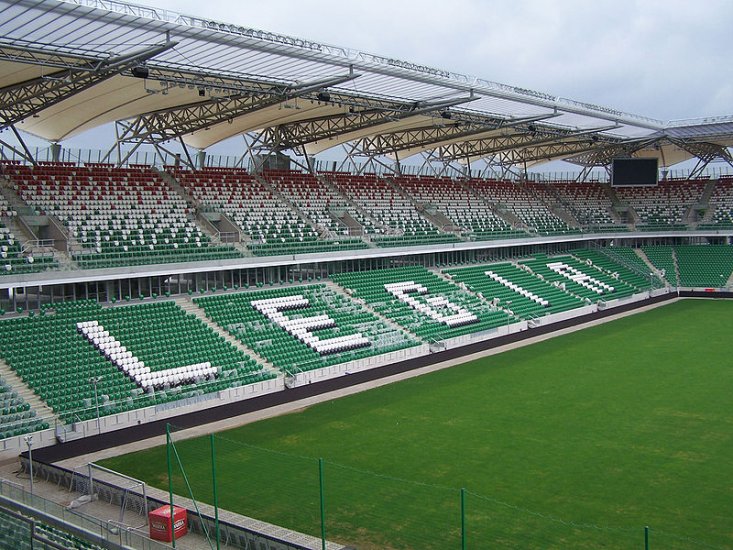
One of Poland’s biggest and most successful clubs, however, is here in the capital. Legia Warszawa was originally formed during WWI as a club for the fighting legions and was officially established as the army club in 1922. They have quite a history with eight league titles and a record 13 cup triumphs to their name and one of only 2 Polish clubs to have qualified for the league stage of the Champions League. They were far more successful in Europe during communist times reaching the semi finals of the European cup in 1969-70 and the quarter-finals a year later. Much of their success during these times was due to the fact that, as the army club, with the support of the party, Legia were able to ‘attract’ the country’s best players with the threat of a spell in the army for those that didn’t agree. It is for this that Legia are traditionally despised in Poland outside of their own fanatical Warsaw based following. Their re-developed stadium at Lazienkowski seats over 30,000 spectators making Legia one of the best supported clubs in the country.
Although Warsaw’s second club, Polonia Warszawa have traditionally been seen as the poor neighbour, they are in fact older than Legia having been formed in 1911 at a time when Poland didn’t even exist as a nation. Taking the name Polonia (the Latin for Poland) the club represented something of a protest to the ruling Russians and the black shirts for which Polonia are known were also seen as a mark of mourning the missing country. With 2 league championships and 2 Polish cups, Polonia have a less successful history than their illustrious neighbours. However with the purchase of the club in 2006 by one of Poland’s richest men the future looks positive and they are once again established in the top division.
Warsaw » Leisure » Football