Lipscani: Bucharest's Old Town

While much of Bucharest has changed beyond recognition over the past two decades, nothing compares to the recent transformation of Old Town/Lipscani, which in the past two years has turned what was very much a no-go area with almost nothing to offer into the Romanian capital’s liveliest entertainment district.

The area is still something of a work in progress, but it’s a rewarding place to explore, one of the few areas of the capital that is. You will certainly not want for things to do, to see, or for places to eat, drink and dance.

Old Town / Lipscani: A Brief History

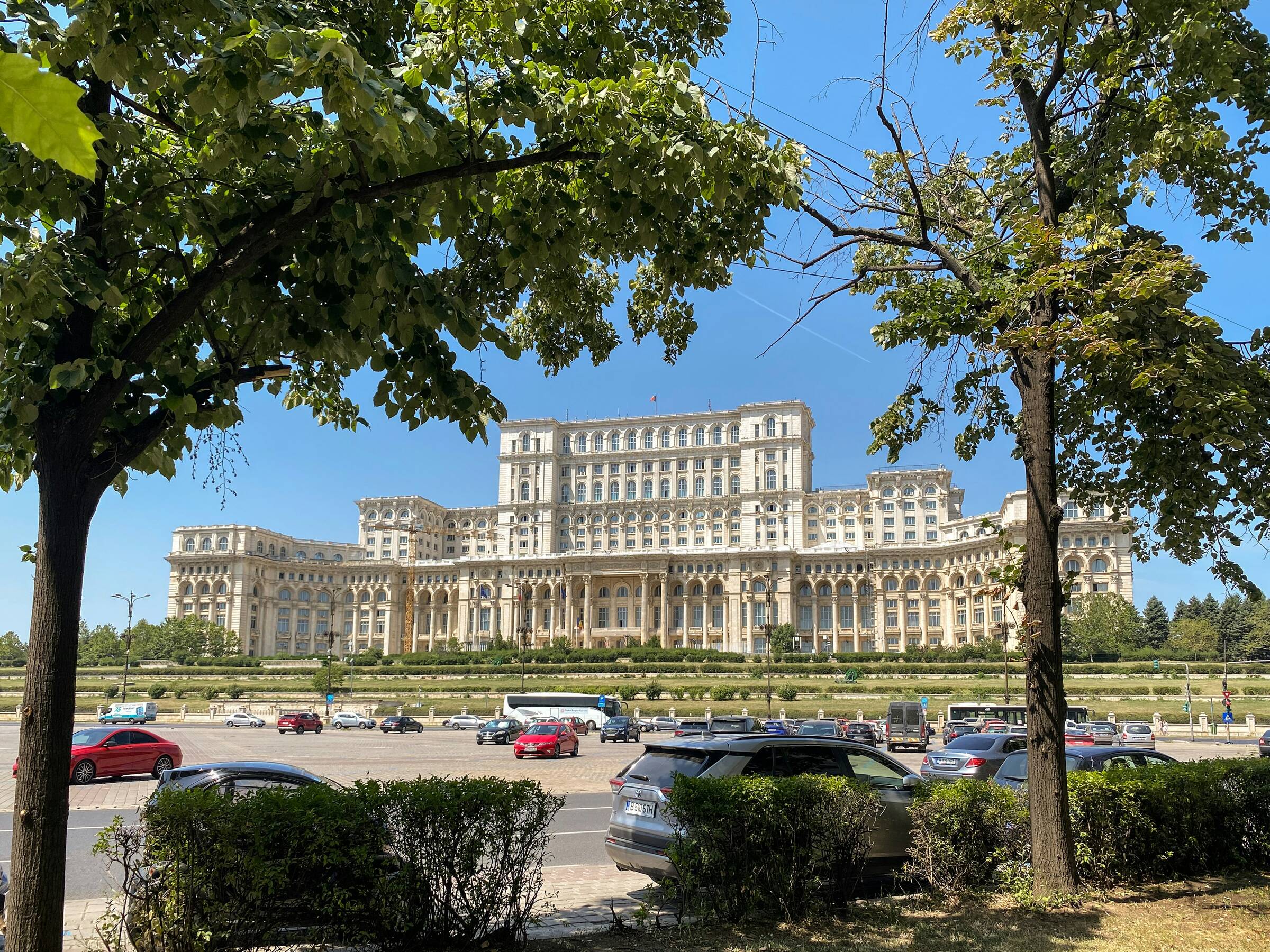
The area of Bucharest described by the Dambovita river to the south, Calea Victoriei to the west, Bulevardul Brătianu to the east and Regina Elisabeta to the north is more or less all that’s left of pre-World War II Bucharest. What the war didn’t destroy (and it destroyed a fair bit: allied bombing was fierce during the early part of 1944) communism did, most notably in the form of the grandiose Civic Centre project that saw almost a fifth of the total area of the city flattened to make way for Bulevardul Unirii and Casa Poporului. That anything survives at all is little short of a miracle.

While we at Bucharest In Your Pocket tend to call the area Old Town, many will know it better as Lipscani, with most locals calling it the Historic Centre (Centru Istoric, in Romanian).


The area is historic for this is where Bucharest was founded. Kind of. According to legend, Bucur the Shepherd founded the city in the 1300s when he built a church somewhere on the eastern bank of the Dâmboviţa river: nobody is sure exactly where this church was (or even if it actually existed). What we do know is that by the first reign of Vlad Ţepeş (1459-1462) there was a palace and court (the Palatul Curtea Veche) in the area we today call Old Town, and that the city grew quickly around the palace.

By the middle of the 17th century the area was Bucharest merchant district, which it to all intents and purposes remained until the end of World War II, when many of the rightful owners of the houses and businesses which lined the area’s streets were arrested by the communist authorities, and their property confiscated and left to rot. The entire area - viewed as being far too bourgeous for communist tastes - was then neglected for decades, with many of the empty buildings being occupied over the years (legally or otherwise) by Gypsies. Many of these Gypsies remain today, and add real character and colour to the area.

Old Town’s Sights


The best place to start any exploration of Old Town is at Unversitate, at the twin semi-circular buildings opposite the main university building. The buildings (one is a bank and the other houses a casino) were originally built (in 1906) to serve as the headquarters of Romania’s largest insurance company. The fenced-off area in front of them will one day be an underground car park.

Best then to leave the building work behind you and head into Old Town proper: the first sight that will probably grab your attention (it will be difficult to miss it) is the colourful St. Nicholas Students’ Church.


Built in 1905-09 with a 600,000 gold rouble donation from Tsar Alexander II, this Russian orthodox church is topped with seven typically Russian onion domes and crowned with an orthodox cross. The wooden, gold-gilded iconostasis (catapeteasmă) is allegedly a copy of the altar in Arhangelsk Cathedral, in Moscow's Kremlin.

Right of here is the Czech Cultural Centre (Ceske Centrum) a lively hive of cultural activity and (for the brave) Czech language courses. Walk to the end of the street (Str. Ion Ghica) and you will see in front of you the unmistakably Neo-Classical exterior of the National Bank of Romania (BNR). It stands on the site of one of the most famous buildings in Romania: the Hanul Serban Voda, which from 1678 until 1883 was the home of various things, from a pub, to an inn to a dormitory for a nearby girl's school. After two fires gutted the building however, the land was levelled and in 1883 work began on the BNR, completed to the designs of French architects Cassien Bernard and Albert Galleron in 1885. The building boasts a facade with Corinthian columns, and an enormous central banking hall. The passing of time has seen the building become rather hemmed in, but it remains a classic worthy of admiration.

On the bank’s far side (on Str. Lipscani) look out for the remains of a 17th century inn: visible below street level through hardened glass.

(For a more detailed look at the National Bank, try this post on the website of architectural commentator, Valentin Mandache).

Str. Lipscani gets its name from the large number of traders who, in the 18th century, sold wares here brought from Leipzig, which at the time was one of the largest trading posts in Europe. As Str. Lipscani was the main commercial street in the Old Town, it over time lent its name to the whole area. Ironically, its name and history aside, modern Str. Lipscani has little to recommend it, although it does have some exceptional bars, pubs and clubs, and a theatre. It also has some hidden treasure: if you walk through the little alley opposite Str. Selari (an alley now packed with cafes and bars) you will come to Str. Blanari, home to the St. Nicolas Church. The church was built in the 1880s as a private chapel for Romania’s first royal couple: Note that the king and queen still have special seats on the left and right of the church’s 18th century icon kept for them should they ever return. The icon itself is said by churchgoers to have magical healing powers.

Back on Str. Lipscani, the Hanul cu Tei is a wonderful courtyard (once part of a large inn) which today houses art galleries, antique shops, second-hand book shops, gift shops, studios and portrait artists, as well as a lively terrace and bar/restaurant.

Retrace you steps to the National Bank, and head for Str. Stavropoleos, named for the eponymous church found along its length (Biserica Stavropoleos; Open 08:30 - 18:00. Services (in Romanian) on Sunday at 09:30, 10:30). The church was built in 1724 by the Greek monk Ioanikie Stratonikeas. It is characterized by its beautiful stone and wood carvings, of which the finest are on the main doors. The courtyard outside (beautiful on a warm afternoon) has a curious collection of tombstones dating from the 18th century.

For a beer, coffee, bite to eat or simple jaw dropping experience (the interior is astonishing) head for Caru cu Bere, a beer hall and restaurant dating from 1875. It is on the other side of the road to the church a little further up. Church fans might also want to venture out on to Calea Victoriei. A few steps to the right is the Biserica Doamnei built in 1683 on the orders of Princess Maria, wife of Wallachia's ruler, Prince Serban Cantacuzino. The church was the first in the city to boast octagonal stone pillars: note the decorative floral motifs of oriental origin at the foot and top of each column. They also decorate the door. The ornate building on the other side of the road is the headquarters of CEC, the national savings bank, while the Neo-Classical giant facing it is the National History Museum.

On the far side of the museum is Str. Franceza, another Old Town street now blessed with more restaurants, cafes, bars and such like than you could wish for. About half way along look out for the Sf. Dumitru Church: Sf. Dumitru is the patron saint of Bucharest. On the other side of the church is Bucharest’s comedy theatre.

The busiest street in the Lipscani area is Str. Smardan, home today to any number of bars, pubs, cafes and restaurants, and which when the weather is good just looks like one huge terrace. History buffs might like to know that in January 1859 at No. 42 (then the Hotel Concordia), Wallachian deputies elected Alexandru Ioan Cuza as their Prince. As Moldavian deputies had already done likewise a week earlier, the election that took place here created the first unified Romanian state since Mihai Bravu’s short-lived reign of 1600. There was a plaque marking the spot until recently, yet building work has (we hope temporarily) covered it up.

At the bottom of Str. Smardan a narrow walkway allows you to reach the birthplace of Bucharest, the Old Court Palace and Church (Palatul şi Biserica Curtea Veche; Open 10:00 - 18:00. Closed Mon).


The Old Court, first built on this site in the second part of the 15th-century by Vlad Ţepeş, was considerably extended during the 16th-century, by Mircea Ciobanul, and again a century later, this time at the hand of Constantin Brancoveanu, who added a splendid voievodal palace, decorated with marble and icons. The palace was by and large destroyed by a series of fires in the 19th century however, and subsequently neglected. Much of what remains today was uncovered during archeological digs that took place from 1967-72, when the palace ruins were first opened as a museum. There are fragments of the original 15th century walls, as well as remnants of the voievodal palace throne room, in which most of the relics found on the site are exhibited. Next door to the palace is the Old Court Church, the oldest in Bucharest, dating from 1545. It was enlarged in 1715, during the reign of Ştefan Cantacuzino, and the frescoes inside, painted by maestros Constantin Lecca and Mişu Papa, were added in 1847. The church's exterior was recently renovated, and it looks better than ever.

Looking anything but its best is the Hanul lui Manuc opposite. Built in 1808 it remained operational as a hotel and restaurant until just a few years ago, when - after a long and often ugly legal battle - the Romanian state was obliged to return it to the descendants of its original owners. Part of the inn (the restaurant/bar, courtyard and some function rooms) was finally reopened earlier this year. The inn’s hotel (the Dacia) remains closed but is poised to reopen soon.

Elsewhere in Lipscani, it is worth checking out the Glassblower’s Courtyard (Curtea Sticlarilor; Str. Selari 9-11) another former inn now put to good use as an artisan’s workshop and as the home of a couple of decent bars and pubs, and an excellent souvenir shop.

Pasajul Macca-Vilacrosse


Today packed with cafes - most of which offer hookah pipes and exotic tobaccos - Pasajul Macca-Vilacrosse was built in 1891 as a conduit between Calea Victoriei – then the busiest street in the city – and the National Bank. It is named for a Catalan architect, Xavier Villacrosse, who from 1840-50 was the chief architect of Bucharest, and Mihalache Macca, son-in-law of the building’s architect, Felix Xenopol. It is covered with an arcade yellow glass roof to allow natural light, also intended to encourage commerce at street level. In other words, this was Bucharest’s first shopping mall. During the communist period the passage was known by the name Pasajul Bijuteriei (Jewellery Passage) and hosted the city’s largest jewelers. It’s original name was restored in 1990.