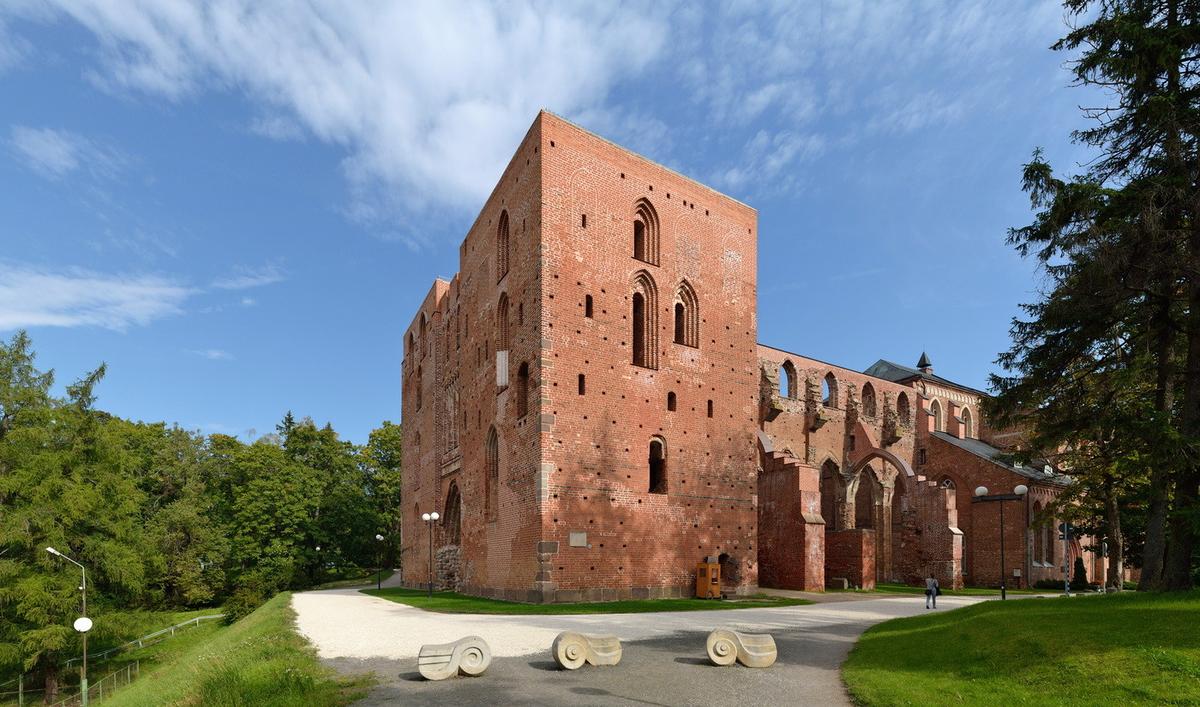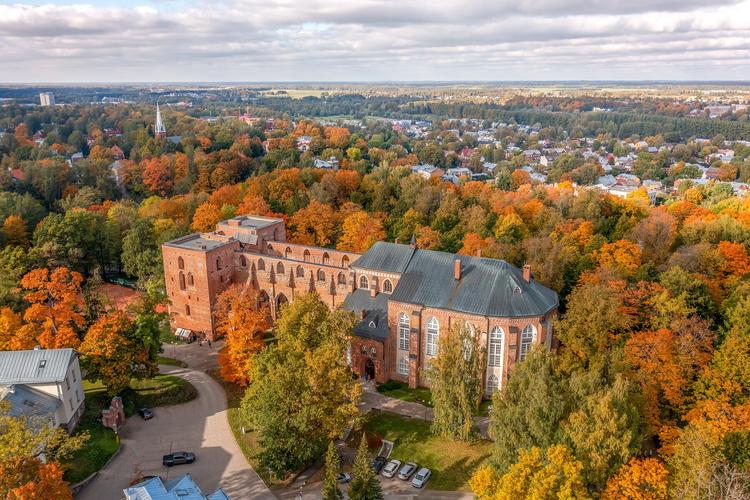


The massive, red-brick structure at the northwest tip of the hill is the remains of the Tartu Cathedral, which dates to the late 13th Century when Tartu was a bishopric. It was heavily damaged during the Livonian War and finally finished off by fire in 1624. In 1804, with the reopening of the university, the choir end of the cathedral was rebuilt into a library. Today, the building houses the University of Tartu Museum where you can learn more about the history of Tartu Cathedral, as well as the city and the university.
Visitors are welcome to stroll through the cathedral’s columns, explore open air exhibitions and, and, from May to September, visit the renovated towers for panoramic views. At night, the cathedral is beautifully illuminated. An artistic lighting installation—blending Nordic folklore, 19th-century mythology, and modern lighting design—brings the ruins to life. The lights switch on at sunset and transform several times throughout the evening.
Visitors are welcome to stroll through the cathedral’s columns, explore open air exhibitions and, and, from May to September, visit the renovated towers for panoramic views. At night, the cathedral is beautifully illuminated. An artistic lighting installation—blending Nordic folklore, 19th-century mythology, and modern lighting design—brings the ruins to life. The lights switch on at sunset and transform several times throughout the evening.