

A note on Bhairahawa
Before anything else: there is no direct bus service to Lumbini Bazaar from Kathmandu or Pokhara, despite what some travel agents will confidently tell you. What exists is a bus to Bhairahawa – also called Siddharthanagar, or Siddhartha Nagar, depending on who you ask – from where you complete the final 20–22km to Lumbini by local bus, taxi, or rickshaw. Some tourist bus tickets are marketed as going "to Lumbini"; what they mean is they'll drop you at or near Buddha Chowk junction on the outskirts of Bhairahawa. From there, a local bus to Lumbini Bazaar takes around 30–40 minutes. A taxi covers the same distance in around 20 minutes and costs NPR 600–800 depending on your negotiating energy.Bhairahawa is a perfectly functional transit city with hotels, restaurants, ATMs, and everything you need to prepare for Lumbini. It is worth knowing that the ATM situation in Lumbini itself is unreliable – there is one, and it has a well-documented habit of running out of cash or going offline. Withdraw whatever you need in Bhairahawa before heading to the site.
By bus from Kathmandu
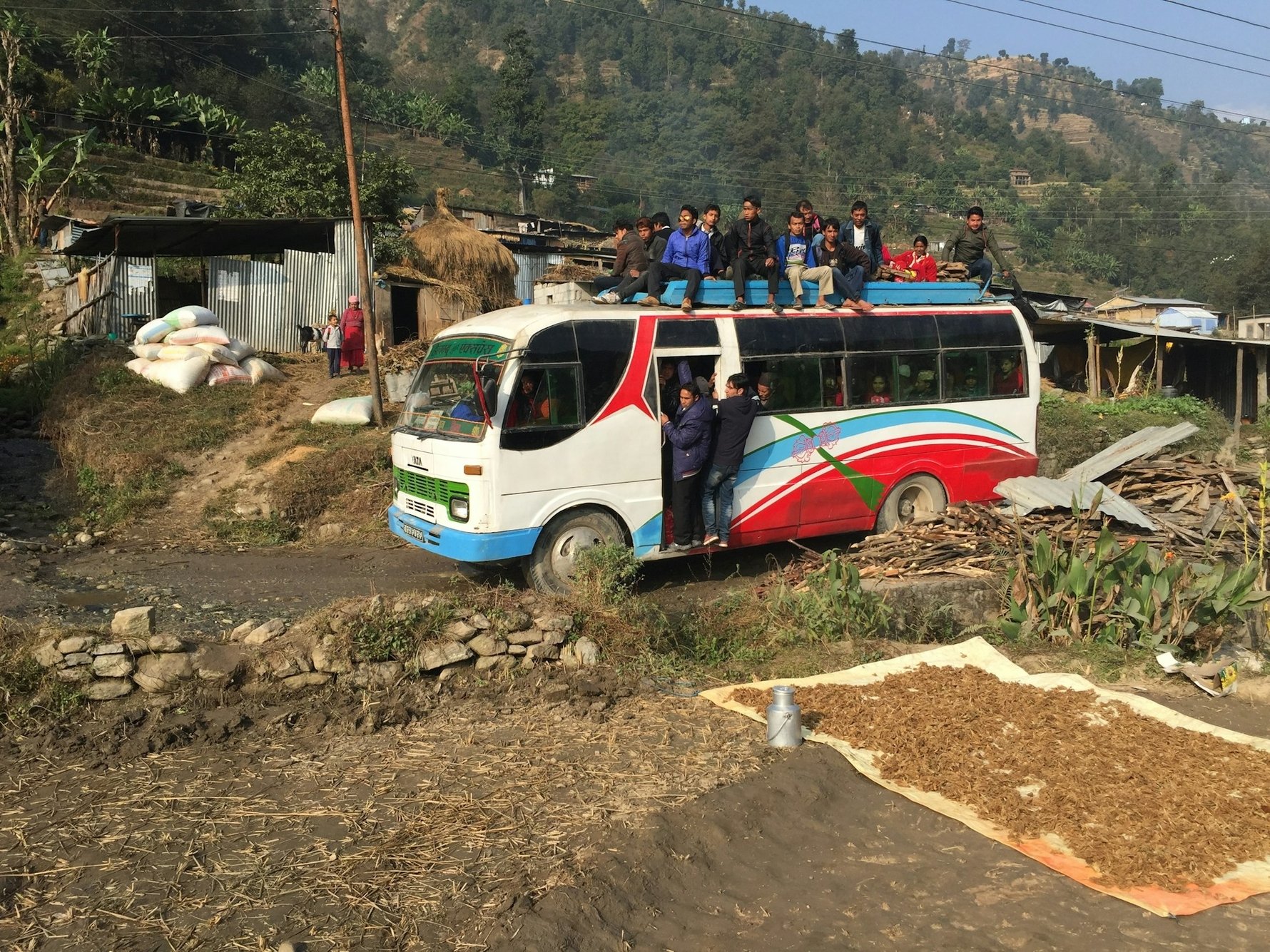
The bus is the standard option for most travellers and, for a journey of this length, entirely manageable. Buses depart from Gongabu Bus Park (also known as New Bus Park) in Kathmandu, with tourist buses leaving in the morning and overnight services also available. The journey covers roughly 290km and takes anywhere from 8 to 10 hours depending on traffic, road conditions, and how many stops the driver decides to make. Night buses exist and are technically cheaper; they are not recommended, for the same reasons night buses are never recommended anywhere in Nepal.Tourist bus tickets cost roughly NPR 1,500–2,000 and are bookable through guesthouses, travel agents, or at the bus park itself. The ride is not glamorous but it is direct, cheap, and gives you a reasonable sense of Nepal's Terai lowlands as you descend from the hills. Local buses are cheaper still but considerably less comfortable for a journey of this length.
By bus from Pokhara
Roughly 6–8 hours by tourist bus, with morning departures available from Pokhara's tourist bus terminal. The route is less mountainous than the Kathmandu road and somewhat easier on the body. Ticket prices are similar – NPR 1,000–1,500 for tourist bus. From Bhairahawa, the same local bus or taxi transfer applies for the final stretch to Lumbini.Lumbini fits naturally into a southern Nepal itinerary alongside Chitwan National Park; the two are roughly four hours apart by road and make a logical pairing for anyone spending time in the Terai.
By air
In theory, you can fly directly to Lumbini via Gautam Buddha International Airport in Bhairahawa, 22km from the site. In practice, the story of this airport is one of the more instructive illustrations of the gap between Lumbini's ambitions and its reality.The airport opened as Nepal's second international gateway in May 2022 after years of planning and billions of rupees of investment. It was designed to attract Buddhist pilgrims from across Asia, transform Lumbini's accessibility, and relieve the chronic pressure on Kathmandu's Tribhuvan International Airport. In its first three years of operation, it handled a total of 731 international flights serving around 45,000 passengers – for an airport with a stated capacity of 3 million passengers per year. There were no international flights at all for several months of 2025. The private sector has been lobbying, meetings have been held, plans have been announced. At the time of writing, Thai AirAsia operates limited services and there are efforts to attract other carriers. Check current schedules carefully before building your itinerary around the international option; it remains unreliable.
For domestic flights, the picture is more straightforward. Buddha Air and Shree Airlines operate regular services from Kathmandu to Bhairahawa, taking around 30–35 minutes. As a foreign national, expect to pay the standard two-tier foreigner price: roughly USD 80–120 depending on timing and availability. From the airport, a taxi to Lumbini takes around 40 minutes and costs NPR 1,000–1,500. The flight is faster but, when you factor in airport time at both ends and the transfer, the time advantage over the bus narrows considerably. For most travellers, the bus remains the better option unless time is genuinely critical.
From India (via Sunauli/Belahiya)
Lumbini's position near the Indian border makes it a natural entry or exit point for travellers arriving overland from India, and this route deserves more attention than it typically gets in Nepal travel guides.The Sunauli/Belahiya border crossing – Sunauli is the Indian side, Belahiya the Nepali side – is one of the busiest Nepal–India land crossings and is open around the clock. It lies only about 26km from Lumbini, making the onward journey a short taxi or bus ride of around 45 minutes to an hour. From the Indian side, Gorakhpur in Uttar Pradesh is the main transport hub: around 90 minutes to two hours from Sunauli by bus or shared taxi, and well connected by train from Delhi, Varanasi, and other major cities.
This makes Lumbini a compelling first stop for travellers entering Nepal from India, or a final stop before crossing back. It also slots naturally into the broader Buddhist circuit: Bodh Gaya (where the Buddha attained enlightenment), Sarnath (where he gave his first teaching), and Kushinagar (where he died) are all accessible by train and road from the Gorakhpur corridor. For anyone travelling that circuit, Lumbini is the obvious centrepiece on the Nepal side.
Nepal visas are available on arrival at the Sunauli/Belahiya crossing. See our Nepal Visa Guide for full details on fees, requirements, and what to expect at the border.
Onward from Lumbini
From Lumbini, buses to Kathmandu and Pokhara depart from Bhairahawa. It is worth booking your onward ticket a day ahead if possible, particularly during peak season (October–March) and around Buddha Jayanti, when services fill up. Local transport between Lumbini Bazaar and Bhairahawa is constant throughout the day and straightforward to pick up from the main road.For Chitwan National Park, the most common onward destination from Lumbini, direct buses run from Bhairahawa to Sauraha (the main tourist access point for Chitwan) in around 3–4 hours. This is a logical next leg for anyone doing a southern Nepal loop before heading back up to Kathmandu or Pokhara.
See also: Lumbini: Destination Overview | What to See in Lumbini | Nepal Visa Guide
Comments