Lumbini is not a single site but a planned development zone, and understanding how it's laid out before you arrive saves considerable confusion on the ground. The zone stretches roughly three miles from north to south, divided into three distinct areas: New Lumbini Village in the north, where you'll find the main visitor facilities and the museum; the Monastic Zone in the middle, where Buddhist nations from around the world have each built their own monastery; and the Sacred Garden in the south, the UNESCO World Heritage core and the reason everyone is here.
The layout is, in fact, deliberate. Japanese architect Kenzō Tange, who designed the master plan in 1978, structured the journey through Lumbini to mirror the Buddhist path itself: you enter through the worldly zone in the north, move through the monastic zone for knowledge and reflection, and arrive at the Sacred Garden – the site of the Buddha's birth – as if completing a small pilgrimage within your visit. It's a genuinely elegant concept. Whether the execution has always matched the vision is a longer conversation, but the structure itself is worth keeping in mind as you move through the site.
A single entry ticket (NPR 700 for foreign nationals; NPR 200 for SAARC nationals; free for Nepalis – verify before travel as fees are subject to revision) covers the entire Development Zone. Buy it at the main gate before entering.
Remove footwear before entering. Photography is restricted inside the inner sanctum. The atmosphere inside is genuinely hushed – monks and pilgrims are often present, chanting quietly – and the temple rewards patience more than it rewards a quick pass-through. Give it time.
Cycling through it – and cycling is very much the right way to do it – feels like a slow, improbable architectural tour of Buddhist Asia. Korean temple, German monastery, Vietnamese pagoda, Chinese complex, Myanmar pagoda, all in a row, each a confident expression of a different tradition's relationship with the same faith. Some are working monasteries with resident monks; others are quieter, used mainly by pilgrims during festivals. Several welcome visitors inside during opening hours.
A few worth seeking out:
Hire a bicycle. The zone is flat and the distances between the Sacred Garden, the Monastic Zone, and the World Peace Pagoda are too far apart to cover comfortably on foot, particularly between April and September. Rentals are available near the main gate for a small daily fee.
Allow at least two sessions. Temples operate on a split schedule, generally open from early morning until around noon, closed for a couple of hours, then open again until around 5pm. A single morning visit will mean some doors are closed by the time you reach them.
Dress appropriately. Cover shoulders and knees when entering temples and monasteries, and remove footwear at every threshold. This applies throughout the Sacred Garden and Monastic Zone without exception.
Photography: permitted in open areas and around monastery exteriors. Restricted or prohibited inside many inner sanctums – check before raising a camera, and ask permission before photographing monks or pilgrims.
Heat: between April and September, temperatures on the Terai plains regularly exceed 35°C. Stone and brick surfaces become too hot to stand on in bare feet by mid-morning. Carry water, wear a hat, and do your walking in the cooler hours of the day.
See also: Lumbini: Destination Overview | Getting to Lumbini | Buddha Jayanti: Lumbini's Biggest Festival
The layout is, in fact, deliberate. Japanese architect Kenzō Tange, who designed the master plan in 1978, structured the journey through Lumbini to mirror the Buddhist path itself: you enter through the worldly zone in the north, move through the monastic zone for knowledge and reflection, and arrive at the Sacred Garden – the site of the Buddha's birth – as if completing a small pilgrimage within your visit. It's a genuinely elegant concept. Whether the execution has always matched the vision is a longer conversation, but the structure itself is worth keeping in mind as you move through the site.
A single entry ticket (NPR 700 for foreign nationals; NPR 200 for SAARC nationals; free for Nepalis – verify before travel as fees are subject to revision) covers the entire Development Zone. Buy it at the main gate before entering.
The Sacred Garden
Maya Devi Temple
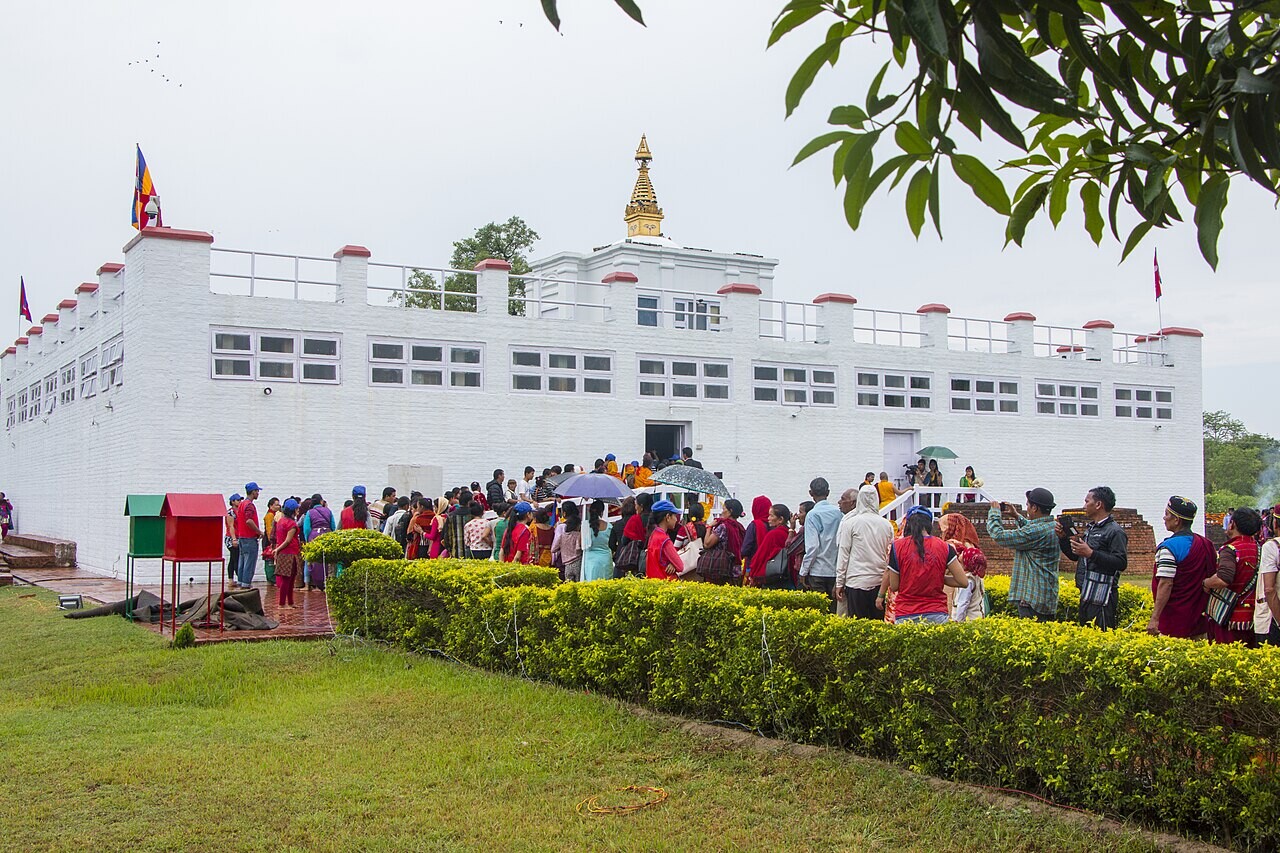
This is the heart of everything. The Maya Devi Temple marks the precise spot where Queen Mayadevi gave birth to the Buddha, and the current structure – modern in its outer shell but built over layers of earlier temples and ruins stretching back to the 3rd century BCE – contains the most important object in all of Lumbini: the Marker Stone, a sandstone relief depicting the birth scene and identifying this as the site. The exact nativity point is marked on the floor nearby.Remove footwear before entering. Photography is restricted inside the inner sanctum. The atmosphere inside is genuinely hushed – monks and pilgrims are often present, chanting quietly – and the temple rewards patience more than it rewards a quick pass-through. Give it time.
The Ashoka Pillar
Standing just outside the temple, the Ashoka Pillar was erected in 249 BCE by the Mauryan Emperor Ashoka, who made a pilgrimage to Lumbini after converting to Buddhism and declared the village exempt from taxes. The Brahmi script inscription on the pillar – confirming this as the Buddha's birthplace – was the key evidence that led to Lumbini's rediscovery by the modern world in 1895, after several centuries of obscurity. It is among the oldest inscriptions in South Asia. The pillar is cracked from an old lightning strike but still standing, which, for something this old, seems entirely reasonable.Pushkarini (Sacred Pond)
According to tradition, Queen Mayadevi bathed in this rectangular pond before giving birth, and the infant Siddhartha was bathed here afterwards. It has been carefully restored and sits in the shade of old trees beside the temple, with pilgrims often circumambulating its edges. It is one of the quieter corners of the Sacred Garden and worth lingering at, particularly in the early morning.The Bodhi Tree and excavated ruins
Near the temple stands a descendant of the species of fig tree under which the Buddha is said to have attained enlightenment, hung with prayer flags and surrounded by the excavated remains of successive monasteries and stupas built around the birthplace over two and a half millennia. Archaeological work is ongoing here. The ruins give a tangible sense of how continuously sacred this ground has been – layer upon layer of devotion, each generation building on the last.The Monastic Zone
North of the Sacred Garden, bisected by a long central canal and pedestrian walkway, the Monastic Zone is where Lumbini becomes genuinely unlike anywhere else in Nepal. Buddhist communities from more than 20 countries have each built their own monastery or temple here, in their own national architectural style, on plots allocated along the canal. The Eastern Zone contains Theravada monasteries from Thailand, Myanmar, Cambodia, Sri Lanka, and others. The Western Zone holds Mahayana and Vajrayana monasteries from China, Japan, Germany, Nepal, Vietnam, Korea, and more.Cycling through it – and cycling is very much the right way to do it – feels like a slow, improbable architectural tour of Buddhist Asia. Korean temple, German monastery, Vietnamese pagoda, Chinese complex, Myanmar pagoda, all in a row, each a confident expression of a different tradition's relationship with the same faith. Some are working monasteries with resident monks; others are quieter, used mainly by pilgrims during festivals. Several welcome visitors inside during opening hours.
A few worth seeking out:
The World Peace Pagoda (Shanti Stupa)
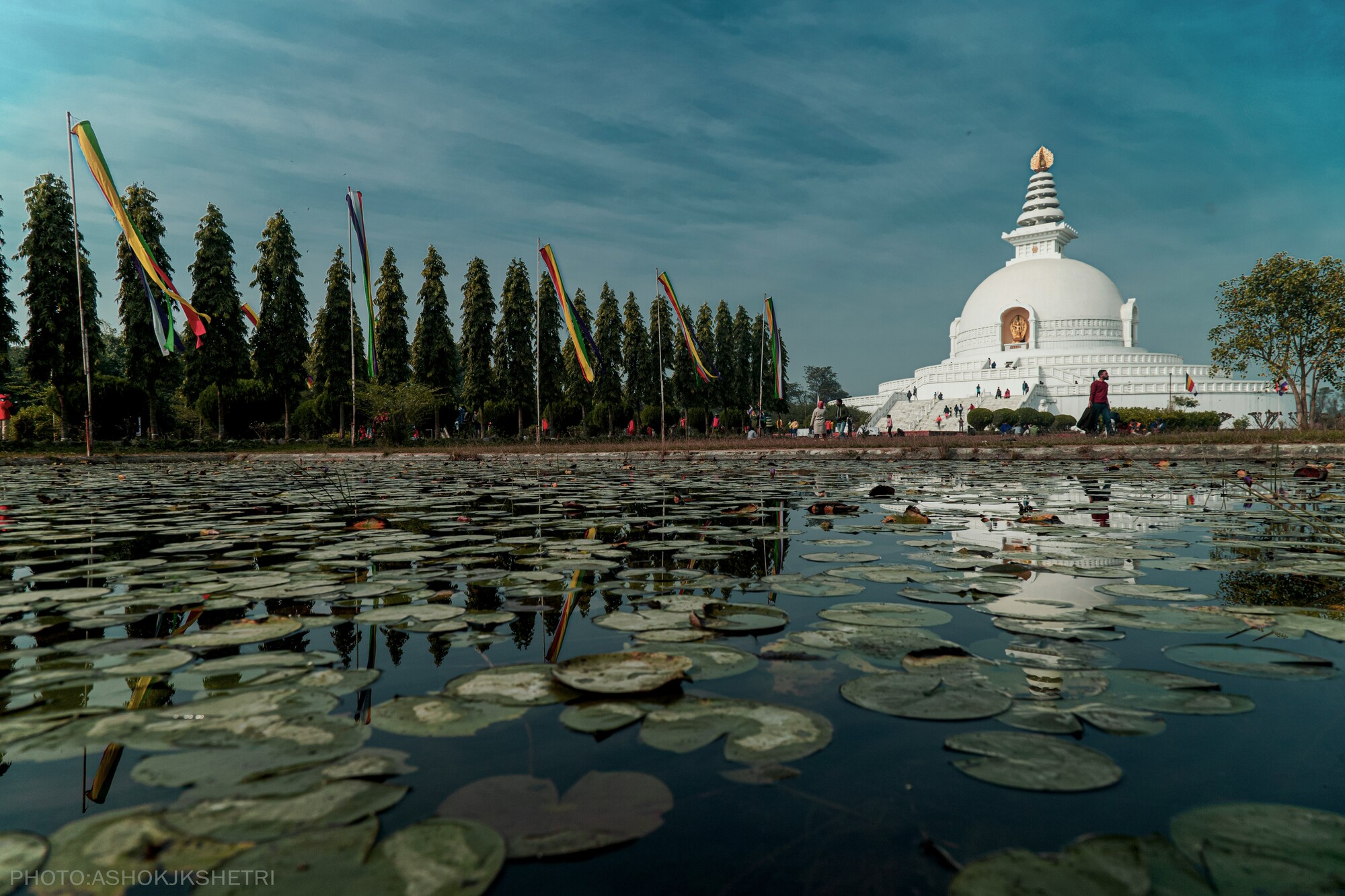
Built by Japanese Buddhists and sitting at the southern end of the monastic zone, the World Peace Pagoda is the most visually striking structure in Lumbini – a gleaming white stupa with a golden Buddha figure that catches the light beautifully at sunrise and sunset. It is also, by mid-morning, surrounded by stone paving hot enough to cause real discomfort underfoot. Visit early or late; bring footwear you can slip on and off easily.The Korean Temple (Dae Sung Shakya Sa)
One of the more welcoming monasteries for visitors, with vivid ceiling murals, a working community of monks, and the option to stay overnight in a communal sleeping area for a nominal daily fee. It is among the best-value overnight experiences in Lumbini for those open to it.The Chinese Temple
A large, ornate complex in the Eastern Zone with the vivid colours and sweeping rooflines of Chinese Buddhist architecture. Often the busiest monastery in the zone, particularly when Chinese pilgrim groups are in residence.The Myanmar (Burmese) Temple
One of the oldest completed structures in the Western Zone, with traditional Burmese spire architecture and a large golden pagoda. Well maintained and worth a look even if the doors are closed.New Lumbini Village
The Lumbini Museum
Located near the northern entrance to the Development Zone, the Lumbini Museum holds around 12,000 artefacts including religious manuscripts, metal sculptures, terracotta figures, coins from the Maurya and Kushana dynasties, and stamps from Buddhist nations around the world. It's a useful first stop if you want the historical context before walking the site, though opening hours can be variable – check locally on arrival.The Eternal Flame
Lit in 1986 and maintained continuously since, the Eternal Flame near the entrance to the Sacred Garden is a small but quietly affecting detail – a symbol of ongoing devotion in a place that has been continuously venerated for over two millennia.The Lumbini Crane Sanctuary
A genuine hidden gem, and one that most visitors walk past without realising it's there. The wetland area within the Development Zone is home to the endangered Sarus crane – the world's tallest flying bird – as well as a range of other species. If you have any interest in birdwatching, or simply want a few minutes of nature in an otherwise human-made landscape, it's worth a short detour.Practical tips for visiting
Arrive early. The light is better, the temperature is manageable, and the Sacred Garden before the main pilgrim groups arrive has a quality of stillness that is hard to find later in the day.Hire a bicycle. The zone is flat and the distances between the Sacred Garden, the Monastic Zone, and the World Peace Pagoda are too far apart to cover comfortably on foot, particularly between April and September. Rentals are available near the main gate for a small daily fee.
Allow at least two sessions. Temples operate on a split schedule, generally open from early morning until around noon, closed for a couple of hours, then open again until around 5pm. A single morning visit will mean some doors are closed by the time you reach them.
Dress appropriately. Cover shoulders and knees when entering temples and monasteries, and remove footwear at every threshold. This applies throughout the Sacred Garden and Monastic Zone without exception.
Photography: permitted in open areas and around monastery exteriors. Restricted or prohibited inside many inner sanctums – check before raising a camera, and ask permission before photographing monks or pilgrims.
Heat: between April and September, temperatures on the Terai plains regularly exceed 35°C. Stone and brick surfaces become too hot to stand on in bare feet by mid-morning. Carry water, wear a hat, and do your walking in the cooler hours of the day.
See also: Lumbini: Destination Overview | Getting to Lumbini | Buddha Jayanti: Lumbini's Biggest Festival