For most of the year, Lumbini operates at a particular register: quiet, contemplative, a little rough around the edges, genuinely moving in places, and – let's be honest – somewhat undercooked as a visitor experience relative to its significance. Then, once a year, on the full moon of Vaisakha, something shifts. Pilgrims begin arriving days in advance. Monks and nuns from dozens of traditions converge on the Sacred Garden. Prayer flags multiply. Butter lamps flicker in their hundreds. The site fills with a charged, joyful devotion that its usual quietude does absolutely nothing to prepare you for.
This is Buddha Jayanti – also known as Buddha Purnima or Vesak – and it is, by some margin, the best time of year to be in Lumbini.
Buddha Jayanti marks the three most significant events in the life of Siddhartha Gautama – his birth, his enlightenment, and his Mahaparinirvana (death) – all of which, according to Buddhist tradition, took place on the same full moon day of the lunar month of Vaisakha. The fact that one person managed to arrange all three major life events on the same calendar date across an 80-year lifespan is, depending on your theological disposition, either a remarkable cosmic coincidence or a useful mnemonic device. Either way, it makes for a significant festival.
"Jayanti" means birthday in Sanskrit. "Purnima" means full moon. "Vesak" is the name used across Theravada Buddhist countries – Thailand, Sri Lanka, Myanmar, Cambodia – and is the term you'll more commonly hear from pilgrims arriving from those traditions. In Nepal and India, Buddha Jayanti and Buddha Purnima are the standard terms. They all refer to the same day.
When is it?
The date shifts annually with the lunar calendar, falling on the full moon of April or May in the Western Gregorian calendar – occasionally nudging into June in a leap year. It can vary by several weeks from one year to the next, so check the date well in advance and build your itinerary around it rather than hoping it will oblige your existing plans.
A practical note: the celebrations in Lumbini are not confined to a single day. Pilgrims begin arriving several days before the full moon, and the atmosphere builds gradually rather than switching on at midnight. If your schedule allows, arriving two or three days before the main date gives you the full arc of the festival rather than just the peak.
What happens in Lumbini?
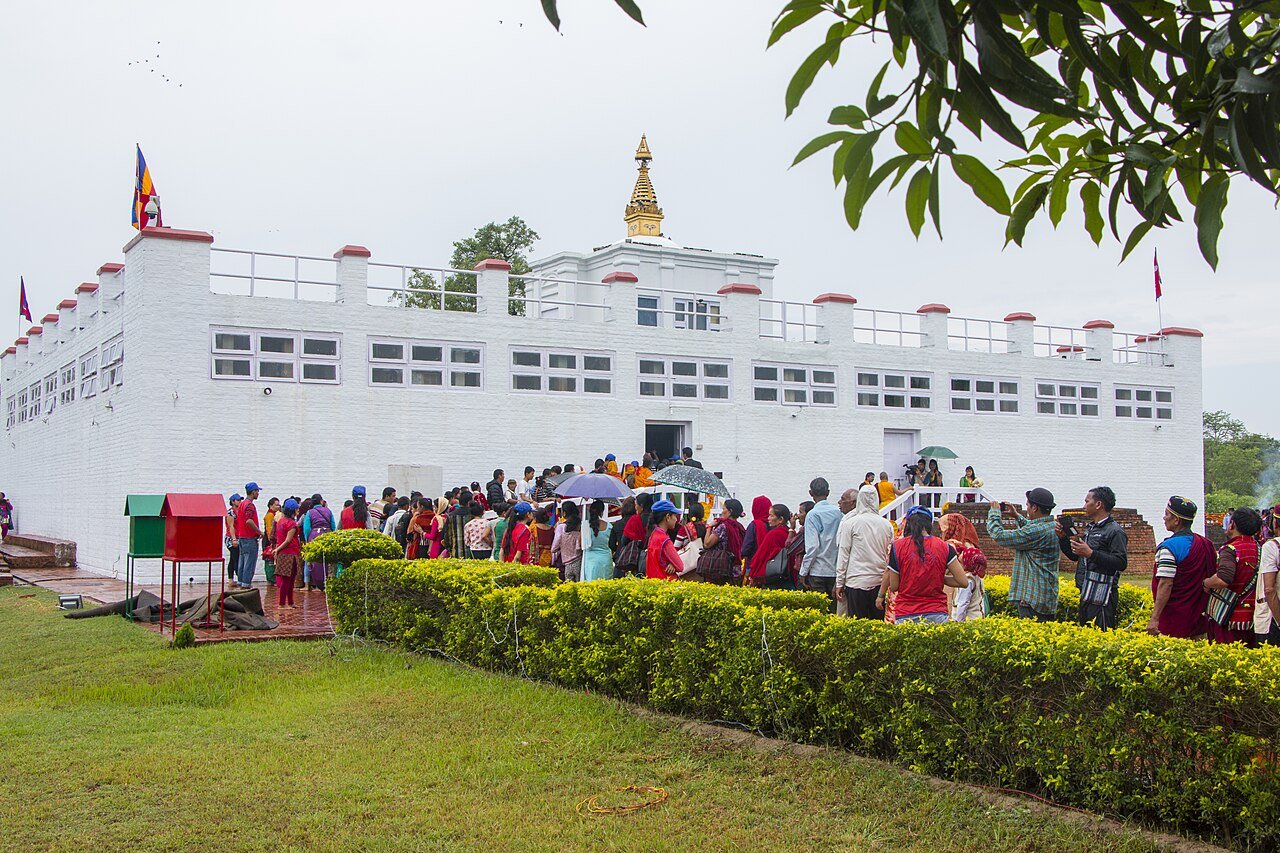
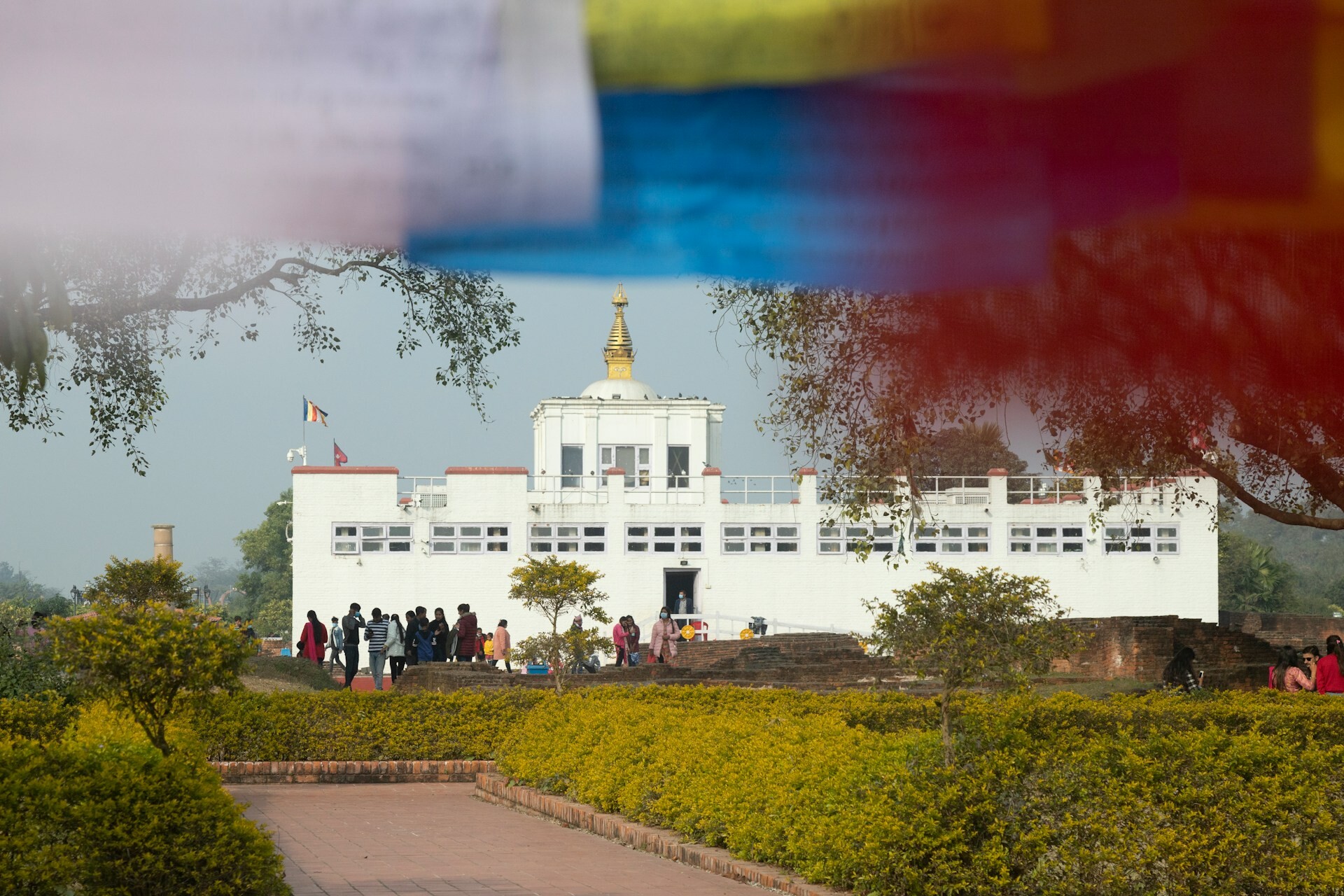
The Sacred Garden is the focal point. On and around the full moon day, it fills with pilgrims from Nepal, India, Sri Lanka, Thailand, Myanmar, China, South Korea, and beyond – each tradition bringing its own forms of devotion, its own robes, its own chanting. The Maya Devi Temple becomes the centre of gravity, with monks and nuns leading prayers and circumambulations from early morning. Butter lamps are offered in their hundreds. Flower garlands are placed at the Ashoka Pillar. The Bodhi tree, already hung with prayer flags, disappears further under fresh offerings.
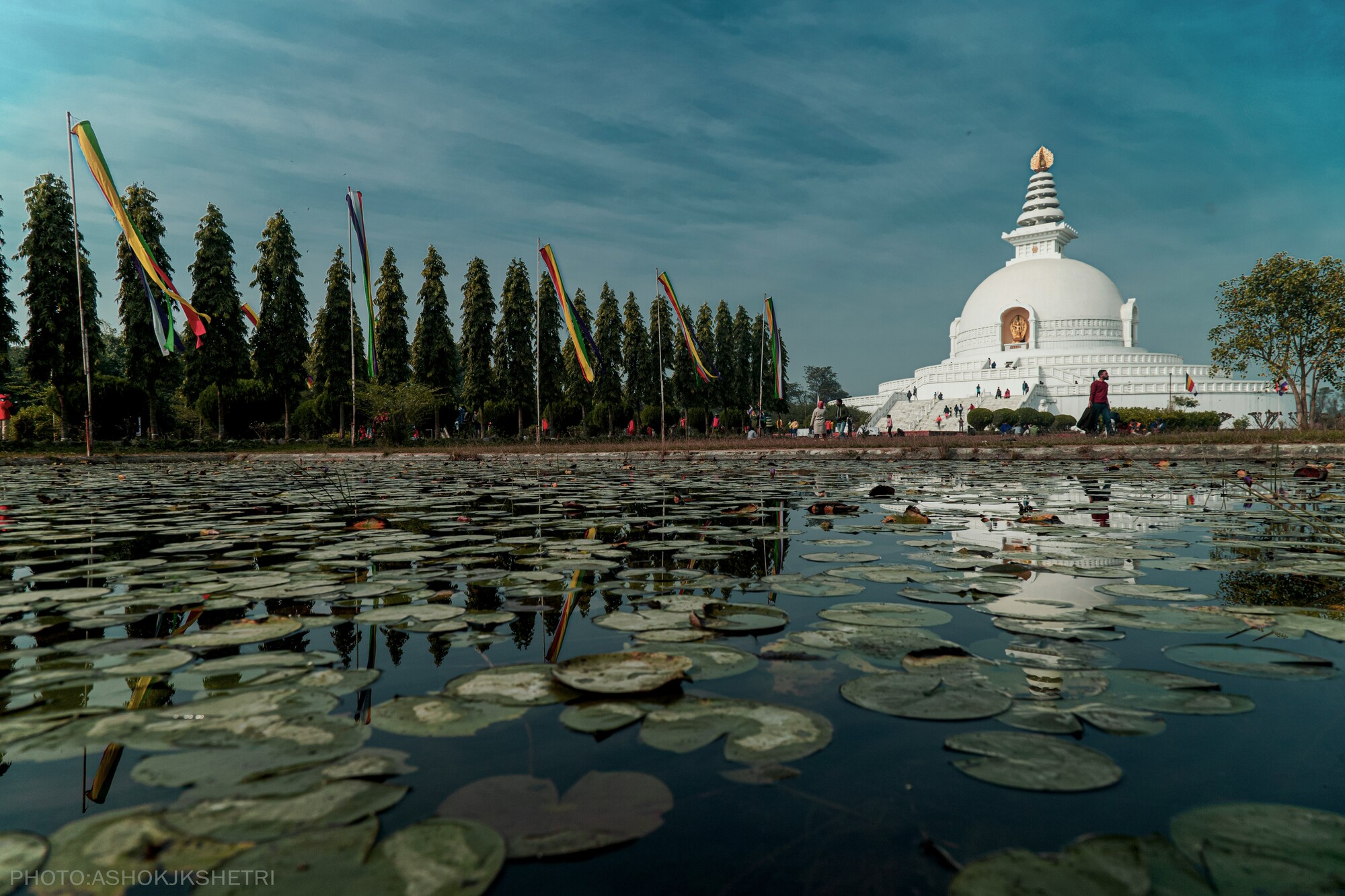
Across the Monastic Zone, each monastery hosts its own programme of prayers, ceremonies, and cultural performances. Walking the zone during Buddha Jayanti is a significantly different experience from any other time of year – doors that are often closed are open, monks who are usually glimpsed in passing are visible at prayer, and the cumulative sound of chanting from different traditions overlapping along the canal path is something that is difficult to adequately describe to someone who hasn't heard it.
Processions move through the site during the day, often led by senior monks and accompanied by music and the carrying of relics or images. In the evening, the monuments are lit with lamps and decorated with flowers, and the full moon – rising over the flat Terai plains with no hills to interrupt it – is genuinely spectacular in a way that the same moon over a city never quite manages.
The Lumbini Development Trust and the provincial government typically organise official ceremonies and cultural programmes around the main day, the scale of which has grown in recent years. The second Lumbini International Peace and Meditation Festival was held in 2026, bringing together practitioners from across the Buddhist world for a programme of talks, meditation sessions, and interfaith dialogue alongside the main festival. These events are worth looking out for when planning your visit.
Practical advice
Book accommodation early. Very early. Lumbini's accommodation stock is not large at the best of times, and it is essentially fully booked for the days around Buddha Jayanti by people who know what they're doing. If you're planning to be there for the festival, start looking months in advance – not weeks. Bhairahawa, 22km away, offers an overflow option if Lumbini itself is full, though staying in situ is significantly preferable.
Expect crowds. Lumbini's usual atmosphere of contemplative near-emptiness is replaced, during Buddha Jayanti, with something considerably more populated. The Sacred Garden in particular will be busy around the main ceremonies. This is not a reason to stay away; it is a reason to arrive early in the morning, move patiently, and understand that you are sharing a sacred space with tens of thousands of people for whom this is the most important day of the religious calendar. Adjust your expectations accordingly and you'll be fine.
Dress respectfully. This is always the rule in Lumbini, but it applies with particular force during Buddha Jayanti. Cover shoulders and knees, remove footwear at every temple threshold, and be mindful about photography – the festival is not a spectacle laid on for visiting cameras. Observe first; photograph second, and only when it's clearly appropriate.
The heat. May in the Terai is warm – temperatures regularly reach 35°C, occasionally higher. The crowds and the effort of walking the site amplify this considerably. Carry water, start your day early, and retreat to shade during the hottest hours of the afternoon. The evening ceremonies, when the lamps are lit and the full moon rises, are worth saving your energy for.
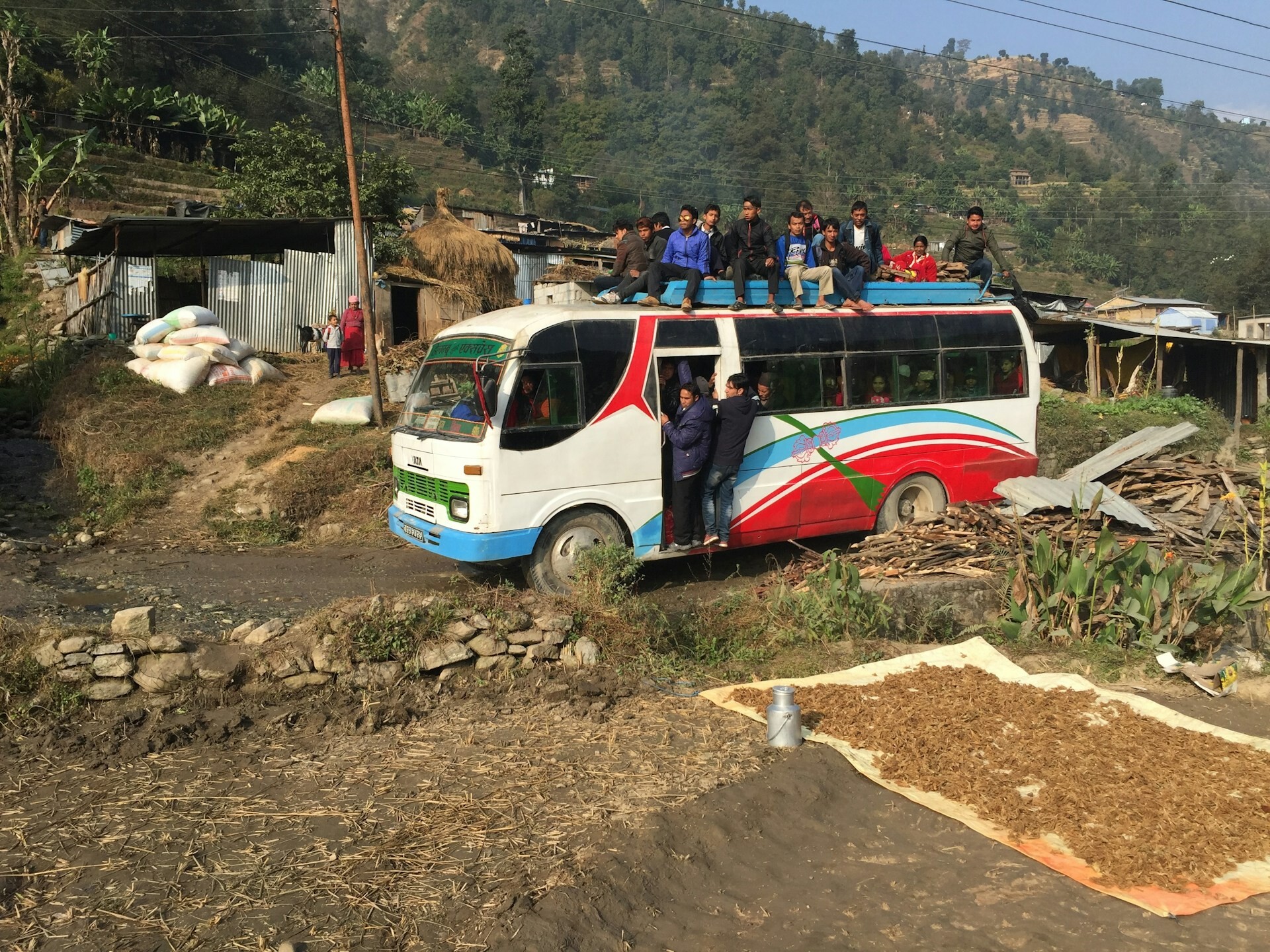
Transport. Buses and shared transport from Kathmandu, Pokhara, and the Indian border fill up around the festival. Book onward and return transport at the same time as your accommodation, not as an afterthought the day before you need to leave.
Is it worth visiting specifically for Buddha Jayanti?
Yes – with the caveat that it requires advance planning that the rest of a Lumbini visit does not. The festival is the one occasion each year when the site fully inhabits the significance it carries the rest of the time. The convergence of traditions, the density of devotion, the sound and light of the evening ceremonies: it adds up to an experience that is qualitatively different from a standard visit, and not easily replicated elsewhere. Bodh Gaya in India celebrates Vesak with similar scale, but there is something specific about being at the birthplace – the beginning of the story, rather than one of its later chapters – that makes Lumbini the natural centre of gravity for this particular day.
If your dates don't align with Buddha Jayanti, Lumbini is absolutely still worth visiting. But if they do align, arrange your schedule around it.