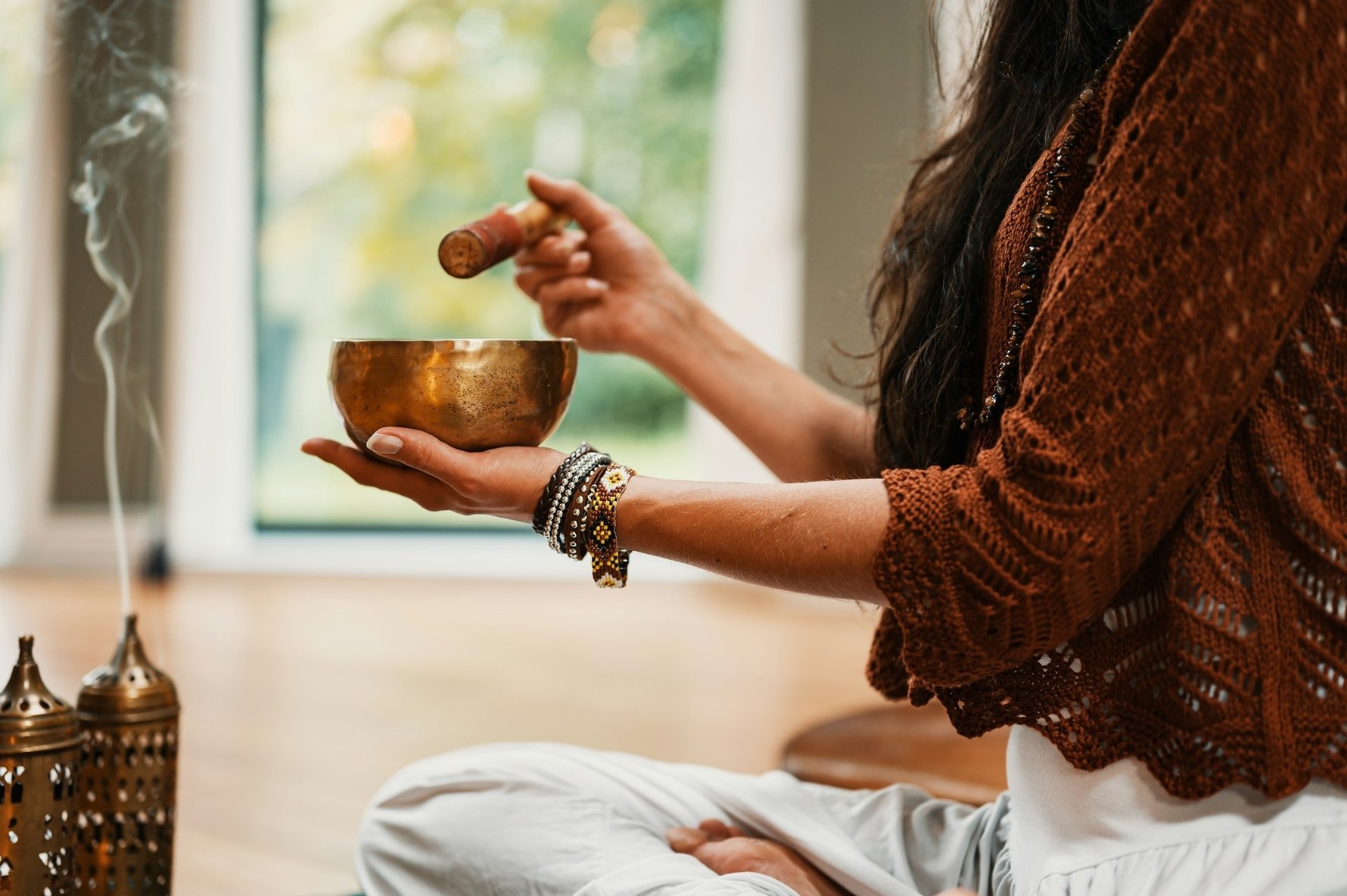
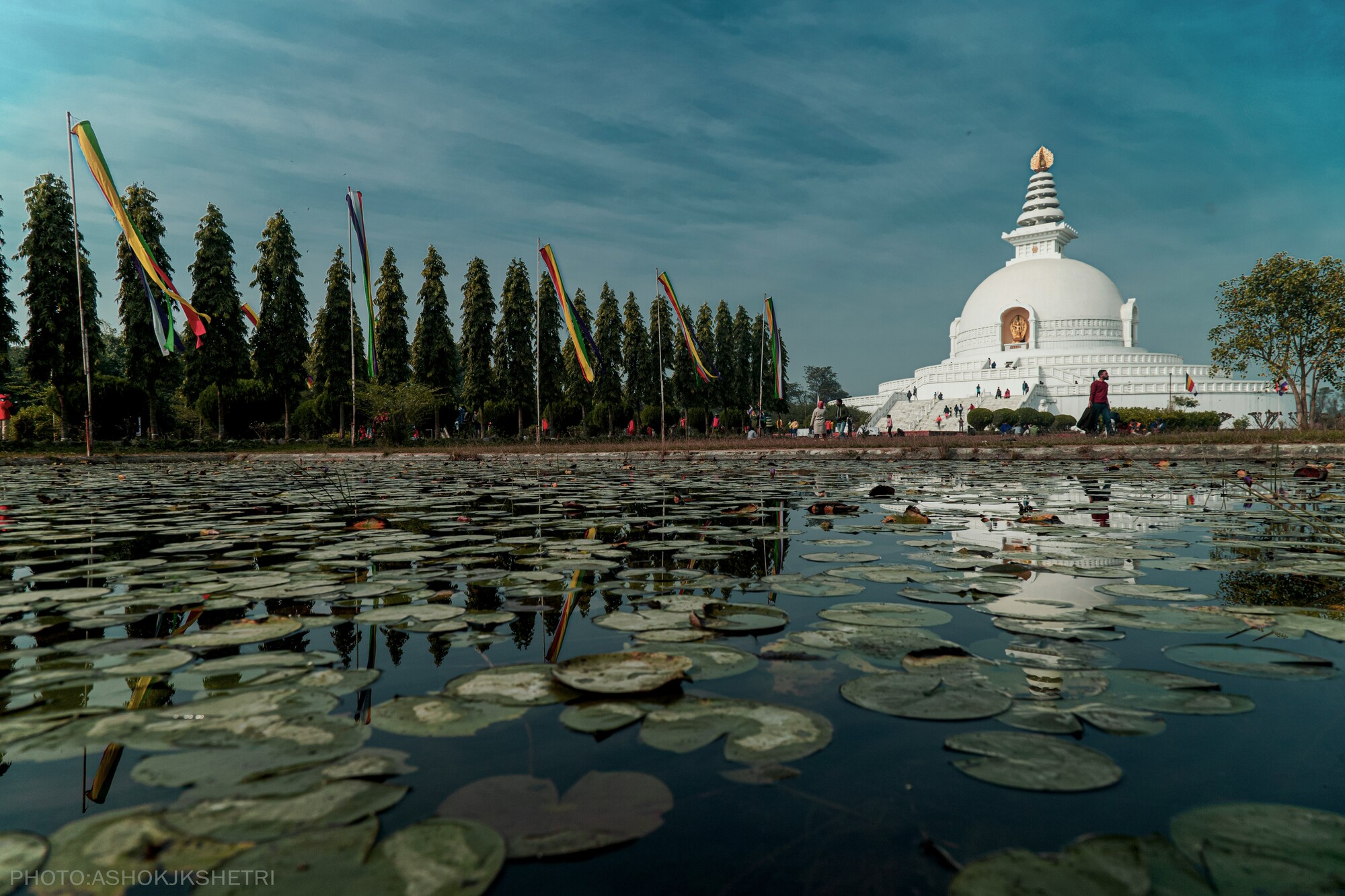
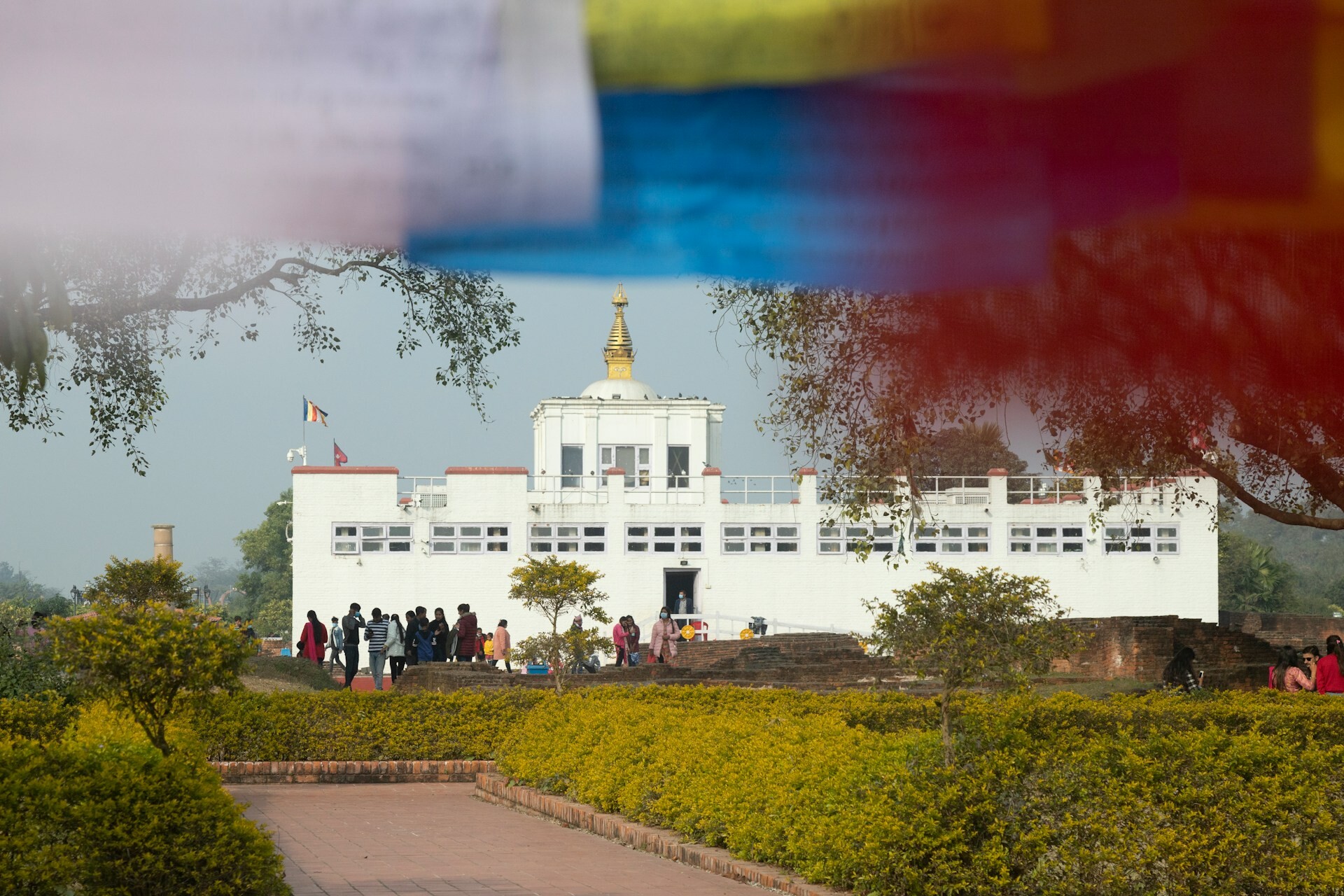
If there is one place on earth where sitting down, closing your eyes, and trying to quieten your mind feels entirely appropriate, it is probably the birthplace of the man who spent 49 days doing exactly that under a fig tree and came up with one of history's most enduring insights as a result. We're not saying a retreat in Lumbini will lead to enlightenment. We're not even saying it will lead to a particularly good night's sleep. But as backdrops for attempting to meditate go, the Sacred Garden of Lumbini is, objectively, hard to beat.
The good news is that whether you're a committed practitioner planning a serious multi-week retreat or someone who once downloaded a mindfulness app and is vaguely curious about what the real thing involves, Lumbini has options calibrated for you. The site has been a centre for Buddhist learning and practice for over two millennia – several of the monasteries in the Monastic Zone welcome visitors to sit in on sessions – and a handful of dedicated retreat centres in and around the Development Zone offer structured programmes ranging from a single guided session to stays of several months.
A word before we get into specifics: meditation in this context is not spa wellness or corporate mindfulness. The serious retreat centres listed here are rooted in Buddhist practice, operate within monastic frameworks, and ask participants to observe precepts and schedules that most people's daily lives do not prepare them for. 4am starts are standard. Noble Silence – no talking, no phones, no reading, no writing – is the norm rather than the exception. This is not a criticism; it is useful information. Go in knowing what you're signing up for, and you'll get considerably more out of it than if you turn up expecting something between a yoga holiday and a city break.
Panditarama Lumbini International Vipassana Meditation Centre
The most serious and most established retreat option in Lumbini, Panditarama has been operating since 1999 and sits within the Development Zone itself, immersed in greenery close to the Sacred Pond. The method taught is intensive Vipassana in the Mahasi Sayadaw tradition of Myanmar – alternating one-hour sessions of sitting meditation and formal walking meditation throughout the day, with daily interviews with the teacher and evening Dhamma talks in English.
The resident teacher, Venerable Sayadaw U Vivekananda – a German-born monk who has been practising in this tradition since 1988 – teaches in English, Burmese, German, and French. There is also a resident nun, Sayalay Daw Bhaddamanika, who has trained under the same lineage for many years. Between April and June, the teachers typically travel abroad to lead retreats in Europe and Australia; check the centre's website for schedule availability if you're planning around those months.
Retreats are individual rather than group-based: you schedule your own arrival and duration, with a minimum stay of seven days and a maximum of several months. The centre accommodates a small number of meditators at any one time – around 30 at most – which creates an atmosphere that larger, more regimented centres rarely manage. Observers of Noble Silence keep eight Buddhist precepts during their stay.
Cost: dana (donation) based. There are no set fees; the centre operates on the principle of generosity that has underpinned Buddhist monastic life for 2,500 years. Your contribution, whatever you choose to give, supports the centre's ongoing operation.
Practical note: contact the centre in advance to schedule your stay. Do not simply arrive and expect a room – pre-arrangement is essential. Winter nights in Lumbini can drop to around 5°C, and morning mist is a genuine feature of the Terai in December and January; a warm layer and insect repellent are both worth packing.
The name, which translates as "Mother of Dhamma," is a nod to Lumbini's role as the origin point of the Buddha's teachings – and before anyone asks, yes, we did pause for a moment of appreciation at that one.
Dhamma Janani is affiliated with the global Goenka tradition of Vipassana – the same network behind retreats in more than 90 countries – and operates the standard 10-day residential course format that has introduced millions of people worldwide to the practice. The method is technique-based and non-sectarian: participants don't need to identify as Buddhist, or indeed as anything in particular. The centre runs one 10-day course per month as well as two Satipatthana courses per year.
Courses follow the classic Goenka structure: Noble Silence from day one, 10 hours of meditation per day, no outside communication, no reading or writing, and a schedule that starts at 4am and ends at 9pm. If this sounds like a lot, that's because it is. Former participants tend to describe the experience in terms that range from "life-changing" to "the hardest thing I've ever done" – often in the same breath, and sometimes as if those two things are not mutually exclusive. The centre accommodates around 48 male and 48 female students, with attached bathrooms and meditation cells available.
Cost: entirely free. No fees for tuition, accommodation, or food. The centre runs on donations from previous participants who found the experience worthwhile and want to make it available to others. This model has sustained the global Vipassana network for decades without, as far as anyone can tell, going bankrupt, which says something either about the generosity of meditators or about the low overheads of a life without furniture and distractions.
Book in advance through the centre's website, which handles scheduling for courses throughout the year.
For those not ready to commit to a multi-day retreat – or indeed those who took one look at "4am start" and "Noble Silence" and quietly closed that tab – several of the working monasteries in the Monastic Zone welcome visitors to join daily meditation sessions on an informal basis. The Thai, Korean, and Burmese monasteries in particular are known for being open to curious visitors; behaviour standards (quiet, respectful, appropriately dressed) apply, and this is not the place to treat meditation as a photo opportunity, but genuine engagement is welcomed warmly.
The experience is less structured than a formal retreat and entirely free. Sitting with monks and pilgrims in a working monastery in the Buddha's birthplace is, to put it plainly, the kind of thing that tends to stay with people. No app required.
The Lumbini International Research Institute
Not a retreat centre in the experiential sense, but worth mentioning for visitors who want to understand the intellectual and scholarly dimension of Buddhism rather than simply practise it. The LIRI holds one of the most significant collections of Buddhist manuscripts and texts in Nepal, and organises occasional lectures and seminars open to the public. If your interest in Buddhism runs more academic than contemplative, this is the place to start.
Practical advice for retreat visitors
Book well in advance. Both Panditarama and Dhamma Janani operate at limited capacity and are genuinely popular. Walking in without a reservation at either centre will almost certainly mean walking back out again.
Time your visit. October to February is the most comfortable period for extended stays: temperatures are manageable, the air is clearer, and the site is at its most pleasant. The Terai summer (April to September) is genuinely harsh – 35°C-plus, high humidity – and sitting motionless for 10 hours a day in that heat is an additional test that even seasoned meditators tend not to seek out voluntarily.
Prepare appropriately. Neither centre requires prior meditation experience, but some familiarity with the basics – even a few weeks of a daily sitting practice – will make your time considerably more productive and considerably less bewildering. Both centres' websites have detailed preparation guidance worth reading before you arrive.
Visa considerations. Both centres accommodate stays of several weeks or months. Nepal's standard tourist visa allows 15, 30, or 90 days depending on which you purchase on arrival. Extensions are available through the Department of Immigration in Kathmandu or, in some cases, at border offices. If you're planning a long retreat, factor this in. See our Nepal Visa Guide for full details.
Connectivity. Both serious retreat centres operate Noble Silence and do not permit phones, laptops, or outside communication during programmes. If the idea of 10 days without your phone fills you with existential dread, that is, according to most meditation teachers, an excellent reason to try it. We're not in a position to argue with them.