Belfast is a city that has had a complicated few centuries and would prefer, on the whole, to get on with things. The Troubles – the thirty years of sectarian conflict that killed over 3,500 people and left a physical and psychological mark on every neighbourhood in the city – ended with the Good Friday Agreement in 1998, and Belfast has spent the years since rebuilding at a speed that consistently surprises visitors who arrive expecting grimness and find instead a genuinely vibrant, architecturally varied, food-obsessed city with a dark history it has largely decided to address honestly rather than paper over. The peace walls still stand. The murals still make their competing claims. And the Titanic museum is extraordinary. Prices below were correct at time of writing; verify before visiting.
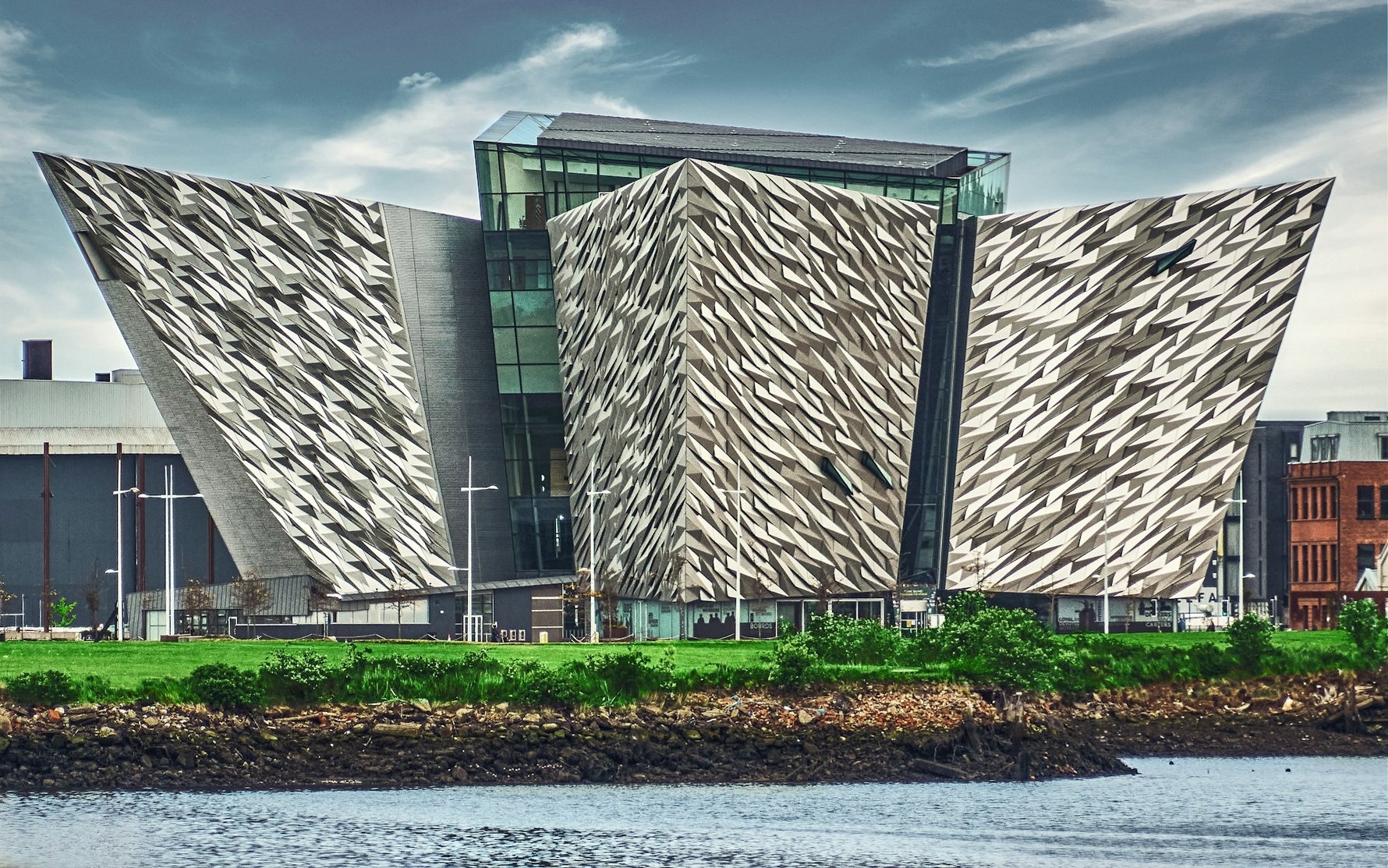
The Titanic Belfast museum opened in 2012 on the centenary of the sinking, built on the exact site in the Harland & Wolff shipyard where the Titanic was laid down in 1909, and it is one of the best-executed major museums to have opened anywhere in these islands in the past twenty years. The building itself – 38.5 metres high (the precise height of Titanic’s hull), clad in 3,000 individually anodised aluminium shards, designed to suggest the prows of four ships converging on the slipway – is an architectural statement of considerable confidence, and the nine interactive galleries inside justify it. The first gallery, Boomtown Belfast, starts with the city at the height of its industrial power and walks through the gates of the original Harland & Wolff yard; subsequent galleries cover the design and construction of the ship, the launch, the fitting out, the voyage, the sinking and the long aftermath of the wreck’s discovery in 1985. The immersive shipyard ride – a slow journey through a recreated version of the yard at full noise – is disorienting in the best way.
Outside, the slipways where Titanic and Olympic were built side by side are paved over and accessible on foot, with the hull outlines of both ships inlaid in the ground at full scale. The benches around the building are spaced in Morse code sequence, reading out the distress signal Titanic transmitted after hitting the iceberg. The SS Nomadic, the last surviving White Star Line vessel, is berthed in the adjacent Hamilton Graving Dock. The whole complex rewards more time than most visitors allow it; the building alone takes the better part of two hours to cover properly.
Location: Queen’s Road, Titanic Quarter, Belfast BT3 9EP. A 20-minute walk from the city centre along the Lagan, or bus to the Titanic Quarter.
Best time to visit: Weekday mornings. Book timed entry tickets online in advance at titanicbelfast.com; weekend sessions sell out.
Ticket prices: Around £22 for adults. Check titanicbelfast.com for current prices and seasonal variations.
Good to know: The SS Nomadic next door is a separate ticket and is covered in its own entry below. The Harland & Wolff Drawing Offices, where the Titanic was designed, have been converted into a hotel directly adjacent to the museum and are worth a look at the exterior even if you’re not staying.
2. The Cathedral Quarter
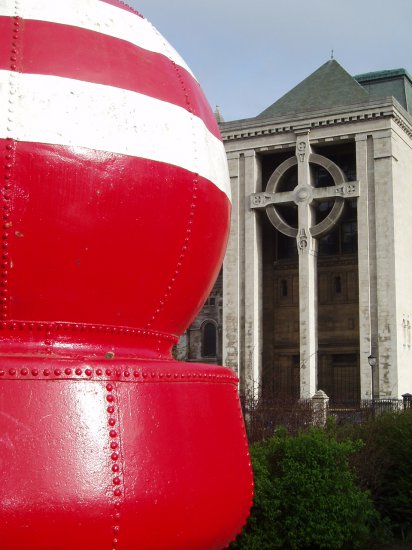
The Cathedral Quarter is the old warehouse and linen merchant district north of the city centre, anchored by St Anne’s Cathedral (Church of Ireland, begun 1899, still technically unfinished) and lined with Victorian and Edwardian industrial buildings that have been converted over the past two decades into bars, restaurants, galleries, studios and hotels. It is the most concentrated area of independent food and drink in Belfast, and it is very good. The Cathedral itself is worth entering for the mosaic ceiling of the nave and the black marble floor of the baptistery, but the surrounding streets – Hill Street, Commercial Court, Donegall Street – are the main reason to come.
The Cathedral Quarter is also where most of the city’s best street art outside the West Belfast murals can be found, and where the Belfast International Arts Festival, the Oh Yeah Music Centre and the various gallery spaces that have colonised the old warehouses are concentrated. Commercial Court, a narrow alley between Donegall Street and North Street, is a compact Victorian streetscape of the kind that Belfast has preserved in better condition than most comparable British and Irish cities. The Mac (Metropolitan Arts Centre) on St Anne’s Square is the largest contemporary arts centre in Northern Ireland and consistently worth checking the programme.
Location: Centred on Donegall Street and Hill Street, north of the city centre; a ten-minute walk from City Hall.
Best time to visit: Any time. The area is at its most animated in the evenings, particularly Thursday through Saturday. The Cathedral itself is open daily.
Ticket prices: Free to enter the Cathedral. The Mac charges for some events; check themaclive.com for the current programme.
Good to know: St Anne’s Cathedral has a “spire of hope” – a 40-metre stainless steel spike added in 2007 to mark the peace process – that is visible from much of the surrounding area and makes the building easier to locate than any map.
3. The Murals and Peace Walls
The political murals of West Belfast are unlike anything else in the United Kingdom or Ireland. They began in the early years of the Troubles as a form of territorial marking and political communication, and have evolved over five decades into something more complex: an open-air record of the conflict, its causes and its consequences, painted from both sides of the peace walls that still separate the nationalist Falls Road from the unionist Shankill Road. The first peace walls were erected in 1969 as what were described as temporary structures. There are currently around 60 of them in Belfast, stretching over 34 kilometres in total. Some of the gates are still locked at night.
Walking the Falls Road, the murals are predominantly republican and nationalist: Bobby Sands, the hunger strikers, the Palestinian cause (a long-standing point of solidarity), scenes from the 1916 Rising. Walking the Shankill Road, a few hundred metres away through one of the gates, the imagery shifts entirely: loyalist paramilitary murals, King William III at the Boyne, British military service, Union flags. The International Peace Wall on Cupar Way, where the two communities meet, is covered in signatures and messages from visitors from around the world, alongside murals that address reconciliation rather than conflict. The contrast between the two sides of the wall – physically, atmospherically, politically – is the most honest account of Belfast’s recent history available anywhere in the city.
Location: Falls Road (nationalist) and Shankill Road (unionist) in West Belfast; accessible by bus 10, 11, 12 from the city centre, or a 30-minute walk from City Hall.
Best time to visit: Daytime only; some areas are less welcoming after dark. The murals are best appreciated at a slow pace on foot, though the hop-on hop-off bus covers the main routes.
Ticket prices: Free to walk. Black cab tours, which provide guided commentary from drivers with first-hand experience of both communities, are a highly recommended alternative (around £10–15 per person for a group tour).
Good to know: The Ulster Museum’s Troubles exhibition provides essential context before or after a visit to the murals. The two experiences complement each other in a way that neither does alone.
4. The Crown Liquor Saloon
The Crown Liquor Saloon on Great Victoria Street is a Victorian gin palace of the first order and one of the finest pub interiors in these islands. It opened in 1826 as the Railway Tavern, serving passengers from the adjacent Great Northern Railway terminus. Patrick Flanagan, who took over in 1885, brought in Italian craftsmen who were in Belfast to work on the city’s new churches – and persuaded them to work on the pub after hours – to create the interior that stands today: polychromatic tiled facade, mosaic floor with a crown at the entrance, red granite bar top with a heated footrest, gas lamps, stained glass windows etched with crowns, fairies, pineapples and clowns, and ten private snugs along the side wall equipped with original gunmetal match-striking plates and antique bell systems for summoning staff. Sir John Betjeman campaigned for its preservation. The National Trust bought it in 1978 and restored it at a cost of £400,000, retaining the gas lighting throughout.
It sits directly opposite the Europa Hotel, which is one of the most bombed hotels in the world by virtue of its proximity to the epicentre of Troubles-era violence in Belfast; the Crown survived the Europa’s many bombings and has now outlasted the conflict that surrounded it. It is one of very few National Trust properties in the world where you can sit in an oak-panelled snug, ring a brass bell for service, and order a pint. It remains a working pub first and a heritage attraction second, and is better for it.
Location: 46 Great Victoria Street, Belfast BT2 7BA. Directly opposite the Europa Hotel; a five-minute walk from the Grand Central Station.
Best time to visit: Lunchtime on a weekday for the most manageable crowds. It fills up considerably in the evenings. No booking required for drinks.
Ticket prices: Free to enter; you pay for what you drink.
Good to know: The wood panelling in the first-floor restaurant (the Britannic Lounge) incorporates panels originally intended for the interior of HMHS Britannic, the Titanic’s sister ship, before the war repurposed her as a hospital ship. This information appears on no signage in the pub and is the kind of detail that rewards asking.
5. Ulster Museum
The Ulster Museum in the Botanic Gardens is Northern Ireland’s national museum and one of the better free museums in these islands. Its collection covers Irish art, natural history, archaeology, world cultures and – most significantly – the history of the Troubles, in a permanent exhibition that is more honest and more balanced than anything a government institution might be expected to produce on a subject this recent and this contested. The Troubles exhibition covers the background to the conflict, the years of violence from both communities, the peace process, and the continuing work of reconciliation, with testimony from victims and survivors on all sides. It is careful, humane and sobering, and should be visited before the murals rather than after.
The broader collection is also excellent. The Armada Room holds objects from the Spanish Armada ships wrecked off the Irish coast in 1588, recovered from underwater excavations – cannons, anchors, personal objects and coins – that represent one of the finest collections of Armada material anywhere. The Egyptian section includes a mummy of Takabuti, an ancient Egyptian woman whose discovery in Belfast in 1834 caused considerable public sensation. The Irish art collection is strong on 18th and 19th-century work, and the temporary exhibition programme consistently punches above what a regional museum might be expected to deliver.
Location: Stranmillis Road, Belfast BT9 5AB (Botanic Gardens, South Belfast). A 15-minute walk from the city centre, or bus to Botanic Avenue.
Best time to visit: Weekday mornings. Free admission means it gets busy at weekends.
Ticket prices: Free for the permanent collection; some temporary exhibitions may charge. Check nmni.com/ulster-museum for current programme.
Good to know: The museum’s rooftop terrace, accessible from the upper floors, provides a view over the Botanic Gardens and the university quarter that is one of the quieter pleasures of the building.
6. St George’s Market
St George’s Market is a covered Victorian market in a converted railway goods warehouse on Oxford Street, open Friday, Saturday and Sunday, and consistently rated among the best markets in the United Kingdom and Ireland. The building dates from 1890; the market inside it is very much of the present. Friday’s City Food and Garden Market focuses on fresh produce, baked goods, street food and flowers; Saturday’s City Food and Craft Market adds artisan producers, clothing, antiques and live music; Sunday’s Variety Market extends to a full antiques, crafts and food event that draws most of central Belfast at some point during the morning. The quality of the food offer – oysters, chowder, soda bread, artisan cheese, street food from a range of cuisines – is consistently high, and the prices are aimed at the regular shoppers who make up the bulk of the market’s clientele rather than the tourists.
The building itself is worth noting: an 1890 cast-iron and brick structure with a glass roof that fills the space with natural light on all but the greyest days, and an acoustic quality that makes the Saturday live music considerably more atmospheric than an outdoor stage would manage. It won Best Large Indoor Market at the Great British Market Awards and has been named the best market in Europe on more than one occasion. Arriving at 9am on a Saturday, when the producers are setting up and the coffee is fresh, is the correct approach.
Location: 12–20 East Bridge Street, Belfast BT1 3NQ. A ten-minute walk from the city centre and from the Cathedral Quarter.
Best time to visit: Saturday morning for the broadest offer. Sunday for antiques. Friday for produce.
Ticket prices: Free to enter.
Good to know: The market is at its most local and least touristic before 10am on weekdays. On Saturdays after midday it gets considerably busier. Parking is available nearby but the walk from the city centre is short enough to render it unnecessary.
Cave Hill is a basalt escarpment 368 metres above sea level on the northern edge of the city, visible from virtually everywhere in Belfast as the distinctive profile of a face staring upward – the feature known locally as Napoleon’s Nose, a basalt outcrop at the summit that, from below, bears an undeniable resemblance to the Emperor in profile. The resemblance presumably postdates 1769, so someone got there first with the name. Jonathan Swift, who spent time in nearby Kilroot, is thought to have used the hill’s appearance as a sleeping giant as inspiration for Gulliver’s Travels, a claim the hill makes with rather more plausibility than most literary heritage sites manage. In 1795, Wolfe Tone and the United Irishmen met at McArt’s Fort at the summit to take their oath before the 1798 rebellion.
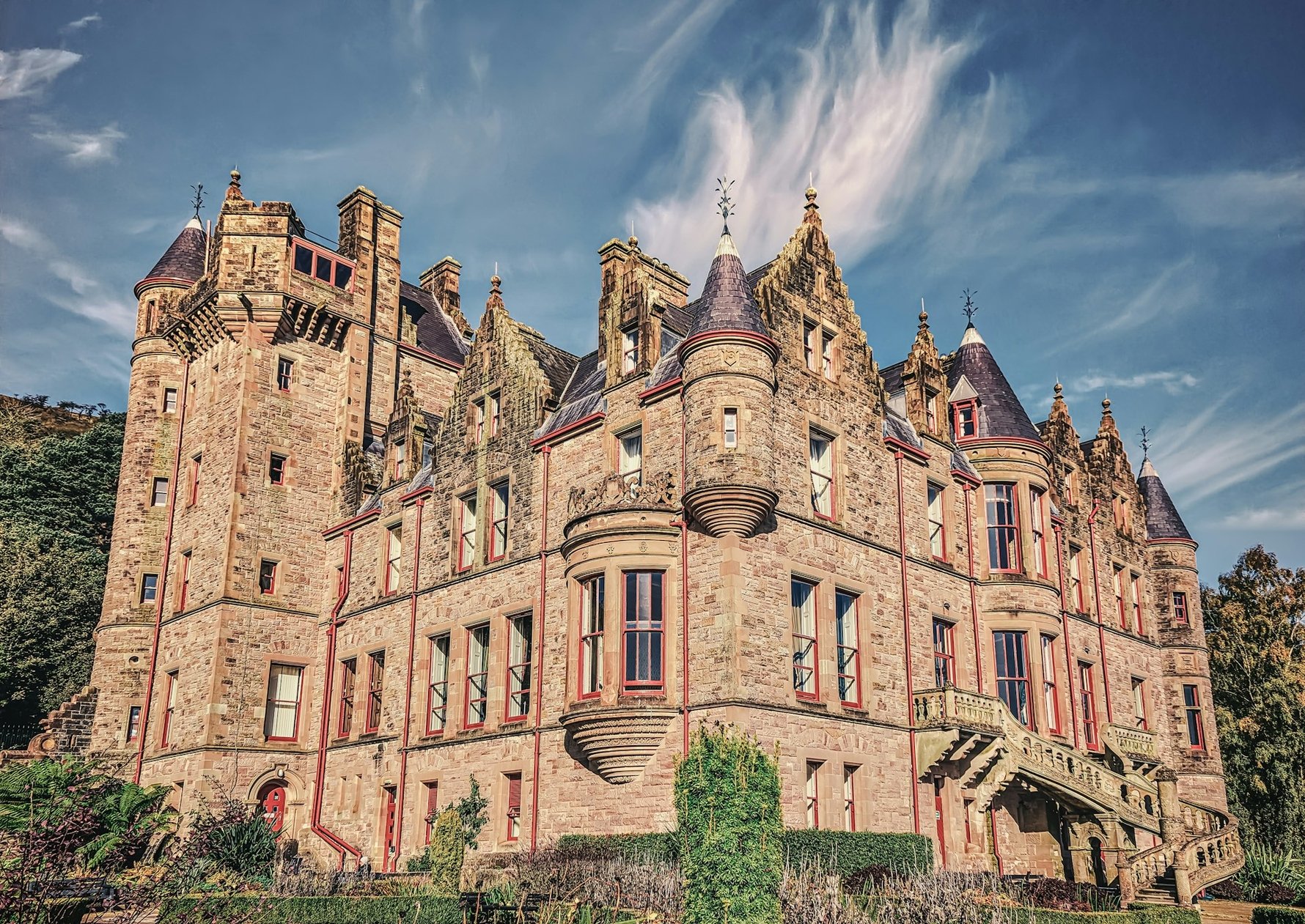
The hill is a country park of 750 acres, free to walk at any time, with trails ranging from a gentle stroll through the castle estate to a 5km circular route to the summit that takes around two hours. Belfast Castle, the Victorian Scottish baronial pile on the lower slopes donated to the city by the Earl of Shaftesbury in 1934, is at the base of the hill and provides a restaurant, exhibition centre and orientating point for the walk. The views from the summit – the full spread of the city, Belfast Lough, the Mourne Mountains to the south and, on a clear day, Scotland and the Isle of Man – are the best available without powered assistance.
Location: Belfast Castle, Antrim Road, Belfast BT15 5GR. Bus routes 1A, 1B, 1C, 1D, 1E from the city centre to the Antrim Road, then a short walk to the castle.
Best time to visit: Clear days for the views. Morning for quieter paths. The summit walk is best done in good footwear; the path is exposed and can be muddy after rain.
Ticket prices: Free. Belfast Castle restaurant and car park are paid separately.
Good to know: Look for the nine cats hidden among the castle gardens – carved or otherwise incorporated into the garden features. The castle also contains a small exhibition on the Donegall family, who owned much of Belfast and built the castle in the 1870s, before it became the city’s problem.
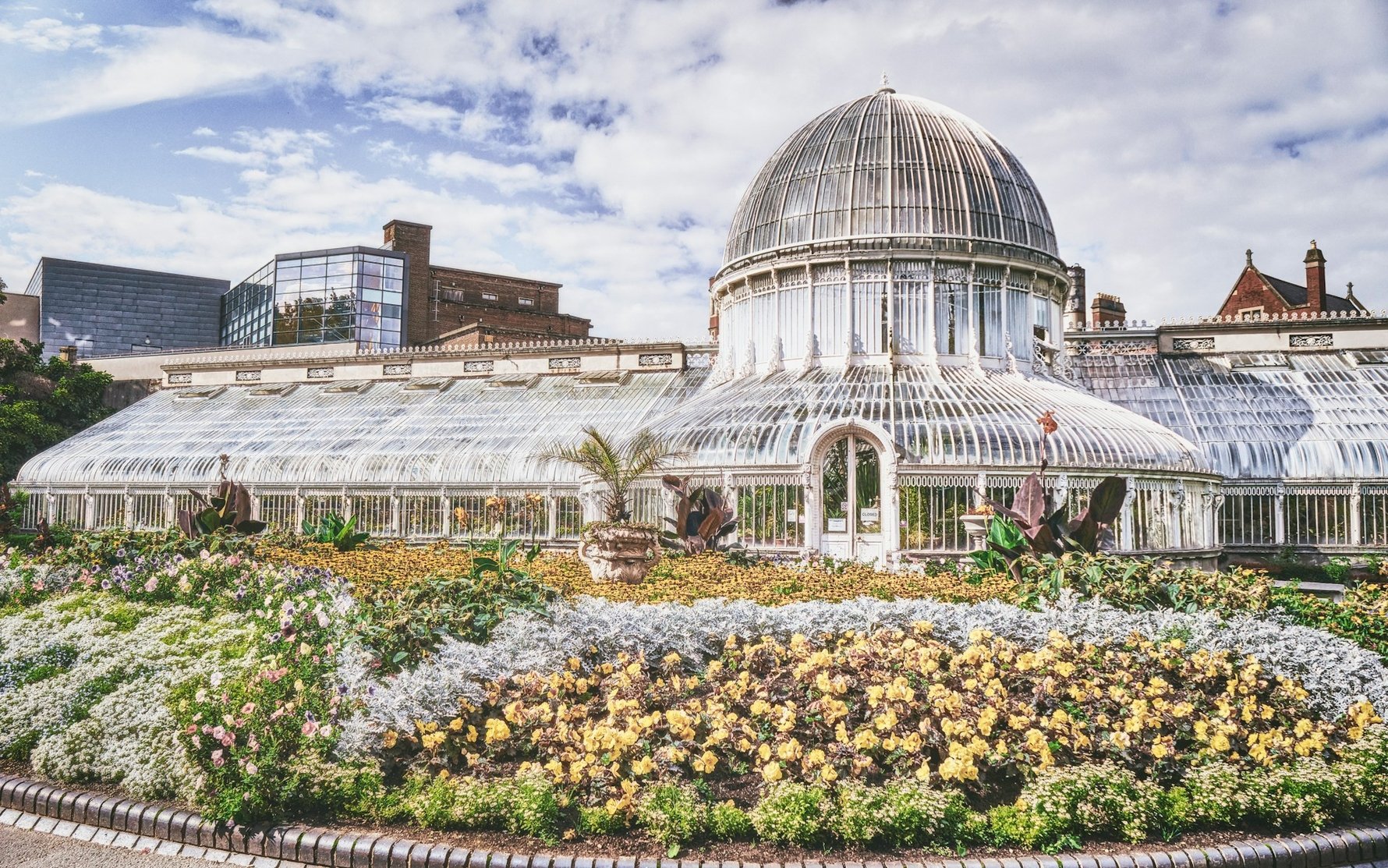
The Botanic Gardens in South Belfast were established in 1828 by the Belfast Botanic and Horticultural Society and opened to the public in 1895, at which point the Palm House – a cast-iron and glass curvilinear greenhouse begun in 1839 and one of the earliest of its type in the world – had already been standing for over fifty years. The Palm House was designed by Charles Lanyon, who designed half of Victorian Belfast, and its curved wings and central dome are among the finest examples of Victorian glasshouse architecture surviving anywhere. The adjacent Tropical Ravine, a sunken glen greenhouse from 1889, was closed for nearly a decade for restoration and reopened in 2018 to considerable acclaim; its lush interior, arranged around a central ravine with a viewing balcony, is a remarkable survival.
The surrounding Queen’s Quarter – the university neighbourhood of terraced Victorian houses, independent cafes, bookshops and restaurants along Botanic Avenue and the Lisburn Road – is the part of Belfast that the city’s residents most consistently recommend. Queen’s University Belfast, founded 1845, is a handsome Tudor Revival building in red brick by – again – Charles Lanyon, whose footprint on this city is essentially inescapable. The Linen Hall Library, the oldest library in Belfast (1788) and an independent institution of considerable character, is a short walk away on Donegall Square and worth the detour.
Location: College Park, Belfast BT7 1LP. A 15-minute walk south of the city centre along University Road.
Best time to visit: Any time. The Palm House and Tropical Ravine are open Tuesday to Sunday and have limited hours; check belfastcity.gov.uk before visiting.
Ticket prices: Free for the gardens. The Palm House and Tropical Ravine are free to enter.
Good to know: The Ulster Museum is at the northern edge of the gardens and makes a natural pairing with the Palm House visit in a single afternoon. The rose garden between the two is excellent in summer.
9. SS Nomadic
The SS Nomadic is the last surviving White Star Line vessel in the world, berthed in the Hamilton Graving Dock adjacent to Titanic Belfast, and it is considerably more interesting than its modest visitor numbers might suggest. Built at Harland & Wolff in 1911 alongside the Olympic and Titanic, the Nomadic was one of two tenders designed to ferry first and second-class passengers from the harbour at Cherbourg out to the great liners, which were too large to dock directly. On 10 April 1912, the Nomadic carried 172 first-class and 274 second-class passengers out to the Titanic for her maiden voyage. Among them were John Jacob Astor IV, Benjamin Guggenheim and Molly Brown. All three survived the sinking in different ways: Astor did not survive at all, Guggenheim famously dressed for dinner and went down with the ship, and Brown helped row survivors to safety and was later portrayed, less than entirely accurately, in a musical.
After the First World War the Nomadic was sold into French service and eventually became a floating restaurant on the Seine before falling into disrepair. Belfast City Council purchased it in 2006, had it towed back to Belfast, and undertook a full restoration before opening it to the public in 2013. The restored first and second-class lounges, the bridge, the engine room and the crew quarters are all accessible. It is a small vessel and takes about an hour to cover, but the combination of the ship’s own story and its direct connection to the Titanic’s last hours makes it quietly compelling.
Location: Hamilton Dock, Queens Road, Titanic Quarter, Belfast BT3 9DT (adjacent to Titanic Belfast).
Best time to visit: Combine with a Titanic Belfast visit; the two are a five-minute walk apart.
Ticket prices: Around £9 for adults. Check titanicbelfast.com/explore/ss-nomadic for current prices. Combination tickets with Titanic Belfast may be available.
Good to know: The ship is moored in the same dock where Titanic herself was fitted out. Standing on the Nomadic’s deck and looking out at that context is worth a moment of reflection that the visit inside the main museum building, for all its quality, cannot quite replicate.
10. Crumlin Road Gaol
Crumlin Road Gaol – the Crum – is the last surviving Victorian prison in Northern Ireland, designed by Charles Lanyon (who, again, designed most of Victorian Belfast) and opened in 1846 on the model of Pentonville Prison in London. Its first inmates were marched in chains from the old gaol in Carrickfergus, eleven miles away, which gives some indication of the Victorian approach to prisoner welfare. Over 150 years of operation it held petty thieves, suffragettes, murderers, United Irishmen, IRA prisoners and loyalist paramilitaries in roughly equal measures of historical significance, with 17 executions carried out between 1854 and 1961. James Connolly, Eamon de Valera and Bobby Sands are among the better-known names on the inmate list. It closed in 1996 and reopened as a visitor attraction in 2012 after extensive restoration.
The tours – self-guided with audio, video and hologram elements, or accompanied by a guide for a longer and more detailed experience – cover the underground tunnel that connects the gaol to the courthouse across Crumlin Road, the C-Wing cells, the condemned man’s cell, the execution chamber and the prison graveyard. The Victorian panopticon wing, with its four tiers of cells radiating from a central circle, is the architectural centrepiece and has served as a filming location for Game of Thrones, Line of Duty and various other productions seeking a suitably imposing Victorian institutional interior. The comparison with Kilmainham Gaol in Dublin is inevitable; the Crum is less atmospherically charged but rather better at telling a complete institutional story.
Location: 53–55 Crumlin Road, Belfast BT14 6ST. A 15-minute walk north of the city centre; bus routes 57 and 12B stop directly outside.
Best time to visit: Weekday mornings for quieter visits. Book guided tours in advance at crumlinroadgaol.com.
Ticket prices: Self-guided around £13; guided tours around £16. Check crumlinroadgaol.com for current prices.
Good to know: The courthouse directly across Crumlin Road from the gaol, connected by the underground tunnel, is a Charles Lanyon building of equal quality and architectural interest. Its future use has been a matter of periodic discussion; check whether it has opened to visitors before your trip.
What else is there to see in Belfast?
The HMS Caroline, a First World War light cruiser moored in the Titanic Quarter and the last surviving warship from the Battle of Jutland (1916), is one of the most significant naval heritage vessels afloat and is open to visitors. It is consistently undervisited relative to its neighbour Titanic Belfast, and is much quieter as a result. The Linen Hall Library on Donegall Square, mentioned above, has been Belfast’s intellectual home since 1788; its Political Collection, covering the Troubles from both sides in over 250,000 items, is the most comprehensive archive of the conflict in existence and can be accessed by members of the public. The Grand Opera House on Great Victoria Street – next door to the Crown Liquor Saloon, which gives the street a Victorian cultural weight it handles very well – is a Frank Matcham theatre of 1895 with an extraordinarily ornate interior; even if you’re not seeing a show, the front of house is accessible during opening hours.
For day trips, the Giant’s Causeway is 90 minutes north along the Antrim Coast Road, the most scenic coastal drive in these islands, and is in a different league from any other geological formation in Northern Ireland. The Antrim Coast Road itself, passing Cushendall, Cushendun and the Glens of Antrim, is reason enough to hire a car or book a coach tour for the day; the Causeway at the end of it is extraordinary but the drive is the better argument. The Mountains of Mourne are an hour south; the Strangford Lough and the Lecale Peninsula an hour southeast, with Downpatrick and the Hill of Down among the finest early Christian sites in Ireland.