There are countries that reward patience, countries that reveal themselves slowly over many visits, and then there is Thailand – which hits you more or less immediately with heat, colour, noise, the smell of lemongrass and exhaust fumes, and a bowl of noodles so good you'll be thinking about it on the plane home. It is one of the most visited countries in Asia for very obvious reasons, and it remains genuinely difficult to have a bad time here if you approach it with even a modest amount of common sense.
That said, the country is large, diverse, and not without its quirks. The gap between a well-planned trip and a vaguely chaotic stumble through the tourist trail is wider than you might expect. This guide covers the essentials: where to go, when to go, how to get around, what the bureaucracy looks like, what to eat, and what to watch out for. Our Bangkok guide goes deep on the capital specifically. Everything else starts here.
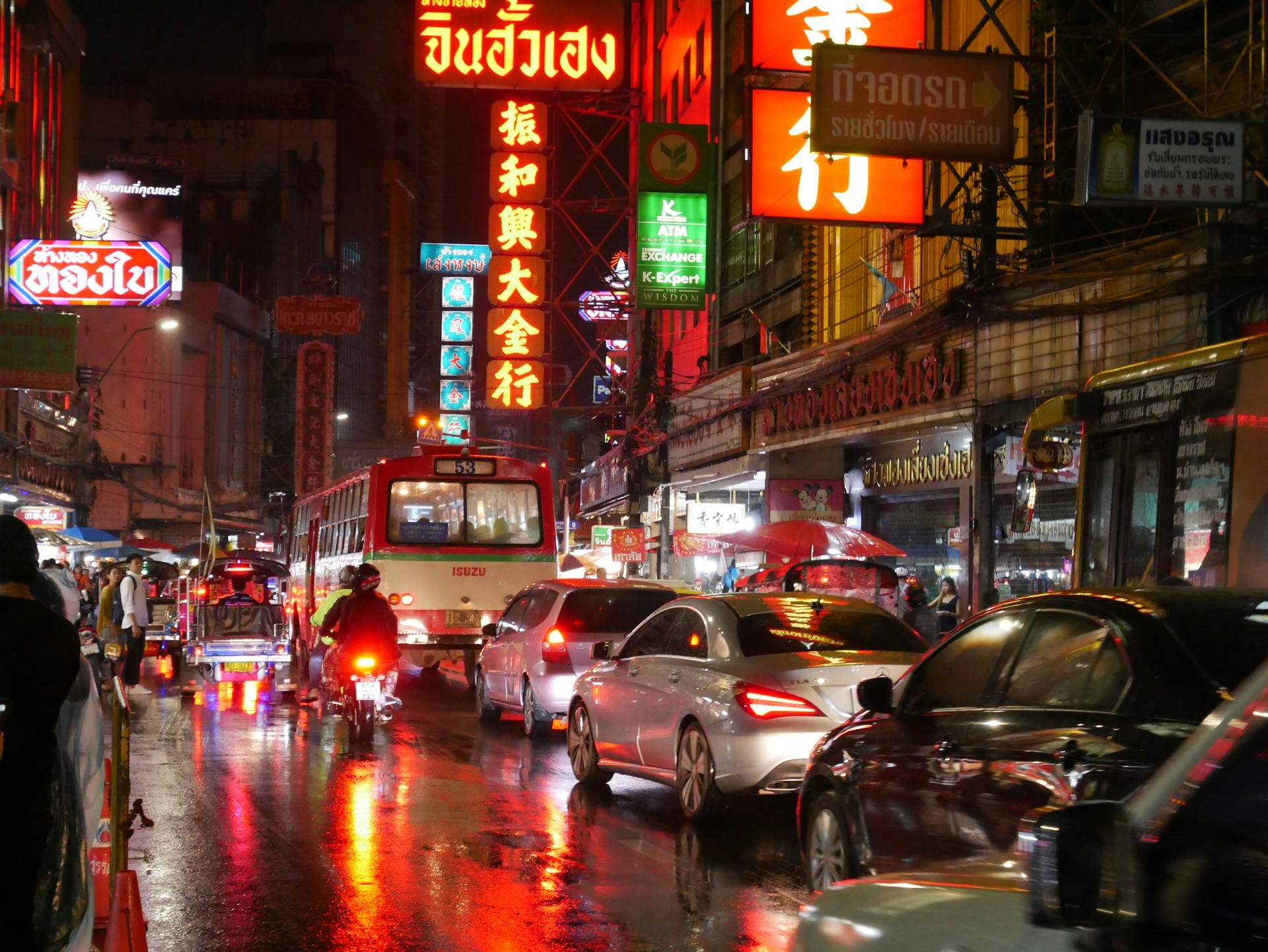
Central Thailand is anchored by Bangkok, one of the great cities of Southeast Asia. It is loud, sprawling, endlessly stimulating, and underrated as a cultural destination by visitors who treat it as a launchpad for beach holidays. The ancient capital of Ayutthaya is an easy day trip north. We cover Bangkok and its surroundings in detail in our dedicated cluster of articles – see Bangkok: Everything You Need to Know.
Northern Thailand is a different country in almost every meaningful sense. The mountains, the cooler air, the temple culture, the food – Chiang Mai is the hub of this region, a city of real substance that rewards slower travel. Chiang Rai and the surrounding highlands offer further depth for those willing to venture further.
Southern Thailand is what most of the world thinks of when it pictures the country: turquoise water, limestone karsts, long-tail boats, and beaches ranging from genuinely spectacular to profoundly overcrowded. The Gulf of Thailand coast (Koh Samui, Koh Phangan, Koh Tao) and the Andaman Sea coast (Phuket, Krabi, Koh Lanta) have very different characters and different weather patterns – a point that catches a surprising number of visitors off guard.
Northeast Thailand (Isan) is the region least visited by foreign tourists and arguably the most authentically Thai. The food is distinct and excellent, the pace is slower, and the Mekong River border with Laos makes for scenery that has nothing to do with the postcard version of the country. It rewards the curious.
As a broad rule, November to February is the cool, dry season across most of the country. Temperatures are more forgiving (Bangkok sits at around 25–30°C rather than the 35°C-plus of April), skies are largely clear, and the major festivals – Loy Krathong in November, and the countdown to Songkran in April – fall within reach of either end. This is also peak season, and prices and crowds reflect that accordingly.
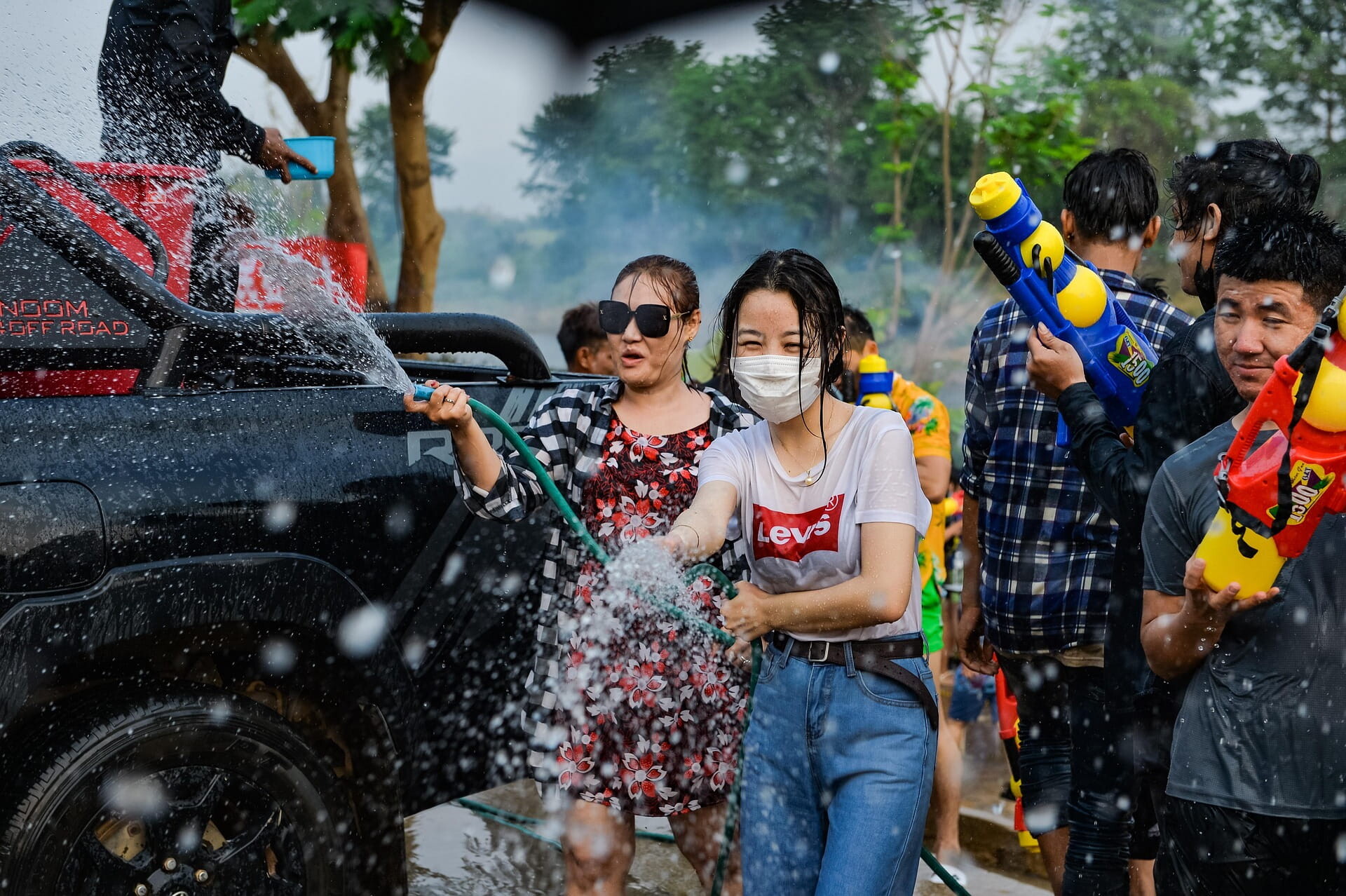
March to May is hot. Genuinely, punishingly hot, particularly in April. Bangkok in April is not a city for the faint-hearted. The upside is that the islands tend to be at their best weather-wise, and Songkran – the Thai New Year water festival celebrated across 13–15 April – is one of the great travel experiences in the region. Our Songkran guide has the full picture.
June to October is the wet season. This does not mean it rains constantly – in Bangkok, rain typically arrives in afternoon downpours and clears quickly. What it does mean is that the southern islands are divided: the Gulf coast (Koh Samui, Koh Phangan) stays relatively dry from about May onwards, while the Andaman coast (Phuket, Krabi) gets the brunt of the southwest monsoon and some beaches effectively close. If you're heading south in the wet season, check which coast you're going to and what the weather looks like for that specific area.
Visa exemption currently applies to citizens of 93 countries, who can enter Thailand for up to 60 days without a visa – a welcome increase from the previous 30-day limit introduced in mid-2024. This covers most major tourism markets including the UK, US, EU member states, Canada, Australia, Japan, and many others. The exemption can be extended once at a local immigration office for an additional 30 days, at a cost of 1,900 THB. Verify your nationality's status at the Thai Ministry of Foreign Affairs before travel, as the list does occasionally change.
A few things worth knowing about the current situation. As of early 2026, Thailand is actively reviewing whether to reduce the exemption back to 30 days, following concerns about long-term visitors using tourist entries to effectively live in the country. No decision has been taken yet, but it's worth checking for updates before you book. Separately, the rules around multiple entries in a calendar year were tightened in late 2025 – officers can now exercise discretion to deny entry to those whose travel history suggests they are using tourist exemptions as a long-term residency strategy. Genuine tourists making a single trip are not affected by this.
The TDAC (Thailand Digital Arrival Card) is now mandatory for all foreign nationals entering Thailand. It replaced the old paper TM6 form in May 2025 and must be completed online at least 72 hours before arrival. The process takes around five minutes and is done through the official Thai immigration portal. Do not use third-party sites that charge for this – the official system is free. You'll receive a QR code to present at immigration.
Visa on Arrival is available for citizens of certain countries not on the exemption list, granting 15 days at the airport. Longer stays, working arrangements, and retirement visas are separate matters and beyond the scope of this guide. All permit fees and entry requirements are current as of early 2026 – verify before you travel, as the situation continues to evolve.
Domestic flights are cheap and plentiful. Bangkok has two airports: Suvarnabhumi (BKK), the main international hub, and Don Mueang (DMK), which handles most low-cost domestic routes (AirAsia, Nok Air, Bangkok Airways). If you're arriving internationally at one and departing domestically from the other, budget significantly more time than you think you need – a transfer between the two airports takes a minimum of 45 minutes in good traffic, and Bangkok traffic is rarely good. Flights to Chiang Mai, Phuket, Koh Samui, and Krabi take under two hours from Bangkok and frequently cost very little if booked in advance.
Trains run between Bangkok and Chiang Mai, and Bangkok down into the south. The overnight sleeper to Chiang Mai is a genuinely pleasant way to travel – book through the State Railway of Thailand website well in advance for the better berths. The network is slower and less extensive than it once was relative to budget aviation, but for those who have the time, it remains the more atmospheric option.
Buses and minivans fill the gaps. Long-distance bus connections from Bangkok's three main terminals (Mo Chit for the north, Sai Tai Mai for the south, Ekkamai for shorter eastern routes) are reliable and cover destinations no airline reaches directly. Minivan services operate on many shorter inter-city routes and are faster than buses if sometimes more chaotic.
Island access is by ferry. The main ferry hubs are Donsak (for Koh Samui and Koh Phangan) and various Andaman piers for Phuket, Krabi, and Koh Phi Phi. Speedboat transfers exist for most islands and are significantly more expensive. Be aware that ferry schedules can become unreliable during peak monsoon season, particularly on the Andaman coast.
Within cities, the options vary by location. Bangkok has an extensive BTS Skytrain and MRT metro system, a public bus network, and river ferry services – it's the subject of a dedicated article. Elsewhere, tuk-tuks, songthaews (shared pick-up trucks), and Grab (the regional equivalent of Uber) cover most practical needs. Renting a motorbike is common on the islands and in Chiang Mai, though this comes with a not-insignificant risk that shouldn't be minimised – hospital emergency rooms across Thailand see a steady stream of foreign tourists who overestimated their confidence on unfamiliar roads.
ATMs are everywhere and reliably stocked. The practical frustration is the fee structure: Thai ATMs charge a flat fee of around 220 THB per withdrawal, regardless of amount, so withdrawing the maximum (usually 20,000–30,000 THB) each time makes more sense than multiple smaller transactions. When the machine offers to convert to your home currency, always decline – this Dynamic Currency Conversion will cost you an additional 5–8% for no benefit.
Exchange booths in tourist areas (including the yellow Superrich booths in Bangkok) often offer better rates than airport counters, which are uniformly poor. If you're bringing foreign currency to exchange, do it after you land rather than before.
The cost of travel in Thailand spans an enormous range. A budget traveller eating street food, using public transport, and staying in guesthouses can manage comfortably on 1,000–1,500 THB per day. A mid-range trip with sit-down restaurants and private transport might run 3,000–5,000 THB. Luxury accommodation at the top end has no ceiling worth quoting.
Pad thai, despite its fame, is one of the harder dishes to execute well on the street and tourist-facing versions are often disappointing. Better to work through the regional specialities: boat noodles (kuay teow reua), holy basil stir-fry (pad kra pao), Isan papaya salad (somtam), the fiery curries of the south, and the more aromatic khantoke dishes of the north. The cuisine shifts significantly from region to region, and eating locally rather than defaulting to the same familiar dishes across the country is one of the better uses of time in Thailand.
Vegetarians and vegans are reasonably well served, particularly in the north and in urban areas. The Thai Vegetarian Festival (held annually in October) is worth timing a visit around if this matters to you.
The royal family commands deep respect and the associated laws are not symbolic – lèse-majesté carries serious consequences and applies to visitors as much as residents. This is not the place for offhand commentary.
The concept of saving face is central to Thai social culture. Public displays of frustration, raised voices, and visible anger are likely to make any situation worse, not better. The Thai capacity for patience is not infinite, but it is considerable, and meeting it in kind tends to produce better outcomes.
Bargaining is appropriate in markets and with independent operators; it is not appropriate in restaurants, convenience stores, or anywhere with a price tag on the wall. Read the situation.
The political situation in Thailand has historically been volatile, with a record of coups and military interventions. The country has been under civilian government since 2023, but the situation is worth keeping an eye on if you plan to stay for an extended period. Register with your country's embassy if doing so.
Power sockets are a mixed bag. Thailand uses Type A, B, and C plugs, and most modern hotels and guesthouses have multi-socket outlets that accept most international plugs without an adapter. It's worth having a universal adapter in any case.
7-Eleven stores are essentially everywhere in Thailand and serve as an informal national institution – cash machines, snacks, phone charging, and occasionally a place to eat something that is more edible than it has any right to be given the circumstances. They are not the most interesting way to experience Thai culture but they are unfailingly useful.
Our Bangkok guides cover the city in detail. Start with Bangkok: Everything You Need to Know, then Getting Around Bangkok for the practical architecture of the place.
That said, the country is large, diverse, and not without its quirks. The gap between a well-planned trip and a vaguely chaotic stumble through the tourist trail is wider than you might expect. This guide covers the essentials: where to go, when to go, how to get around, what the bureaucracy looks like, what to eat, and what to watch out for. Our Bangkok guide goes deep on the capital specifically. Everything else starts here.
The Regions in Brief
Thailand is usefully divided into four broad zones, each with its own character and its own reasons to visit.Central Thailand is anchored by Bangkok, one of the great cities of Southeast Asia. It is loud, sprawling, endlessly stimulating, and underrated as a cultural destination by visitors who treat it as a launchpad for beach holidays. The ancient capital of Ayutthaya is an easy day trip north. We cover Bangkok and its surroundings in detail in our dedicated cluster of articles – see Bangkok: Everything You Need to Know.
Northern Thailand is a different country in almost every meaningful sense. The mountains, the cooler air, the temple culture, the food – Chiang Mai is the hub of this region, a city of real substance that rewards slower travel. Chiang Rai and the surrounding highlands offer further depth for those willing to venture further.
Southern Thailand is what most of the world thinks of when it pictures the country: turquoise water, limestone karsts, long-tail boats, and beaches ranging from genuinely spectacular to profoundly overcrowded. The Gulf of Thailand coast (Koh Samui, Koh Phangan, Koh Tao) and the Andaman Sea coast (Phuket, Krabi, Koh Lanta) have very different characters and different weather patterns – a point that catches a surprising number of visitors off guard.
Northeast Thailand (Isan) is the region least visited by foreign tourists and arguably the most authentically Thai. The food is distinct and excellent, the pace is slower, and the Mekong River border with Laos makes for scenery that has nothing to do with the postcard version of the country. It rewards the curious.
When to Go
Thailand's climate is tropical, and the notion that there is a single best time to visit is slightly misleading – the country is long and thin, and the monsoon does not arrive everywhere at once.As a broad rule, November to February is the cool, dry season across most of the country. Temperatures are more forgiving (Bangkok sits at around 25–30°C rather than the 35°C-plus of April), skies are largely clear, and the major festivals – Loy Krathong in November, and the countdown to Songkran in April – fall within reach of either end. This is also peak season, and prices and crowds reflect that accordingly.
March to May is hot. Genuinely, punishingly hot, particularly in April. Bangkok in April is not a city for the faint-hearted. The upside is that the islands tend to be at their best weather-wise, and Songkran – the Thai New Year water festival celebrated across 13–15 April – is one of the great travel experiences in the region. Our Songkran guide has the full picture.
June to October is the wet season. This does not mean it rains constantly – in Bangkok, rain typically arrives in afternoon downpours and clears quickly. What it does mean is that the southern islands are divided: the Gulf coast (Koh Samui, Koh Phangan) stays relatively dry from about May onwards, while the Andaman coast (Phuket, Krabi) gets the brunt of the southwest monsoon and some beaches effectively close. If you're heading south in the wet season, check which coast you're going to and what the weather looks like for that specific area.
Getting In: Visas and Entry
Thailand is one of the more straightforward countries in the world to enter, though the rules have shifted enough in recent years that it's worth paying attention to the current situation rather than relying on what you last heard.Visa exemption currently applies to citizens of 93 countries, who can enter Thailand for up to 60 days without a visa – a welcome increase from the previous 30-day limit introduced in mid-2024. This covers most major tourism markets including the UK, US, EU member states, Canada, Australia, Japan, and many others. The exemption can be extended once at a local immigration office for an additional 30 days, at a cost of 1,900 THB. Verify your nationality's status at the Thai Ministry of Foreign Affairs before travel, as the list does occasionally change.
A few things worth knowing about the current situation. As of early 2026, Thailand is actively reviewing whether to reduce the exemption back to 30 days, following concerns about long-term visitors using tourist entries to effectively live in the country. No decision has been taken yet, but it's worth checking for updates before you book. Separately, the rules around multiple entries in a calendar year were tightened in late 2025 – officers can now exercise discretion to deny entry to those whose travel history suggests they are using tourist exemptions as a long-term residency strategy. Genuine tourists making a single trip are not affected by this.
The TDAC (Thailand Digital Arrival Card) is now mandatory for all foreign nationals entering Thailand. It replaced the old paper TM6 form in May 2025 and must be completed online at least 72 hours before arrival. The process takes around five minutes and is done through the official Thai immigration portal. Do not use third-party sites that charge for this – the official system is free. You'll receive a QR code to present at immigration.
Visa on Arrival is available for citizens of certain countries not on the exemption list, granting 15 days at the airport. Longer stays, working arrangements, and retirement visas are separate matters and beyond the scope of this guide. All permit fees and entry requirements are current as of early 2026 – verify before you travel, as the situation continues to evolve.
Getting Around
Thailand has a functioning and reasonably affordable transport network, though the best option varies considerably depending on where you're going.Domestic flights are cheap and plentiful. Bangkok has two airports: Suvarnabhumi (BKK), the main international hub, and Don Mueang (DMK), which handles most low-cost domestic routes (AirAsia, Nok Air, Bangkok Airways). If you're arriving internationally at one and departing domestically from the other, budget significantly more time than you think you need – a transfer between the two airports takes a minimum of 45 minutes in good traffic, and Bangkok traffic is rarely good. Flights to Chiang Mai, Phuket, Koh Samui, and Krabi take under two hours from Bangkok and frequently cost very little if booked in advance.
Trains run between Bangkok and Chiang Mai, and Bangkok down into the south. The overnight sleeper to Chiang Mai is a genuinely pleasant way to travel – book through the State Railway of Thailand website well in advance for the better berths. The network is slower and less extensive than it once was relative to budget aviation, but for those who have the time, it remains the more atmospheric option.
Buses and minivans fill the gaps. Long-distance bus connections from Bangkok's three main terminals (Mo Chit for the north, Sai Tai Mai for the south, Ekkamai for shorter eastern routes) are reliable and cover destinations no airline reaches directly. Minivan services operate on many shorter inter-city routes and are faster than buses if sometimes more chaotic.
Island access is by ferry. The main ferry hubs are Donsak (for Koh Samui and Koh Phangan) and various Andaman piers for Phuket, Krabi, and Koh Phi Phi. Speedboat transfers exist for most islands and are significantly more expensive. Be aware that ferry schedules can become unreliable during peak monsoon season, particularly on the Andaman coast.
Within cities, the options vary by location. Bangkok has an extensive BTS Skytrain and MRT metro system, a public bus network, and river ferry services – it's the subject of a dedicated article. Elsewhere, tuk-tuks, songthaews (shared pick-up trucks), and Grab (the regional equivalent of Uber) cover most practical needs. Renting a motorbike is common on the islands and in Chiang Mai, though this comes with a not-insignificant risk that shouldn't be minimised – hospital emergency rooms across Thailand see a steady stream of foreign tourists who overestimated their confidence on unfamiliar roads.
Money
Thailand's currency is the Thai Baht (THB). Cash remains king for most day-to-day transactions – street food, markets, tuk-tuks, smaller restaurants, and many guesthouses operate cash-only. Cards are accepted in hotels, larger restaurants, shopping centres, and on Grab, but you'll need local currency more often than in many European destinations.ATMs are everywhere and reliably stocked. The practical frustration is the fee structure: Thai ATMs charge a flat fee of around 220 THB per withdrawal, regardless of amount, so withdrawing the maximum (usually 20,000–30,000 THB) each time makes more sense than multiple smaller transactions. When the machine offers to convert to your home currency, always decline – this Dynamic Currency Conversion will cost you an additional 5–8% for no benefit.
Exchange booths in tourist areas (including the yellow Superrich booths in Bangkok) often offer better rates than airport counters, which are uniformly poor. If you're bringing foreign currency to exchange, do it after you land rather than before.
The cost of travel in Thailand spans an enormous range. A budget traveller eating street food, using public transport, and staying in guesthouses can manage comfortably on 1,000–1,500 THB per day. A mid-range trip with sit-down restaurants and private transport might run 3,000–5,000 THB. Luxury accommodation at the top end has no ceiling worth quoting.
Food
We'll state the obvious: Thai food is one of the great reasons to visit. The more useful thing to know is that the food on the street and in market stalls is frequently better than what's served in the restaurants built for tourists. A busy lunch stall outside an office building, a night market, a plate of khao man gai (poached chicken over fragrant rice) from a vendor who has made nothing else for 30 years – this is what Thai cooking at its best looks like.Pad thai, despite its fame, is one of the harder dishes to execute well on the street and tourist-facing versions are often disappointing. Better to work through the regional specialities: boat noodles (kuay teow reua), holy basil stir-fry (pad kra pao), Isan papaya salad (somtam), the fiery curries of the south, and the more aromatic khantoke dishes of the north. The cuisine shifts significantly from region to region, and eating locally rather than defaulting to the same familiar dishes across the country is one of the better uses of time in Thailand.
Vegetarians and vegans are reasonably well served, particularly in the north and in urban areas. The Thai Vegetarian Festival (held annually in October) is worth timing a visit around if this matters to you.
Culture and Customs
Thailand is a Buddhist country, and the temples are not just for tourists – dress codes apply and should be respected. Shoulders and knees need to be covered when entering a wat; many larger temples keep wraps available for the underprepared, though not all do. Remove shoes before entering any temple building.The royal family commands deep respect and the associated laws are not symbolic – lèse-majesté carries serious consequences and applies to visitors as much as residents. This is not the place for offhand commentary.
The concept of saving face is central to Thai social culture. Public displays of frustration, raised voices, and visible anger are likely to make any situation worse, not better. The Thai capacity for patience is not infinite, but it is considerable, and meeting it in kind tends to produce better outcomes.
Bargaining is appropriate in markets and with independent operators; it is not appropriate in restaurants, convenience stores, or anywhere with a price tag on the wall. Read the situation.
Elephant Tourism
This warrants its own note. Elephant riding remains widespread in Thailand and should be avoided. The training process required to make elephants compliant for riding is cruel, regardless of how the venue presents itself. Ethical elephant sanctuaries – where animals are not ridden, where visitor numbers are limited, and where the focus is on observation and care rather than performance – exist and are the right alternative. Do your research before booking: "sanctuary" in the name is no guarantee of the practice. ElephantVoices and similar organisations publish guidance on what to look for.Safety
Thailand is generally safe for tourists, and violent crime against visitors is genuinely rare. The risks that do exist are worth naming plainly. Petty theft – bag snatching and phone grabs – happens in crowded areas and on motorbikes. Drink spiking has been reported at bars in the major tourist nightlife zones. Scams targeting tourists near major attractions (the gem scam, the tuk-tuk "closed temple" detour, the overly friendly stranger with an unmissable deal) have been running for decades and remain active; if something feels contrived, it probably is. Road accidents involving rental motorbikes account for a significant proportion of tourist injuries and deaths in Thailand each year – this is worth factoring into the romantic appeal of scooting around Koh Phangan at sunset.The political situation in Thailand has historically been volatile, with a record of coups and military interventions. The country has been under civilian government since 2023, but the situation is worth keeping an eye on if you plan to stay for an extended period. Register with your country's embassy if doing so.
Connectivity and Practicalities
SIM cards from the three main carriers (AIS, TrueMove, DTAC) are available at all major airports and in convenience stores throughout the country. Tourist SIM packages offering generous data allowances for a week or a month are inexpensive and reliable. Take your passport – it's required for registration. eSIM options are increasingly available for those who prefer not to swap physical cards.Power sockets are a mixed bag. Thailand uses Type A, B, and C plugs, and most modern hotels and guesthouses have multi-socket outlets that accept most international plugs without an adapter. It's worth having a universal adapter in any case.
7-Eleven stores are essentially everywhere in Thailand and serve as an informal national institution – cash machines, snacks, phone charging, and occasionally a place to eat something that is more edible than it has any right to be given the circumstances. They are not the most interesting way to experience Thai culture but they are unfailingly useful.
Where to Start
If this is your first visit and you have ten days to two weeks, a reasonable route is Bangkok for three or four days, then either north to Chiang Mai or south to the islands, depending on what you're after. Bangkok deserves more time than most travellers give it, and treating it purely as a transit point is a mistake worth actively avoiding.Our Bangkok guides cover the city in detail. Start with Bangkok: Everything You Need to Know, then Getting Around Bangkok for the practical architecture of the place.