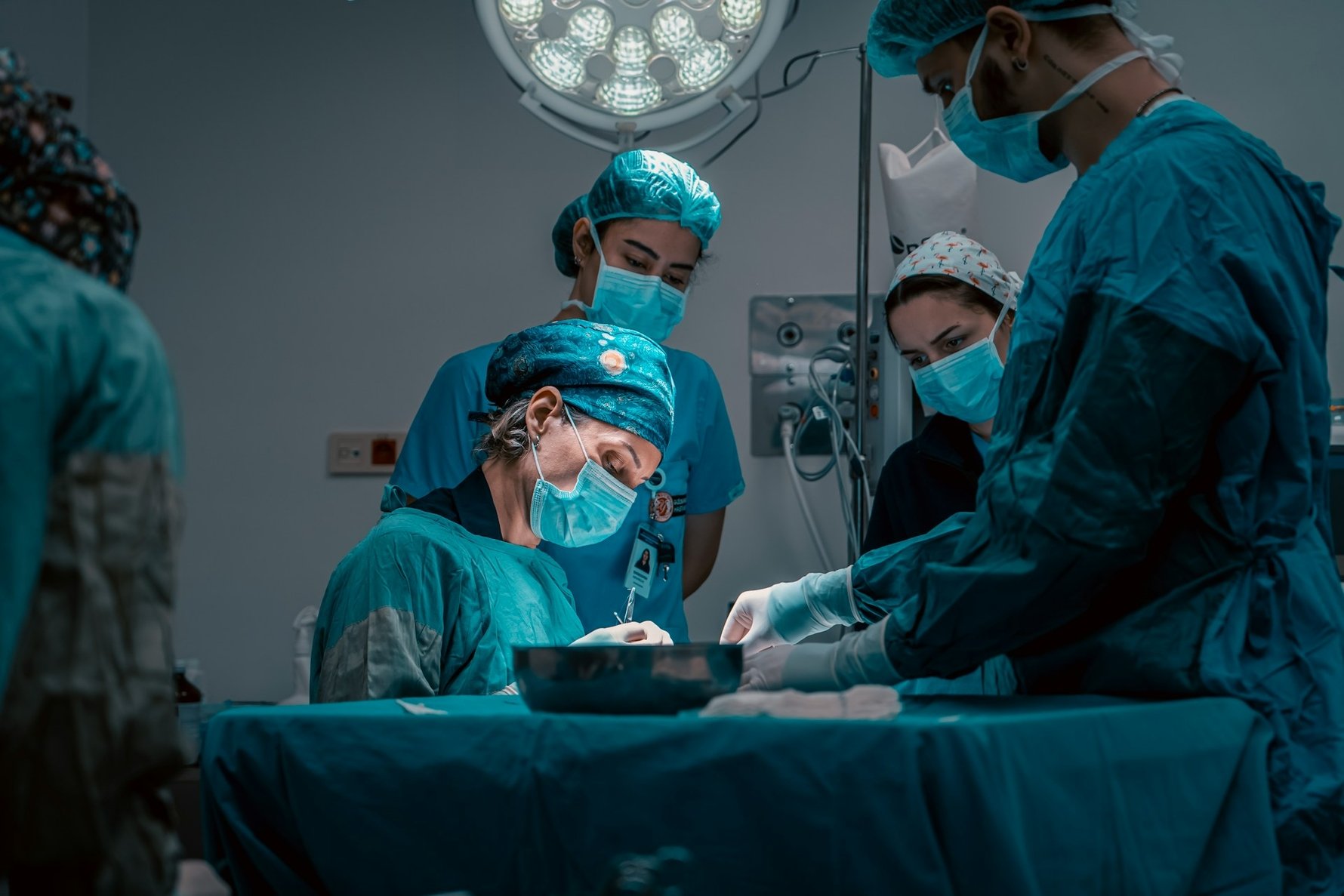
Every year, around two million people board a plane to Turkey not for the baklava (though that's a fine bonus), but for a nose job, a new hairline, a set of veneers, or a gastric sleeve. They land, they get cut open or lasered or implanted, they spend a few days convalescing somewhere considerably sunnier than home, and they fly back looking – and feeling – noticeably different. Often for a fraction of what the same procedure would have cost them in the UK, the US, or Western Europe.
Turkey didn't stumble into this by accident. It has spent two decades deliberately building one of the most comprehensive medical tourism ecosystems on the planet: accredited hospitals, internationally trained surgeons, all-inclusive packages that bundle flights, transfers, accommodation and aftercare into a single price, and a government that actively promotes health tourism as a strategic economic pillar. The result is a country that now handles an estimated 60–70% of all hair transplants performed globally, and where cosmetic and plastic surgery alone accounts for nearly 40% of its medical tourism market.
Is it all smooth sailing? Not always. Turkey's medical tourism sector has a gleaming top tier and a significantly murkier bottom one, and knowing the difference matters rather a lot when someone is about to operate on your face. This guide covers everything you need: what's available, what it costs, which cities to consider, how to find reputable providers, and what the red flags look like. Consider it the honest friend's version – the one who's done the research so you don't have to.
The short answer is cost. A rhinoplasty that runs $8,000–$15,000 in the United States or UK costs $2,500–$4,000 in Turkey. A gastric sleeve that would set you back $20,000–$35,000 at home can be done for $3,500–$6,000. Hair transplants – the procedure that practically built Turkey's medical tourism reputation – range from $1,500–$4,000 all-inclusive, versus $10,000–$25,000 in Western markets. Across the board, patients are typically saving 50–80% compared to private rates in their home countries.
But cost alone doesn't explain why Turkey has pulled ahead of other affordable destinations like Thailand, India, or Mexico. A few other factors are doing a lot of work:
Geography. Turkey sits at the junction of Europe, the Middle East, and Central Asia. Most European cities are two to four hours away by direct flight. Istanbul's two international airports – Istanbul Airport and Sabiha Gökçen – handle a combined passenger load that puts most European hubs to shame, with Turkish Airlines operating the world's most extensive international route network, including direct connections to over a dozen US gateway cities.
Accreditation. As of early 2025, Turkey holds JCI (Joint Commission International) accreditation for 40 health institutions – 25 of them in Istanbul alone. JCI is the gold standard of international healthcare quality certification, and the same benchmark used by top hospitals in the United States. Major names like Acibadem, Memorial, and Florence Nightingale operate facilities that genuinely rival their Western counterparts in equipment, protocols, and clinical outcomes. Additionally, two hospitals within the Koç Healthcare group became the first institutions in Europe to join the Mayo Clinic Care Network, as of September 2024.
Volume and expertise. Turkish surgeons – particularly in aesthetic procedures – perform extremely high volumes. A hair transplant clinic in Istanbul might handle 5,000 cases a year. A leading rhinoplasty surgeon may operate daily. High volume, when combined with genuine skill, produces outcomes that experienced surgeons in lower-volume Western practices simply can't match on the learning curve alone. Many Turkish specialists also trained in Europe or the United States and brought that expertise home.
The package model. Turkey pioneered the all-inclusive medical tourism package in a way that most competitors haven't replicated. Flight assistance, airport pickup, clinic-adjacent hotel accommodation, translation services, post-op nursing, and follow-up consultations are often bundled into the procedure price. For someone navigating a foreign healthcare system from scratch, this removes enormous friction.
What Procedures Are Available
Turkey's medical tourism offering spans considerably more than hairlines and noses. Here's an overview of the main categories, with more detailed spoke pages linked below.
Hair Transplants
Turkey's single largest draw. Istanbul alone is home to more than 650 dedicated hair transplant clinics, around 360 of which hold Ministry of Health certification. The country performs an estimated 1,500 hair transplants per day – making it, by a significant margin, the global leader. Techniques include FUE (Follicular Unit Extraction), DHI (Direct Hair Implantation), and Sapphire FUE, with newer methods incorporating stem cell therapy and OxyCure. Costs: $1,500–$4,000 all-inclusive. → See our full guide: Hair Transplants in Turkey
Cosmetic & Plastic Surgery
Rhinoplasty (nose jobs) is Turkey's flagship cosmetic procedure – Istanbul surgeons have quietly become some of the most sought-after in the world for ethnic and revision rhinoplasty specifically. Beyond noses: breast augmentation, liposuction, abdominoplasty (tummy tuck), facelifts, blepharoplasty (eyelid surgery), and BBL (Brazilian butt lift) are all widely available. Costs vary considerably by procedure. → See our full guide: Cosmetic Surgery in Turkey
Dental Tourism
Veneers, implants, crowns, root canals, teeth whitening – Turkey has developed a substantial dental tourism sector, particularly among British and Irish visitors. The term "Turkey teeth" has entered the popular lexicon (for better and worse – see the caveats section). Implants that cost £2,500+ per tooth in the UK can run under £400 in Istanbul or Antalya. → See our full guide: Dental Tourism in Turkey
Bariatric & Weight Loss Surgery
Gastric sleeve, gastric bypass, and gastric balloon procedures are among the fastest-growing segments. NHS waiting lists for bariatric surgery in the UK can stretch beyond 18 months; private UK costs run £8,000–£15,000. Turkish packages for the same procedures start around £2,500–£4,500, in JCI-accredited hospitals with internationally trained bariatric teams. → See our full guide: Bariatric Surgery in Turkey
Eye Surgery
LASIK, LASEK, and other refractive procedures are available at significant savings, particularly in Istanbul and Ankara. Some specialist eye clinics hold international accreditation and use equipment equivalent to leading Western providers.
Oncology & Specialist Treatments
Turkey has invested heavily in oncology infrastructure, with proton therapy, CAR-T therapy, and robotic surgery platforms available at major centres at 40–70% below US prices. This is a specialist area where accreditation and surgeon credentials matter enormously; it warrants careful independent research beyond any directory.
IVF & Fertility
A growing segment, particularly for patients from countries with restrictive fertility regulations. Turkish law permits IVF for married couples. Some procedures available in Turkey (e.g. using your own eggs and sperm) are not subject to the same legal restrictions as egg donation or surrogacy, which remain prohibited. Patients should verify the legal status of their specific procedure under Turkish law before travelling.
Where to Go: Istanbul, Antalya & Beyond
Turkey's medical tourism geography is not evenly distributed. Two cities handle the overwhelming majority of international patients, and they serve somewhat different markets.
Istanbul is the undisputed centre of gravity. It handles the lion's share of hair transplant procedures globally, houses most of Turkey's JCI-accredited hospitals, and is home to the country's leading cosmetic surgery, dental, oncology, and bariatric specialists. For almost any elective procedure, Istanbul should be your starting point for research. It's also a world-class city to recover in – with enough restaurants, history, and scenery to make a post-op week considerably less grim than staring at four walls would suggest.
Antalya has positioned itself as the leisure-and-recovery capital of Turkish medical tourism. Lower costs than Istanbul (particularly for accommodation), a resort-city infrastructure that caters to long-stay visitors, and a growing cluster of internationally accredited clinics make it a strong choice, particularly for dental procedures and cosmetic surgeries with longer recovery periods. The weather helps too.
Ankara hosts several major hospital groups and university medical centres, including JCI-accredited facilities. Less frequented by international patients than Istanbul or Antalya, but worth considering for specialist treatments where a specific hospital or surgeon is the primary draw.
Izmir has a small but growing medical tourism presence, particularly in dental and cosmetic procedures, supported by a pleasant coastal city environment and good flight connections from Europe.
The All-Inclusive Package: What's Typically Included
One of Turkey's most effective competitive advantages is the bundled medical tourism package. Understanding what's inside – and what might quietly not be – is worth spending a moment on before you commit.
Most reputable Turkish medical tourism packages include:
The procedure itself (surgeon's fee, anaesthesia, operating theatre, clinical staff)
Pre-operative consultations and standard blood tests / medical assessments
Hospital or clinic accommodation for the required post-operative period
Hotel accommodation for additional recovery days (typically 3–7 nights depending on procedure)
Airport transfers to and from clinic / hotel
A dedicated patient coordinator or translator for the duration
Post-operative medications for the initial recovery phase
A follow-up consultation before departure
What packages sometimes do not include – and where you should ask explicit questions:
Flights (usually booked separately, though some agencies assist with this)
Revision procedures if results are unsatisfactory
Extended-stay costs if recovery takes longer than planned
Specific implant brands or premium product upgrades
Remote follow-up consultations after you return home
Get everything in writing. Ask specifically: what happens if there's a complication? What is the revision policy? Is there a dedicated aftercare contact once you're back home? Reputable clinics will answer these questions clearly. Clinics that deflect or get vague are telling you something.
How to Choose a Clinic or Hospital: The Honest Checklist
This is where the savings-versus-safety calculus matters most. Turkey's medical sector has a genuinely excellent top tier and a considerably more variable lower tier – and the price gap between them is not always as large as you might expect. The clinics cutting corners are often not dramatically cheaper than the reputable ones. They're just less careful about what they're cutting.
Check accreditation – and verify it independently. JCI accreditation is the benchmark for hospital-level care. The official JCI directory is searchable at jointcommissioninternational.org. If a clinic claims JCI status but can't provide current documentation, or doesn't appear in the directory, walk away. Turkish Ministry of Health certification is the baseline requirement for all facilities treating international patients – not a premium credential.
Research the surgeon, not just the clinic. Accreditation covers the facility; it says less about the individual who'll be operating. Ask for your surgeon's specific qualifications, their training background, their procedure volume, and their complication rate if disclosed. Look for board certification from recognised Turkish medical bodies (e.g. the Turkish Plastic, Reconstructive and Aesthetic Surgery Association, or equivalent specialty boards). For hair transplants specifically, look for ISHRS (International Society of Hair Restoration Surgery) membership.
Request before-and-after photos – specifically from the surgeon who will perform your procedure. Not the clinic's general portfolio. Your surgeon's portfolio. Clinics that can't or won't provide this are a red flag.
Insist on a video consultation before booking. Any clinic worth its accreditation offers pre-operative video consultations with the actual surgeon. If the consultation is with a coordinator who then "passes it to the doctor," or if you can't speak directly with your surgeon before committing, reconsider.
Read independent reviews, not just testimonials. Trustpilot, Google Reviews, RealSelf, and patient forums like Reddit's r/HairTransplants or r/PlasticSurgery have unfiltered patient experiences. Instagram before-and-afters can be informative but are curated. Look for patterns across many reviews, not individual outliers.
Understand the bait-and-switch risk. Cases of patients arriving for one procedure and being told (after payment) that the surgeon recommends something different are documented. Get the procedure, the surgeon's name, and the clinic's revision and refund policy confirmed in writing before any money changes hands.
Safety, Risks & What Honest Due Diligence Looks Like
It would be dishonest to write a guide to medical tourism in Turkey without addressing this plainly: things do go wrong. The UK Foreign Office has recorded 28 deaths among British nationals following elective procedures in Turkey since 2019. NHS admissions for complications following overseas surgery rose 94% in the same period. An October 2024 editorial in the journal Obesity Surgery found that 42% of discharge notes from Turkish bariatric providers omitted critical operative details, creating aftercare problems once patients returned home.
These figures don't mean Turkey is uniquely dangerous. Complications occur in every country, including your own. What they mean is that the risks specific to medical tourism – unfamiliar regulatory environment, language barriers, the pressure to fly home before full recovery, limited follow-up once you're back – are real and require active management, not passive trust.
The honest calculus: a well-researched procedure at a JCI-accredited Istanbul hospital with a board-certified specialist is likely to be as safe as the equivalent procedure in a reputable Western clinic. A rushed booking at a budget clinic based on a social media ad is not. The variable is not Turkey; it's the specific facility and surgeon you choose.
A few practical safety steps that separate informed patients from unlucky ones:
Get specialist travel insurance that covers planned medical procedures. Standard travel insurance typically excludes them. You want a policy that covers surgical complications, extended stays, and medical repatriation.
Tell your home GP before you travel. Share your surgical details in writing, so your home healthcare system has context if they need to treat complications on your return.
Don't fly immediately after major surgery. Deep vein thrombosis risk is elevated post-operatively. Follow your surgeon's specific guidance on the minimum recovery period before flying – and build extra buffer if you can.
Confirm who you call if something goes wrong after you're home. Does the clinic have an aftercare line? Will the surgeon do a video follow-up? Get this in writing before you travel.
The Honest Word on Costs (and What "Cheap" Actually Means Here)
The cost advantage is real. Savings of 50–70% versus Western private healthcare are achievable without compromising on quality at the top end of the Turkish market. Several factors explain the gap that have nothing to do with cutting corners: lower labour costs, lower property costs, a historically weak Turkish lira (though inflation has complicated this recently), and government subsidies for the health tourism sector.
A few things worth knowing before you assume rock-bottom price equals rock-bottom quality:
The Turkish lira situation. Turkey's inflation peaked at 85% in 2022 and has moderated but remains elevated. Many clinics now quote in euros or US dollars specifically to insulate patients from currency volatility – which is good for planning but means the lira depreciation advantage is partly priced out.
Very low prices are often a warning sign. In hair transplants especially, the difference between a $1,500 package and a $3,000 package from a comparable clinic often comes down to whether a qualified surgeon is performing the procedure or whether technicians are doing the bulk of the work unsupervised. In a field described by some specialists as having a "wild west" atmosphere among lower-tier clinics, price is an imperfect but meaningful signal.
Factor in the full cost. Flights, travel insurance, accommodation beyond the package, time off work, and the potential cost of revision procedures (either there or at home) should all go into your real-world comparison against home-country pricing. For most people the savings still hold up comfortably; it's just worth doing the maths honestly.
A Quick Note on the HealthTurkey Portal
The Turkish government operates HealthTurkey (healthturkey.gov.tr), an official state-backed portal designed to connect international patients with certified healthcare providers. It's a useful starting reference point for verifying that a facility holds Ministry of Health authorisation to treat international patients. It does not replace independent research into individual surgeons and clinic quality, but it at least establishes a baseline: if a clinic isn't on it, that's worth investigating.
Frequently Asked Questions
Is medical tourism in Turkey safe?
At accredited facilities with qualified surgeons, yes – outcomes are generally comparable to equivalent procedures in Western Europe or the US. The risk isn't Turkey per se; it's the quality of the specific facility and surgeon, which varies enormously. Do your homework on both.
Do I need a visa to travel to Turkey for medical treatment?
Visa requirements depend on your nationality. Many nationalities (including UK, US, and most EU citizens) can obtain an e-Visa online before travel. Some nationalities may wish to apply for a medical visa, which can occasionally ease administrative processes at hospital entry. Always verify current requirements via the official Turkish e-Visa portal (evisa.gov.tr) or your nearest Turkish consulate before booking.
Will my health insurance cover procedures in Turkey?
In most cases, standard domestic health insurance will not cover elective procedures abroad. Some international health plans and a small number of European insurers (particularly Scandinavian ones) have begun including referrals to JCI-accredited Turkish facilities. Check with your provider. For the procedure itself, dedicated medical travel insurance is strongly recommended – it's a separate product from standard travel insurance.
How do I verify a hospital's JCI accreditation?
Search the official JCI directory at jointcommissioninternational.org. The listing will show current accreditation status and the date it was last awarded. Accreditation is renewed every three years, so check the date is current. Do not rely solely on a clinic's own website claim.
What's the typical recovery time before flying home?
It depends heavily on the procedure. Hair transplants typically allow return flights within 3–5 days. Minor cosmetic procedures (e.g. rhinoplasty, blepharoplasty) generally require 7–14 days before flying. Bariatric surgery, major plastic surgery, or any procedure involving general anaesthesia for extended periods warrants a longer stay – your surgeon should give specific guidance. Deep vein thrombosis risk on flights post-surgery is a genuine concern; don't minimise recovery time to save on an extra night's hotel.
Can I get a consultation before committing to a clinic?
Yes, and you should. Most reputable Turkish clinics offer free video consultations before any commitment. If a clinic won't connect you with the actual surgeon before booking, or pushes you to pay a deposit before a consultation, treat that as a red flag.
What happens if something goes wrong after I'm home?
This is one of the more complicated aspects of medical tourism. Recourse against a Turkish clinic from abroad is difficult. Legal action is possible but expensive and slow. The practical solution is to choose a clinic that offers documented aftercare and remote follow-up, ensure your home GP is briefed on your procedure, and carry adequate medical travel insurance. If you need revision surgery at home, your home country's healthcare system may treat complications but is unlikely to cover the cost of the original elective procedure.