Istanbul is, by any reasonable measure, the hair transplant capital of the world. Over a million international patients travel to Turkey annually for hair restoration, and the vast majority of them pass through Istanbul. The city performs more hair transplants per day than most countries manage per month. It has produced some of the most experienced follicular technicians and surgeons on the planet – people who have spent careers refining the precision and artistry that distinguish a great result from a merely adequate one.
It also has a serious problem with unlicensed clinics.
Estimates suggest that as many as six in ten hair transplant clinics operating in Istanbul do so illegally – without the proper Ministry of Health licences, in unsuitable premises, and with procedures performed by technicians rather than qualified surgeons. This is not scaremongering. It is documented, it is a known issue within the industry, and it is the reason that choosing a clinic in Istanbul requires more due diligence than you might expect in a city with such a prominent medical tourism reputation.
The good news: the licensed, reputable tier of Istanbul's hair transplant market is genuinely world-class. This guide will help you find it.
Turkey became a global hair transplant hub through a combination of factors that converged in Istanbul more than anywhere else: a concentration of surgeons who trained in the early FUE era and accumulated extraordinary case volumes; competitive pricing driven by lower operational costs and favourable exchange rates; a well-developed medical tourism infrastructure of coordinators, packages, and English-speaking support staff; and sheer reputation compounding itself as more international patients arrived, more surgeons specialised, and more techniques were refined locally.
Istanbul surgeons at leading clinics routinely perform 300–500 or more procedures per year – a case volume that simply does not exist in most Western markets, where even busy practices might see a fraction of that. Volume builds expertise in a way that no amount of training alone replicates. The city is also where several modern hair transplant innovations – including the widespread adoption of Sapphire FUE and the refinement of DHI technique – were pioneered and standardised before spreading elsewhere.
Packages at reputable Istanbul clinics typically include the procedure, pre-operative tests, hotel accommodation (usually four or five nights in a partner hotel), VIP airport transfers, post-operative care kit, first wash at the clinic, and ongoing remote follow-up. All-inclusive pricing for 2,000–4,000 grafts generally falls in the €2,000–€5,000 range depending on technique and clinic tier.
The Hair Mill Problem: What It Is and Why It Matters
A "hair mill" is the industry term for a clinic that operates on an assembly-line model – processing ten or more patients per day, running multiple operating rooms simultaneously, and delegating most or all of the surgical work to technicians rather than qualified surgeons. The named surgeon may exist, may even be on-site, but spends five or ten minutes with each patient while technicians handle extractions, incisions, and implantation.
A "ghost clinic" is worse: facilities operating without a licensed surgeon present at all, sometimes in residential buildings or offices not registered as medical facilities, performing what is legally a surgical procedure without any qualified medical oversight.
Under Turkish law, only a certified doctor may create incisions during a hair transplant. Technicians and assistants may support the procedure but cannot legally perform the surgical steps independently. Violations can result in facility closure and criminal charges. In practice, enforcement has historically been inconsistent, which is how the problem grew.
The consequences for patients treated at these facilities range from poor cosmetic results – unnatural hairlines, low graft survival, patchy growth – to genuine medical harm: infections, permanent donor area damage from overharvesting, and scarring. Donor area depletion is particularly serious: most patients only have 4,000–7,000 grafts available in a lifetime. A clinic that overharvests aggressively to meet a promised graft count eliminates future options permanently.
Some of the worst offenders are also some of the most heavily marketed. A large social media following, a celebrity endorsement, or a polished website is not evidence of clinical quality. A clinic running 30 patients a day and spending heavily on influencer campaigns has to fund that operation somehow.
Ministry of Health operating licence – verified, not assumed. Every legitimate hair transplant clinic in Istanbul must hold a Ministry of Health Hair Transplant Unit Operating Licence and be registered on the national healthcare system. Ask for documentation. A reputable clinic will produce it without hesitation. You can also cross-reference via the Turkish Ministry of Health's public registry.
A named surgeon with verifiable credentials. Find out the name of the specific surgeon who will perform your procedure – not the clinic's medical director or brand ambassador, but the person who will physically be in the room. Look them up. Check their board certification and membership of professional bodies such as the International Society of Hair Restoration Surgery (ISHRS). As of mid-2025 there are only 16 ISHRS-registered surgeons in Turkey, which is a striking figure given the size of the market – ISHRS membership is not the only quality signal, but its absence narrows down who you can verify independently.
Confirmed surgeon involvement in your procedure. Get explicit written confirmation of what the surgeon personally performs: hairline design, incisions, and supervision of extractions and implantation. "The doctor will be present" is not the same as "the doctor will perform the procedure." The former is a minimum legal requirement; the latter is what you are paying for.
A proper pre-operative assessment, not a booking form. Your consultation should include a scalp analysis, donor area assessment, a realistic graft count based on your individual donor capacity, and a discussion of your hair loss trajectory (future progression matters – a hairline designed without accounting for future loss can look unnatural within a decade). Any clinic willing to book surgery based on a few photos sent via WhatsApp, without a detailed clinical evaluation, should be declined.
No "unlimited graft" promises. This is a classic hair mill marketing tactic. Graft counts are constrained by your donor area – extracting more than the density can safely sustain causes permanent damage. A clinic promising unlimited grafts in a single session is either planning to overharvest your donor area or padding the count with follicles that will not survive. Neither is acceptable.
Realistic pricing. All-inclusive packages from reputable Istanbul clinics currently start at roughly €2,000 for standard FUE and rise to €5,000+ for premium DHI or larger sessions. Packages quoted below €1,500–€1,700 for a full procedure are almost certainly cutting corners somewhere that will show up in your result. The cheapest quote is rarely the value option when donor hair is finite and the procedure is permanent.
Transparent aftercare and follow-up protocol. A good clinic will provide written post-operative instructions, perform your first wash the following day, and maintain contact with you through the growth timeline – typically requesting photos at one, three, six, and twelve months. A clinic that goes quiet after payment is not a clinic invested in your result.
Most international patients stay two to three days in Istanbul for a standard hair transplant, though some clinics recommend an additional rest day before flying. The typical schedule:
Day of arrival: Airport pickup by clinic transfer. Check-in at the partner hotel. Pre-operative blood tests and consultation with the surgeon, who will review your scalp, confirm graft count, and design your hairline.
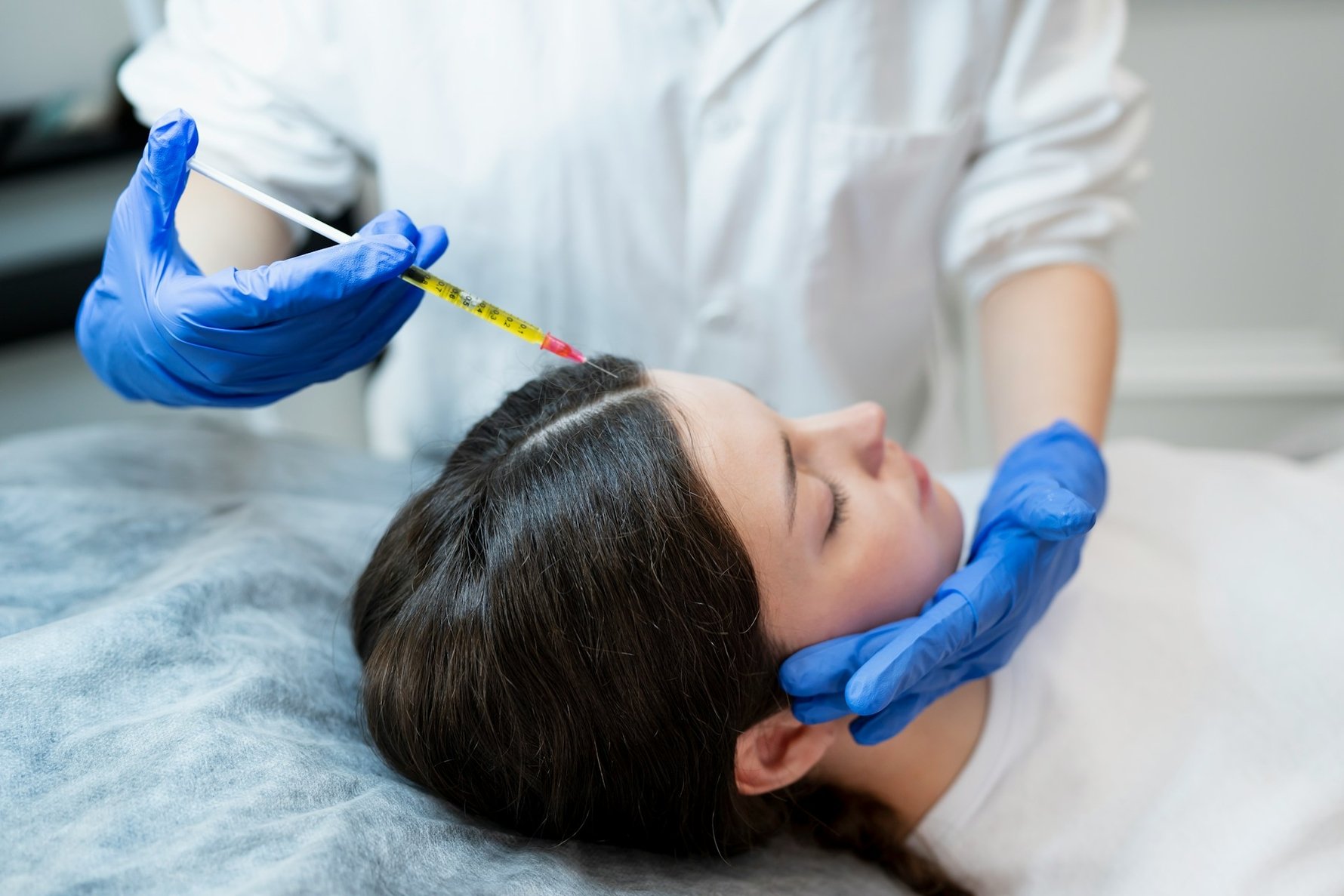
Surgery day: Transfer to the clinic. Local anaesthesia administered. Depending on technique and graft count, the procedure typically takes six to ten hours – extraction and implantation are done in the same session. You are awake throughout; most patients find the anaesthesia administration the most uncomfortable part, with the rest largely painless. Return to hotel same day.
Day after surgery: First wash performed at the clinic by a nurse or technician, removing dried blood and securing the grafts. Post-operative instructions confirmed. Many patients are cleared to fly home from this point, though an additional rest day is recommended if you are comfortable staying.
The weeks following: Expect some redness and scabbing in the first week, resolving within ten to fourteen days. Shock loss – the temporary shedding of transplanted hair shafts – typically occurs in weeks two to four. This is normal and not a sign of failure. New growth begins around months three to four; meaningful density becomes visible at six to nine months; final results at twelve to eighteen months.
Istanbul Districts: Where Are the Clinics?
Istanbul's reputable hair transplant clinics are distributed across several districts, most on the European side of the city:
Şişli / Nişantaşı hosts a high concentration of medical facilities and is the location of several well-regarded clinics, convenient to central Istanbul hotels.
Ataşehir (Asian side) is home to some established clinics including, notably, Vera Clinic and Smile Hair Clinic – both of which attract large numbers of international patients and have significant review histories.
Kartal / Kadıköy (Asian side) has several reputable facilities including hospital-based options, which offer the added safety margin of full emergency infrastructure on-site.
For patients who want a full hospital environment rather than a standalone clinic – which is worth considering for complex cases, significant medical history, or anyone who simply wants the belt-and-braces reassurance – Istanbul's private hospital groups including Medicana offer hair transplant services within a full clinical setting.
A Note on Antalya
Istanbul is not the only option. Antalya has a solid cluster of reputable clinics – fewer in absolute number, but with strong international reputations – and for patients from the UK, Germany, and Northern Europe, direct flight options can make it equally or more convenient. The pace is slower, the recovery environment more resort-like, and some patients specifically prefer the lower-key atmosphere. If you are considering Antalya rather than Istanbul, the same selection criteria apply – the geography changes, the due diligence does not.
Frequently Asked Questions
How do I verify whether a clinic is licensed?
Ask the clinic directly for their Ministry of Health Hair Transplant Unit Operating Licence number and documentation. You can also search the Turkish Ministry of Health's public healthcare facility registry. Any legitimate clinic will support this process; one that becomes evasive when you ask should be crossed off your list.
Can I trust online clinic rankings and "top ten" lists?
With significant caution. Many of these lists are sponsored content or affiliate arrangements, and some of the clinics that dominate online visibility are doing so through marketing budget rather than clinical quality. Weight independently verified reviews on Google and Trustpilot (filtered for verified purchasers), before-and-after results from patients with similar hair characteristics to yours, and the professional credentials of the named surgeon above any ranking list.
Is it safe to fly home the day after surgery?
Most surgeons clear patients to fly one to two days post-procedure. The main risk is physical disturbance to the grafts in the first 72 hours – the grafts need time to begin anchoring before any significant pressure or rubbing is applied to the scalp. Follow your surgeon's specific clearance, avoid overhead luggage bins that require you to stretch, and keep anything from pressing on the recipient area during the flight.
What if my result is not what I expected?
The first thing to establish is whether your expectations were realistic – final results are not visible until twelve to eighteen months post-surgery, and early assessments are unreliable. If at that point the result is genuinely poor, contact your clinic: most reputable practices will discuss what can be addressed. If you believe you received substandard treatment, document everything and seek an independent assessment from an ISHRS-registered surgeon. Legal recourse is possible under Turkish law, though pursuing it from abroad is complex.
What is the difference between a clinic and a hospital-based hair transplant centre?
A standalone clinic is a dedicated hair transplant facility. A hospital-based centre performs hair transplants within a full private hospital environment, with emergency facilities, anaesthesiology teams, and broader clinical infrastructure on-site. For most patients, a well-accredited standalone clinic is entirely appropriate. For patients with significant cardiovascular history, diabetes, or other conditions that elevate surgical risk, a hospital-based setting provides an additional margin of safety worth considering.