This In Your Pocket Guide is available as

Bookmark and Share

Warsaw | Sightseeing | Places of interest

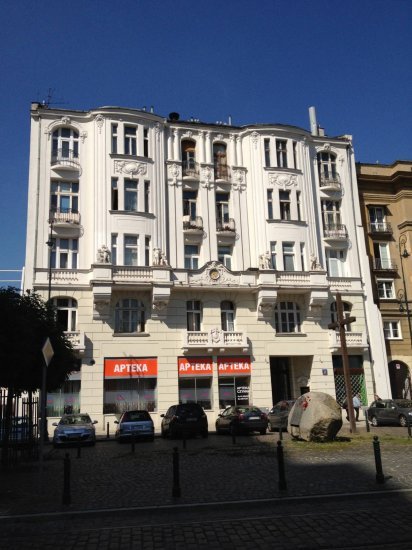
Now, you may hear some people claiming this to be the only fotoplastikon in Europe. This is clearly a lie – there’s one across the road in the Palace of Culture, for a start. Nonetheless, don’t let that stop your visit. Hidden away in a darkened pre-war tenement a visit here reall [...]


Add your comment

Al. Jerozolimskie 51

tel. (+48) 22 629 60 78

Open 10:00-18:00,
Tue Closed.
Every bit as disturbing as Pawiak is the former Gestapo HQ, found on Al. Szucha 25. Built between 1927 and 1930, the building's original purpose was to serve as a centre for religious beliefs. In 1939 it came under control of the Nazi regime, and for the next five years became one of the most feared addresses in Poland operating, among other capacities, as a brutal interrogation centre. The imposing building, currently housing the Ministry of Education, was left untouched by the carnage of war and now also holds a small but sobering museum within its bowels. Cells, where prisoners were held prior to interrogation, have been left largely as they were. Known as 'trams,' Poles would be sat on wooden benches facing the wall as they awaited their fate. Forbidden to eat or sleep, they were compelled to sit motionless in darkness, sometimes for days on end. Failure to do so would lead to almost certain death. The bullet marks scarring the walls tell their own harrowing story. Although the torture cells have long since been blocked off, the English language tape that the curator plays paints a vivid and repulsive picture. Prisoners were subjected to savage beatings, attacked with dogs and electrocuted. Those who didn't co-operate would, in some cases, be forced to watch their own families being tortured. The office where prisoners would have been 'checked in' also remains, complete with a faded portrait of Hitler and battered issues of Wehrmacht magazine lying around. Manacles, bullwhips and other sinister instruments can also be seen stacked on the bookshelf. [...]


Add your comment

Al. Szucha 25

tel. (+48) 22 629 49 19

Open 09:00-16:00,
Mon Closed,
Tue Closed,
Wed 09:00-17:00,
Fri 10:00-17:00,
Sun 10:00-16:00.
Built in the 1830s to serve as a Tsarist prison, Pawiak came to the fore during WWII when it slipped into the hands of the Gestapo. During the Nazi occupation it became the largest political prison in Poland and saw over 100,000 inmates pass through its gates. Of this number, over 37,000 were execu [...]


Add your comment

ul. Dzielna 24/26

tel. (+48) 22 831 92 89

Open 09:00-16:00,
Mon Closed,
Tue Closed,
Wed 09:00-17:00,
Fri 10:00-17:00,
Sun 10:00-16:00.
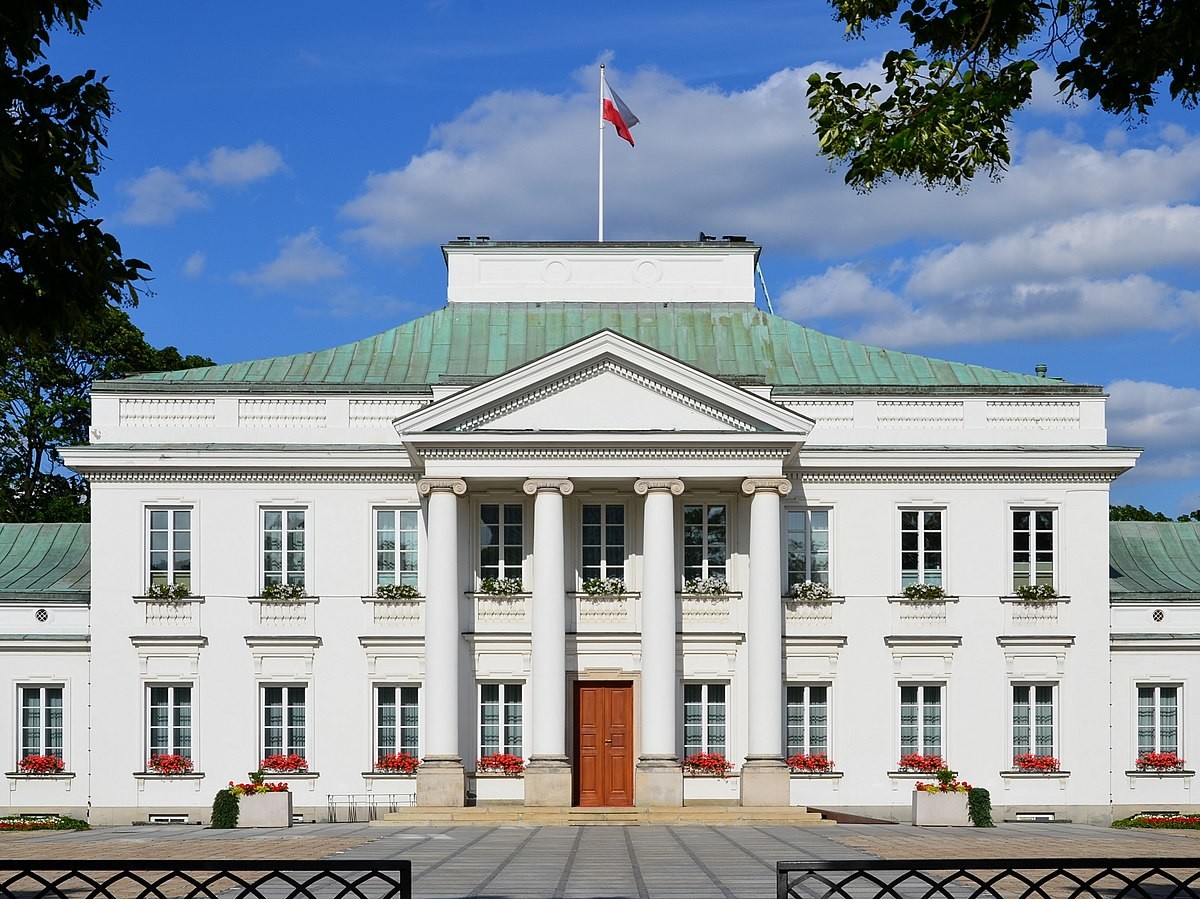
If pre-war Warsaw was considered the Paris of the East then Krakowskie Przedmieśćie would have been its Champs Elysees, its importance recognized by the number of palaces, institutions, monuments and churches that line it. Of those none are more important than the Presidential Pal [...]


Add your comment

ul. Krakowskie Przedmieście 46/48

Royal Castle
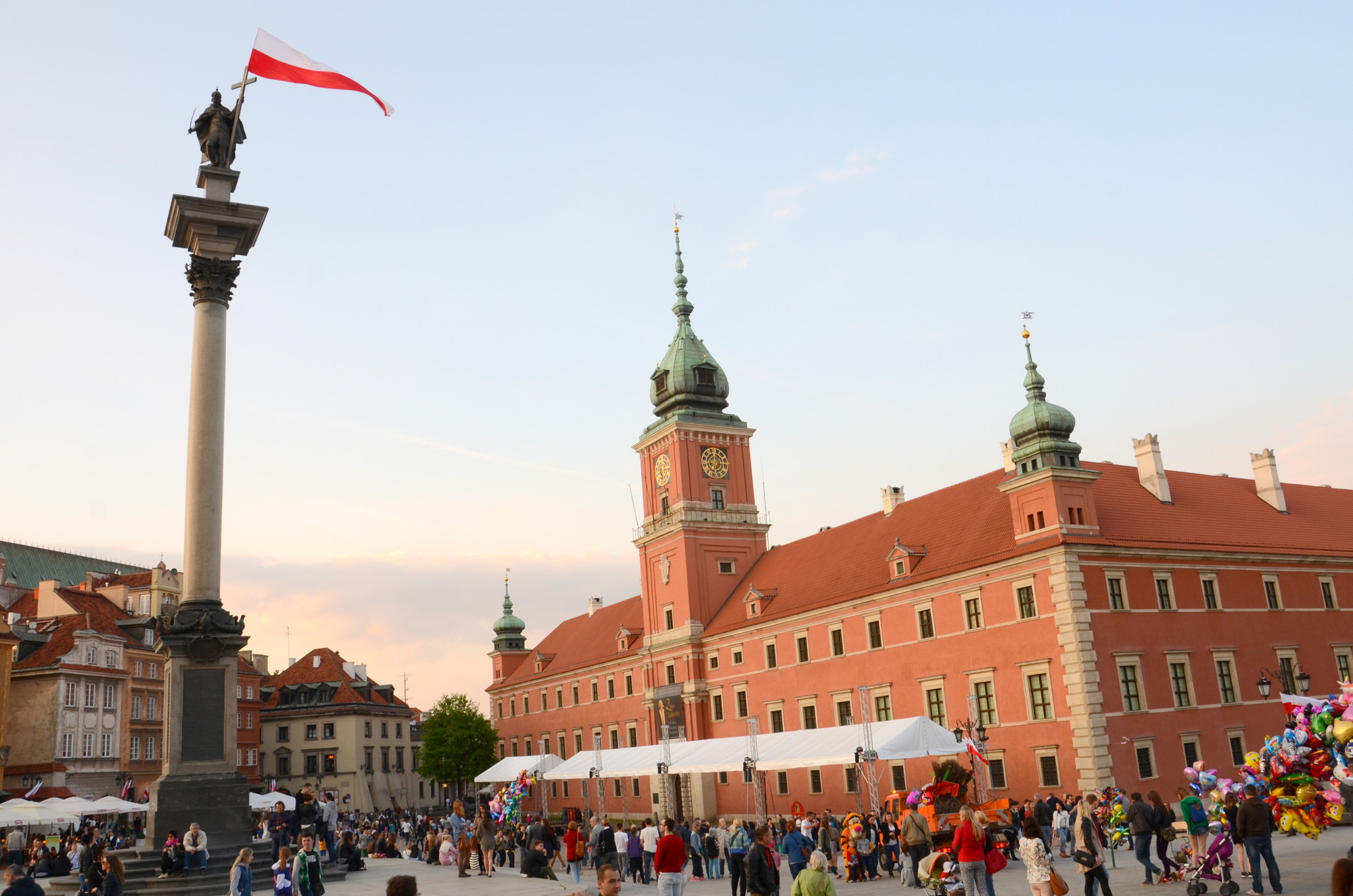
More a palace than a castle, this building is the pride of Warsaw, reconstructed from a pile of rubble at incredible cost between 1971 and 1984. Much of the furniture was donated by now deceased commie buddies such as the GDR and USSR, and much of the money for rebuilding came from generous donatio [...]


Add your comment

Pl. Zamkowy 4

tel. (+48) 22 355 51 70

Open 10:00-16:00, Sun 11:00-16:00. Closed Mon. From May Open 10:00-18:00, Sun 11:00-18:00. Last entrance 60 minutes before closing.
One piece of lost Warsaw that is set to rise again is the Saski Palace, formerly located in the grounds of Saski Park (B-2). Originally the residence of the Morsztyn family the building was purchased by King Augustus II and substantially enlarged and used by both him and his successor, Augustus III. Off-topic, but nevertheless worth airing, amateur historians will delight in learning that Augustus II sired 12 children by different women, while his successor managed to match the number, only this time staying loyal to his wife in the process.
Back on track, when Augustus III passed away (shagged out most likely) the building fell into disuse before being rented out for accommodation. Between 1806-1816 the Prussians established Warsaw Lyceum on the premises, and conflicting evidence suggests that Chopin either lived there for a time, or that his father taught French in one of the outbuildings. Extensively remodelled in 1842 the Palace finally assumed its best known shape in 1925 when the Tomb of the Unknown soldier was added to the series of colonnades used to link the two wings together. Serving as the seat of the Polish General Staff after WWI it was here that the German Enigma Code was first cracked by local science boffins. WWII signalled the end of the Palace and it was flattened by retreating Nazi troops, with only the Tomb of the Unknown Soldier surviving the blasts.
But the story continues. In a rare act of foresight the city of Warsaw has decided to cover the 201 million złoty cost of rebuilding Saski Palace. Budimex Dromex have been awarded the tender to undertake the work and the façade, thanks to blueprints made available by the Central Military Archive, will look just like it did in 1939. It’s not known what will occupy the space, with ideas ranging from a Museum of Polish History to an institute dedicated to the thoughts of Pope John Paul II. Completion was originally set for 2010, though so far building work has not entirely gone to plan. Although sappers failed to find any undetonated devices, builders have since come across over 10,000 rare archaeological finds including baroque sculptures, secret tunnels, ancient wells, German helmets and wine glasses bearing August III’s monogram. The one problem being that no provision was made for discoveries of this scale, meaning that many of the treasures recovered have since corroded after being incorrectly stored. For the time being work appears to have stopped completely, with even the fences taken down – when it’ll resume is anyone’s guess, though we could be in for a bit of a wait.
[...]


Add your comment

First off a tip. The entrance to the Citadel is on Wybrzeze Gdańskie and is not that easy to find. Once you get there you discover a complex built in the wake of the 1830 November Insurrection, and commissioned by Tsar Nicholas I to serve as a fortress for the occupying Russian garrison - [...]


Add your comment

ul. Skazańców 25 (entrance from ul. Wybrzeże Gdyńskie)

tel. (+48) 22 839 12 68

Open 09:00-16:00,
Mon Closed,
Tue Closed.
Last entrance 30 minutes before closing.
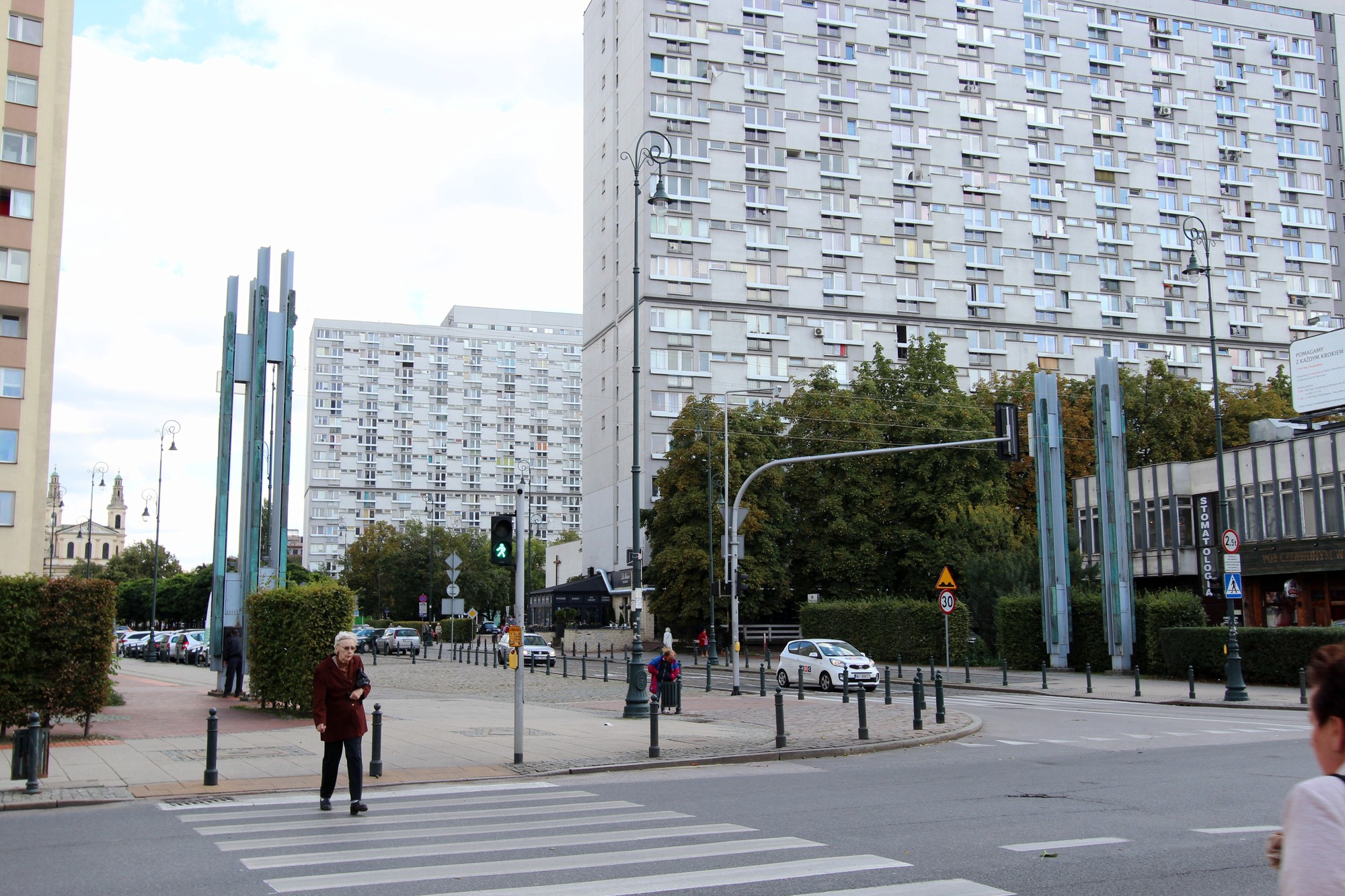
Reeling from near total annihilation the post-war years saw Warsaw emerge as Europe’s biggest brickyard as it struggled to rebuild itself from the ashes. Initially the buzzword for architects in the region was Socialist Realism, a severe style following strict guidelines from a Soviet masterplan. The death of Stalin in 1953 changed all that and architects looked to the west for inspiration, a disastrous move that saw all manner of brutalist monstrosities rise from the ruins. The competition in Warsaw is fierce, but probably nastiest of the lot is the development dubbed ‘the Eastern Wall’ (Ściana Wschodnia), a collection of buildings and tower block running from Rondo Dmowskiego (B-4) to ul. Świętokrzyska (B-3). Architect Zbigniew Karpiński – the guy who also designed the bunker like US Embassy on ul. Piękna – won the competition to rebuild the area and set about remodeling the centre of Warsaw with the zealous glee of a complete nutter. Construction kicked off in 1962 and was completed seven years later, the result being four department stores, the Rotunda bank building, a blockish office building behind it, a cinema, and even a nightclub. Towering over it all were three residential blocks situated on Swiętokrzyska (85 metres), Zgoda (87 metres) and Chmielna (81 metres). Originally hailed a work of genius the Eastern Wall soon became a bit of rusty elephant, crippled and blackened with age and neglect. The collapse of communism breathed new life into the complex – Poland’s first McDonald’s was opened at the Świętokrzyska end of the complex, while the office block behind the Rotunda temporarily held the title for having the largest billboard in the world. More recently steps have been taken to polish up the area with shining glass frontages added to the department stores, and granite floored pedestrian walkways and modern tubular lighting added to the section behind the Jerozolimskie end. But snoop behind the area around McD’s and you’ll find a glorious blast to the past, with smashed pavements, useless bare-lit supermarkets and a couple of cafes selling ersatz coffee to hunched old men smoking cigarettes by the fistful.
[...]


Add your comment

More observant visitors are at some stage going to come across a great big palm tree planted in the middle of a traffic island. So, what’s it all about eh?  Standing on the intersection between Nowy Świat and Al. Jerozolimskie (C-4, Rondo de Gaulle’a) it’ll come as l [...]


Add your comment

Known locally as Trakt Królewski the Royal Route is a title used to describe the road once taken by Poland’s kings to get from the Royal Castle in the old town, to the palace complex in Wilanów. The streets most familiar to readers, Nowy Swiat and Krakowskie Przedmieście, are covered in detail elsewhere in this guide, so we’ll star t off on Pl. Trzech Krzyży, Warsaw’s poshest shopping district, and an area known for i ts ‘closed at dawn’ bars. Translated to mean Three Crosses Square the name is something of an inaccuracy, and more eagle-eyed readers will be able to spot four cruci fixes: two date from 1731, another – held by the figure of St John of Nepomuk – dates from 1752 and a final one tops the church. The rotund looking church in the centre is that of St Alexander, and it’s here that Allied agents gathered during the war to swap information while disguised as the deaf mutes the church has historically catered for. Head past the Sheraton and onto ul. Wiejska 4/6/8 to catch a look at the Polish Parliament (Sejm), a series of dull looking low-level buildings. Parts of it are open to the public, but our advice is to give it a wide berth if there’s any public demonstrations going on – the miners in particular have a penchant for turning the whole area into a battlefield during their annual marches. Head back onto Al. Ujazdowskie to look enviously into some of the most elegant lodgings in Warsaw. Most of these 19th century structures have since been occupied by embassies but it’s not hard to squint and imagine the days when it was Warsaw’s leading entrepreneurs who resided in these grand mansions; number 17 was home to Michal Szlechow, a caviar magnate, while 12/14 was the domain of the Marconi architects. Then, lumped amongst these wedding cake masterpieces is the US Embassy (Al. Ujazdowskie 29/31), perhaps the best example of crap architecture in Warsaw – a position that’s fiercely contested. Built in late fifties this horror has to be seen to be believed, but don’t for a minute think you can get away with photographing the evidence. As you continue down Ujazdowski you’ll pass the castle, the neo-renaissance astronomical observatory and botanical garden. But the real point of interest should be the Belweder Palace (ul. Belwederska 52), a building whose history merits a book. Built in the 18th century it was extensively remodelled in the 1820s, and became the official residence of the Tsar’s brother Prince Konstantine. His life took a colourful turn in 1830 when the November Uprising kicked off with an attack of the palace. The prince escaped, disguised as a woman, and the rebellion was crushed within a year. Marshal Józef Piłsudski used the palace as his residence during the interwar years (his statue stands outside), and the list of residents includes the Nazi Hans Frank, Lech Wałęsa, all Poland’s post-war leaders and General Jaruzelski, the man responsible for declaring Martial Law in 1981. The rest of the journey to Wilanów is a largely undistinguished trip through suburbia, but one structure that can’t help but stop you in the tracks is the Russian Embassy (ul Belwederska 49). This intimidating structure looks every bit a Bond building, and its not hard to imagine cold war intrigues being played out behind the darkened windows.
[...]


Add your comment

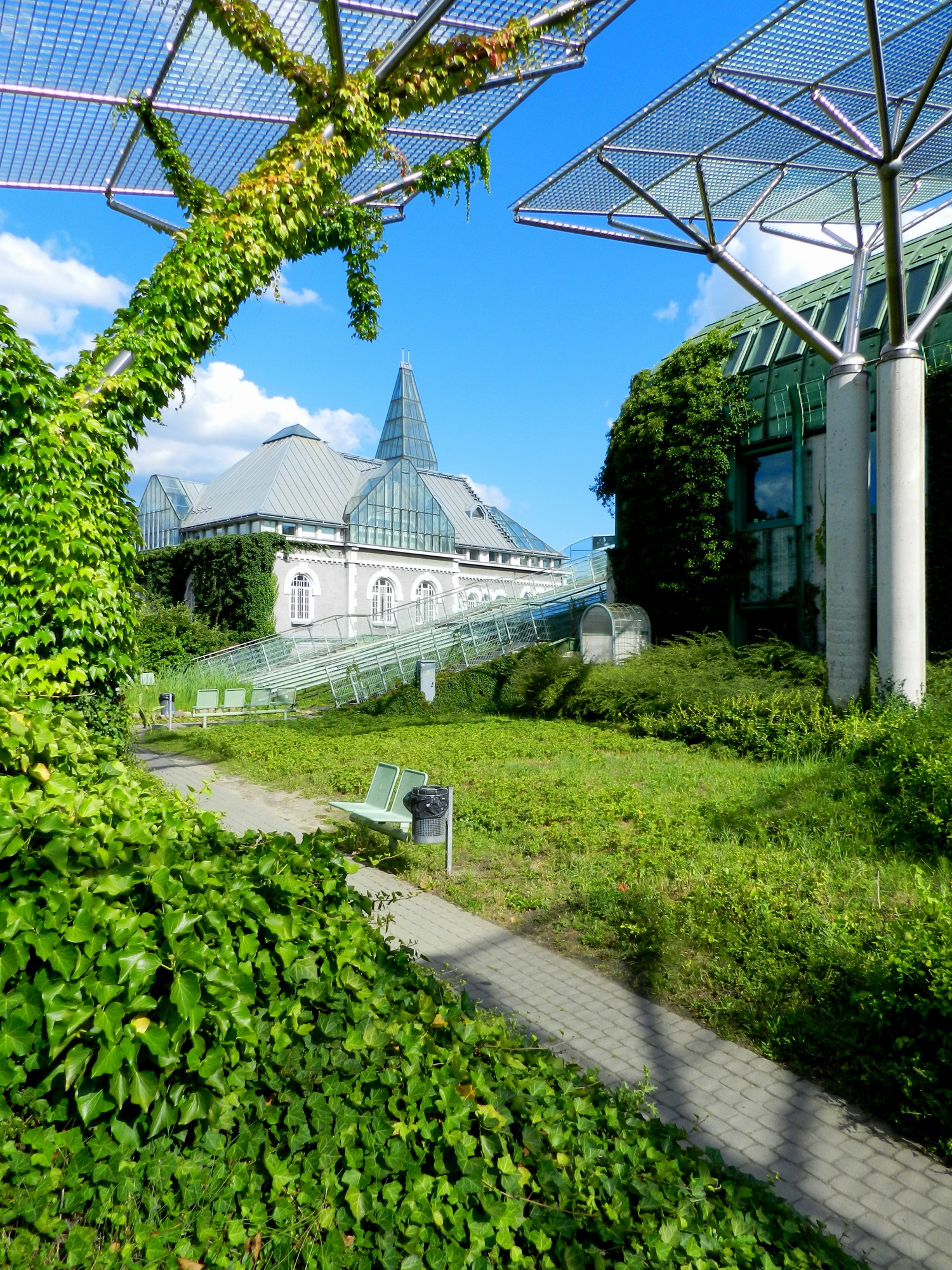
The University of Warsaw – which vies with the Jagellonian University of Kraków for the title of Poland’s most respected seat of learning – occupies a suitably grand location on Krakowskie Przedmieście, Warsaw’s own version of the Champs Elysee. Established in 1816 after the partition of Poland, the university employs more than 5,500 people, who look after around 55,000 students.
A walk around the university’s main campus is one of the most enjoyable diversions a visitor to Warsaw can take. A genuine campus-like atmosphere greets you as you wander through the grand main gates, where inside a number of fantastic period buildings and palaces, set amongst leafy courtyards, exude erudition and learning from every brick. Students sit on benches reading books and smoking cigarettes, a few hurry between buildings scurrying from lecture to lecture. It all adds to the buzz.
The most impressive building in the complex is the magnificent Kazimierzowski Palace, originally built in 1637 as the main residence of King Jan II Kazimierz, from where it takes its name. Destroyed and rebuilt at least four times since then, it has served as the rectorate of the university since 1960. The latest renovation of the palace was completed only in 2006, and has left it loking better than ever: a treasure of Neo-Classicla architecture and one of Warsaw’s finest buildings. Other buildings worthy of note on campus are the Neo-Classical Tyskiewicz Palace and the Baroque Uruski Palace, both of which were likewise built in the 17th century as the residence of aristoctratic families.
The universities students have long been at the vanguard of Poland’s struggle against invaders and occupiers, The university was even closed for in 1830 after its students took part in the Cadet Rebellion against the Russian Empire, and reopened only in 1863. Similarly, many students – who were studying in secret, the Nazi’s having closed the university in 1939 – joined the Warsaw Uprising of 1944, determined to recapture the campus from the Wermacht, who had taken it over for use as administrative offices and an officer training school. Alas, the campus gates, so impressive today, proved impenetrable, and hundreds of students were killed before the game was given up. By the time of the Nazi withdrawal later in the year more than two thirds of the university had been destroyed – some of it deliberately by the vengeful Nazis – and more than 80 per cent of the university’s library and art collection had been looted. [...]


Add your comment