This In Your Pocket Guide is available as
The Warsaw Uprising

The Warsaw Uprising
August 1, 1944. Warsaw, subject to five years of fascist hegemony, rose up in popular rebellion in what would go on to be recorded as the largest ever uprising in the German occupied territories. With German morale in ribbons, a retreat from Warsaw in full swing, and the Red Army already on the east bank of the Wisła, no time seemed better than the present. Following close contact with the Polish government-in-exile, and assurances of Allied aid, the Home Army (Poland’s wartime military movement a.k.a the Armii Krajowy or AK) launched a military strike with the aim of liberating Warsaw and installing an independent government.

In the event the Red Army made no concerted attempt to help the Poles, while promises of Allied support proved largely empty. As for the Nazi hierarchy, they reacted with blind rage to this stroke of Polish insolence, and what ensued was an epic 63 day struggle during which the Home Army faced the full wrath of Hitler. The most notorious chapter of Warsaw’s history was about to be written.

Outbreak of War

At 4.45am, September 1, 1939, shots were fired from German gun emplacements positioned inside the lighthouse at Danzig Neufahrwasser, found in what was then known as the Free City of Danzig (today Gdansk). Object of the aggression was the military garrison stationed on the Polish controlled Westerplatte Peninsula, and within minutes the German battleship Schleswig Holstein joined the bombardment, inadvertently kicking off a conflict that would last six years and cost 55 million lives.

Approximately an hour after Westerplatte the capital itself came under aerial bombardment; waves of Stuka dive bombers swooped on the capital in what can only be described as one of the world’s first ever terror bombings – hospitals, schools and market places were all deemed legitimate targets, while columns of fleeing refugees were strafed from the air. Within a week German land forces had reached the city limits, though any thoughts of a swift lightning victory were quickly rebuffed. An opening tank assault on Ochota was fended off, with the German’s losing 80 tanks from an attacking force of 220. Spurred on by the stirring broadcasts of Warsaw Mayor Stefan Starzynski the defenders dug in for siege, fighting street by street and inch for inch. A German demand for surrender on September 14th was rejected, and in spite of claims of triumph in the German press the city fought on, civilians and military alike joining together in a desperate attempt to ward off the invaders.

Warsaw’s fate, and indeed Poland’s, was sealed days later on the 17th of September when the Soviets invaded from the east thereby fulfilling their part in the Nazi/Soviet Molotov-Ribbentrop pact.Even so, with the odds stacked against them the Poles continued the fight on two fronts, with segments of Chopin aired every 30 seconds by radio to let the outside world know that Warsaw was still Polish. However the human cost was starting to mount; the merciless bombardment had claimed the lives of over 50,000 Varsovians, the Royal Castle lay in ruins, and supplies of food, power and water had reached critical levels. With Allied aid not forthcoming, and a humanitarian disaster looming large, the capital finally raised the white flag on September 28th. To bring the Polish heroics into perspective, Paris, defended by the largest standing army in the world, took just nine days to fall.

Occupation
Hitler arrived in Warsaw for his one and only visit to the Polish capital on October 5th, inspecting a victory parade on (C-4) Al. Ujazdowskie before scuttling off for a reception at the Belvedere Palace. If his pre-war rants hadn’t been ominous enough, the Polish public were about to learn just what a nutcase this man really was. ‘The Fuhrer’s verdict on the Poles is damning’, wrote Goebbels shortly after Hitler’s stopover, ‘More like animals than human beings, completely primitive, stupid and amorphous’.

Hitler carved Poland into pieces – parts were annexed into the Reich, other areas – Warsaw included – found themselves under the General Government of Hans Frank, an expert chess player and fanatical Nazi: ‘If I had to put up a poster for every seven Poles I shot, the forests of Poland would not be sufficient to manufacture the paper’, he is said to have bragged. His rule was textbook despot, both brutal and bloody, and it was under his suggestion that Ludwig Fischer was appointed governor of Warsaw, a post he would hold right until 1945. Fischer was more bureaucrat than butcher, yet nonetheless it was under his authority that Warsaw became a city of blood.

The racial politics of the Reich were pursued with active intent, with whole swathes of the city set aside for Germans only. The largest Ghetto the world has ever seen was constructed to the north, and Warsaw was marginalized in importance and earmarked as a town whose true purpose would be to soak up refugees expelled from Aryan territories to the west. Chopin disappeared from his plinth, Copernicus and his statue were awarded German identity, and the Polish community alienated from their own city. Daily rations were set to 669 calories (184 for Jews), and it’s estimated that a quarter of the population were only saved from starvation by the appearance of emergency soup kitchens. But worse was to follow; from 1943 the Gestapo were granted carte blanche to shoot people on mere suspicion of wrongdoing, and street roundups and public executions became a daily occurrence. This wasn’t so much a city under occupation as a city under tyranny.  

The Uprising
With such a malignant machine in force it’s little surprise Poland gave birth to Europe’s largest resistance movement. Even still, with the war moving towards its closing stages it was far from obvious that the resistance would abandon its partisan tactics and launch a bona fide military assault on the Nazis. By July, 1944 the Red Army led by Marshal Rokossovsky had reached the Wisla, and on July 22 a panicked Fischer ordered the evacuation of German civilians from Warsaw; sensitive papers were torched and destroyed, trains screeched westwards to Berlin and all the signs suggested liberation was but days away. German intelligence was aware that an uprising was possible, yet nothing seemed clear cut. Fischer’s appeals for 100,000 Poles to present themselves to work on anti-tank defences were ignored, as were broadcasts reminding the Poles of their heroic battle against Bolshevism in 1923. Tensions increased with Red Army leaflet drops urging Varsovians to arms, and were further exacerbated on July 30th with a Soviet radio announcement declaring, ‘People of the capital! To arms! Strike at the Germans! May your million strong population become a million soldiers, who will drive out the German invaders and win freedom’. Still, like boxers prowling the ring, each side appeared locked in a waiting game, so much so that German military despatches on the afternoon of August 1, 1944 concluded with, ‘Warschau ist kalm’. Warsaw was anything but.

On orders from General Tadeusz ‘Bor’ Komorowski 5pm signalled W-Hour (Wybuch standing for outbreak), the precise time when some 40,000 members of the Home Army would attack key German positions. Warsaw at the time was held by a garrison of 15,000 Germans, though any numerical supremacy the Poles could count on was offset by a chronic lack of arms, and a complete dearth of heavy armour. Nonetheless the element of surprise  caught the Germans off guard, and in spite of heavy losses the Poles captured a string of strategic targets, including the old town, Prudential Tower (then the tallest building in Poland), and the post office. The first day had cost the lives of 2,000 Poles, yet for the first time since occupation the Polish flag fluttered once more over the capital.

Yet in spite of these initial successes their remained several concerns. Polish battle groups were spread across the city, and many had failed to link up as planned. More worryingly, several objectives had been met with disaster – the police district around (G-4) Al. Szucha remained firmly in German hands, even more importantly, so did the airport. Hitler, meanwhile, was roused out of his torpor, screaming for ‘no prisoners to be taken’, and ‘every inhabitant to be shot’.

Within days German reinforcements started pouring in, and on August 5th and 6th Nazi troops rampaged through the western Wola district, massacring over 40,000 men, women and children in what would become one of the most savage episodes of the Uprising. Indeed, it was to prove a mixed first week for the Poles. In liberated areas, behind the barricades, cultural life thrived – over 130 newspapers sprang up, religious services were celebrated and a scout run postal service introduced. Better still, the first allied air drops hinted at the support of the west. As it turned out, this was just papering over the cracks. The Germans, under the command of the Erich von dem Bach, replied with heavy artillery, aerial attacks, armoured trains and tanks. Even worse, the practice of using Polish women as human shields was quickly introduced.

The insurgents were a mixed bag, featuring over 4,000 women in their ranks, a unit of Slovaks, scores of Jews liberated from Warsaw concentration camp, a platoon of deaf and dumb volunteers led by an officer called Yo Yo, and an escaped English prisoner of war called John. Fantastically ill-equipped, the one thing on their side was an almost suicidal fanaticism and belief. Casualties were almost 20 times as high as those inflicted on the Germans, yet the Poles carried on the fight with stoic self-assurance. Air drops were vital if the rising was to succeed, though hopes on these were scuppered with Stalin’s refusal to allow Allied planes landing rights in Soviet held airports. Instead the RAF set up a new route running from the Italian town of Brindisi to Warsaw, though casualty rates proved high with over 16% of aircraft lost, and the drops often inaccurate – one such mission concluding with 960 canisters out of a 1,000 falling into German hands.  All hopes, it seemed, rested on the Russians.

After six weeks of inaction Rokossovsky finally gave the go ahead for a Polish force under General Berling to cross the river and relieve the insurgents. The operation was a debacle, and with heavy casualties and no headway made the assault was called off. For the Russians, this single attempt at crossing the Wisla was enough; Warsaw was on its own. Already by this time the situation in Warsaw’s old town, defended by 8,000 Poles, had become untenable, and a daring escape route was hatched through the sewers running under the city. The Germans were now free to focus on wiping out the remaining outposts of resistance, a task undertaken with glee and armour. Six hundred millimetre shells were landing on the centre every eight minutes, and casualties were rising to alarming rates. Surrender negotiations were initiated in early September, though it wasn’t till the end of the month – by which time all hope had been exhausted – that they took a concrete shape. Abandoned by her allies the Poles were forced to capitulate once more, some 63 days after they had taken on the Reich. ‘The battle is finished’, wrote a eulogy in the final edition of the Information Bulletin. ‘From the blood that has been shed, from the common toil and misery, from the pains of our bodies and souls, a new Poland will arise – free’.

Aftermath

Having deposited their weaponry at pre-designated sites, 11,668 Polish soldiers marched into German captivity, defeated but proud. The battle had cost up to 200,000 civilian lives, while military casualties between Germans and Poles would add a further 40,000 to the figure. Hitler was ecstatic; with the Uprising out of the way his plan to raze Warsaw could finally be realized. Remaining inhabitants were exiled (though around 2,000 are believed to have seen in liberation by hiding in the ruins), and the Germans set about obliterating what was left of the city. ‘No stone can remain standing’, warned Himmler, and what happened next can only be described as the methodical and calculated murder of a city. Buildings were numbered according to their importance to Polish culture before being dynamited by teams of engineers, while less historic areas were simply burned to the ground. Nothing was spared the iconoclasm, not even trees. ‘I have seen many towns destroyed,’ exclaimed General Eisenhower after the war, ‘but nowhere have I been faced with such destruction.’

Modern studies estimate the cost of damage at around fifty four billion dollars. In human terms Poland lost much more. With the Uprising died a golden generation, the very foundation a new post-war Poland could build on. Those veterans who survived were treated with suspicion and disdain by the newly installed communist government, others were persecuted for perceived western sympathies. Post-war Soviet show trials convicted 13 leaders of the Uprising for anti-Soviet actions, and thereafter the Uprising condemned as a folly to serve the bourgeois ends of the Polish government-in-exile. Today, finally, the event that has come to define the spirit of Warsaw, has been awarded the recognition it deserves.   

‘Freedom came out against slavery. The flame of the Uprising remained in people’s hearts and souls. It was passed on by the baton of the generations. The spirit proved indestructible and immortal. Soldiers of the Rising. You did not die in vain.’

Lech Walesa, 1994


Bookmark and Share

Warsaw | Sightseeing | The Warsaw Uprising

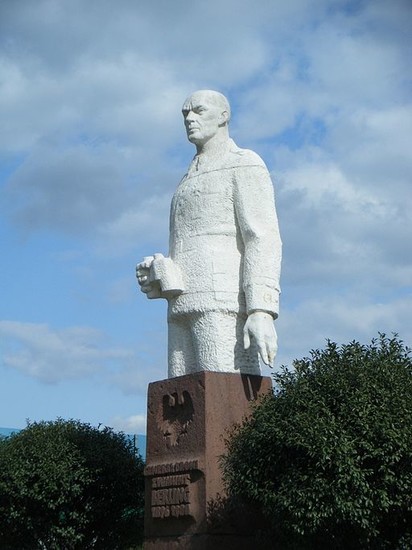
Berling Statue
Zygmunt Berling is best remembered as the commander of the 1st Polish Army during WWII, a role that saw him honoured with his own statue in 1985. Designed by Kazimierz Danilewicz his white marble monument frequently falls foul of the vandals, and it’s not uncommon to see Berling’s hands daubed with blood red paint. That’s on account of Berling’s associations with the USSR; the 1st Polish Army was little more than a puppet wing of Stalin’s forces, and Berling’s perceived inaction during the 1944 Warsaw Uprising still rankles with a great many Poles.

fot. masti [...]


Add your comment

Wał Miedzeszyński

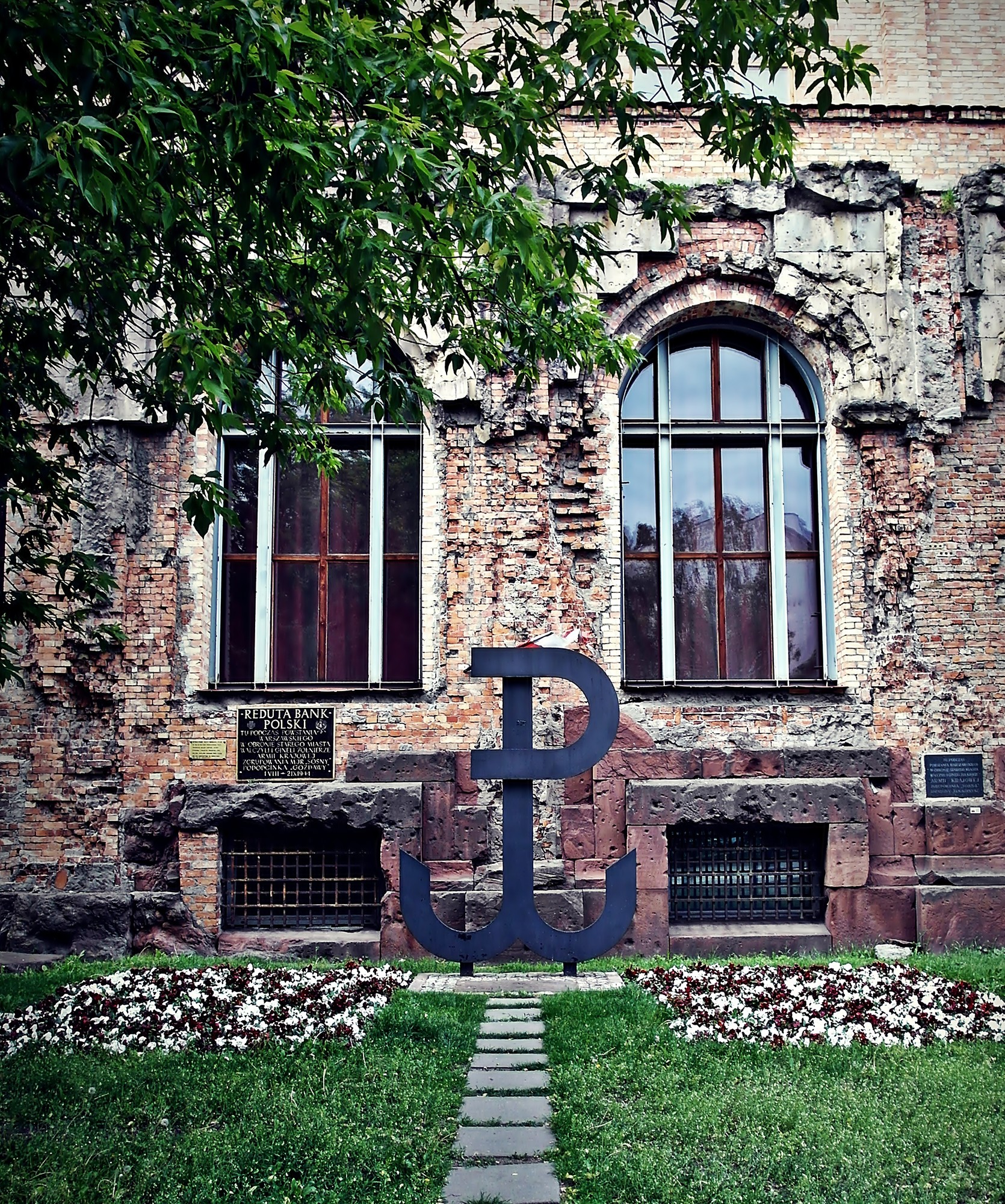
Few remnants of the Uprising are more conspicuous than the hulking shell on ul. Bielańska. It’s got quite a history. The site was originally home to a mint, but that found itself demolished to make way for the Warsaw division of the Imperial Bank of Russia. Designed by Leontij Niko&a [...]


Add your comment

ul. Bielańska 10

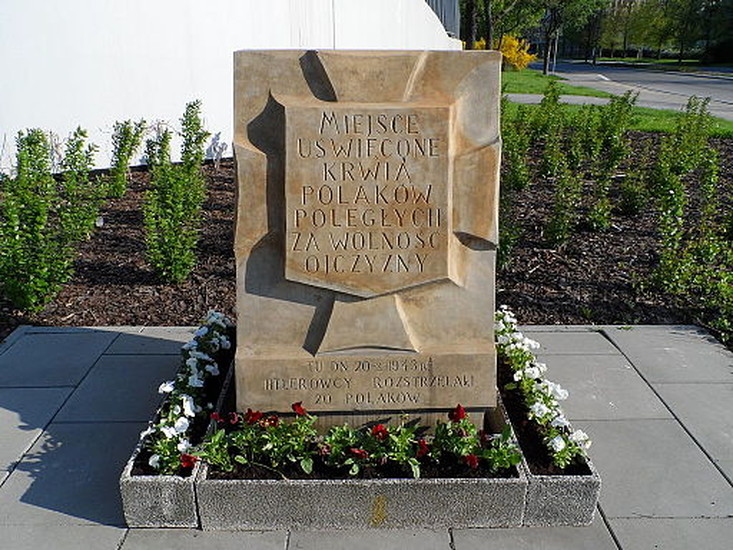
The fall of communism brought with it a huge desire to commemorate the Uprising, which had hitherto been largely erased from Polish history by anti-nationalist communist censors. Now memorial plaques and tablets abound around Warsaw and though they tend to be in Polish only, it doesn’t take long to get the hang on them; on the whole they’ll display the date and number of people executed by the Nazi’s.
[...]


Add your comment

Monument to the Warsaw Uprising
It was only with the regime close to collapse that this unconventional, not to say controversial monument was unveiled. Completed in 1989, and designed by Wincent Kucma, it depicts a group of insurgents in battle, and another faction retreating into the sewers.
[...]


Add your comment

Pl. Krasińskich

Pasta
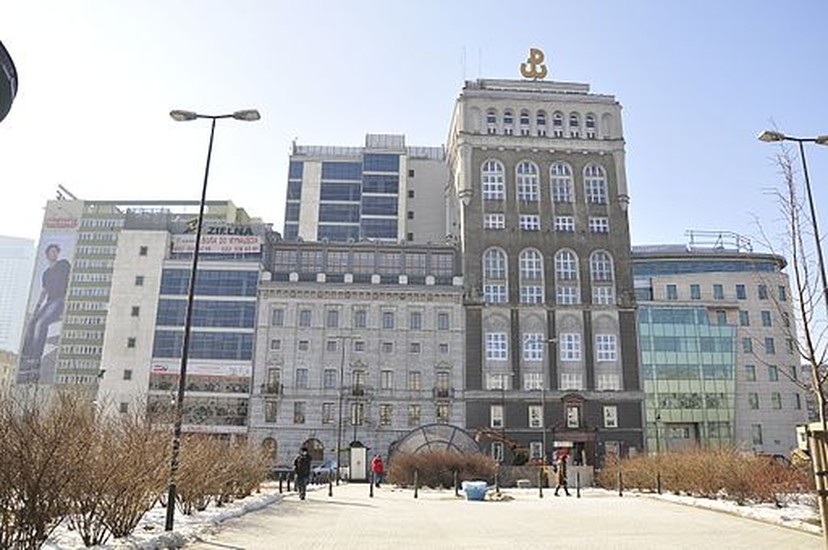
A real city landmark, and unmistakable thanks to the great big red and white P attached to its roof. That P was a favoured sign of the insurgents, and the buildings importance to the Rising should not be underestimated. Built between 1904 and 1910 this weird tower like structure – ramparts et al – operated as a telecommunications centre, a function it continued to serve under the Nazis. Heavily defended by bunkers and guard posts it was besieged for twenty two days by the Kilinski battalion of the Home Army before finally surrendering on the 22nd. In 2000 Prime Minister Jerzy Buzek handed stewardship of the building to a combatants association, and today, among numerous other functions, the ground floors are home to the award winning KOM restaurant.

fot.Mikiapole3,wikipedia.org [...]


Add your comment

ul. Zielna 37

Prudential Tower
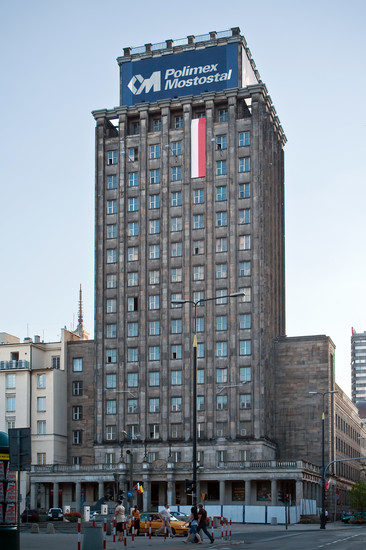
The first building in Warsaw to surpass fifteen floors. Built using 1,250,000 bricks Warsaw’s first true skyscraper became a major point of attack on opening day of the Rising, the symbolic meaning of a Polish flag on Poland’s tallest structure not lost on the insurgents. The Nazis shelled it heavily, and though it was gutted its prototype steel skeleton refused to topple. After the war the tower was given a thinner look, and for decades operated as the Hotel Warszawa. Closed in 2003, and currently derelict, the tower is due to be given a refit and new lease of life as both hotel and top-class apartment block. With the credit crunch reality, don’t hold your breath.

fot. Cezary Piwowarski, wikipedia.org [...]


Add your comment

ul. Świętokrzyska

Ruins of the Rising
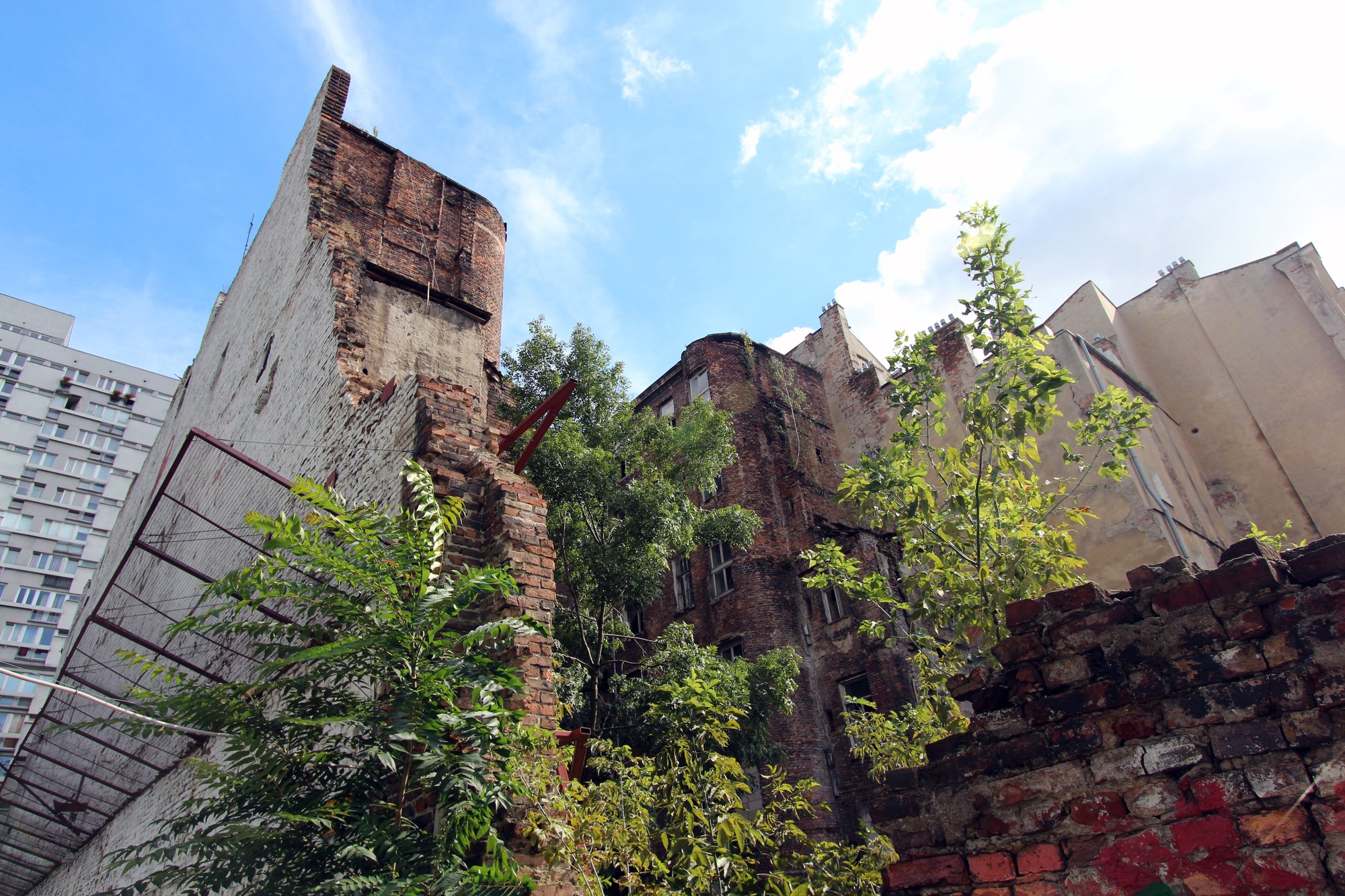
Between 1939 and 1944 over 84 percent of Warsaw was completely destroyed, with the city centre bearing the brunt of the damage. In spite of the Herculean rebuilding work that has since taken place, bullet scarred wall on pre-war tenements can still be found in relative abundance round the few parts of the centre that escaped total destruction. Perhaps most obvious of all is the building on ul. Waliców, featuring shell-pocked facades and a wall half-tumbling down.
[...]


Add your comment

Sapper Monument
Designed by Stanisław Kulon and unveiled on May 8th, 1975, the monument to the sappers is a typically formidable piece of 70s brutalism. Designed to evoke the explosive blast of a landmine this seventeen metre high monstrosity commemorates the sappers who died defusing mines and booby traps in the years after the war. ‘Free Warsaw will never forget those, who with their pain and blood, started the work on her reconstruction’ reads the accompanying plaque. The names and units of the sappers who died are listed on the pylons, as well as Polish-language descriptions of the hazardous work they undertook.

fot. Patryk Korzeniecki, wikipedia.org
[...]


Add your comment

Park Marszałka Edwarda Śmigłego-Rydza

Skaryszewski Park
While the allied air lift to aid the Uprising proved a disaster, the heroism of the Commonwealth and Polish pilots who flew missions to relieve Warsaw cannot be called into question. Standing in Skaryszewski Park on Warsaw’s east bank, is a memorial to commemorate these airmen. It was here that a Liberator plane crash landed in 1944, killing all but one of the seven crew on board. The sole survivor, Henry Lloyd Lyne, unveiled the monument in 1988, and today it is the sight for British Embassy’s annual Remembrance service. In 2000 Lloyd Lyne, a retired farmer, was presented with a recovered piece of the plane by Queen Elizabeth II.

fot. Alina Zienowicz, wikipedia.org
[...]


Add your comment

The Little Insurgent Monument
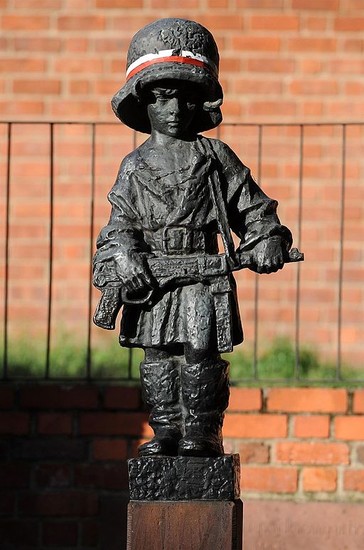
The communist authorities continually thwarted efforts to commemorate the Uprising, though by the early 80s cracks in their resolve were beginning to show. On October 1, 1983, the most poignant of all Uprising monuments was unveiled by the walls of the Barbakan; designed by Jerzy Jarnuszkiewicz, and funded by collections undertaken by scouts, the bronze installation shows the figure of a boy soldier clutching a Sten gun and weighed down by an adult-sized helmet. Commemorating the children who served as messengers and frontline troops, the figure is inspired by the story of 13 year old corporal Antek, himself killed in action close to the scene on August 8, 1944.

fot. Cezary p, wikipedia.org

[...]


Add your comment

ul. Podwale

Warsaw Uprising Museum
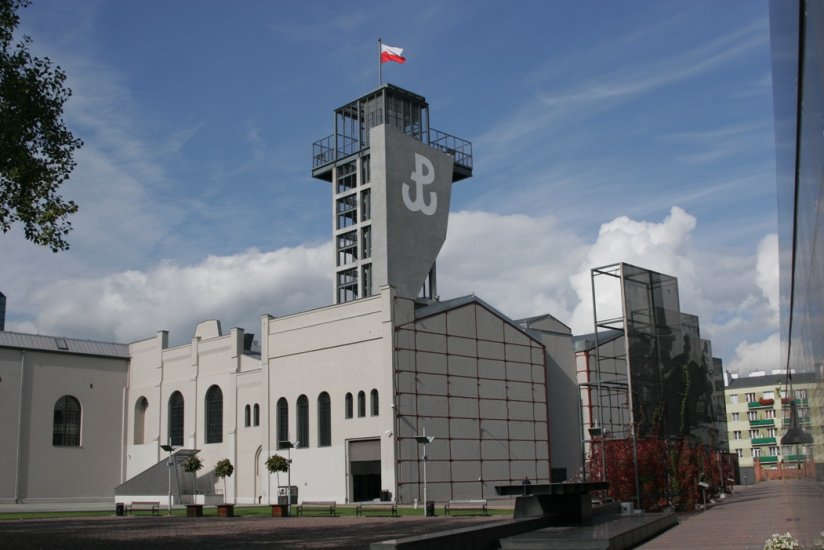
Opened in 2004, and while this remains one of Poland’s best museums, it’s not without its faults – better sign posting would be handy, as would a bit more elbow room; being pushed and jostled is part of the experience. Nonetheless, packed with interactive displays, photographs, video footage and miscellaneous exhibits it’s a museum that’s guaranteed to leave a mark on all visitors. Occupying a former tramway power station the 2,000m2 space is split over several levels, leading visitors through the chronological story of the Uprising (provided they don’t make any wrong turns, alas, a common mistake).
Start off by learning about life under Nazi rule, your tour accompanied by the background rattle of machine guns, dive bombers and a thumping heartbeat. Different halls focus on the many aspects of the Uprising; walk through a replica radio station, or a covert printing press. The mezzanine level features a great ten minute film detailing the first month of battle, before which visitors get to clamber through a mock sewer. The final sections are devoted to the creation of a Soviet puppet state, a hall of remembrance, and a particularly poignant display entitled Death of the City; take time to watch the black and white ‘before and after’ shots of famous Warsaw landmarks. As you make your way to the exit check out the films playing in the 110 seat cinema, as well as an exact replica of a B24 Allied aeroplane once used to make supply drops over the besieged city. A viewing platform and ‘peace garden’ wrap up this high impact experience.
[...]


Add your comment

ul. Grzybowska 79

tel. (+48) 22 539 79 33

Open 08:00-18:00,
Tue Closed,
Thu 08:00-20:00,
Sat 10:00-18:00,
Sun 10:00-18:00.
Wola Massacre Statue
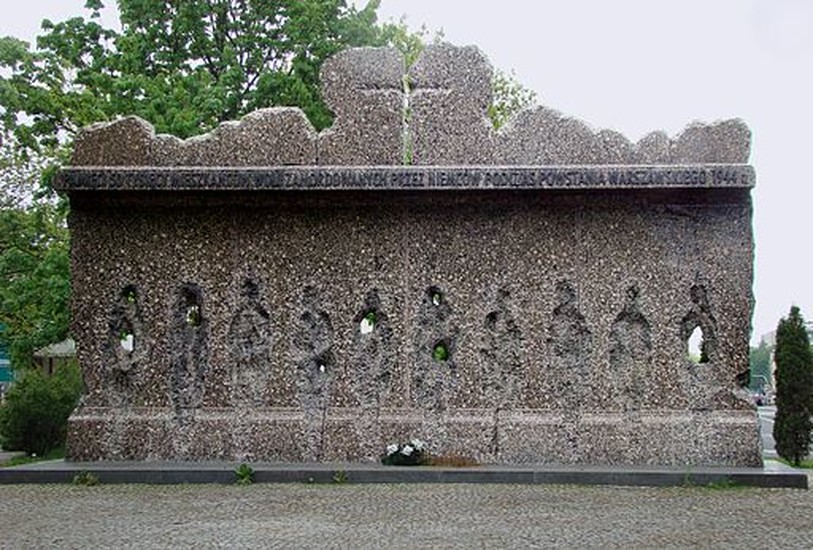
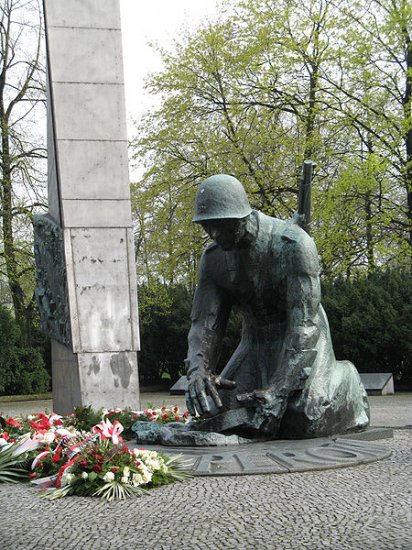
No other event captures the brutality of the Uprising better than the Wola Massacre. Between August 5 and August 6 the Nazis embarked on a savage bloodletting in an attempt to batter the Poles into submission. Led by Oskar Dirlewanger, a despicable man with a history of sex crimes against minors, and Heinz Reinfarth, German units executed approximately 40,000 civilians in the Wola area of Warsaw. The massacre only came to halt when Hitler himself intervened and declared all civilians be sent to concentration camps instead. While Dirlewanger was beaten to death by Poles after the war, Reinfarth and countless others evaded justice. The senseless slaughter is commemorated by an impressive monument dating from 2006, designed by Ryszard Stryjecki and found practically opposite the Ibis hotel on Solidarnosci.

fot. Hiuppo, wikipedia.org
[...]


Add your comment

Pl. Solidarności