Regarded as the 'Atlantis of Wrocław', the once-mighty Benedictine Abbey of Ołbin may no longer exist, but its legendary lost treasures continue to capture the imaginations of locals and visitors alike.
Anyone who has seen the latest promotional campaign for the city of Wrocław will have already had their interest in Ołbin Abbey piqued, whether they realise it or not. Under the slogan 'Wrocław - City of Adventure,' the campaign's main feature is a high-production short film in the style of Dan Brown/Indiana Jones/National Treasure that follows two locals (played by well-known young Polish actors) collecting clues across Wrocław and trying to outrace their shadowy adversary en route to discovering the Włostowic sarcophagus. This legendary artefact is said to be filled with the treasure of Ołbin Abbey, and hidden somewhere within the city (see video embedded above). Fantastic as it all looks and sounds, what we all want to know after watching the promo film is, 'Is the legend of the treasure true?'
To begin answering that we first need to go back to the 12th century, when the Benedictine Abbey in Ołbin was founded. At the time, Ołbin was a thriving settlement with a market located just outside of Wrocław's city walls. The Silesian nobleman who resided over this area was Piotr Włostowic, a significant figure in the state of Prince Bolesław Krzywousty (Boleslaw III Wrymouth), and credited with founding over 70 churches in his lifetime. Born around the year 1080, Włostowic's origins are shrouded in mystery. Researchers have variably attributed his family roots to Russia, Denmark, Czechia and Silesia. It has even been suggested that Włostowic was a fleeing relative of the Anglo-Saxon king Harold II, who had recently been defeated in the Norman invasion of England by William the Conqueror. Whatever his origins, it's clear that Włostowic had accumulated an unprecedented amount of wealth, which allowed him to oversee many public works in his lifetime. More infamously, Włostowic is said to have ventured east to Przemyśl and kidnapped one of Bolesław Krzywousty's rivals, Prince Wołodar Rościsławicz, in addition to marrying himself to Maria, a daughter of Światopełk II of Kiev (Sviatopolk II). Having done so without permission, the church ordered him to invest in church-building as an ongoing act of penance.
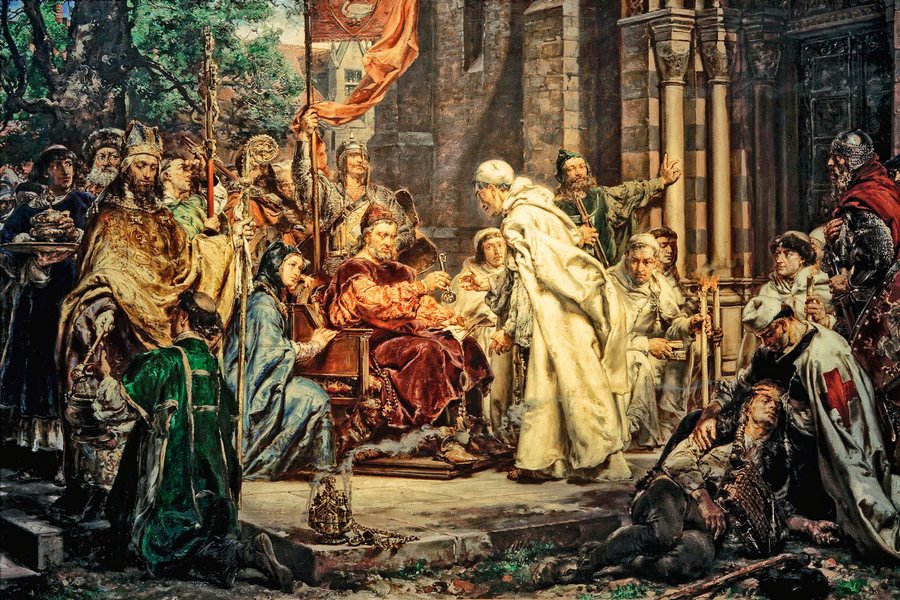
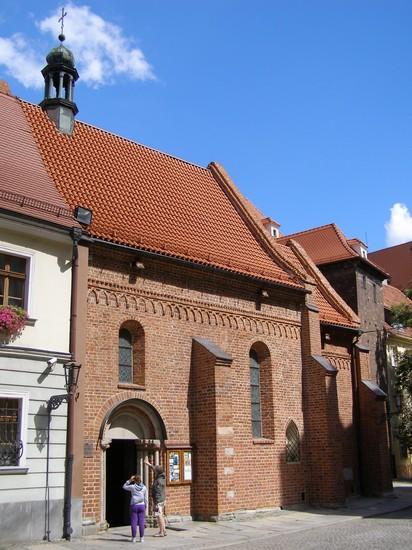
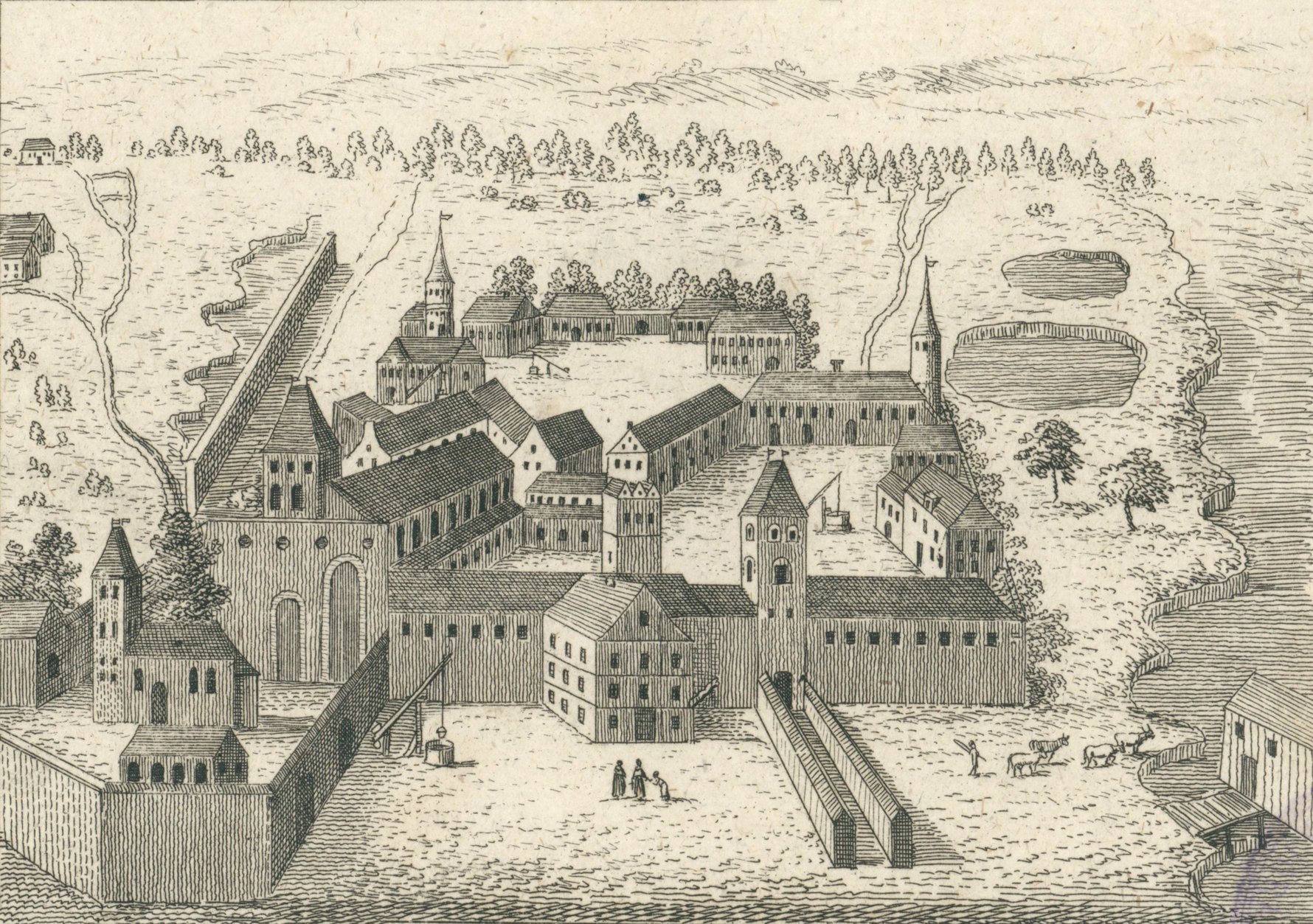
Amongst the many local churches that went up under Włostowic's direction were the Church of St. Giles, and the Church of the Blessed Virgin Mary on the Sand, the latter located on Piasek Island where Włostowic was a landholder. However, none of these would compare to Benedictine Abbey of St. Vincent in Ołbin, which is believed to have been founded before 1139, and was unrivalled by anything in Central Europe at the time. This huge, imposing complex featured 48 vaulted buildings, 7 courtyards and three churches - including a grand basilica built of granite blocks, which was approximately 70m long, with a ceiling supported by monumental columns (partly preserved to this day). In the turbulent period that ensued after Boleslaw Krzywousty's death in 1138, however, Włostowic fell out of favour with Krzywousty's son, Prince Władysław, who was at war with his brothers over full control of the region. In 1146, Włostowic was removed from office, and his property was confiscated. He was imprisoned, blinded and had his tongue removed. Władysław would eventually be defeated by his brothers, allowing for Włostowic to return to Wrocław and regain his fortune. Part of the legend even asserts that he would ultimately regain both eyesight and speech!
Upon his death in 1153, it is believed that both Włostowic and, eventually, his wife Maria, were buried within the grounds of the Benedictine Abbey in Ołbin. A monumental tombstone for Włostowic was added in 1270 and placed in the middle of the choir of the monastery church. More impressive, however, was Włostowic's sarcophagus, only known from drawings made in the 16th century. These works were reinterpreted again by Wolff Erdmann-Seydlitz in the 18th century, adding more questions than answers to the mystery of Włostowic's sarcophagus. For one, the lions lying at the sides of the tomb in Erdmann-Seydlitz's rendering are questionable, due to the fact that there are no other examples of tombstones with such ornamentation from the 12th and 13th centuries. It is generally believed that this drawing was created at a time when the monument was already broken or seriously damaged, which might make it more of an attempt at reconstruction rather than an exact reproduction of the tombstone. What is also noteworthy is the fact that Erdmann-Seydlitz's work has many features typical of his own era, which were not common in the era when the tomb was originally created.