This In Your Pocket Guide is available as

Bookmark and Share

Lodz | Sightseeing | Places of Interest

ul. Jana Karskiego 5

Originally conceived in the 1930s, building work didn’t begin on what’s today a 64ha site featuring individual areas such as a Japanese garden, rock garden, arboretum, examples of Polish flora, park plants, plant biology, decorative plants and medicinal industrial plants. An extremely pleasant place to visit in the summer, the Botanical Gardens also offer gardening advice, do guided tours for groups of school children and put on a few botanical shows throughout the year. [...]


Add your comment

ul. Krzemieniecka 36/38

tel. (+48) 42 688 44 20

Open from April 09:00-19:00. Last entrance one hour before closing
Old Cemetery
A vast necropolis founded in 1858 to serve those of Catholic, Evangelical and Orthodox faiths. It’s here you’ll find the tombs of Łódź’s most eminent citizens, including the tombs of industrialists such as Beiderman, Grohman, Geyer and Kindermann. The undisp [...]


Add your comment

ul. Ogrodowa 39

Open 08:00-17:00
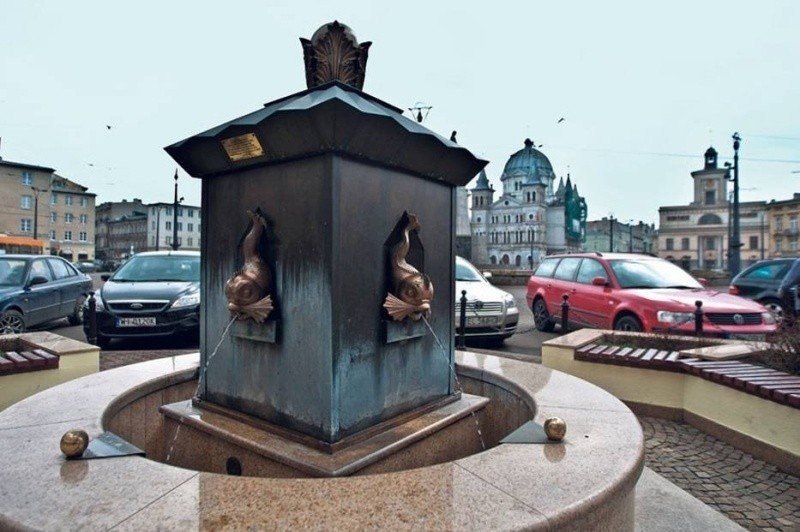
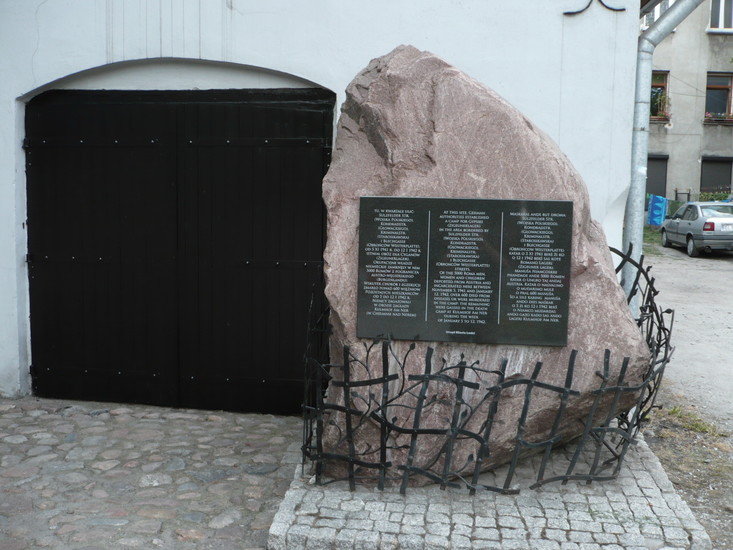
On the face of it there’s very little to see in Łódź’s old town square – for a start it’s grey, barren and not old in the slightest – the buildings you see in front of it are Stalin-era finest, and went up right after the war. Indeed, the grandiose squares of Wrocław, Kraków and Warsaw certainly have little to fear, but to ignore it entirely would be a schoolboy error. Firstly, and rather obviously, the square didn’t always look like this. Before the war this was the heart of what was a thriving Jewish community, and in its heyday was home to a timber town hall and a small lake on the southern end. Houses of sturdier material were added in the 19th century, though it was in the 20th century things really started to hot up. The western front was occupied by market stalls designed by the eminent architect of the time, Marconi, and the square was deemed sufficiently upmarket for one of Izrael Poznański’s sons to take up quarters there. When WWII broke out it formed the very southern edge of the ghetto, and a wooden bridge was added over ul. Nowomiejska to link the square with the western side of the ghetto. Following the war the communists decided to get shot of the old buildings, and launched a zealous campaign to demolish everything in the sight. The architect in charge of the project was Ryszard Karlowicz, and he was under orders to follow the ideals of Socialist Realism – a severe artistic style pegged to strict guidelines from a Soviet masterplan. He didn’t disappoint, coming up with a network of uniform looking streets with a simple classicist form that were designed to honour both patriotic and socialist ideals. The square was later topped off in 1964 with a statue of commie agitator Julian Marchlewski, though that fell victim to the iconoclastic fury that erupted once the communists were booted out. Instead, today you’ll find a memorial stone in its place, placed there in 1998 to mark the 575th anniversary of the first recorded mention of Łódź. While it might look a bit bleak and boring the area is certainly well worth a snoop – not least for a look at the Soc-Realist leftovers on ul. Podrzechna. It’s here you’ll find grand colonnades from the Big Brother era, as well as some brilliant peeling house paintings depicting Utopian ideals – see if you can spot the hammer and sickle.
[...]


Add your comment

Completely renovated in 2003 and now the most modern example of its kind in Poland, the quirky Palm House is a delight for green-fingered jungle types. One of the warmest and most relaxing places to visit during the winter, exhibits include 20 very precious palm trees and plants that have been grow [...]


Add your comment

Al. Piłsudskiego 61 (Park Źródliska 1)

tel. (+48) 42 674 96 65

Open 09:00-16:00, Closed Mon. From April Open 10:00-18:00, Closed Mon. Last ticket sold 30 minutes before closing.
One of the finest museums in Poland, Radogoszcz prison is a sinister look inside the Łódź's recent past. The prison (before 1939 a factory complex) was used from 1939-45 as place of detention and torture for those Poles the Nazis declared 'dangerous.‘ Those held here included most of Łódź‘s intelligentsia, Polish socialists and communists, as well as captured officers of the Polish army. Ten‘s of thousands of people were held here during the war; the capacity was about 2,000 at any one time, and conditions were awful. Around a quarter of all inmates were summarily tried and executed here, while others starved to death or died as a result of prolonged torture. Many others were shipped from here to the death camps of Chelmno and, later, Auschwitz. Much of the prison was burnt down on the eve of liberation, with many of the prisoners still locked inside. The exhibition contains the story behind wartime Łódź, from the opening days of war, to life under Nazi occupation; on display everything from Hitler Youth ID papers to fly posters declaring parks to be ‘For German‘s Only‘. Other sections deal with the children caught up in the maelstrom, with a particularly disturbing photo montage of children seized from their parents and taken away for ‘Germanization‘. Next up, a section devoted to the Jewish Ghetto, with prisoners uniforms and belongings on display. Curiously everything comes with surprisingly decent, if not brief, English descriptions; everything that is apart from the final room which is dedicated to the prison itself. Pick up one of English books at the entrance to learn more. Even if you fail to do so the photographs of prisoners, instruments of torture and belongings recovered from the ashes of the fire - including family photos and charred spectacles - paint a grim picture of those sinister times. The subject of a year long renovation, latest editions to this moving exhibition include a section devoted to Gross Rosen concetration camp, with several artefacts recovered from the site on display.
[...]


Add your comment

ul. Zgierska 147

tel. (+48) 42 655 36 66

Open 09:00-16:00,
Mon Closed,
Tue 10:00-18:00,
Thu 10:00-18:00,
Sat 10:00-15:00,
Sun 10:00-15:00.
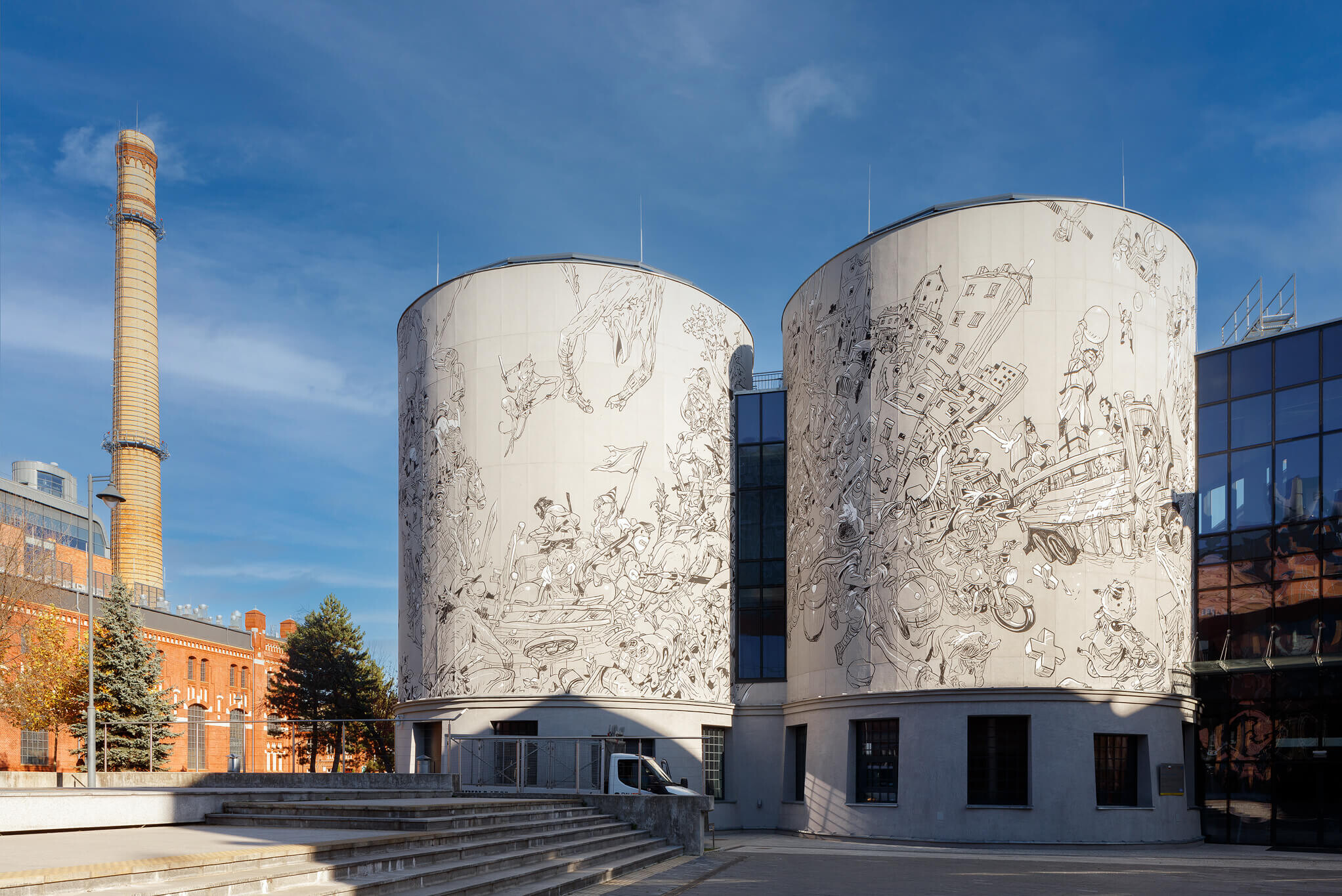
Splitting Łódź into two, ulica Piotrkowska stands out as the commercial and social heart of the city. Measuring little under five kilometres, ranks as Europe’s longest pedestrian street and is lined with restaurants, beer gardens, hot-dog stands, and a mix of neo-renaissance and art nouveau buildings; some in chronic disrepair, others restored to their former glory. Starting at the Tadeusz Kościusko statue the street stretches southwards with crews of all-year-round rickshaws (5zł from end to end) spiriting travellers to the destination of choice. Pretty much all of Łódź’s major industrialists kept residences on this street, as if their palaces were not enough, and many of the buildings boast intricate details on their facades; ranging from reliefs of dolphins to dragons to demons. In more recent years Łódź has entered the Guinness Book of Records as possessing the largest piece of graffiti in the world. Painted by the Design Futura group in November 2001, the mural took two months to complete and is apparently very symbolic. Featuring Wolności Square and the Kościusko monument, Old Town Hall, an old tram and the city’s emblem on the side of a boat, the work combines the traditional with the modern and is well worth having a look at. Find it in the car park just to the northeast of the junctions of Piotrkowska and Al. Piłsudskiego.

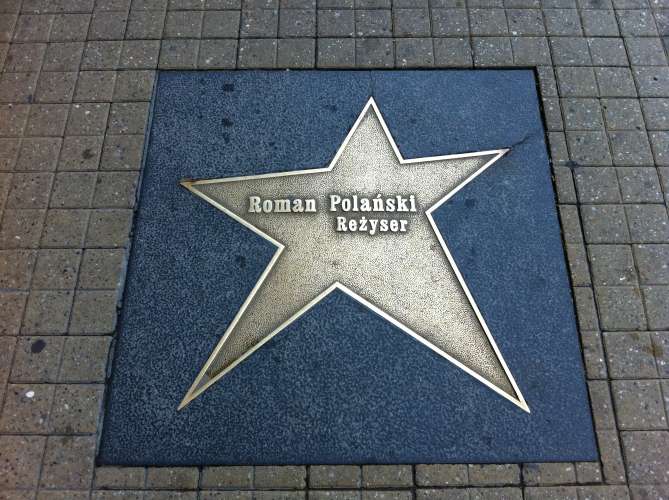
Łódź’s most recognizable hotel can be found halfway down Piorkowska. Constructed in 1887-1888 the neo-renaissance Grand was originally the work of Ludwik Meyer, though the building saw sweeping renovations (including an extra floor) in 1913, courtesy of the architect Dawid Lande – a man whose designs deeply influenced the appearance of Piotrkowska. Functioning as a hotel for over 100 consecutive years the building has in the past sheltered an A-Z of heroes and villains, including Isadora Duncan, Roman Polański, Tito and Himmler (the more ghoulish tourist may be interested to know the street was re-christened Adolf Hitlerstrasse during WWII). Directly outside the hotel is the ‘Walk of Fame’ – star-shaped plaques celebrating Poland’s most famous cinema artists and directors. Other highlights to keep an eye out for include pianist Artur Rubinstein’s childhood home (Piotrkowska 78), and the ‘Turn of the Millennium’ walk: running from Piotrkowska 98 through till 146 you’ll find 12,859 names of Łódź residents engraved into the paving. Elsewhere monuments of famous characters related to Łódź (Rubinstein, Reymont, Tuwim etc) can be found dispersed around the street. [...]


Add your comment