

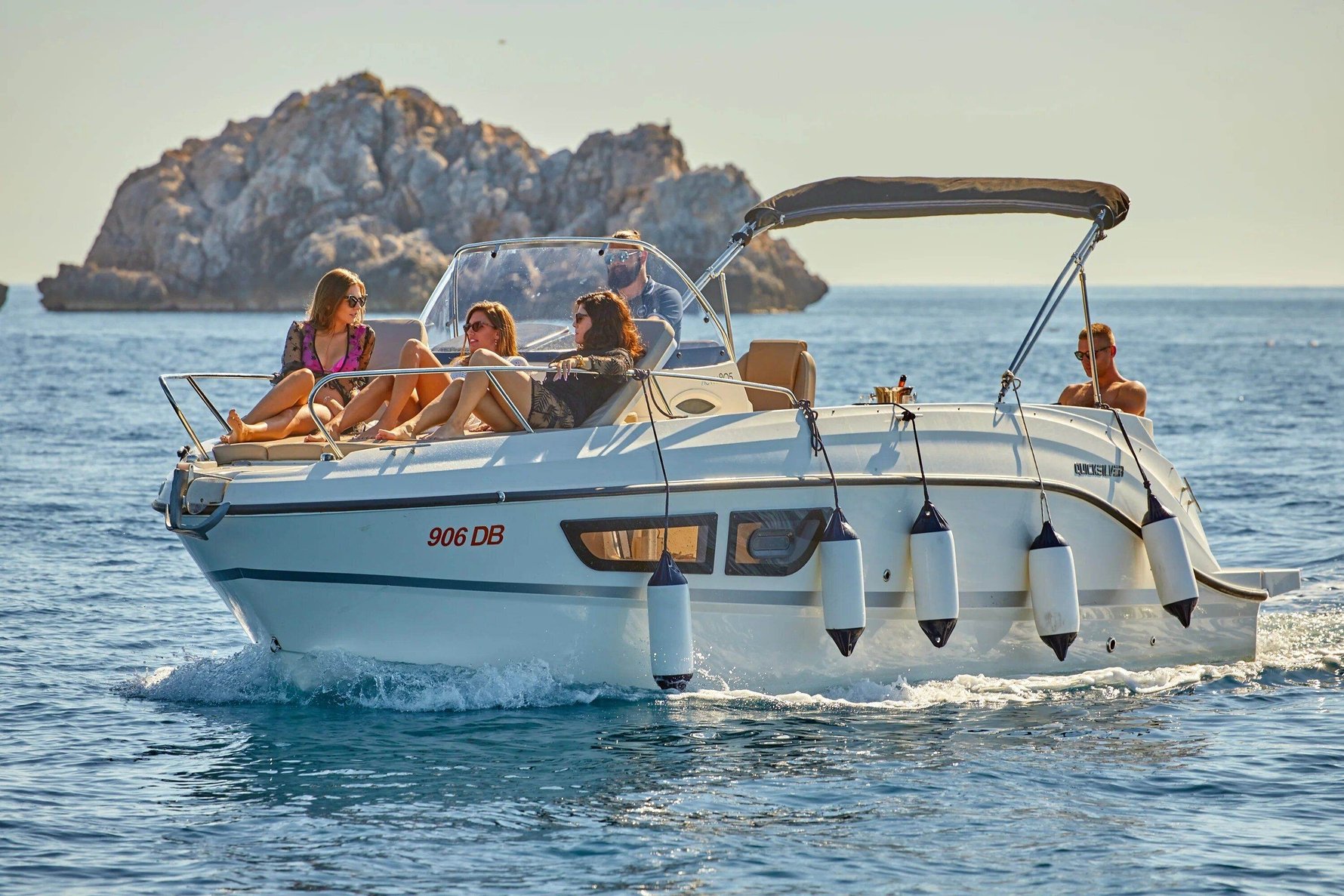
And it’s not silence you notice first. It’s the… softening of things. A small splash along the hull. A gull that doesn’t seem in any hurry. The kind of sounds you don’t usually register because you’re too busy doing other things. Then your eyes start working differently. You spot details that have always been there but somehow invisible from land: a shaded crease in the cliffs, a stubborn little tree angled in a strange way, colours that only appear when the light hits from the sea-side instead of the land-side.
Locals don’t make a spectacle of any of this. They just know. They move around the water like it’s the street system nobody drew on a map. Ask one of them where they swim and they’ll point vaguely toward some narrow spot that sounds like nothing, and then you arrive and realise it’s everything. A pocket of water between two cliffs. A cave that glows only at a certain hour. They don’t hype it because they grew up inside that world; it doesn’t need selling.
We tourists tend to stay on land longer than we should. Because that’s what you do: Old Town, the walls, a view here, a museum there. Lovely, all of it. But there’s a version of Dubrovnik that never shows up properly until you leave the shore behind, and once you’ve seen that version, the on-land one feels like a chapter missing half its pages.
The Coastline You Don’t Realise Exists
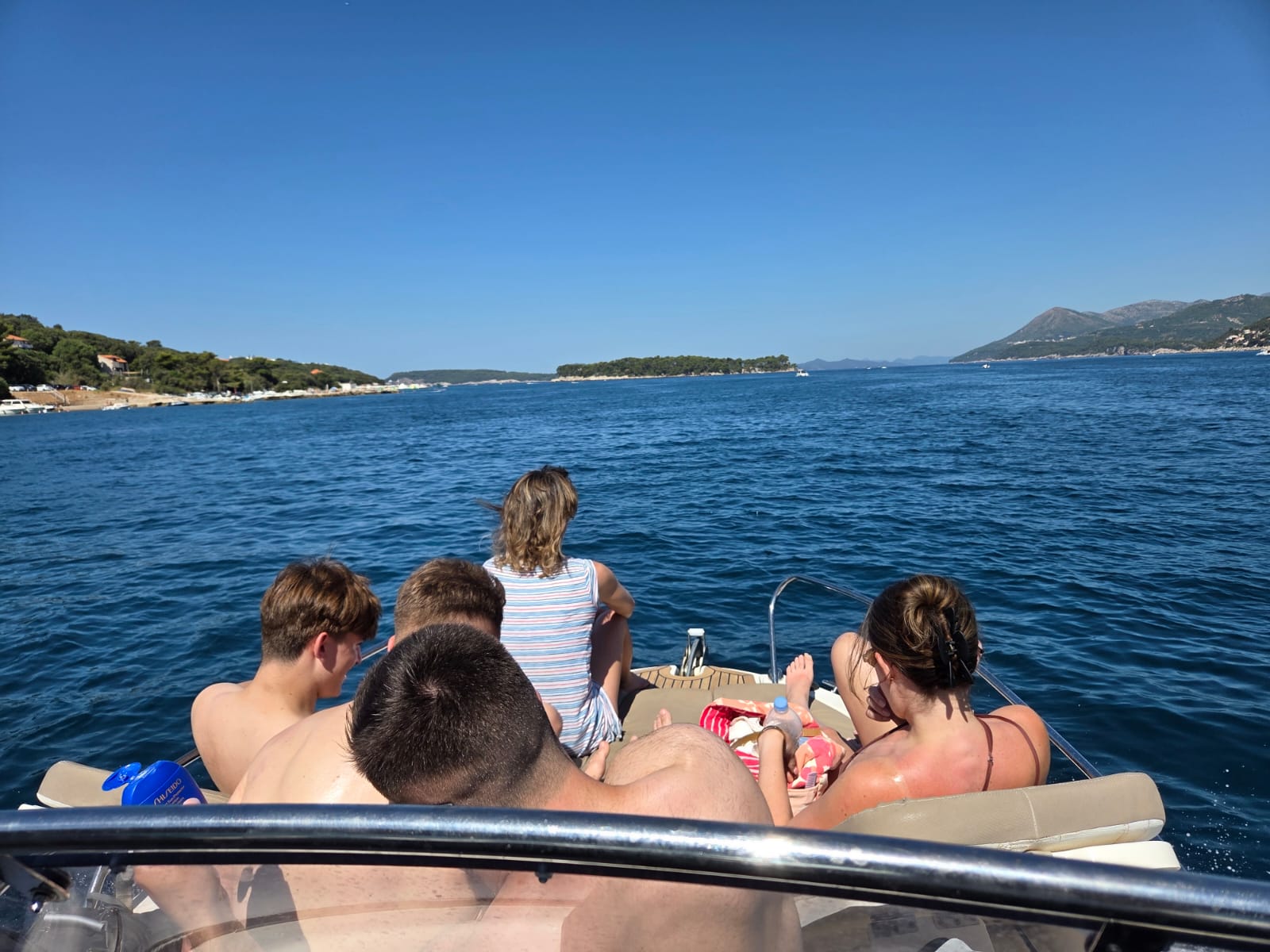
Lokrum is the perfect example. Everyone knows Lokrum. You take a ferry, you walk around, maybe you sit by the Dead Sea pool, eat something, wander. But approach it in a boat you rented in Dubrovnik and it’s like experiencing something you thought you already understood and suddenly discovering it has a whole other side. The cliffs rise sharper. The greenery leans out over the water. Little openings in the rocks appear that you would never spot from land and inside them, water so calm it feels like it’s been waiting for someone to notice.
Go slightly farther, really just a few minutes and the coastline shifts again. Softer edges. Warmer colours. A kind of movement that isn’t movement at all but the sea changing its mind. Locals always say the Adriatic is alive, and this is the part where it becomes obvious. The place looks different every time you glance back.
You start seeing the quieter scenes of daily life: a man fishing before sunrise, someone steering a small boat with a half-drunk coffee still in hand, a couple drifting toward the Elaphiti Islands without any specific plan except “let’s see what happens.”
The Blue Cave Dubrovnik: Not Just a Photo Spot
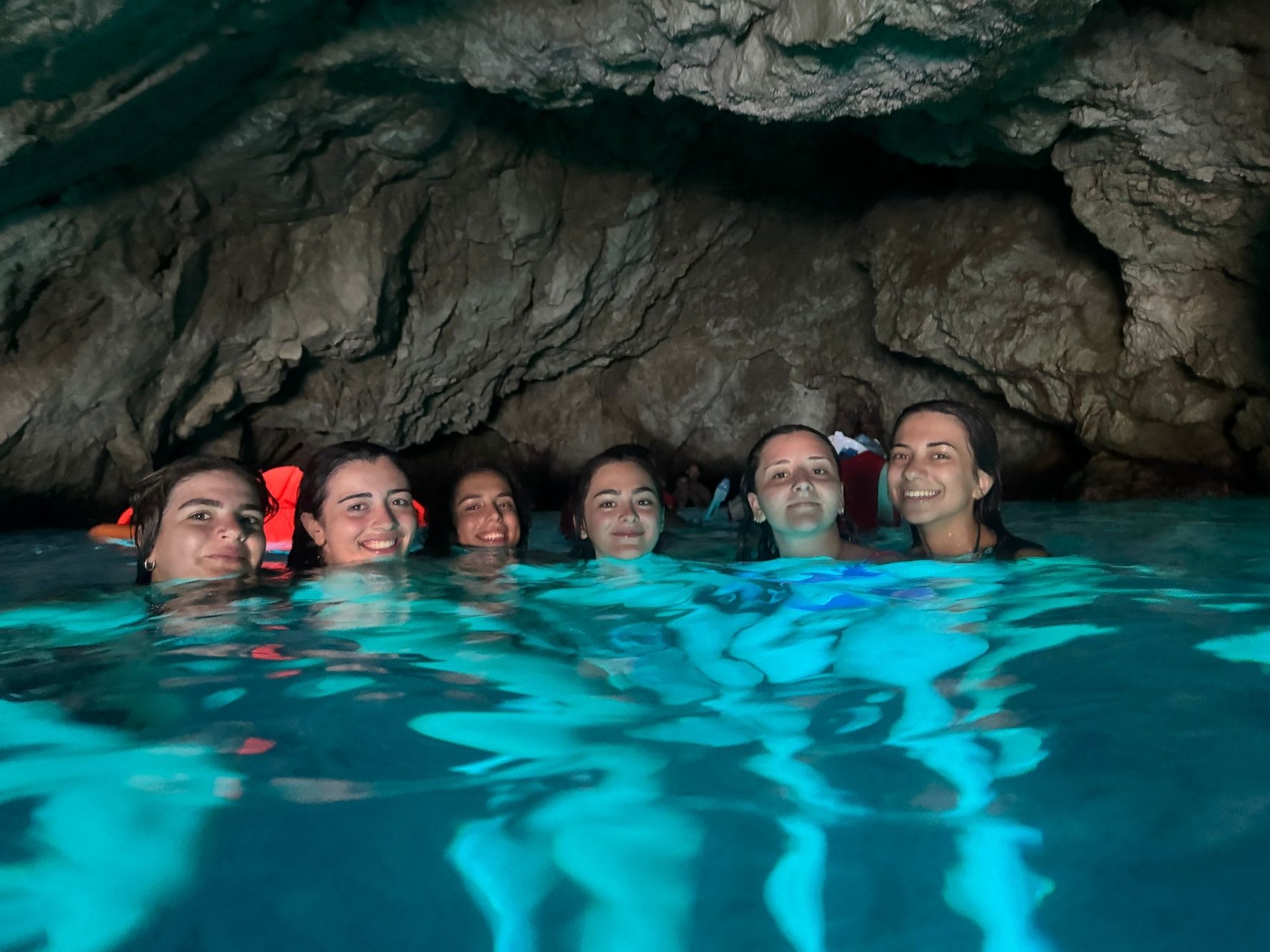
People talk about the Blue Cave Dubrovnik like it’s magic, and honestly they’re not wrong. The colour looks fake until you’re inside it. But what stays with you isn’t the colour, it’s the pace. No one tells you that the best part is the slow approach. The way the water shifts shades. The way the temperature drops a little. The way the cave waits for you to adjust before revealing itself.
There are several caves around Dubrovnik, each with its own personality. The ones near Koločep feel completely different in the late afternoon when the sun hits them in a way that makes the inside glow. If you’re on a private boat, you can sit there for as long as you like, drifting, not rushing, letting the place show you what it wants to.
And then the Elaphiti Islands chain appears, almost casually beaches and stone shelves that barely have names, patches of turquoise that seem to appear out of nowhere. Little places that don’t demand attention, but reward it if you give them even a moment.
How to rent a boat in Dubrovnik like a local (Without Overpaying)
People assume renting a boat in Dubrovnik is too much, too complicated, too risky, too something. It really isn’t. The distances are short. The sea is calm more often than not. And once you leave the harbour, the pace of your day changes in a way you can’t fake.
You’re not competing for a spot. Turn once and you’re alone in a cove.
You decide the rhythm. Swim here. Don’t swim there. Go into a cave. Skip one. Eat on an island. Drift until the sun changes colour.
Places you saw yesterday look entirely new from the water. And if you bring a skipper, you get access to a mental map that locals carry silently which cave will glow at 10 AM, which one fills up by noon, where dolphins sometimes appear (never guaranteed, but unforgettable when they do).
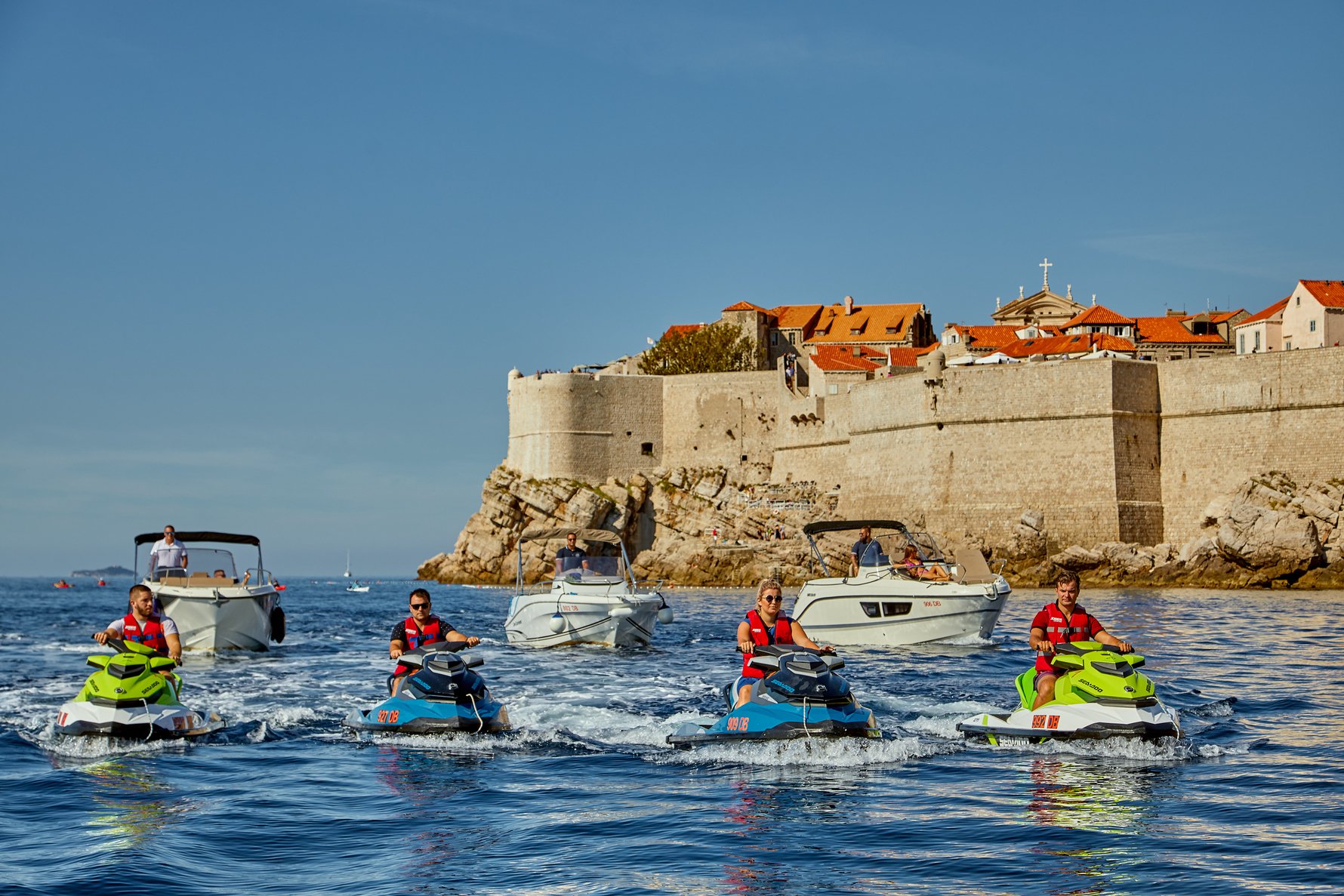
And if calm isn’t your style, the coastline becomes pure adrenaline with jet ski rental in Dubrovnik, the cliffs rushing past, the spray kicking up, everything louder, faster, freer.
One Local Boat Operator Travellers Often Mention
Because the sea offers so much, the person or company you choose matters more than you realise. One name that keeps resurfacing among travellers and locals is Garitransfer as featured in The Dubrovnik Times; they're known for private tours, straightforward Dubrovnik boat rentals for Blue Cave tours, island hopping Dubrovnik, flexible routes, and a general way of operating that feels… steady. Not rushed. Not scripted.Their boats are clean and modern, but what people mention most is the way the team treats the Adriatic. Not like a backdrop to sell, but as something that shapes the day. They ask what you want your experience to be and build around that rather than pushing a pre-made itinerary.
The Dubrovnik That Stays After You Leave
Garitransfer-Private-boat-experience-in-Dubrovnik-with-tourists-enjoying-the-Adriatic-coastline.jpg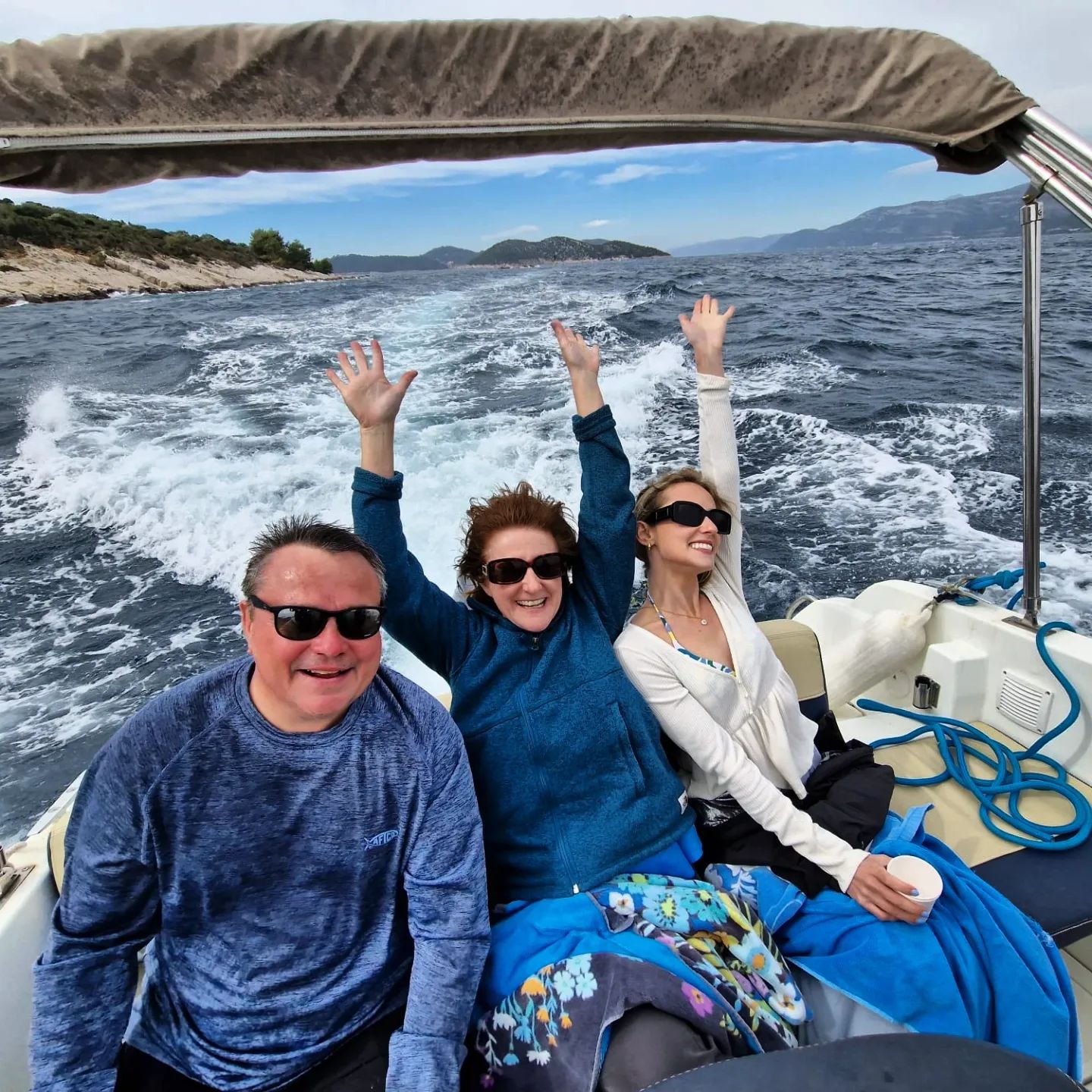
Everyone arrives expecting beauty, the rooftops, the walls, the sunsets. But the memory that clings to people after they leave tends to be smaller, quieter:
A patch of deep blue that looks unreal.
A moment when the boat engine went silent.
A curve of coastline that felt ancient and private at the same time.
It’s rarely the “big” thing. It’s the in-between moments that stitch themselves into the day without you noticing.
That’s why travellers often say, almost absentmindedly,
“I thought I knew Dubrovnik… until I saw it from the water.”
And maybe that’s the whole point.
Seeing Dubrovnik from the sea doesn’t replace the city — it completes it.



Comments