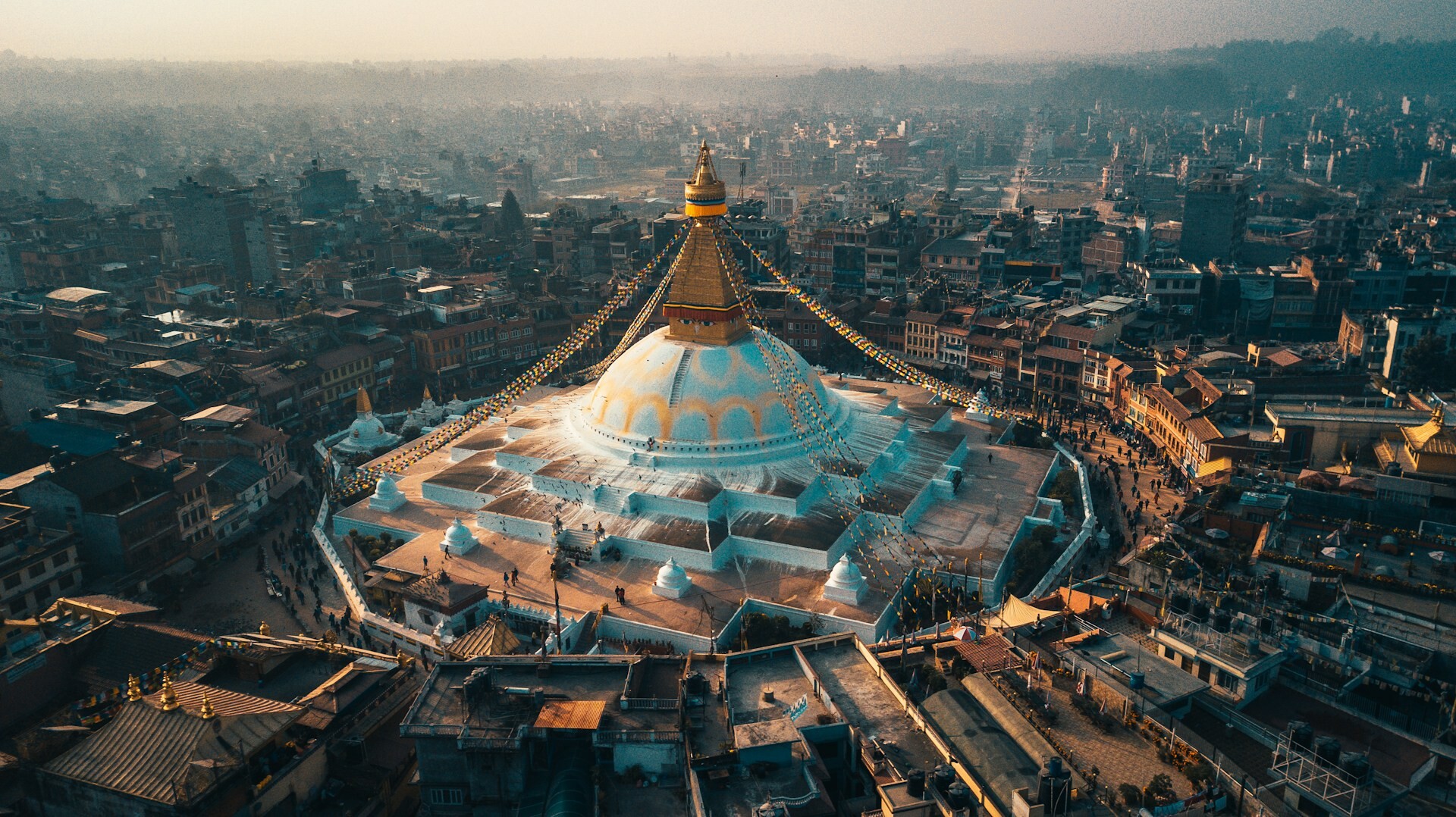
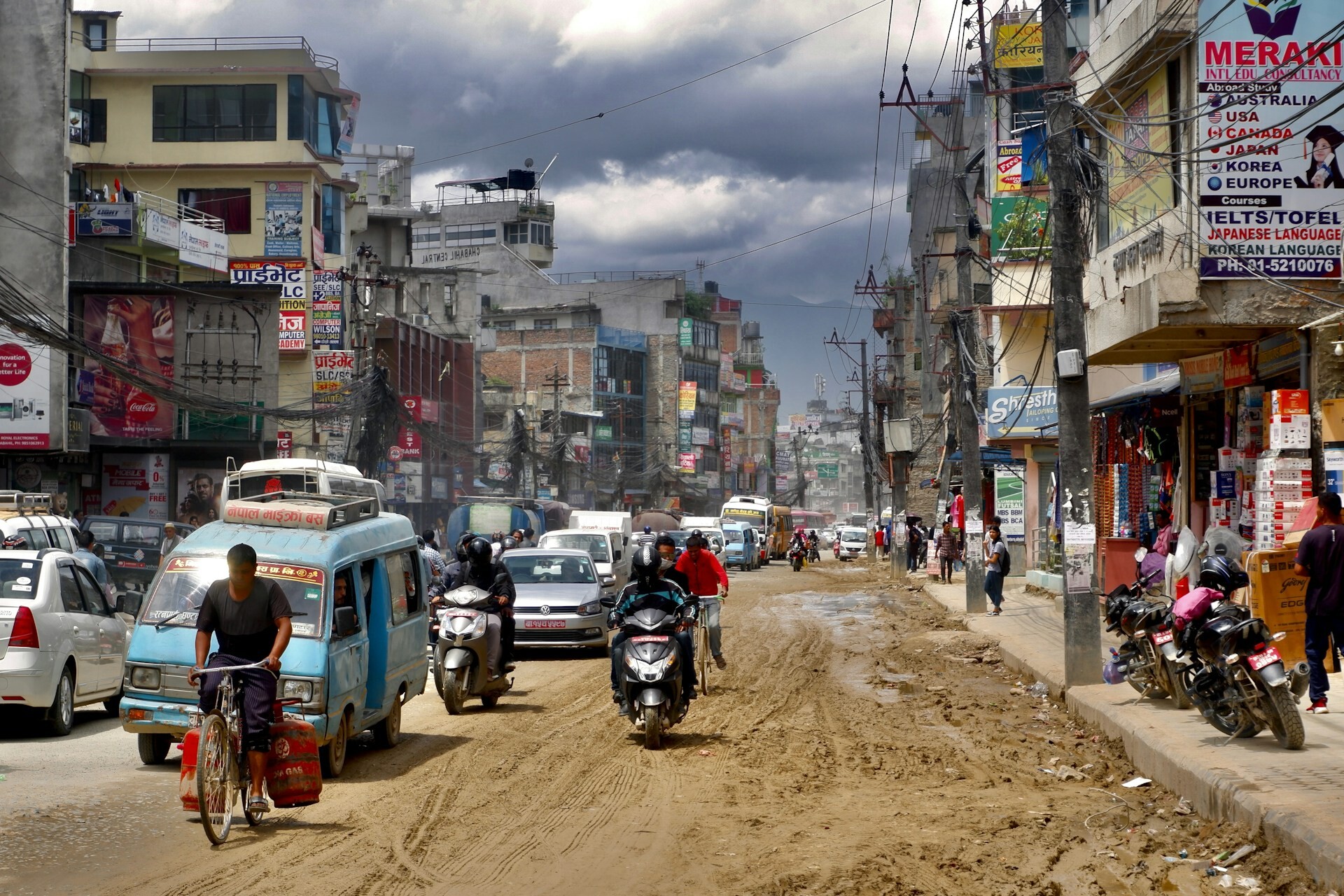
The Kathmandu Valley is compact enough that several genuinely worthwhile destinations sit within an hour or two of the city – and different enough from the capital that leaving for a day feels like leaving for a week. Whether you want Himalayan views at dawn, a medieval town with almost no other tourists, a sacred Buddhist hilltop, or a national park with one-horned rhinos, you don't have to go far. What follows are the best options, in honest detail.
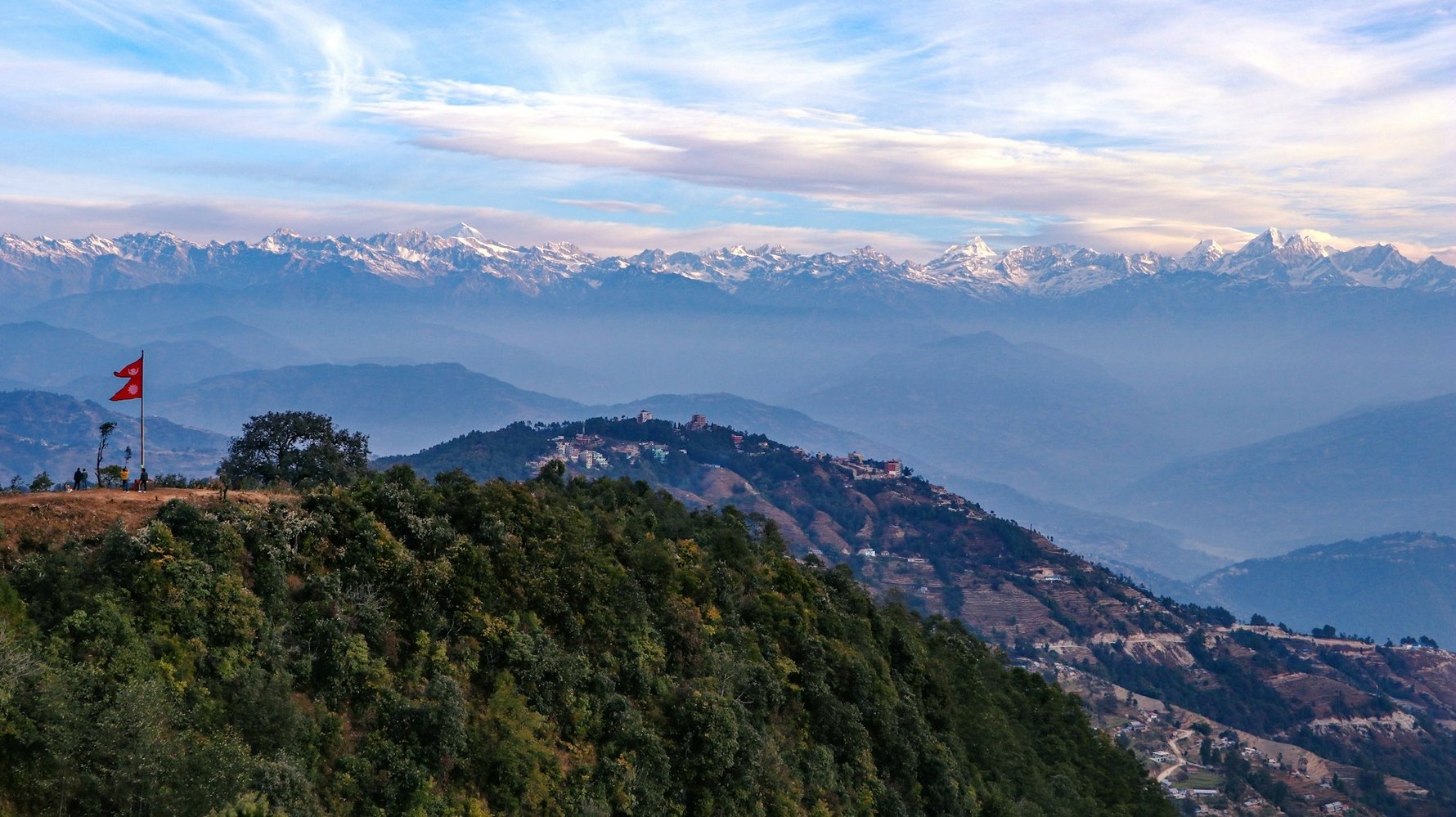
Nagarkot is the classic. A small hill station perched at 2,175 metres on the eastern rim of the valley, about 32 kilometres from central Kathmandu, it exists almost entirely for one purpose: watching the sun come up over the Himalayas. On a clear morning, the panorama stretches from Dhaulagiri in the far west to Kanchenjunga in the east, with Langtang, Ganesh Himal, Gaurishankar, and – on the best days – Everest's distant summit visible along the way. Eight major Himalayan ranges in a single glance, before breakfast.
The catch, as anyone who has made the pre-dawn drive in vain will tell you, is that the view depends entirely on the weather. October and November give you the highest odds of clear skies. The monsoon (June to September) and the hazy weeks of late winter are a gamble. Go in the knowledge that clouds are always possible and that even a partially obscured morning has its own atmosphere.
The drive from Kathmandu takes about 1.5 hours, which means leaving the city somewhere between 4am and 5am depending on the season. Most people hire a taxi or private car for the round trip – negotiate the full day rate upfront, keep the driver's number, and arrange a pickup time after you've had breakfast. Expect to pay NPR 4,000–6,000 for a private car for the day. You can also get here by local bus from the City Bus Park in Kathmandu, but the first departure won't get you there in time for sunrise.
The popular add-on is to hike down from Nagarkot to Changu Narayan – the oldest of the valley's seven UNESCO heritage sites – a descent of about 3–4 hours through terraced fields, forests, and small villages. It's a genuinely lovely walk, mostly downhill, and ends at a quiet temple complex that most visitors skip entirely. A driver can meet you at the bottom. If you'd rather just have the sunrise and come back, that's a perfectly reasonable half-day.
Nagarkot has several hotels and guesthouses if an overnight stay is more appealing than a 4am start. Waking up at the viewpoint rather than racing to it is, objectively, a better way to do it.
Bhaktapur
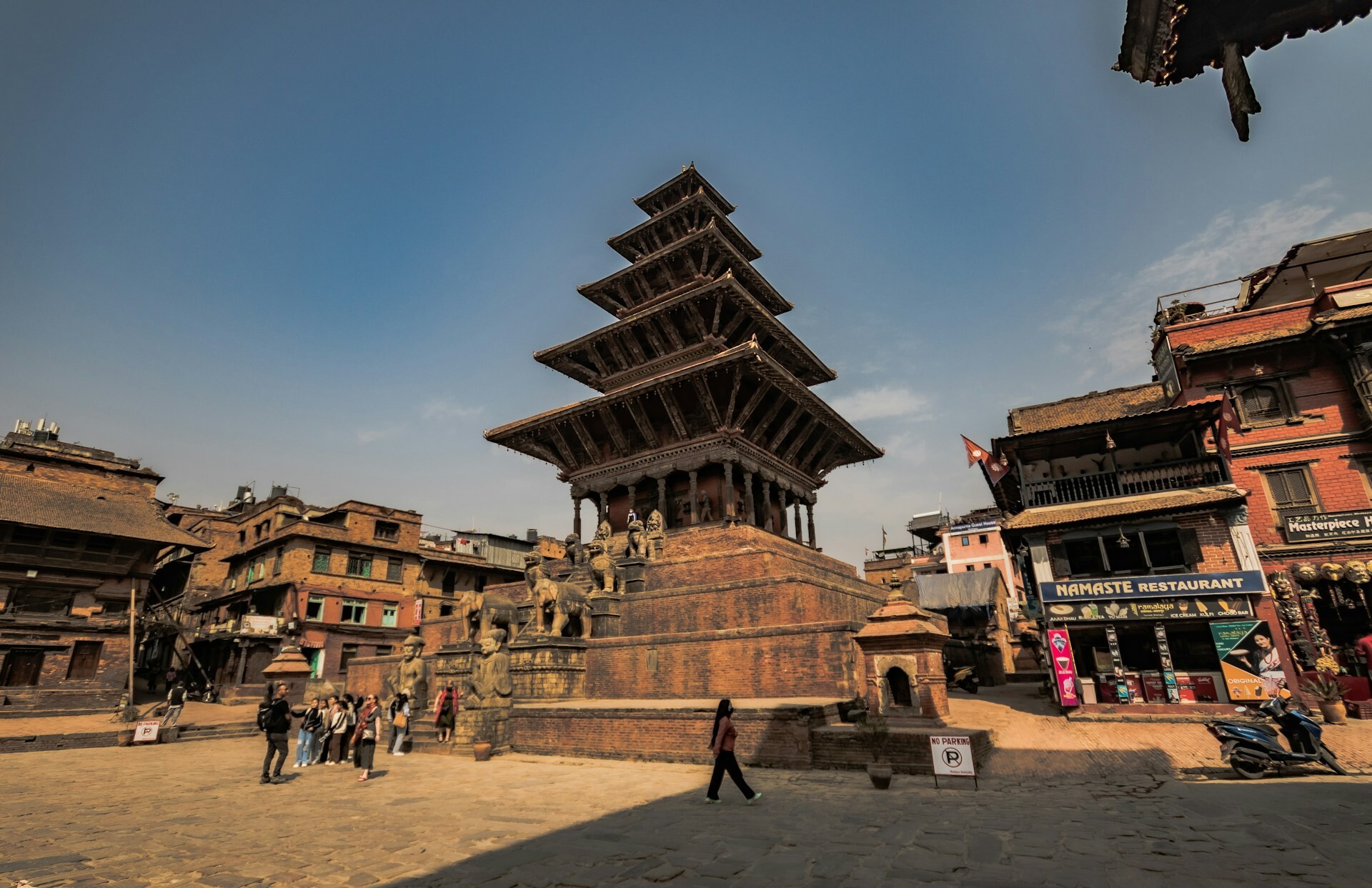
The best-preserved medieval city in Nepal and the most rewarding day trip from Kathmandu by some margin. Bhaktapur sits about 14 kilometres east of the capital, its brick-paved streets and largely car-free historic core making it feel genuinely different to the chaotic capital. The Durbar Square, the Nyatapola Temple, and the 55-Window Palace are world-class; the surrounding lanes are full of potters, woodcarvers, and the occasional excellent café. Try the juju dhau – the famous Bhaktapur "king curd" – before you leave.
Entry for foreign visitors is US$18, which covers the whole historic area and is valid for multiple consecutive days. Budget a full day rather than a rushed afternoon; Bhaktapur punishes haste.
For the full picture on what to see and how to spend your time there, see our guide to Bhaktapur. Getting there independently is easy – local buses run from the City Bus Park near Ratna Park for a few rupees, or a taxi from Thamel will cost around NPR 700–1,000 each way.
Dhulikhel
Dhulikhel is Nagarkot's quieter, less-touristed alternative – and for those who want Himalayan views without the pre-dawn circus, arguably the better choice. The small hill town sits at 1,550 metres, about 30 kilometres southeast of Kathmandu along the Araniko Highway, and on a clear day the panorama from its ridge takes in over 20 peaks, from Annapurna in the west to Everest in the east. Langtang, Gaurishankar, Dorje Lakpa, and Numbur are all visible and easier to identify from here than from many better-known viewpoints.
Beyond the views, Dhulikhel has a compact old town of Newari architecture worth a wander, a handful of temples, and a genuinely unhurried atmosphere. It's the kind of place where you can have a good lunch and feel like you've actually stopped moving for an hour, which is harder to achieve in Kathmandu than it sounds.
Dhulikhel works well as a standalone day trip, or as the starting point for the Dhulikhel–Namo Buddha–Panauti hike (see below). The drive from Kathmandu takes about an hour. Local buses run from Ratna Park; taxis or a pre-arranged private car are more comfortable and give you flexibility on timing.
Namo Buddha
About 45 kilometres southeast of Kathmandu, Namo Buddha is one of the most sacred Buddhist pilgrimage sites in Nepal – and one of the most atmospheric places in the valley's orbit. The hilltop at 1,750 metres is dominated by the Thrangu Tashi Yangtse monastery, a major Karma Kagyu tradition institution that serves simultaneously as a school for monks, a retreat centre, and an active place of pilgrimage. The main stupa marks the spot where, according to Buddhist legend, the Bodhisattva Mahasattva offered his own flesh to feed a starving tigress and her cubs – a story depicted in stone reliefs around the site.
Even without the religious context, the setting alone is worth the trip. The ridge commands sweeping views across forested valleys with the Himalayas behind, and the monastery complex – with its colourful flags, chanting, and the smell of juniper incense – creates an atmosphere quite unlike anything in the capital.
Namo Buddha works best as part of the Dhulikhel–Namo Buddha–Panauti combination. Drive to Dhulikhel, hike across to Namo Buddha (about 2.5 hours on good trails through terraced farmland and forest), have lunch at the monastery or a nearby teahouse, then either hike on down to Panauti (another 2.5 hours) or get a vehicle back from the hilltop. The full Dhulikhel–Namo Buddha–Panauti hike covers around 14–16 kilometres and is suitable for most reasonably fit walkers, with no significant altitude gain. It's one of the best easy hiking days available from Kathmandu.
Panauti
Panauti is the valley's best-kept secret, which is a cliché but happens to be accurate. A compact Newari town about 32 kilometres southeast of Kathmandu, it sits at the confluence of two rivers – the Roshi and Pungamati Khola – and has been a place of religious significance since at least the medieval period. Unlike Bhaktapur, it has no significant entry fee, no tour groups, and no souvenir sellers stationed at every corner. What it does have is a beautifully preserved network of temples, stone-paved lanes, and traditional Newari houses with the intricately carved windows and doorways that the Malla-era craftsmen were famous for.
The main temple complex around the Indreswhar Mahadev – a 14th-century pagoda dedicated to Shiva and considered one of the finest surviving examples of Newari religious architecture – is the centrepiece, but the real pleasure of Panauti is simply walking through it. The town is said to be earthquake-resistant due to its position at the river confluence, a claim given weight by the fact that successive earthquakes that devastated neighbouring areas, including 2015, left Panauti largely intact.
Combine Panauti with Namo Buddha as the end point of a hike, or visit independently as a half-day. A taxi from Kathmandu takes about an hour. Local buses run from Ratna Park but with changes involved; the taxi option is simpler.
Bungamati and Khokana
Two ancient Newari villages about 10 kilometres south of Kathmandu, sitting close enough together to visit in a single easy half-day, and different enough to make the combination worthwhile.
Bungamati is built on a low ridge above the Bagmati River's tributary valley, its centre dominated by the temple of Rato Machindranath – one of the valley's most important rain gods, whose chariot festival is a major annual event. The village is known for its woodcarvers and sculptors; walking through the lanes you'll find workshops producing everything from small figurines to elaborate temple struts using techniques unchanged for centuries. The 2015 earthquake caused damage here, and reconstruction work continues, but the essential character of the place is intact.
Khokana, a short walk north through farmland, is smaller and arguably even more authentically rural. It's famous in the valley for its traditional mustard-oil production – a heavy wooden beam-press system that would look at home in a medieval illustration – and for the three-storey Rudrayani temple at its centre. Visiting early in the morning, when agricultural life is in full swing and the smell of crushed mustard seed hangs in the air, is the ideal way to see it.
Neither village has a significant entry fee. Both are accessible by taxi from Kathmandu in under an hour, or by taking a local bus towards Patan and then a shorter hop south. They pair naturally with a visit to Patan Durbar Square on the same day – arrive at the villages in the morning, have lunch, then head into Patan in the afternoon.
Chitwan National Park
Chitwan is included here with a clear caveat: it is not really a day trip. The park sits around 150–170 kilometres southwest of Kathmandu, the drive takes 5–7 hours each way depending on traffic and road conditions, and the wildlife activity that makes Chitwan worthwhile – jeep safaris, jungle walks, canoe rides on the Rapti River – is spread across morning and afternoon sessions that don't fit neatly into a single day's return journey. Technically possible; practically pointless.
What Chitwan is, unambiguously, is the best wildlife destination in Nepal and one of the finest in Asia. The park covers 932 square kilometres of subtropical forest, grassland, and river systems, and is home to greater one-horned rhinoceros, Bengal tigers, gharial crocodiles, elephants, leopards, sloth bears, and over 450 species of birds. It was Nepal's first national park, designated a UNESCO World Heritage Site in 1984, and conservation work here has brought the rhino population back from near-extinction.
The standard visit is two nights and three days, staying in one of the lodges in Sauraha on the park's northern boundary, with activities bookable through your accommodation. Tourist buses from Kathmandu depart around 7am and take 5–6 hours to Sauraha; a domestic flight to Bharatpur Airport (20 minutes) followed by a short drive is faster and worth considering if time is short. Foreign visitors pay NPR 2,000 per day for park entry, plus VAT.
The best time to visit is October to May. The monsoon months (June–September) bring flooding, leeches, and reduced wildlife visibility; some lodges close entirely. If your trip to Nepal includes any time in Chitwan at all, budget at least two nights – and if you're travelling on to Pokhara anyway, stopping at Chitwan en route makes more geographical sense than making a separate return trip from Kathmandu.