“Katowice is never going to win any beauty prizes” was an opening line from one of our first Katowice guides way back in 2007. “That the finest building in town is a concrete bowl that looks like a UFO should be an indicator of what lies in store” was another disparaging comment.
There's no hiding the fact that Katowice was once a truly ugly city, and was difficult for us to big up on aesthetic value alone, but hey, that's what we're known for – brutally honest (and fair!) deductions. If these were the views held by previous editors, what about now? As the current editor for Katowice InYourPocket (since 2017), will I beat Kato down? Does it deserve it? Hell, no! Now, dear reader, you find yourself in a city which has undergone a major, and badly needed, facelift. Today, Kato, billed as the 'city of gardens' (miasto ogrodów) after its attempt to become a European Capital of Culture in 2016, is now a city which innovates and has the honour of being a cultural hub, officially recognised as a UNESCO city of music for its efforts.
In the past, Kato had very few tourists as, well... there was not much to see! Those arriving found themselves here mainly on business, questioning their very existence and how on earth they ended up here. Why the existential dilemma? Let's begin with a walking tour, one which will require a bit of imagination, as we describe the changes the city has undergone in the last decade, and what the businessman of 10 years ago experienced compared to the tourist of today. We'll start in the centre, where most visitors to the city begin their 'Kato experience'.
Arriving at Katowice train station, you walk through a modernised complex of platforms and main hall, handily incorporated into a new shopping centre. Now, shopping centres are not often something we enjoy walking through due to their predictable and repetitive nature, however, the mix of old and new architecture in this location is quite interesting so it's worth tilting your head up to take it all in. The main difference with the train station of today to that of yesteryear – it no longer smells of urine. Anyone new to the city is none the wiser as to how much of an abomination this site once was, often known as Poland's ugliest spot, let alone worst train station, it set the tone for your whole trip. Walking through often meant being accosted by beggars and drunks, food stalls being of a poor standard, and the available toilet facilities being...umm...horrific! Now you walk through the station and shops, out into a collection of streets containing spruced-up 19th century buildings which wouldn’t look out of place in Poland's top tourist destinations.
Keep looking around, with head tilted, to take in the architecture and don't take for granted that you can breathe normally after the closure of coal mines in the vicinity. Walk just around the corner and you reach the revamped market square. Though you might gaze upon it today and think there's not much here, it's still much better than what you would have experienced 10 years ago! Previously, there was a huge roundabout plonked in the middle, like a boil on the face of Katowice that just made the centre look bleak and unloved. Now, people walk, cycle, roller skate or skateboard through the square, sometimes weaving between trams – themselves mainly new and travelling on redirected tramlines following the modernisation. The city planners are attempting to make a city which feels more open and friendly, whereas during the days of Communism, cement was the key ingredient in building recipes with little thought given to aesthetic value. Walk through the square and check out the palm trees and deck chairs next to the water feature, right at the heart of the old roundabout - a fake river, built right above the actual river Rawa flowing beneath, following the same route. Return at night and see the whole square and fake beach setting all lit up and follow the path of the river across the tram lines to see the ‘Zachód Słońca’ (Sunset) neon light art installation.
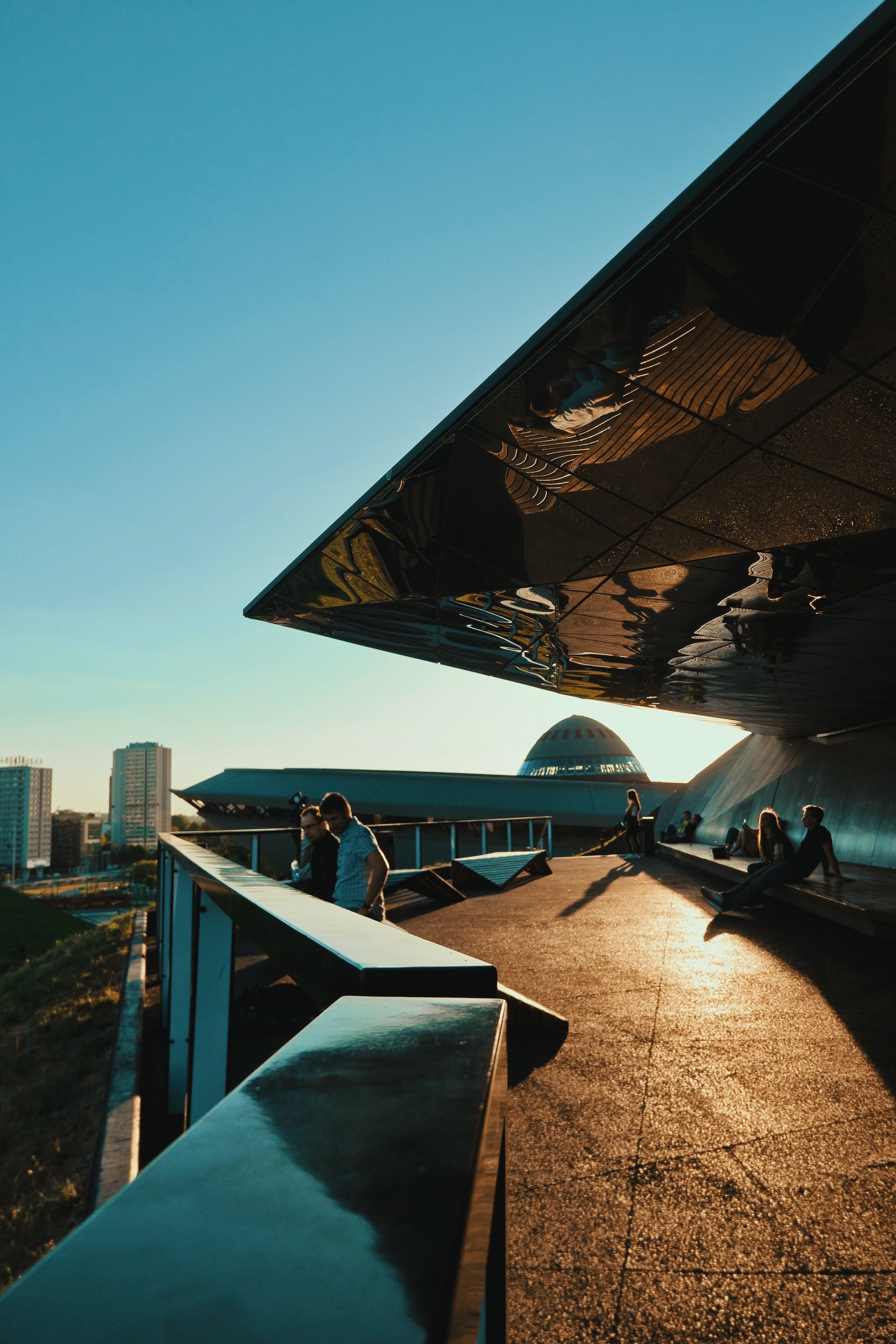
After you've taken in the sights around the square, in the distance, you see one of these cement remnants; the huge UFO, looking grounded due to the poor aerodynamic qualities of cement, is actually the Spodek sport and concert arena. Originally looking somewhat out of place in the city centre, the modernisation of the area surrounding Spodek has surprisingly resulted in the building fitting in rather nicely. Where once stood Katowice Coal Mine (yes, a coal mine moonscape right in the city centre), we now have the Silesian Museum, NOSPR (The Polish National Radio Orchestra) and the International Congress Centre all hugging each other in what was once yet another eyesore in the city.