

A place made by many hands
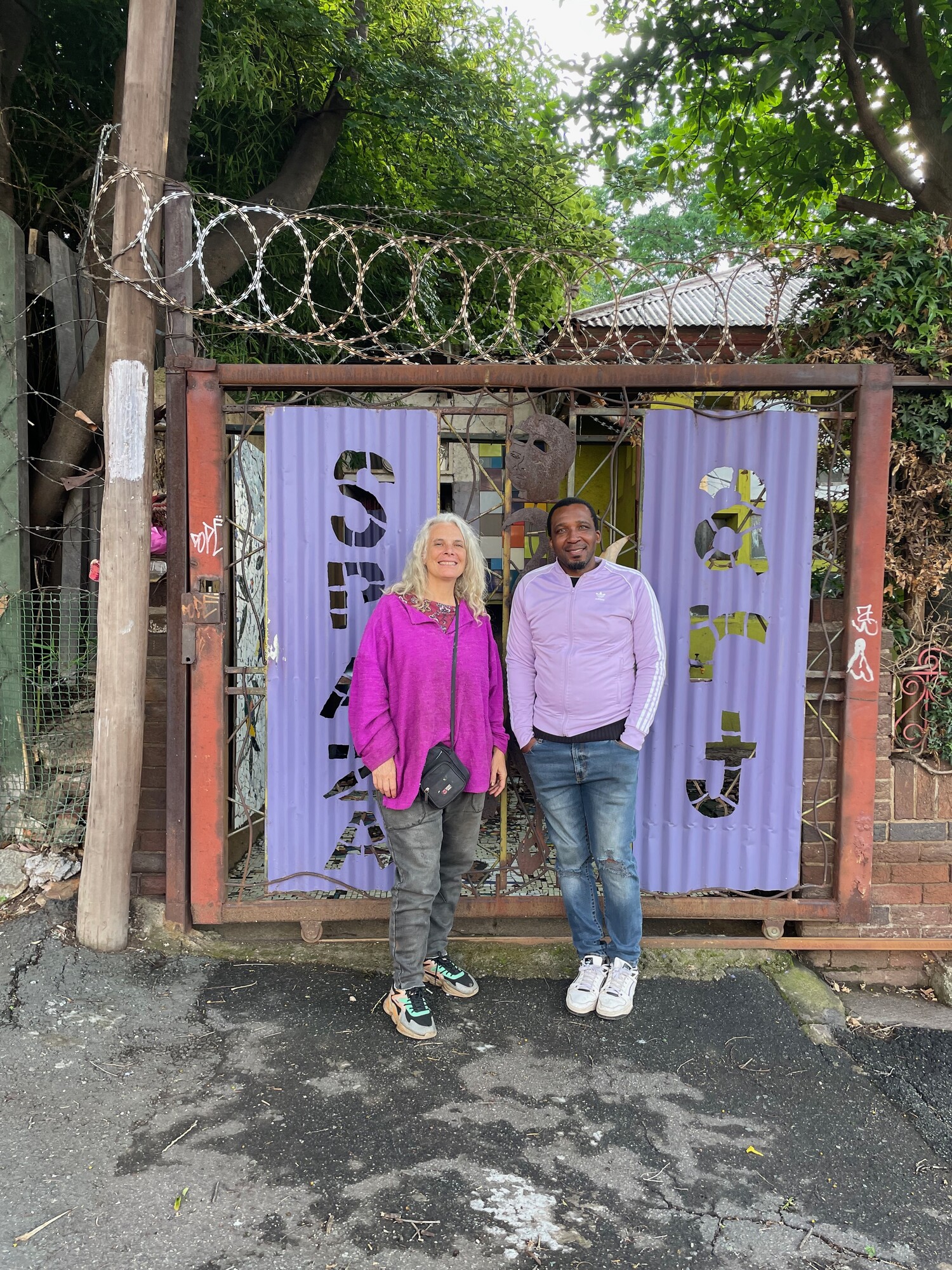
The garden at Spaza Art Gallery is verdant after the summer rains, greenery spilling out onto the pavement. If it weren’t for the i’Themba Tower – an old Telkom signal tower wrapped in thousands of plastic bottles – it would be easy to miss the purple lettering marking the gallery’s entrance. The tower was a collaborative project between Spaza’s founder Drew Lindsay, the artist R1, recyclers, and members of the surrounding community. With 7,000 bottles glittering strangely along its sides, it feels like a sci-fi relic pulled into the present. Each bottle holds a message of hope – i’Themba meaning just that.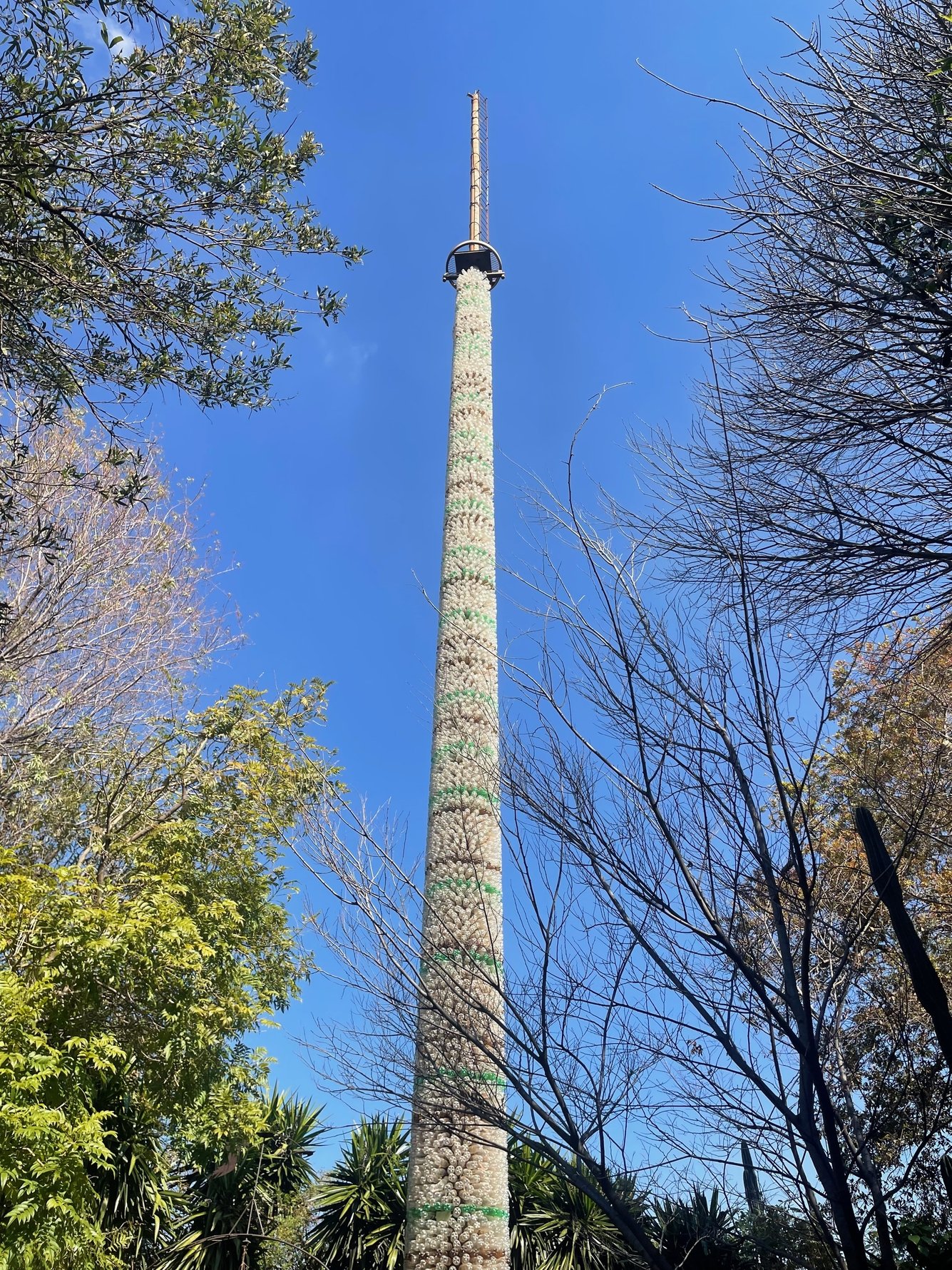
Beneath the tower, the magic continues. The building is old, yet charged with energy; mosaics and ceramics surface in unexpected places. Worn wooden floorboards creak beneath our feet as we move under pressed ceilings, with paintings and drawings lining the passageways.
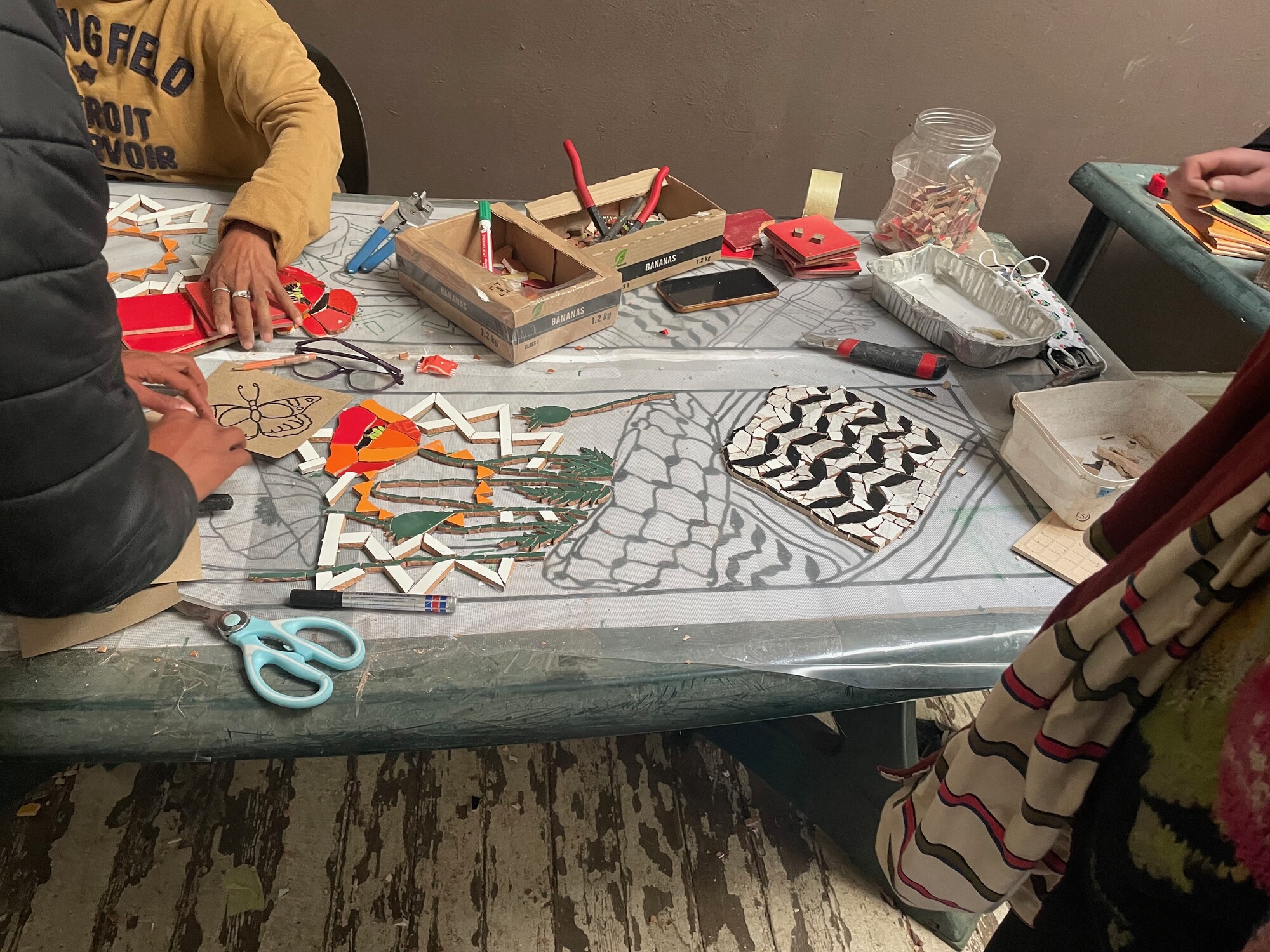
Spaza Art Gallery was founded in 2001 by Lindsay as a place for artists from across Southern Africa to exhibit their work, and stay. After travelling the country on commissions for the National Union of Mineworkers (NUM), Lindsay recognised the need for a space in Johannesburg that could bridge the city and smaller towns, rural areas included. With the Spaza Art team, he continued to develop public art installations, with mosaics that now dot the city. In addition to beautifying public space, these works commemorate memory and history, reflecting Johannesburg’s many communities, with each project drawing in local participants.
"Each [Spaza] mosaic is more than surface decoration. They mark memory, heal damaged spaces, and are made with the people who live alongside them."
During our visit, one of the building’s trustees stops by for coffee. In conversation with him, Dionne MacDonald, and Tutu Mkhabela, it becomes clear that the community Lindsay built is in safe hands – and that his belief in the transformative power of art continues to shape Spaza today. MacDonald worked closely with Lindsay in the years prior to his death, and shares Lindsay's philosophy on making art accessible outside of traditional "white cube" galleries and the ardent belief that art is for everyone. Aside from this, she brings a multifaceted approach, with work across mosaic, film, theatre, and carnivals. Mkhabela, who has been at Spaza Art Gallery since 2023, says that while helping out with the mosaics has pushed his painting and drawing practice to grow, it is MacDonald's commitment to experimentation and trying new things that has brought more freedom to his work.
Doornfontein, Bertrams, and surrounds
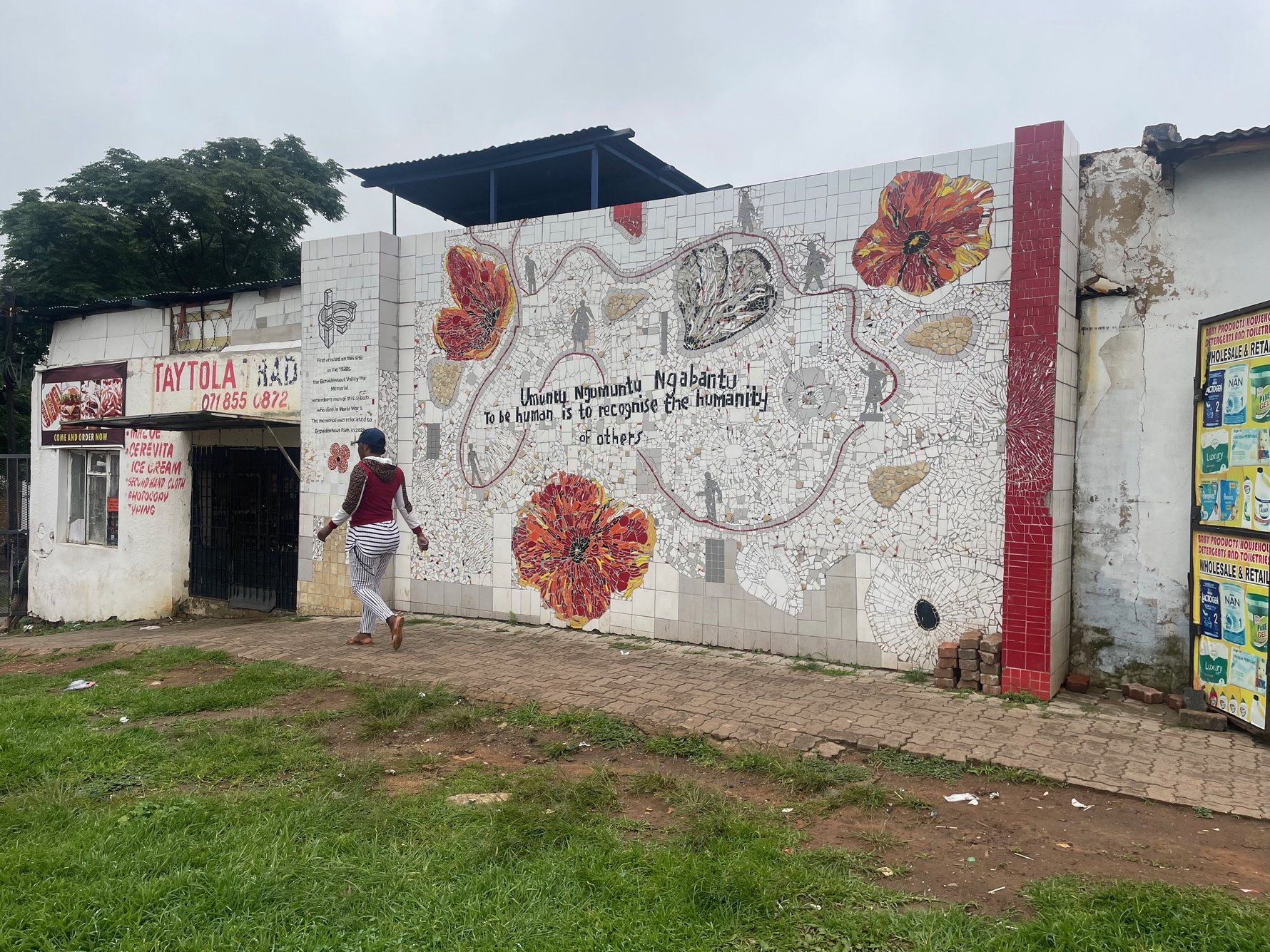
We begin our tour in the surrounding suburbs of Troyeville. Here, many of Spaza’s mosaics bring much-needed colour to streets long neglected by the city, in areas that have increasingly become low-income neighbourhoods. One such work is Ubuntu, a mural commissioned to mark the site where the Bez Valley war memorial once stood. Figures dance in a circle across the wall, a motif MacDonald explains was common in Lindsay’s work, inspired by Matisse’s Dance. Before the mosaic was installed, the wall was repeatedly vandalised and used as a urinal. MacDonald recounts with pride how the entire thoroughfare is now better cared for. Beauty is not frivolous.
From there, it’s a short trip down the valley into Lorentzville, where the Jukskei River briefly daylights. At this point, Spaza Art Gallery collaborated with Water for the Future and local schoolchildren to create a mosaic marking the river’s emergence. The work formed part of Water for the Future’s broader reinvigoration of Fuller Park, situating environmental awareness within the everyday life of the neighbourhood.
Community collaboration underpins much of Spaza’s work, and our next stop is with one of its long-time partners, the Curriculum Development Project (CDP). From the street, the small building is almost indistinguishable from the surrounding repair shops, light industry, and spaza stores. Once inside, brightly painted walls and mosaics thread into the courtyard. An arts and learning centre for children and women, Spaza’s work at the CDP has the dual purpose of providing a creative outlet and developing new skills.
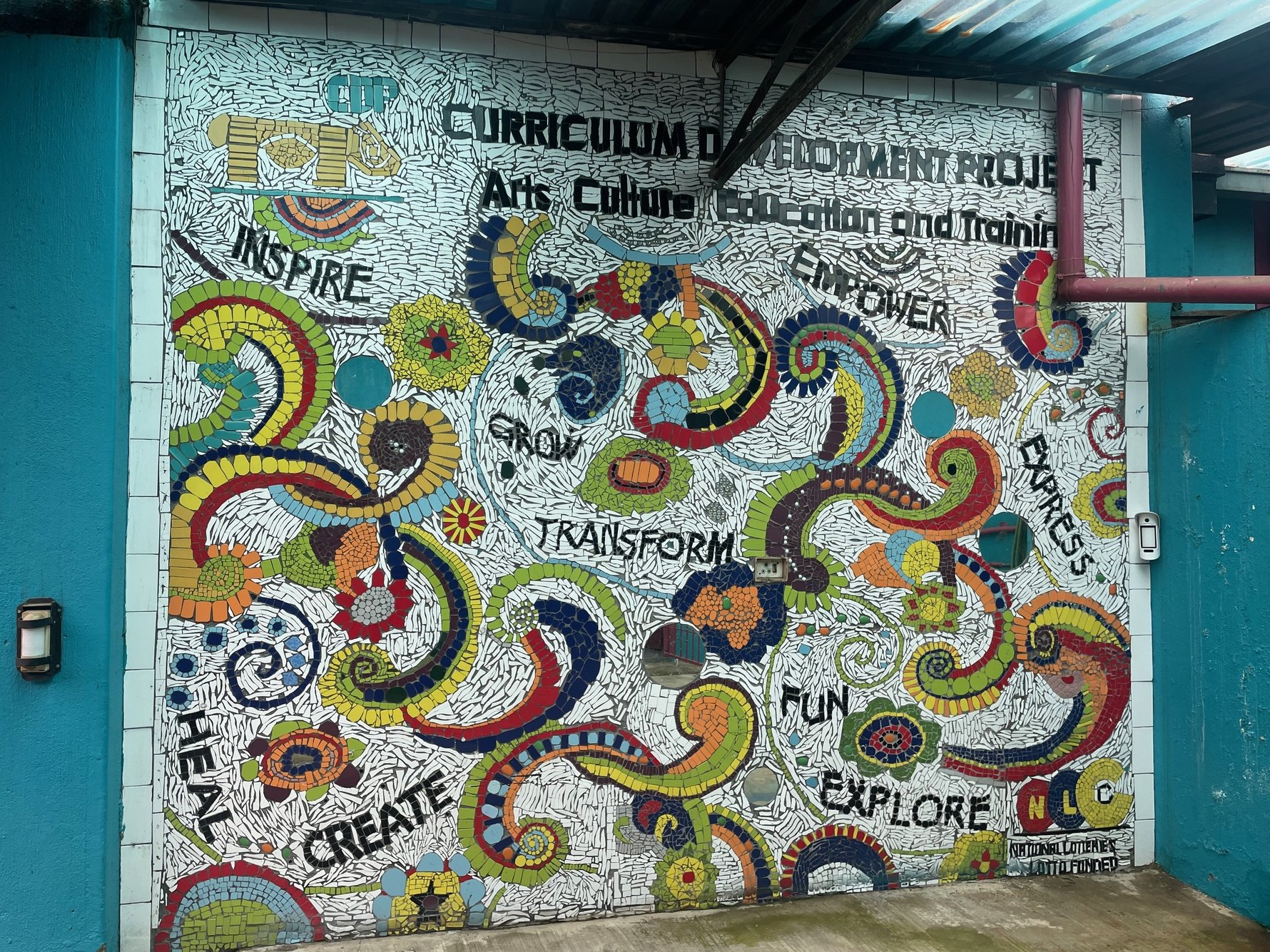
Photo: Johannesburg In Your Pocket.
Nearby are The Pillars, on the corner of Charlton Terrace and Joe Slovo Drive, and further along, the Battle of Ellis Park. Beneath the highway, concrete pillars are clad in shattered white tiles punctuated by circles of yellow and red, and mirrors help brighten the otherwise dark space. Part of a Johannesburg Development Agency (JDA) project, the mosaics were installed alongside new lighting, and in the years since, the underpass has become less of a hijacking hotspot. Looking back at when they first installed it, MacDonald says, "All the people here knew Drew: the cleaners, the homeless guys. He was just that sort of person."
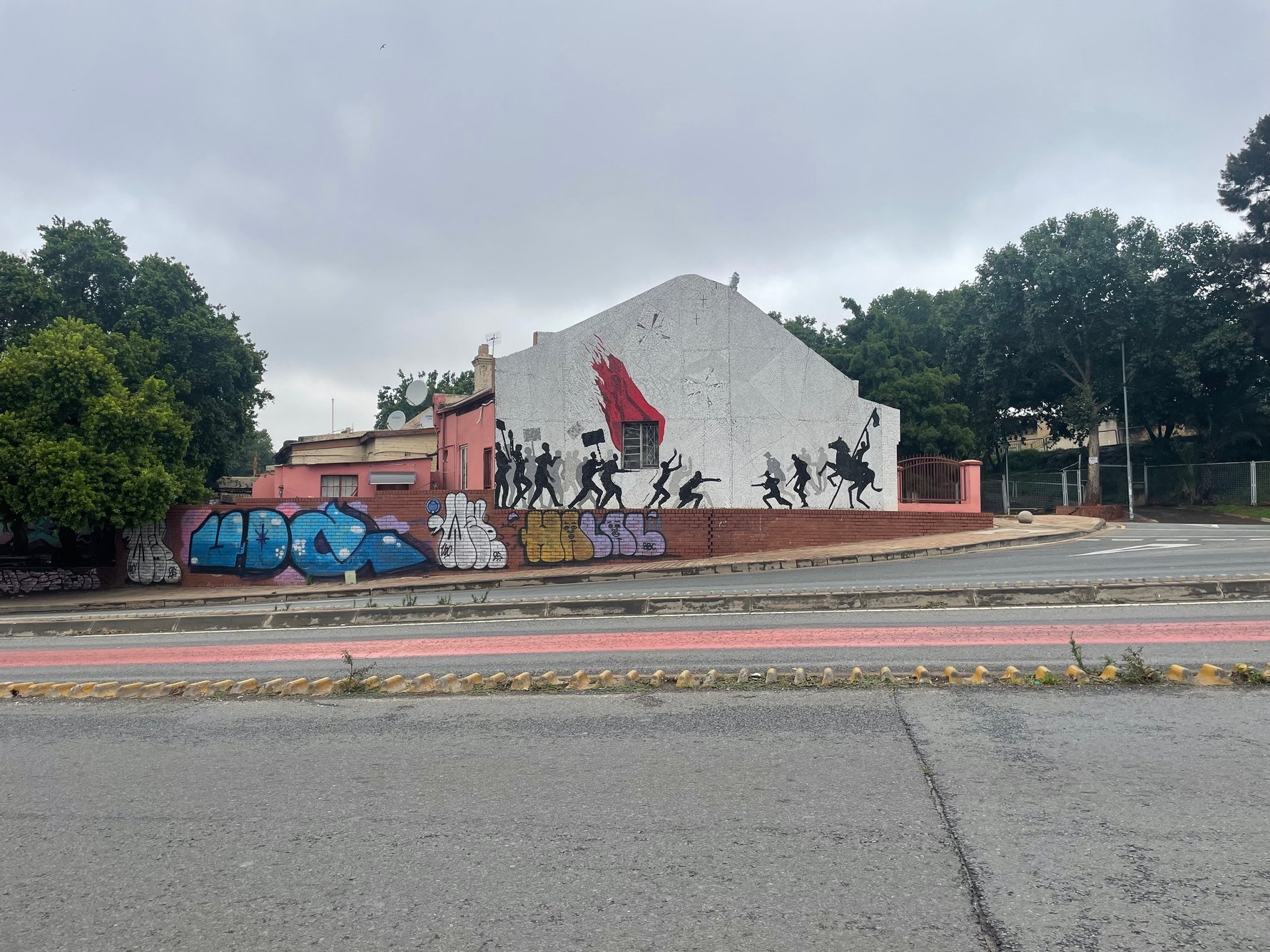
Battle of Ellis Park is one of our favourites of the journey. Composed largely of white tile fragments, the silhouettes of the striking workers are set against a blood-red fire. The mosaic marks the Rand Revolt that took place in 1922, when white workers went on strike against the perceived threat of black workers taking their jobs. It is an event that still fissures South Africa's labour market today. Completed in collaboration with women who were in refugee camps after the xenophobic attacks of 2008, this piece reflects parallels between historical labour conflict and contemporary tensions between South African and migrant workers today.
Braamfontein and beyond
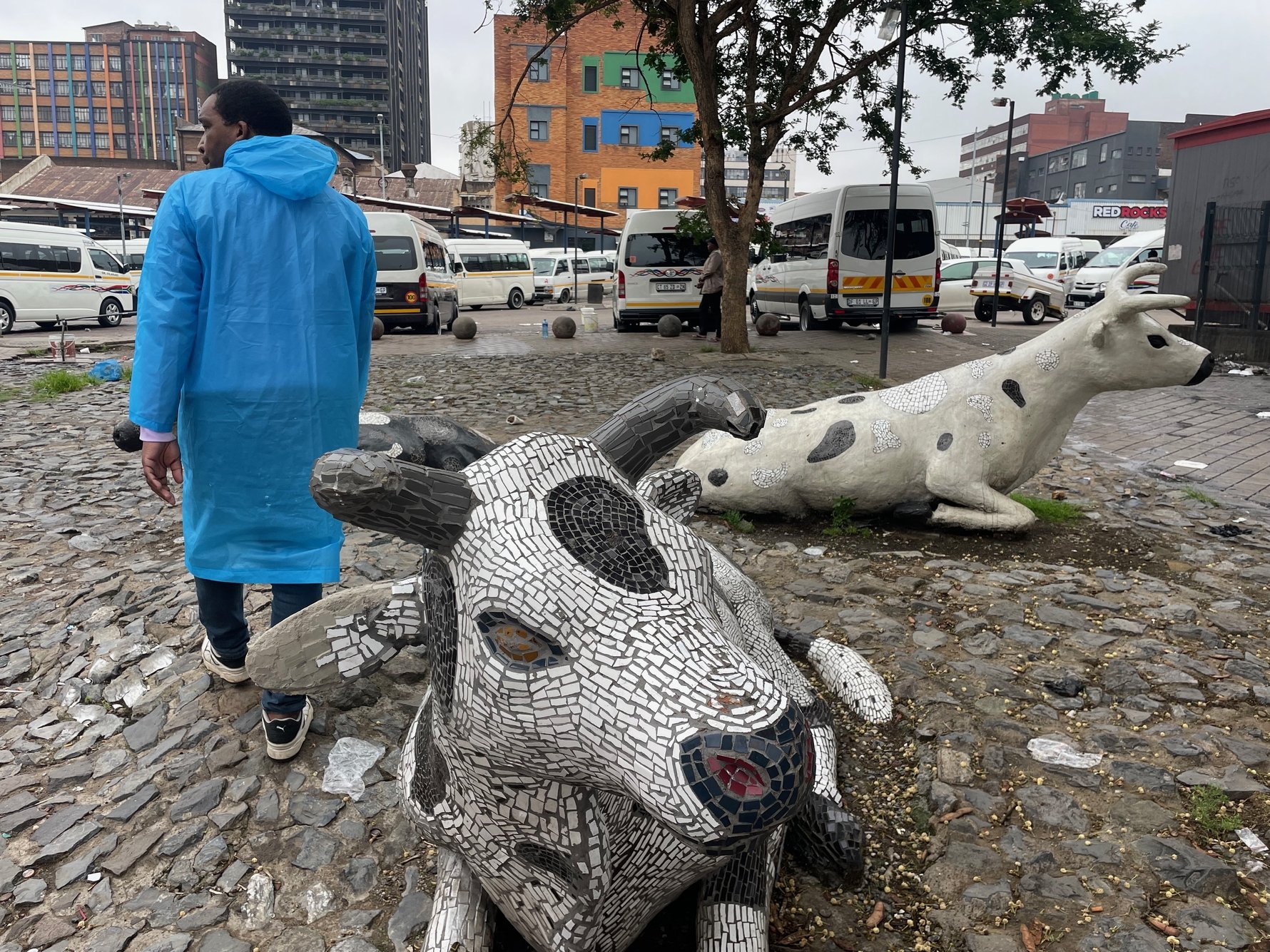
On our way to Braamfontein, we visit Enkomeni taxi rank. Nestled between masses of concrete, it funnels commuters to and from KwaZulu-Natal daily. Known as "the place of the cows", the rank is home to life-sized concrete cow sculptures, which Spaza has adorned in mosaics. MacDonald takes notes of where touch-ups are needed. The wear on the cows shows how people make practical use of them: one has concrete exposed where commuters sit on its back, another’s horns are worn where drivers hang their cloths after washing taxis. An example of how Spaza’s mosaics live alongside the city.
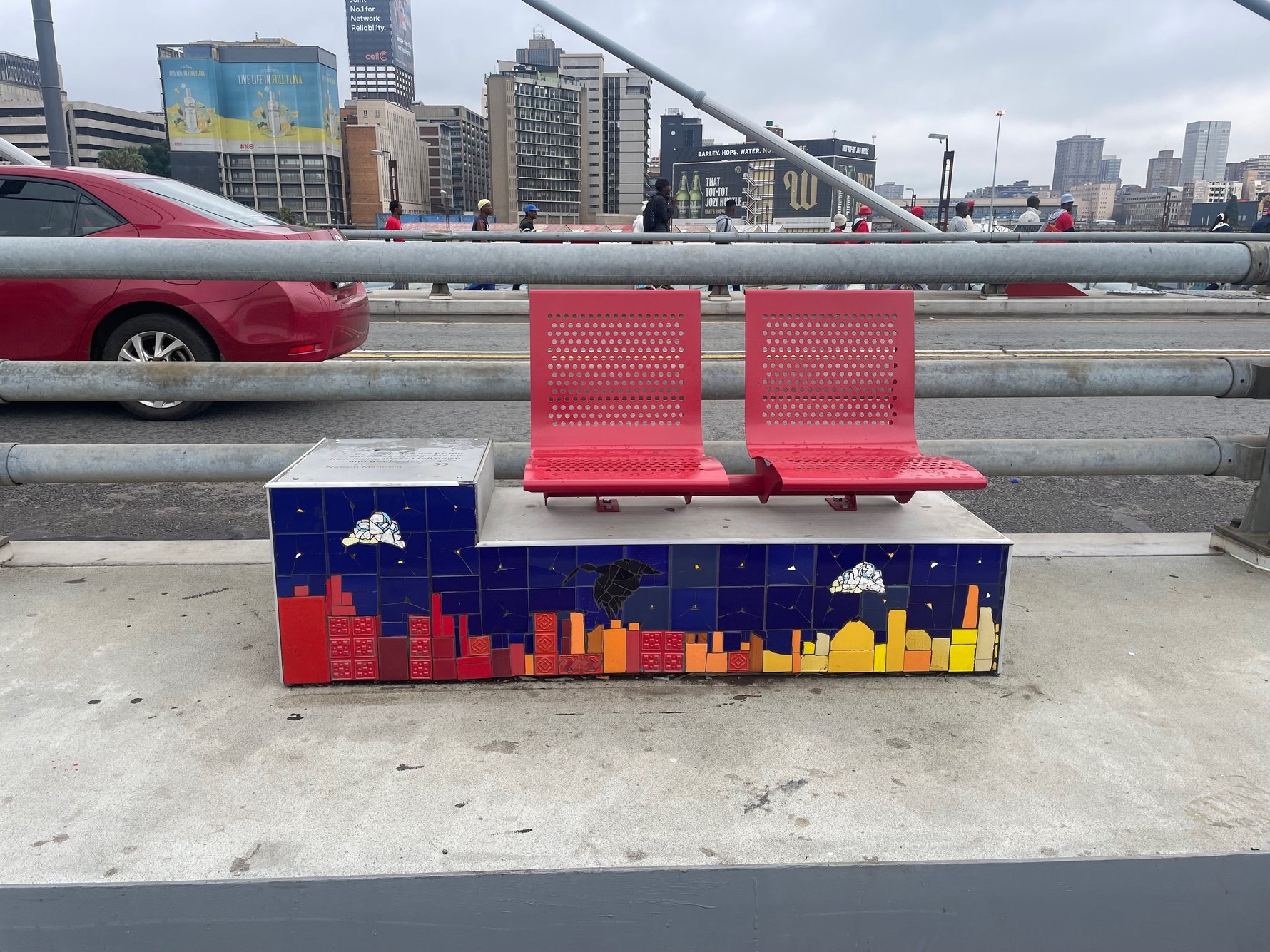
From here, we make our way to Nelson Mandela Bridge, where Spaza Art Gallery's most recent collaboration (July 2025) formed part of a Jozi My Jozi gateway project. Along the bridge, benches offer panoramic views of the city and invite moments of pause, each featuring mosaics of the Johannesburg skyline. The renditions are simple, capturing the sky at different times of day. A steady stream of people moves along the walkways, and it is wonderful to see the effects of the improved lighting and safety for pedestrians.
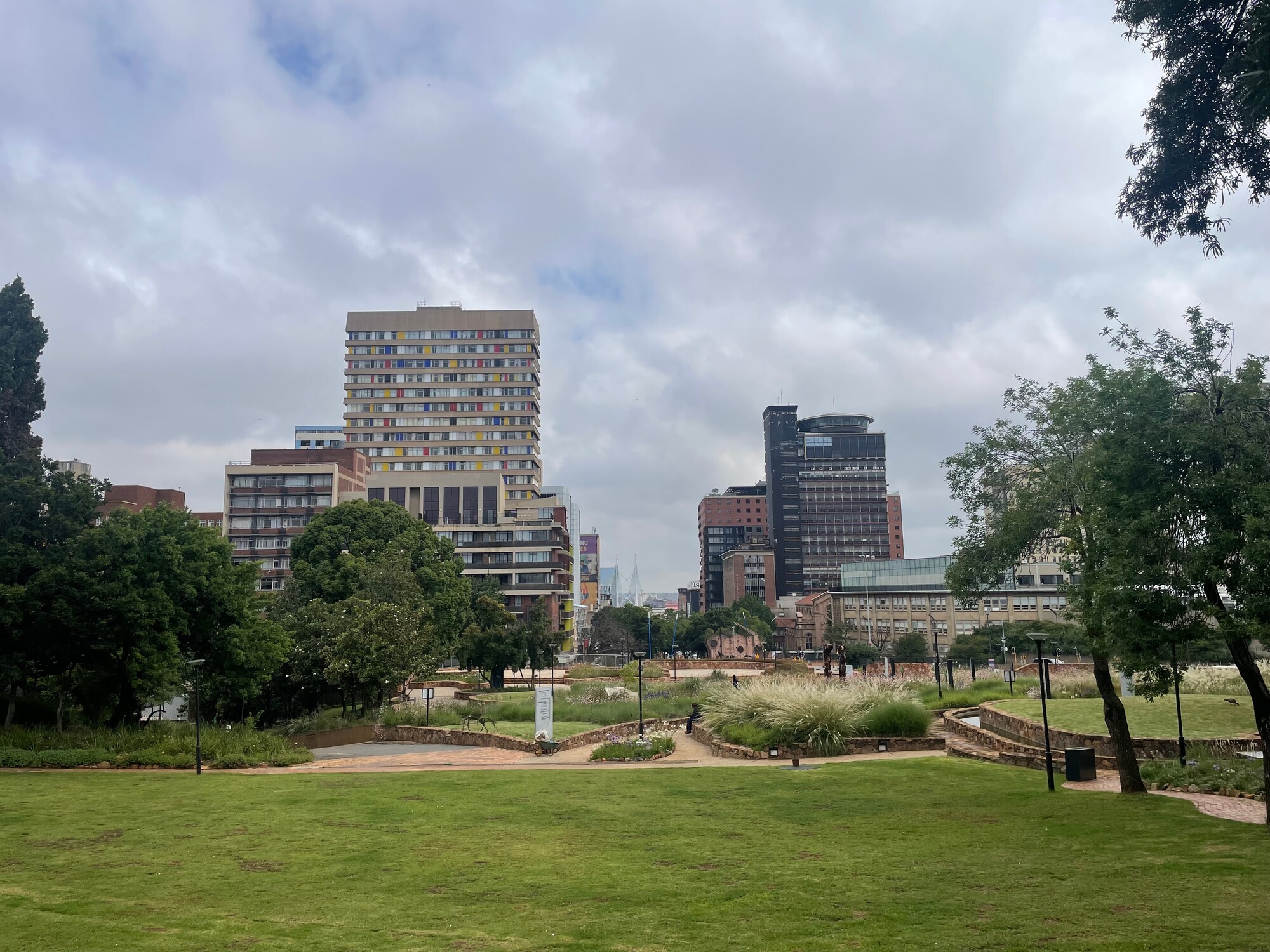
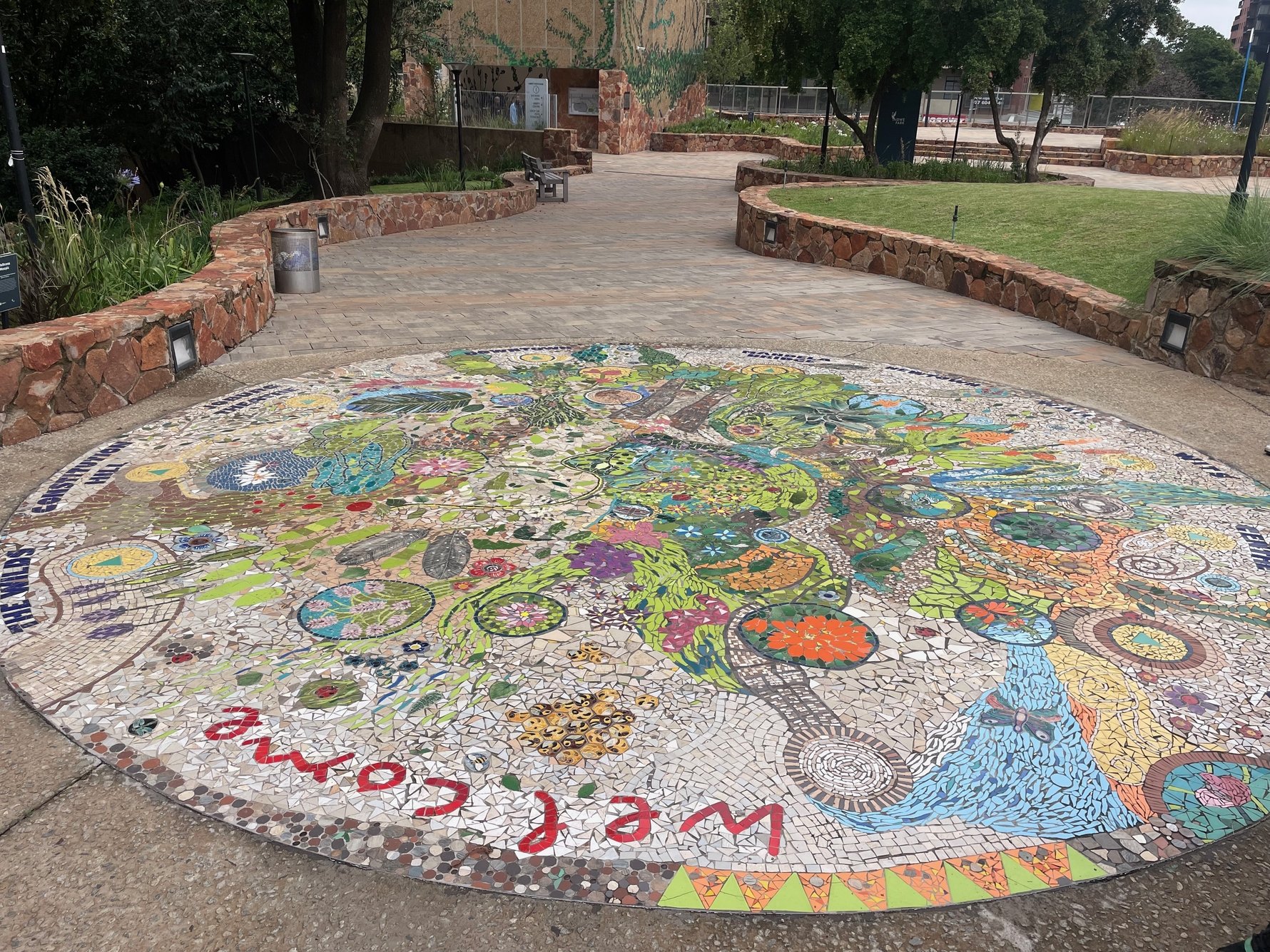
We walk to Indwe Park, part of Liberty's head offices but open to the public. A recent addition to Braamfontein, the park is an oasis of indigenous plants with a focus on healing. Alongside artists Rirhandzu Makhubele, Zanele Montle, Grace Mokalapa, Kagiso Pat Mautloa, Hannelie Coetzee, and James Delaney, Spaza installed a mosaic here. It was the last piece designed by Lindsay, with MacDonald adding her own touch through colours that depart from his traditionally more muted palette. It is a fitting work for this space of healing, and the flora and fauna that have found a home in Johannesburg intermingle with landmarks of the city.
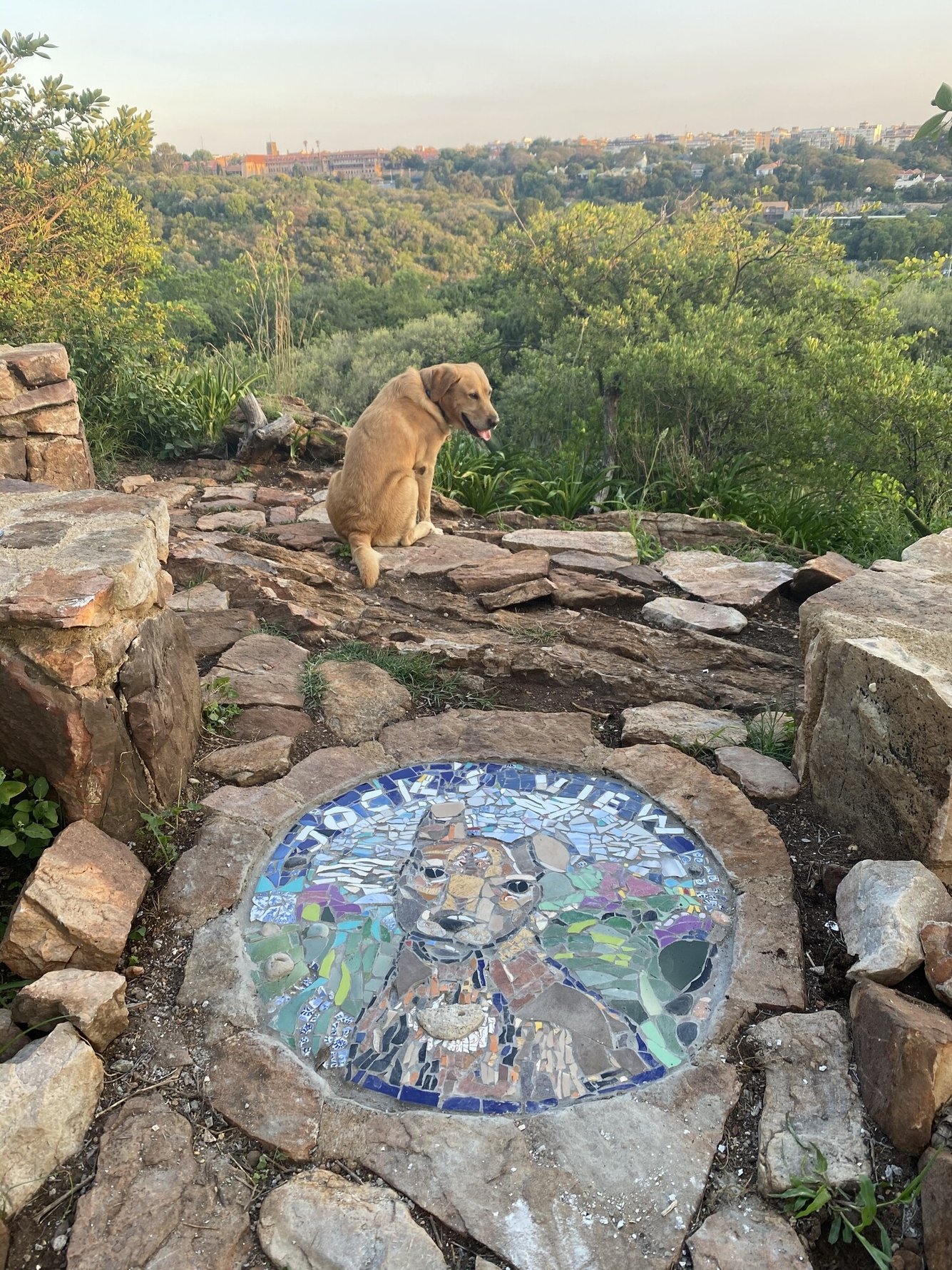
Another green space that we didn’t visit on the day, but are frequent fans of, is The Wilds. The transformation of this hillside park, led by James Delaney, shows how art can breathe life into neglected spaces. Sculptures dot the succulents along the ridges, while Spaza Art Gallery’s mosaics, appearing seemingly out of nowhere, turn the paths and walkways into a kind of treasure hunt. It makes for stunning afternoon walks with sprawling vistas, and the lawns make it a great option for a picnic.
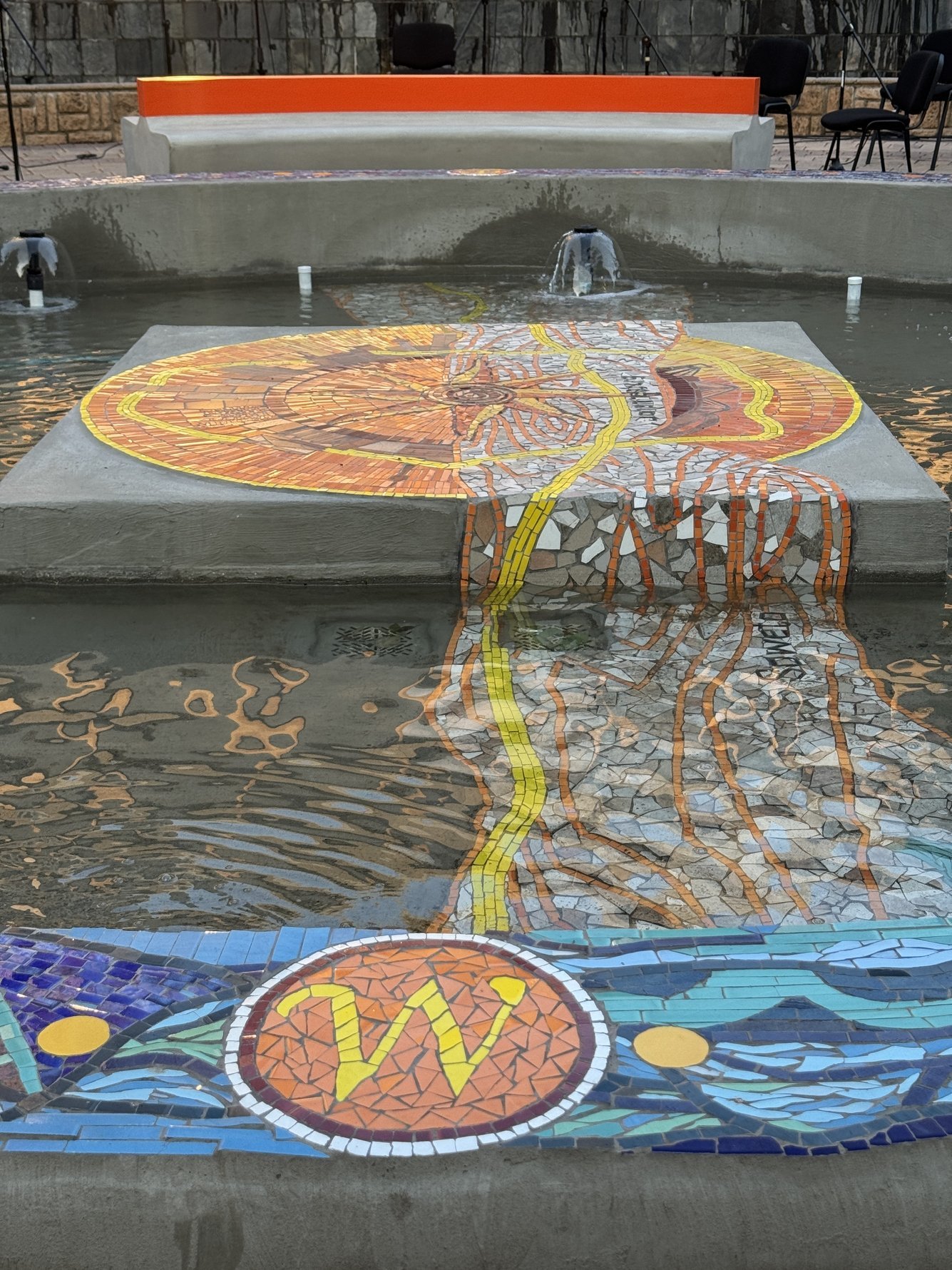
In a similar vein, a mosaic in the fountain behind Joburg Theatre exemplifies Spaza’s embeddedness in Johannesburg. Part of the Ameshoff Street Identity & Placemaking Project, the fountain marks a key intervention in the revitalisation of four city blocks in Braamfontein, transforming the space into a welcoming piazza. The Watershed mosaic’s waterline flows east to west, while a fiery orange sun radiates across the city’s landmarks, tracing a miniature map of Joburg. Designed by MacDonald, the piece illustrates Johannesburg as a living watershed, where rivers, streets, and skylines are connected in both ecological and social terms. Surrounded by comfortable seating, it's an excellent spot to stop for lunch. It's also a reminder that, while Spaza's mosaics certainly add to the beauty of the city, they are as much inspired by – and reflective of – the beauty that is already there.
While we ended the tour here, the mosaics of Spaza Art Gallery, and the work of Drew Lindsay, can be found further afield too. Spaza Art Gallery contributed to Unisa Science Park's Art Walk, and their six metre in diameter Cosmogram shows alongside other sustainable art installations and makes the trip to Florida well worth it.
Wherever they are encountered, Spaza’s mosaics are maps and mirrors. They reveal the city while shaping how people move through and experience it. Each mosaic is more than surface decoration. They mark memory, heal damaged spaces, and are made with the people who live alongside them.
On the horizon
Back at Spaza, MacDonald says they will continue collaborating with community organisations so that their mosaics may spread even further. In 2026, priorities include hosting exhibitions and events at the gallery, and, she hints, possibly launching a dedicated Spaza Art Gallery mosaic walk.Mapping Joburg in mosaics: An itinerary
The best part about Spaza Art Gallery's works is that you don't need to worry about exhibition dates or venue opening hours to see them. Here, we have a list of some of MacDonald's favourite public artworks by Spaza Art Gallery and where to see them. Either set aside a day to see them all, or schedule an hour or two to visit an area and walk between them. Braamfontein is a great pick to start from the Nelson Mandela Bridge and walk to the Joburg Theatre, or go to The Wilds for a slow meander and picnic. As always, when moving around Joburg, make sure to stay aware of your surroundings and belongings.1. Jukskei Day Light Point – Cnr Queen St and Thames Rd, Lorentzville
2. Curriculum Development Project – 20 Derby Rd, Bertrams (note that as the mosaics of Spaza Art Gallery are inside the CDP, you should phone ahead to arrange your visit on +27 11 624 1025)
3. The Pillars – Cnr Charlton Terrace and Joe Slovo Dr, New Doornfontein
4. Battle of Ellis Park – 33 Bertrams Rd, New Doornfontein
5. Ubuntu – 161 Kitchener Ave, Kensington
6. Traffic Circle Portal – Cnr Rambler & Rocket rds, Kensington
7. Wellness Mosaic – Indwe Park, Braamfontein
8. Watershed – Cnr Ameshoff and Simmonds sts, Braamfontein
9. Zoo Lake Plaque – 60 Jan Smuts Ave, Forest Town
10. The Wilds (various) – The Wilds, Houghton Dr, Houghton Estate
11. Cosmogram – Unisa Science Campus, Florida


Comments