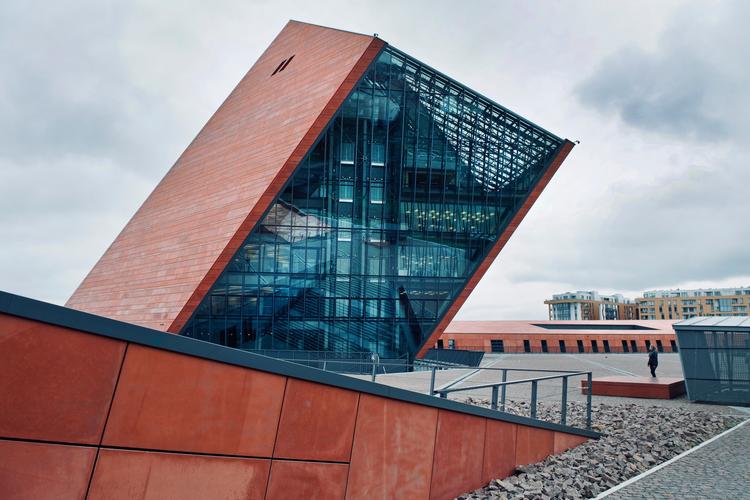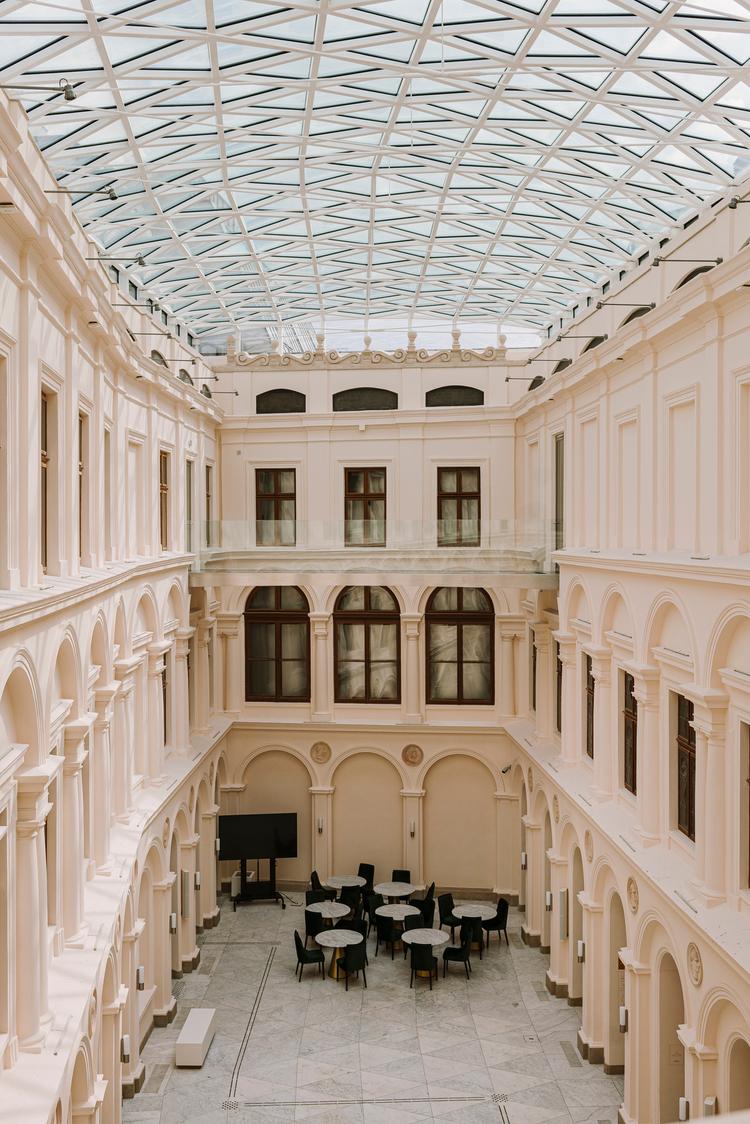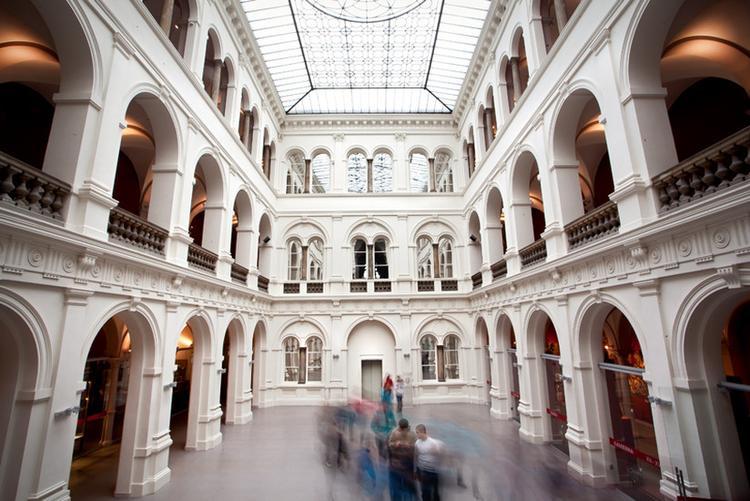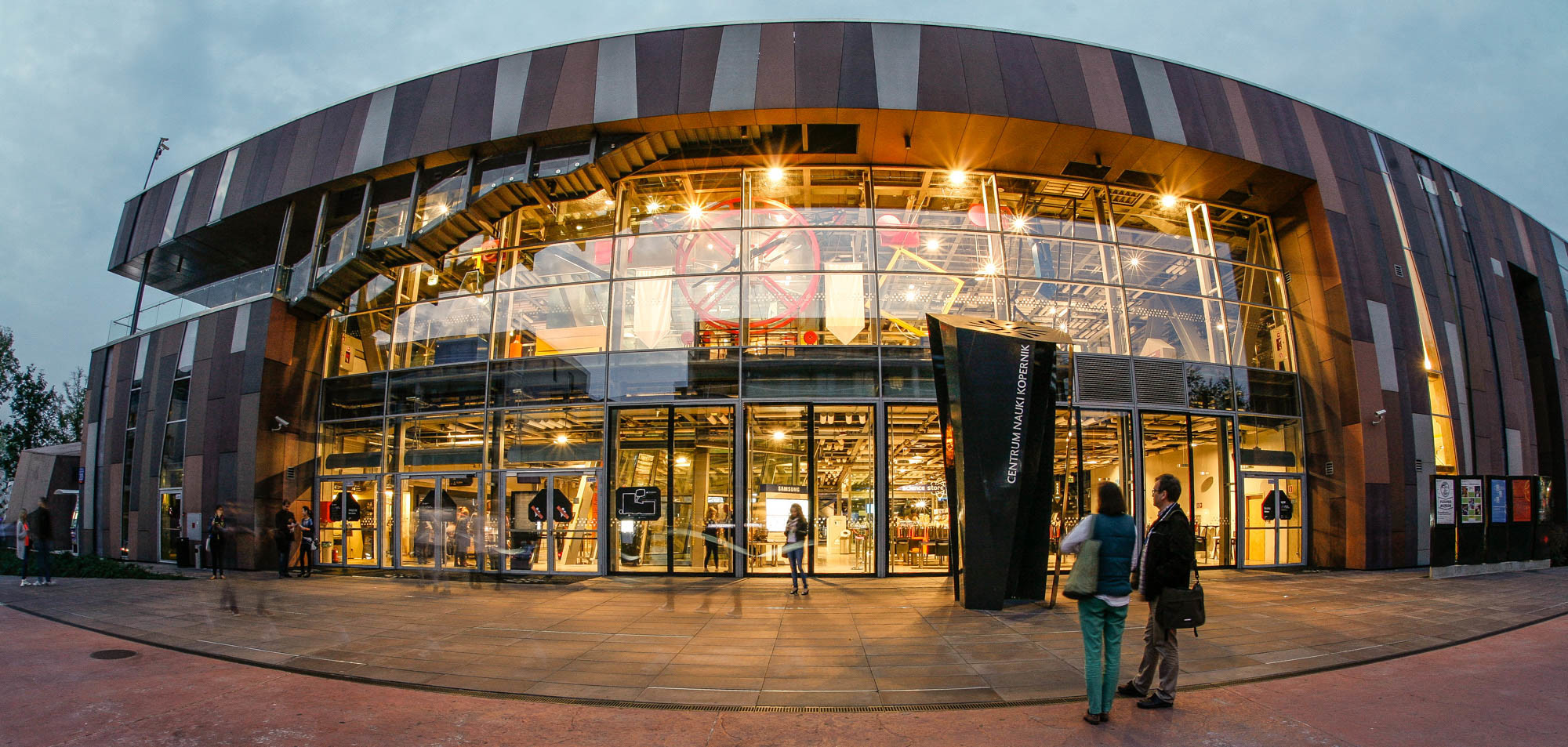

As that's all a bit much to take in, below we've done our best to list Poland's very best museums , in no particular order. If WWII interests you, you're spoilt for choice, but you can't go wrong with the Warsaw Rising Museum or the WWII Museum in Gdańsk . If modern art is your scene, look no further than Kraków's MOCAK or the Art Factory in Łódź . The more traditional art collections, most notably the who's who of Polish painters, can be found in the main branches of the National Museum in Warsaw , Kraków and Wrocław . If you're travelling with children and are looking for some fancy interactive science centres, we highly recommend taking time out to visit the Copernicus Centre in Warsaw as well as the Hydropolis in Wrocław . Now, without further ado, here they are:
The Best Museums in Poland
MOCAK (Kraków)
When it comes to modern art galleries, it doesn't get any better than this! Opened in 2011, Krakow's Museum of Contemporary Art (MOCAK) does not disappoint, capably holding its own with comparable international art institutions. Tucked behind the famous Schindler Factory, the building alone will impress with its avant-garde styling and ultra-modern layout. The museum boasts a large and fine permanent collection of modern art highlighting both Polish and international artists, plus the Mieczysław Porębski Library and its collection of works on art theory and history, as well as a permanent exhibition space devoted to Krystian Lupa’s interactive installation Live Factory 2 - inspired by Warhol's cult NYC studio. Several provocative temporary exhibitions are ever-changing: check their website for details. Despite the relatively late closing hour, make sure to leave yourself plenty of time to enjoy all the museum has to offer, including the large café and bookshop.
Czartoryski Museum (Kraków)
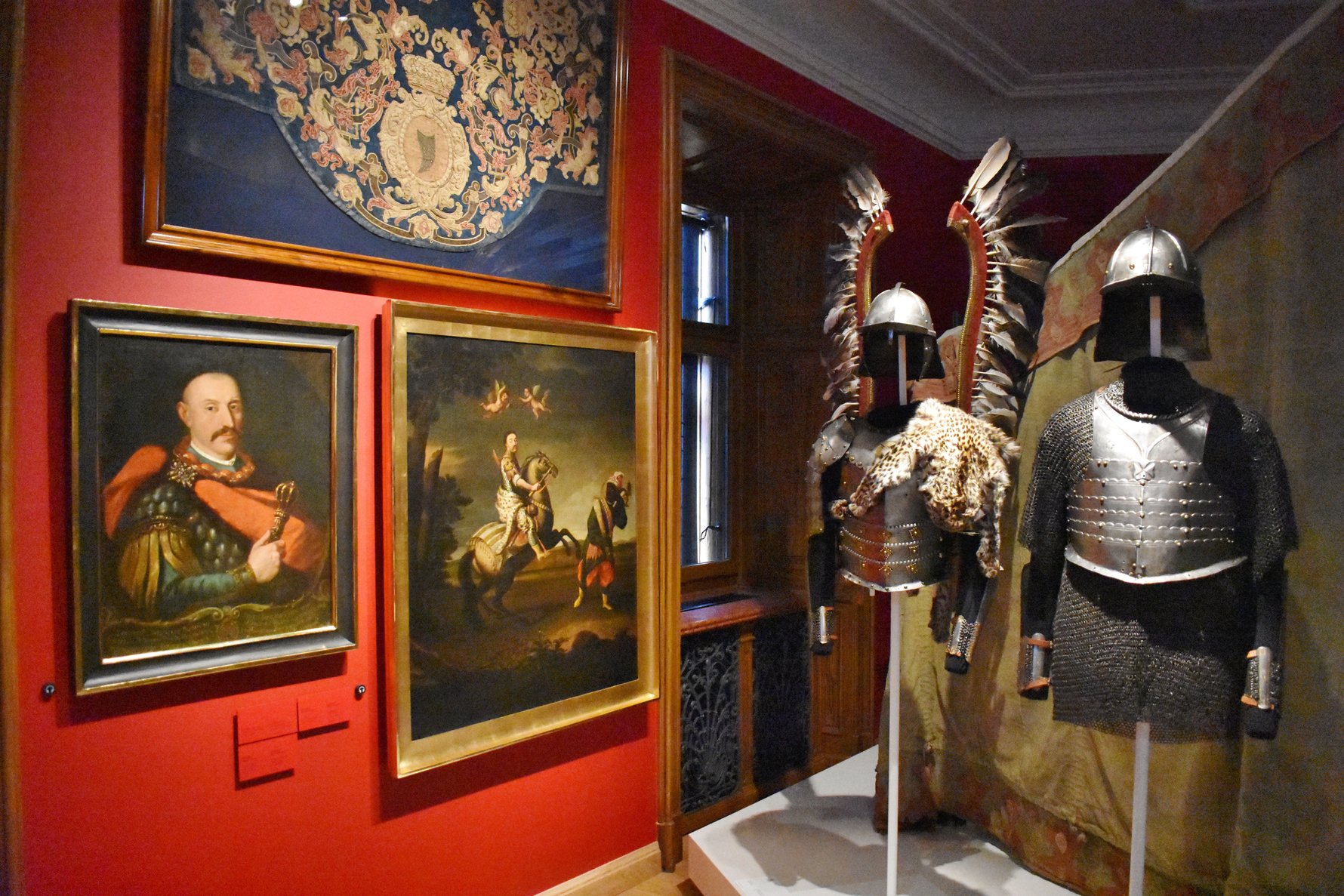
Originally built in the mid-15th century, this space once stored Kraków's armoury, munitions, cannons and gunpowder. In the 1800s it was rebuilt and expanded into its current neo-Gothic state to hold the vast library and collections of the Czartoryski Princes, until the collection was moved across the street to ul. Św. Marka 17 in the 1960s. Since then Kraków's former Arsenal has been used to showcase various segments of the famous Czartoryski collection, including a long stint as the Gallery of Ancient Art. Closed since the acquisition of the Czartoryski collection by the Kraków National Museum in 2016, the primary collection of the Czartoryski Museum across the street reopened in December 2019, and plans are to reopen the Arsenal with a new exhibit on July 4, 2020.
POLIN Museum of the History of Polish Jews (Warsaw)
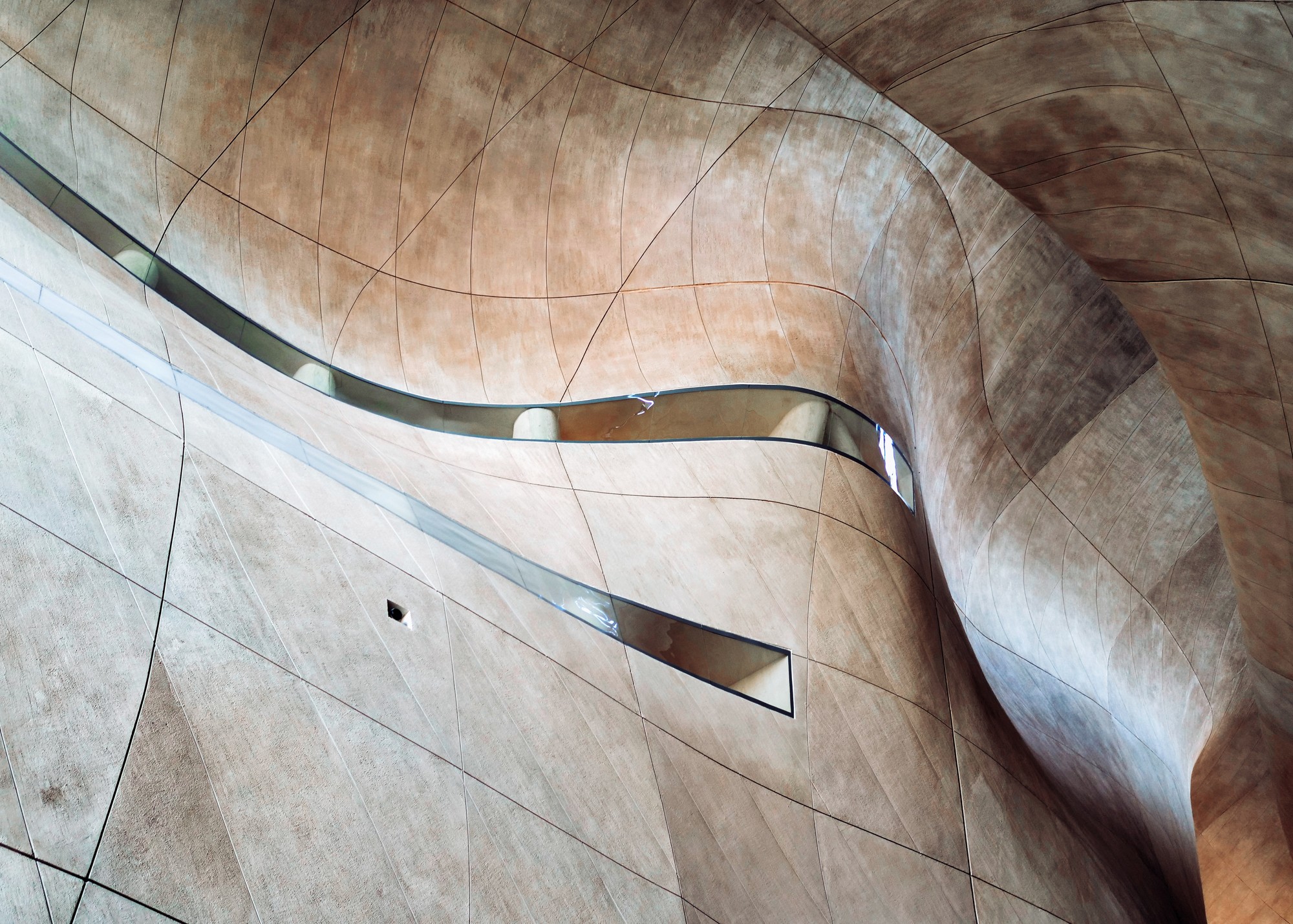
The world is well-aware of Poland's Jewish history, particularly following the horrific events of WWII. Prior to the holocaust, Poland had long offered safety and tolerance to the Jews of Europe for almost a millennia, and Kraków became a thriving centre for the community. It is therefore appropriate that POLIN, opened in 2014, should be located here, specifically in the Muranów district - the sight of the former Jewish quarter and the subsequent ghetto that replaced it. The building itself, designed by Finnish architect Rainer Mahlamäki, is a stunning new copper and glass structure that evokes the shape of Noah's ark and some other interpretations.
Each of the 8 galleries, spread over 4000m², addresses a different era in the long history of the Jewish people beginning in the forests of the Poland of Duke Mieszko (960-992), where legend has it that the first Jews decided to settle. Fleeing persecution from the east, Jews arrived in a forest where they heard the word Polin, which sounded like the Hebrew expression for ‘Rest here’, hence the name given to this institution. The exhibition goes on to chart the arrival of the first Jewish diplomats and traders throughout the ages when Jews enjoyed social and religious freedoms, in addition to the protection that was not bestowed upon them elsewhere in Europe. The culmination of the exhibition are the calamitous events of the 20th century, which saw the Polish Jewish population nearly wiped out. The centrepiece of the exhibition is a remarkable reconstruction of the roof, painted ceiling and celestial canopy of a lost synagogue in Gwoździec, in what was eastern Poland (now Ukraine). A visit to this museum is essential for those choosing Kraków as a travel destination.